Weather identification Math Worksheets for Ages 3-7
4 filtered results
-
From - To
Introduce your little learners to the fascinating world of weather with our engaging Weather Identification Math Worksheets, designed specifically for ages 3-7. Combining fundamental math skills with fun weather activities, these worksheets encourage early learners to identify and understand different weather conditions. From counting raindrops to sorting cloud types, each worksheet is crafted to promote cognitive growth and enhance math proficiency in a playful manner. Ideal for home or classroom use, these resources support the development of critical thinking, observation, and problem-solving skills while sparking curiosity about the environment. Download our worksheets today and watch your child thrive in their learning journey!
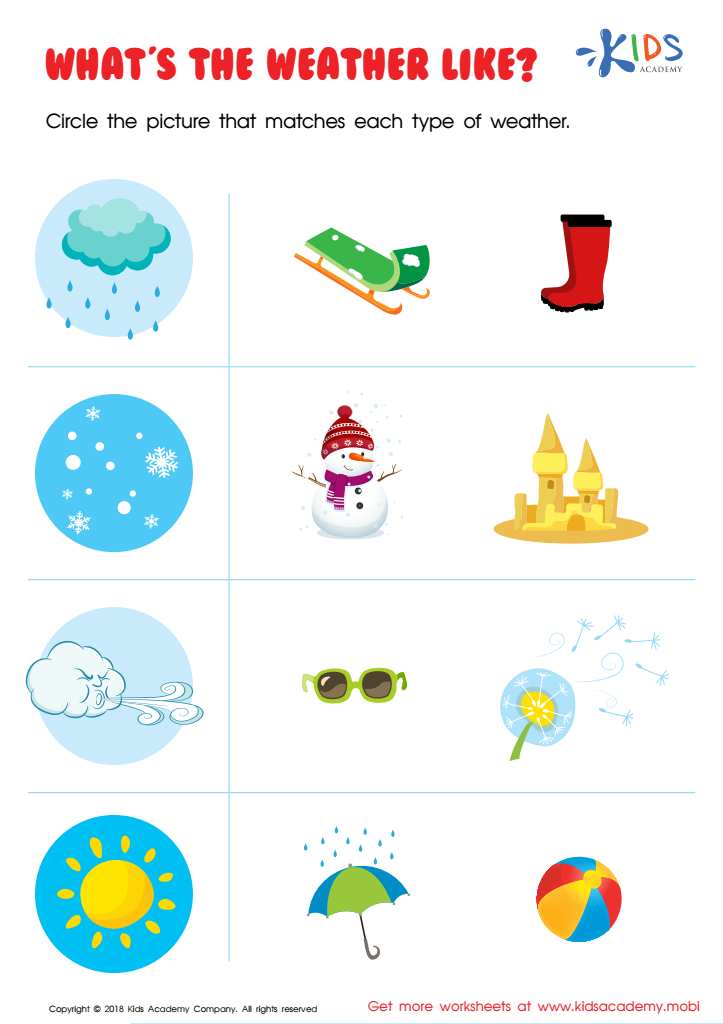
What's the Weather Like? Worksheet
 Assign to My Students
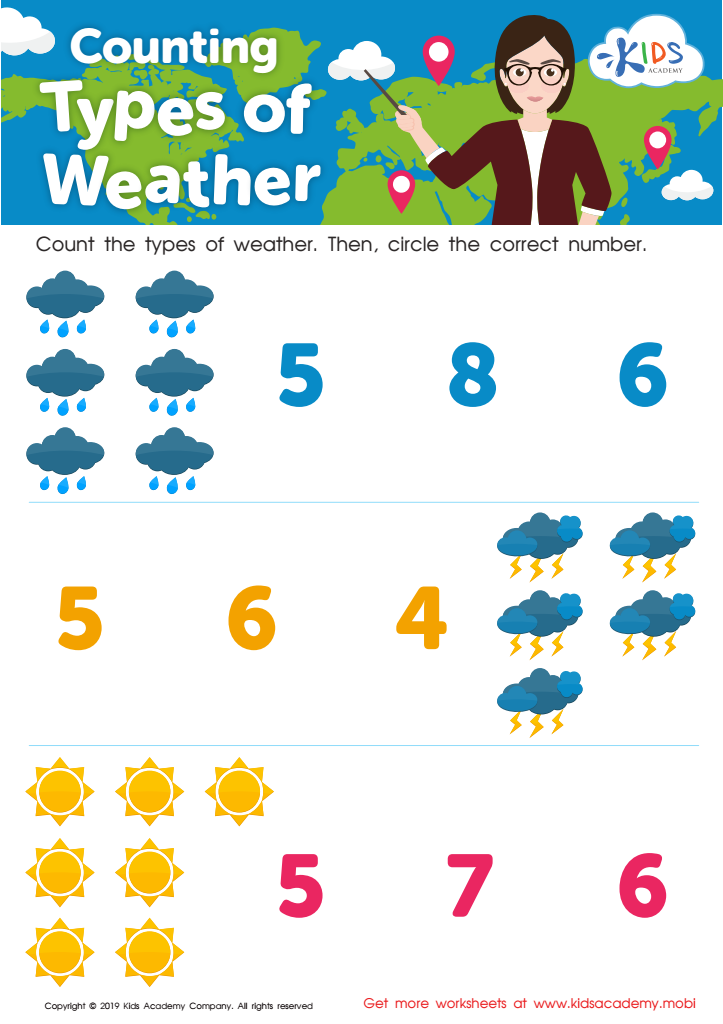
Counting Types of Weather Worksheet
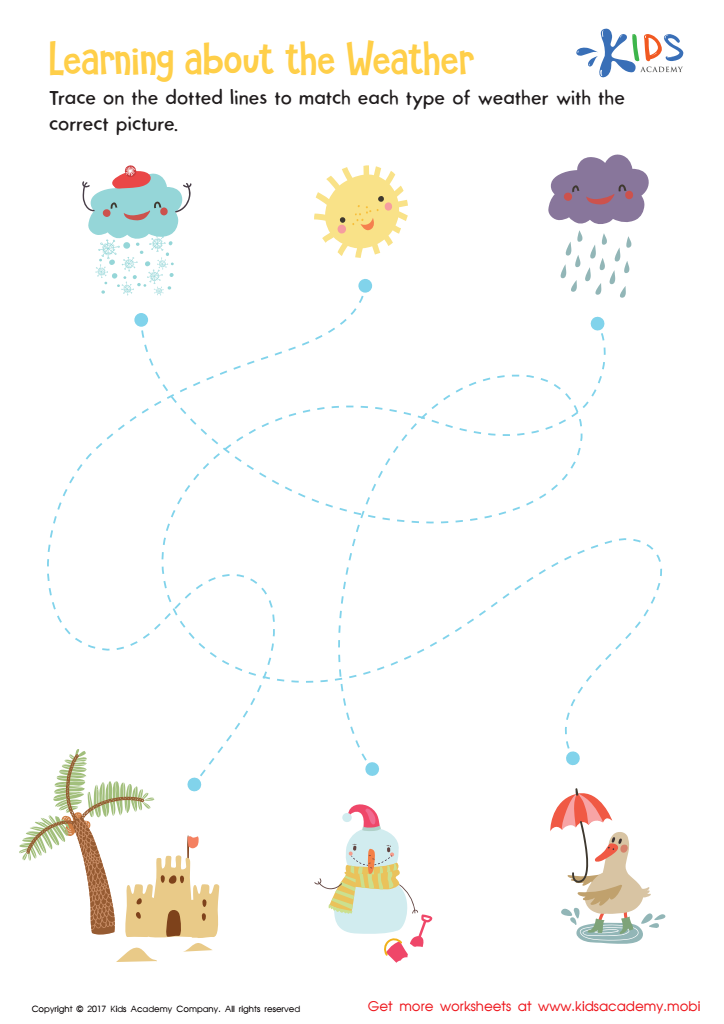







Weather identification math is vital for children ages 3-7 as it combines essential mathematical concepts with real-world experiences, promoting holistic development. Understanding weather involves observation, comparison, and categorization—a fun way to introduce basic math skills like counting, sorting, and pattern recognition.
When teachers and parents engage young learners in weather identification, they foster cognitive and observational skills. For instance, identifying sunny versus rainy days encourages children to tally occurrences, supporting their counting skills. Associating temperatures with clothing choices introduces them to data collection and basic graphing, laying the groundwork for future mathematical learning.
Furthermore, weather discussions spark curiosity about the environment, nurturing critical thinking and scientific inquiry. By integrating weather math into daily routines, caregivers can create rich learning moments that enhance language skills through weather-related vocabulary.
Beyond academics, this knowledge can also promote emotional intelligence and real-life preparedness. Recognizing different weather conditions empowers children to make informed choices about dressing adequately for the weather, fostering autonomy. In summary, weather identification math offers a dynamic and engaging way for young learners to build essential skills while connecting them to their environment, ensuring a well-rounded educational foundation.








