Basic measurement skills Measurement Worksheets for Ages 3-7
3 filtered results
-
From - To
Introduce your child to the world of measurements with our Basic Measurement Skills Worksheets designed for ages 3-7. These engaging printables help young learners grasp fundamental concepts such as length, width, height, and weight through fun, interactive activities. Foster essential mathematical abilities while enjoying a variety of colorful exercises and hands-on tasks that make learning enjoyable. Tailored for preschoolers and early elementary students, our worksheets ensure strong foundational skills, preparing your child for future mathematical success. Explore our collection today, and watch your child's confidence in measurements soar! Visit Kids Academy and start your learning adventure now.
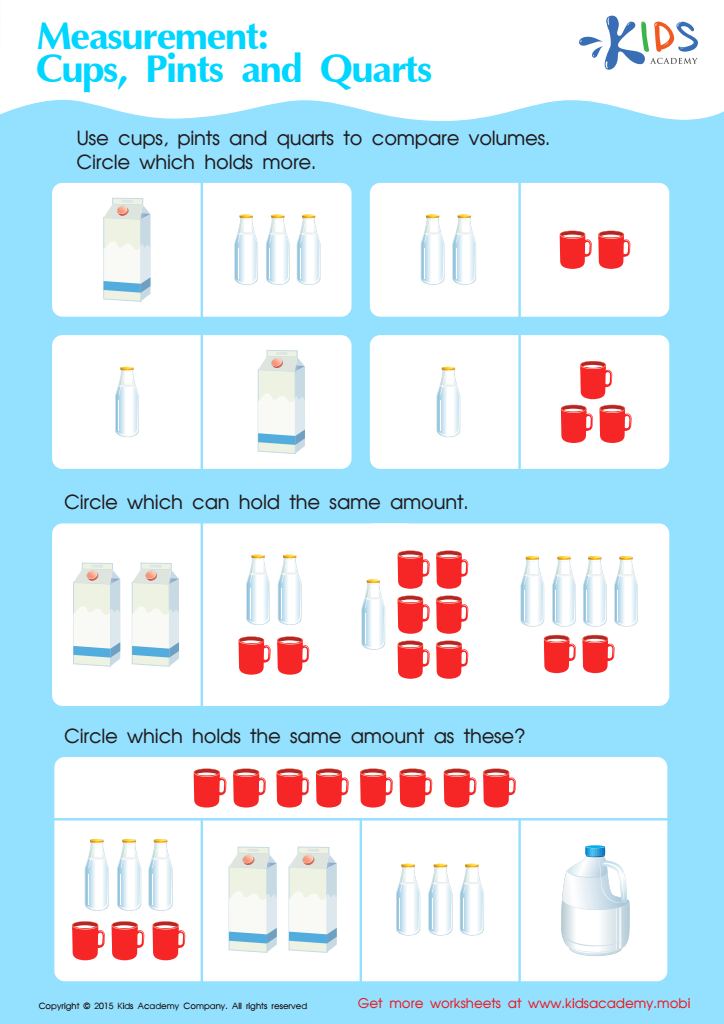
Measurement: Compare Volumes Worksheet
 Assign to My Students
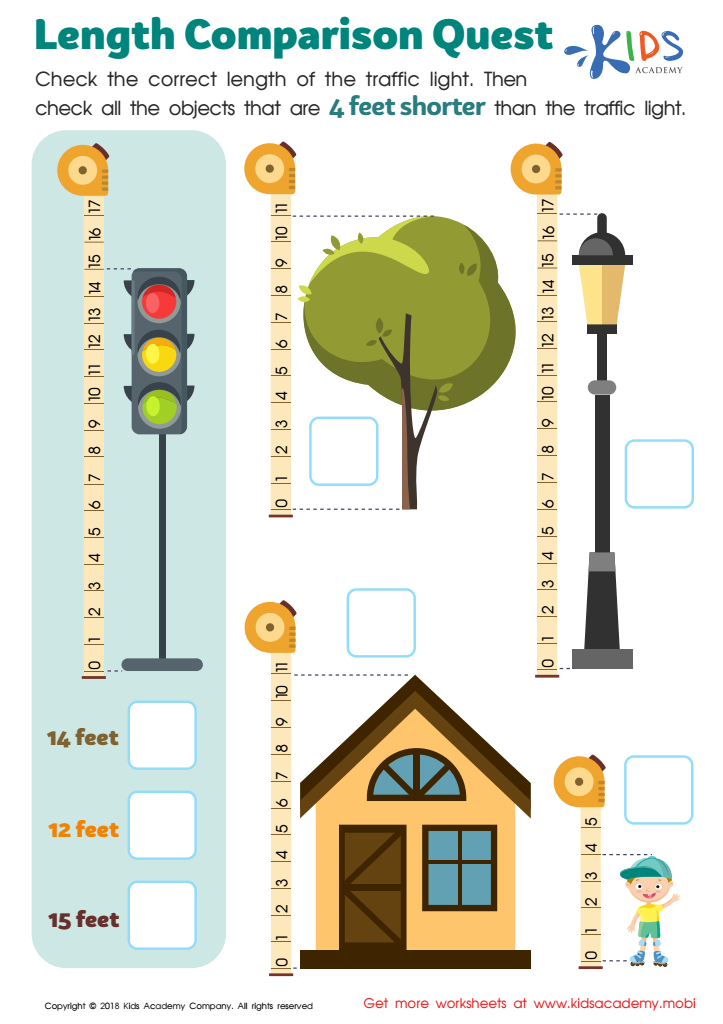
Length Comparison Quest Worksheet
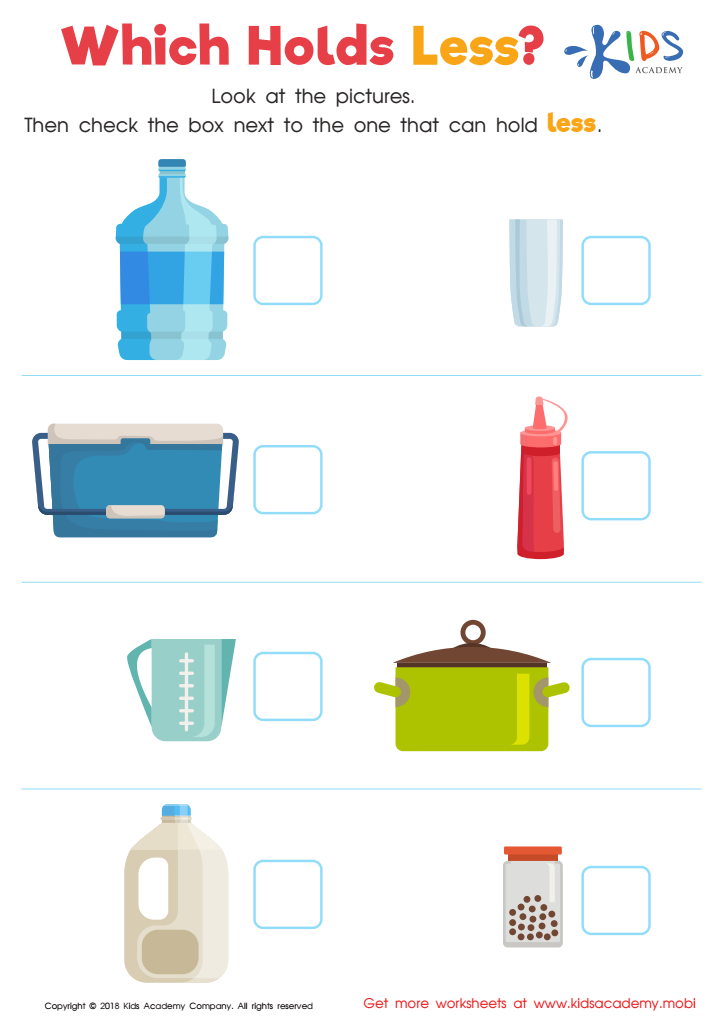
Which Holds Less? Worksheet








Basic measurement skills are foundational to a child’s cognitive and academic development, making it essential for parents and teachers to prioritize this aspect of early education for children aged 3-7. Early experiences with measurement help children understand and quantify their world, promoting both numerical and logical thinking. Learning to measure objects, both formally and informally, introduces fundamental mathematical concepts like length, weight, volume, and time, fostering a grasp of everyday math that they will build upon in later schooling.
Through hands-on activities such as comparing the height of two plants, using blocks to measure the length of a table, or timing how long a task takes, children engage in critical thinking and problem-solving. These activities enhance fine motor skills and spatial awareness, important aspects of physical development.
Measurement skills also build a child's confidence in using numbers, which is crucial as they begin to tackle more complex mathematical ideas. Furthermore, understanding measurement enhances practical life skills. Being able to follow a recipe, plan activities, or organize objects efficiently are everyday tasks that rely on measurement knowledge.
By supporting the development of measurement skills, parents and teachers directly contribute to a child’s analytical abilities, preparedness for school, and overall competence in navigating their environment effectively.








