Conversion skills Measurement Worksheets for Ages 3-7
5 filtered results
-
From - To
Introduce your little learners to the world of measurements with our engaging Conversion Skills Measurement Worksheets designed for ages 3-7. These fun and educational resources from Kids Academy help kids grasp basic conversion concepts, preparing them for advanced math skills in the future. Through vibrant illustrations and interactive activities, children learn to convert units of length, weight, and more, enhancing their understanding and problem-solving abilities. Perfect for both classroom and home use, these worksheets make learning a captivating adventure. Download now, and watch your child’s confidence and math skills grow exponentially!
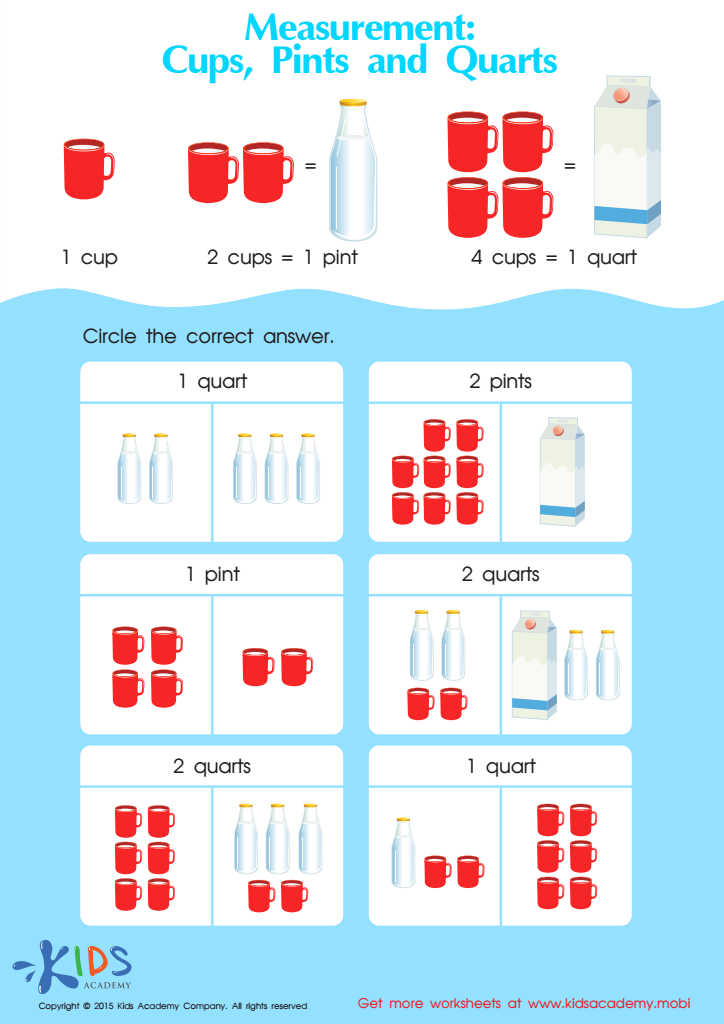
Cups, Pints and Quarts Worksheet
 Assign to My Students
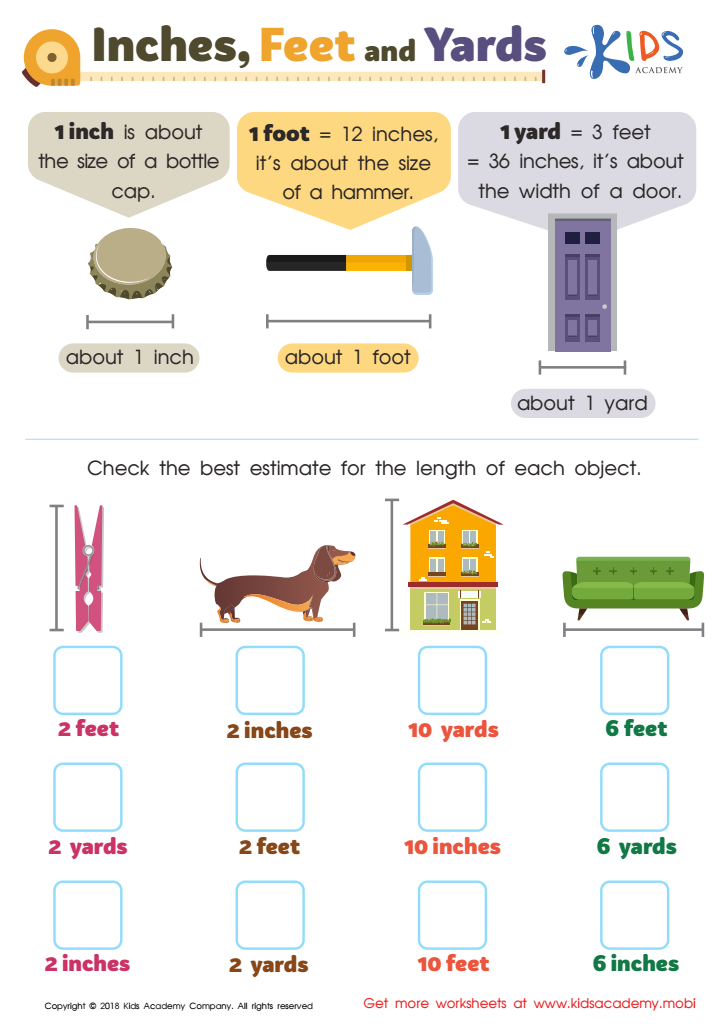
Inches, Feet and Yards Worksheet
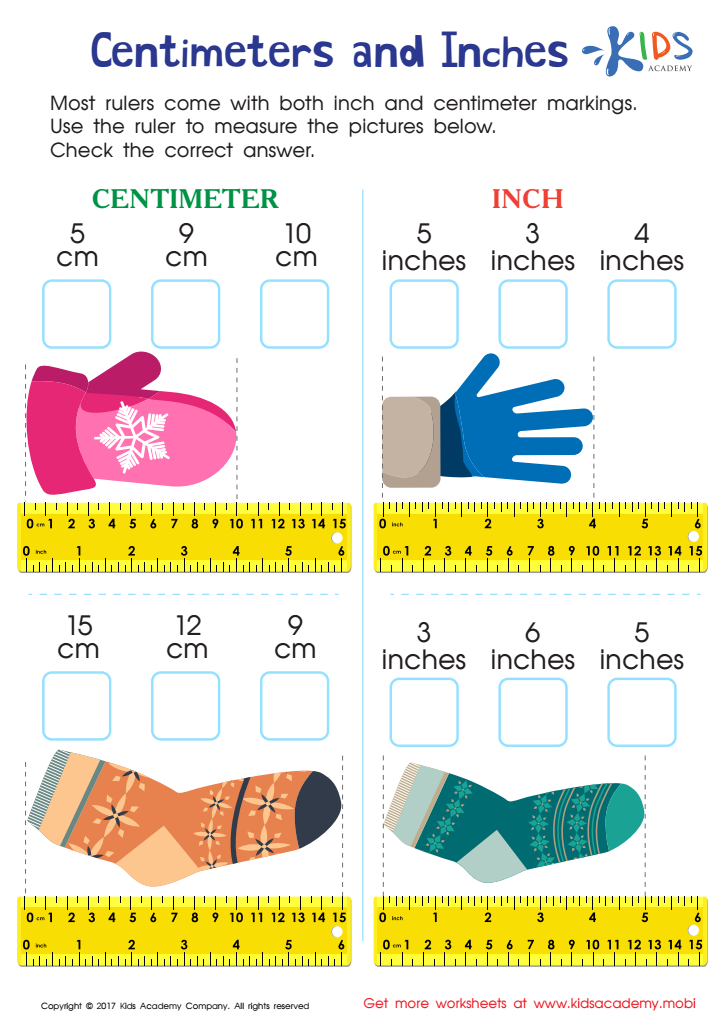
Centimeters and Inches Worksheet
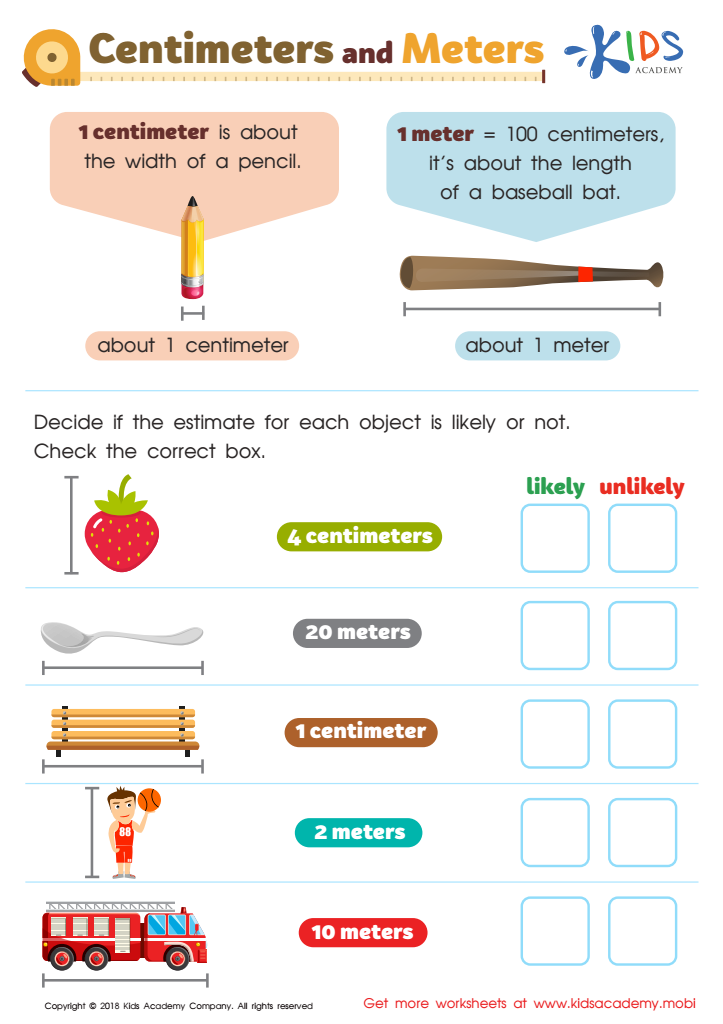
Centimeters and Meters Worksheet
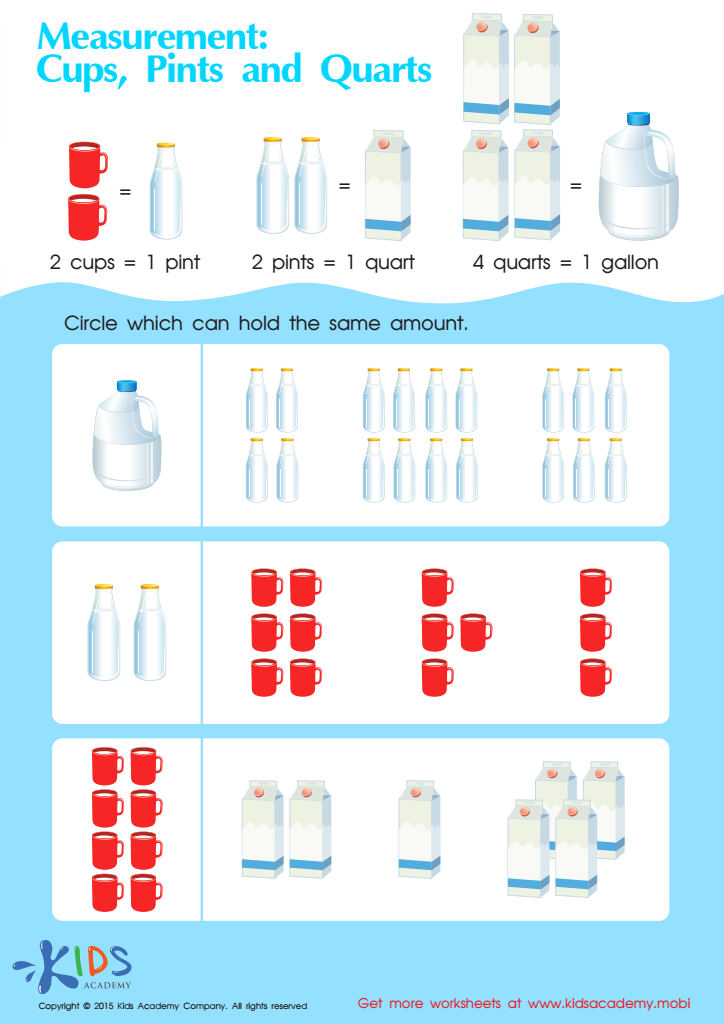
Cups, Pints and Quarts 2 Worksheet








Parents and teachers have vital roles in nurturing the foundational skills of children, especially during the early years of ages 3-7. One crucial set of skills that can significantly impact a child's academic and personal development is conversion measurement skills. These include basic understanding and application of concepts like length, weight, volume, and time, as well as the ability to convert between different units (e.g., inches to centimeters, liters to milliliters).
These skills are integral in developing a child's mathematical reasoning and problem-solving abilities, which are foundational for their success in further education. Understanding measurement also has practical applications in daily life, helping children make sense of the world around them. For example, when playing or cooking, they often encounter situations involving measurements of ingredients, spaces, or objects, making these skills very relevant.
Additionally, these skills foster cognitive development by enhancing spatial awareness and logical thinking. Early mastery of conversion measurement can instill confidence and enthusiasm in young children, reducing math anxiety and opening doors to advanced mathematical learning.
Therefore, prioritizing conversion measurement skills ensures children build a strong academic foundation and acquire essential life skills. Parents and teachers' supportive engagement during these formative years can spark lifelong curiosity and a positive attitude toward learning.








