Addition Practice Numbers up to 100 Worksheets for Ages 3-7
4 filtered results
-
From - To
Boost your child's math skills with our engaging "Addition Practice Numbers up to 100" worksheets designed for ages 3-7. These fun and interactive printable activities help children develop essential addition skills while enhancing their confidence in numbers. Featuring colorful illustrations and age-appropriate exercises, our worksheets guide young learners through mastering addition concepts step by step. Whether in the classroom or at home, these resources make learning math enjoyable and effective. Watch as your little one excels in addition, lays a strong foundation for future math skills, and builds a lifelong love for learning. Start their math journey today!
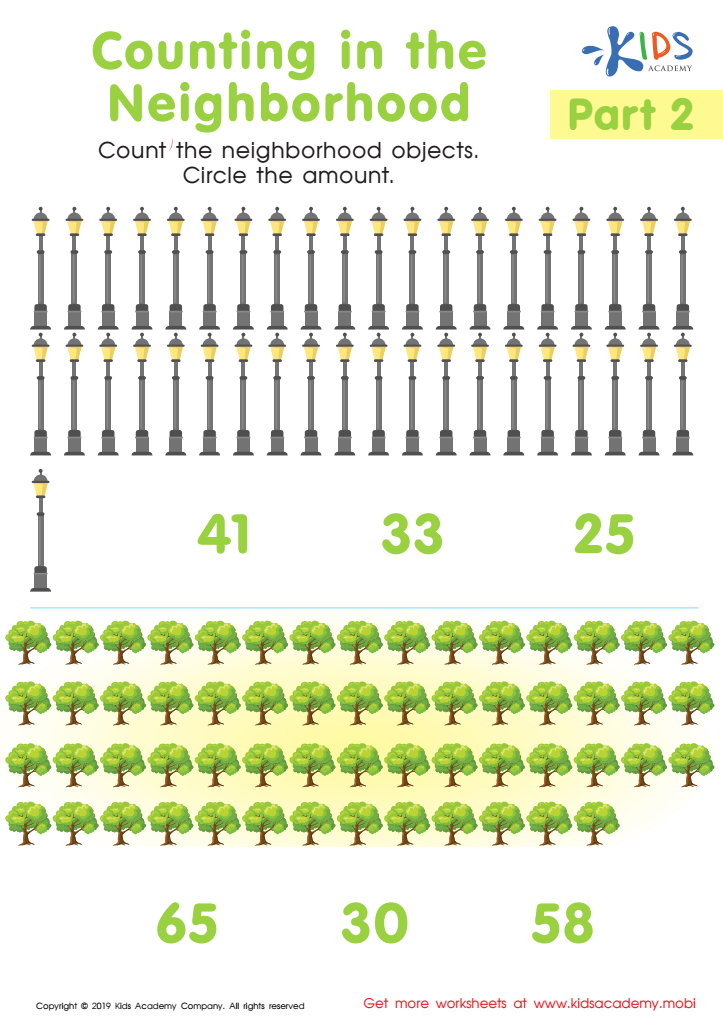
Counting In The Neighborhood Part 2 Worksheet
 Assign to My Students
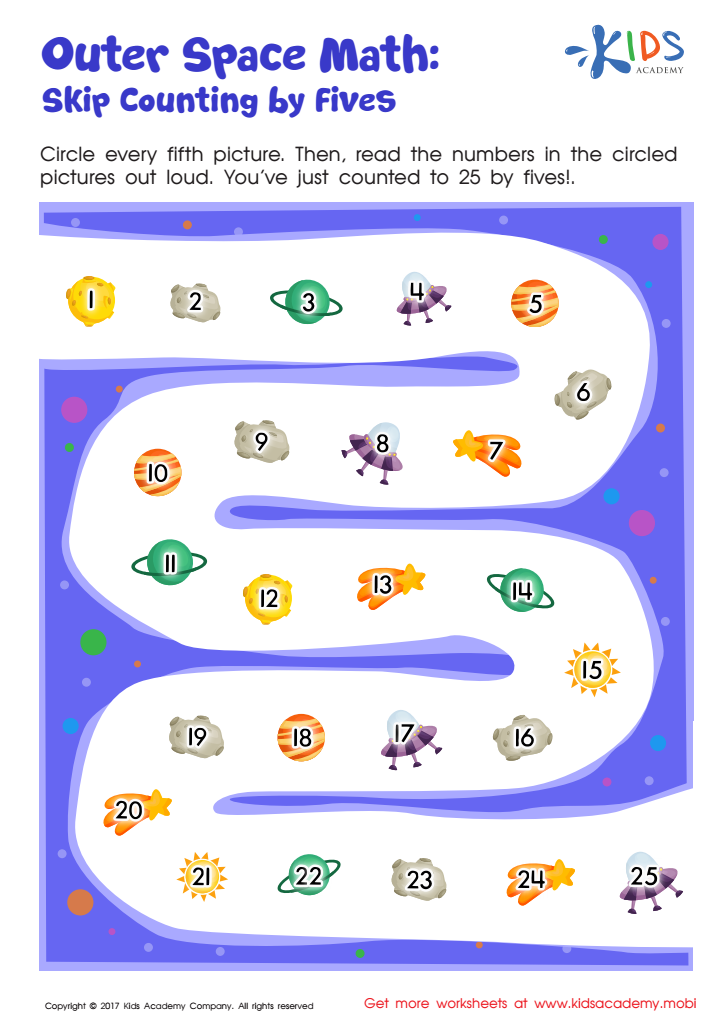
Skip Counting by 5s: Outer Space Math Printable
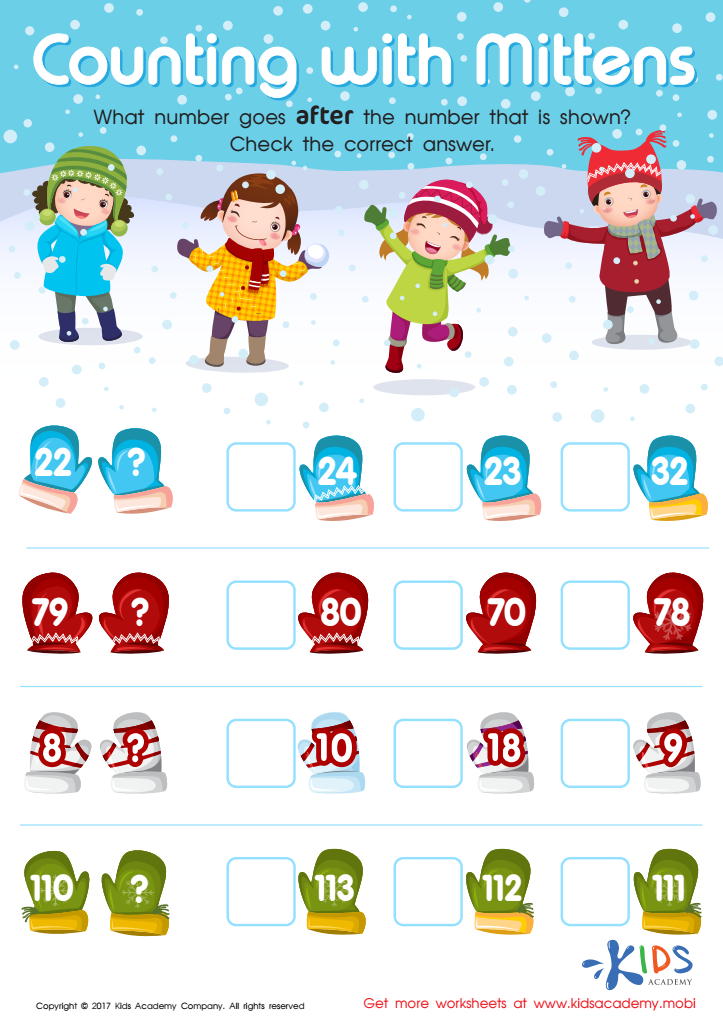
Counting with Mittens Worksheet
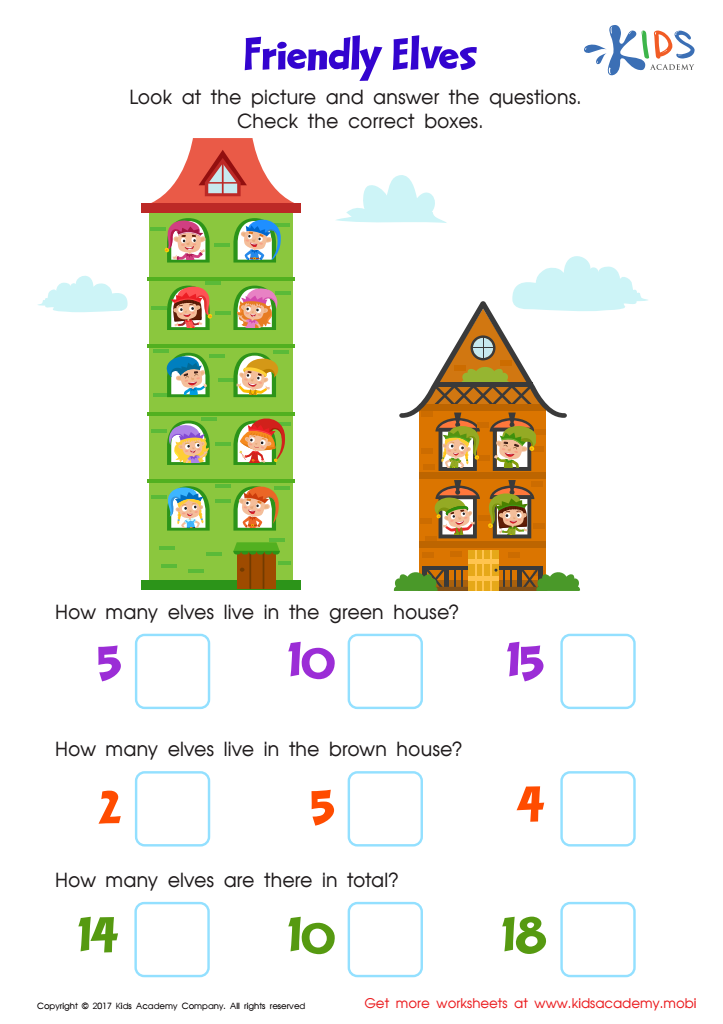
Place Value: Friendly Elves Worksheet








Parents and teachers should prioritize addition practice with numbers up to 100 for children aged 3-7 because this foundational skill lays the groundwork for their future mathematical understanding. Early exposure to addition fosters a sense of number sense, helping children grasp concepts like quantity and value, which are essential for everyday problem-solving.
At this age, children are naturally curious and eager to learn, making it an ideal time to introduce basic math concepts. Mastering addition boosts their confidence, enhances cognitive development, and encourages a positive attitude towards math, reducing the risk of math anxiety later in life.
Additionally, regular practice with numbers up to 100 promotes critical thinking. Children learn how numbers relate to one another, developing strategies for understanding more complex math concepts as they progress in their education. Practicing addition with a variety of fun games and engaging activities can make learning enjoyable and reinforce their skills through play.
Incorporating addition practice into daily routines—such as counting objects, using manipulatives, or playing math-focused games—can strengthen these abilities. Ultimately, solid addition skills will serve children well not just in school, but throughout their lives, forming a basis for everything from budgeting to problem-solving.