Reading clocks Time Worksheets for Ages 3-7
3 filtered results
-
From - To
Discover our engaging "Reading Clocks Time Worksheets for Ages 3-7" designed to make learning about time fun! Tailored for young learners, these worksheets feature vibrant illustrations and interactive activities that help children master reading analog and digital clocks. Each worksheet promotes essential skills such as telling time to the hour and half-hour, understanding AM and PM, and developing number recognition. Ideal for both classroom and home use, our resources encourage independent learning and reinforce time comprehension. Set your child on the path to becoming a time-telling pro with our thoughtfully crafted, educational worksheets! Start the adventure in learning today!
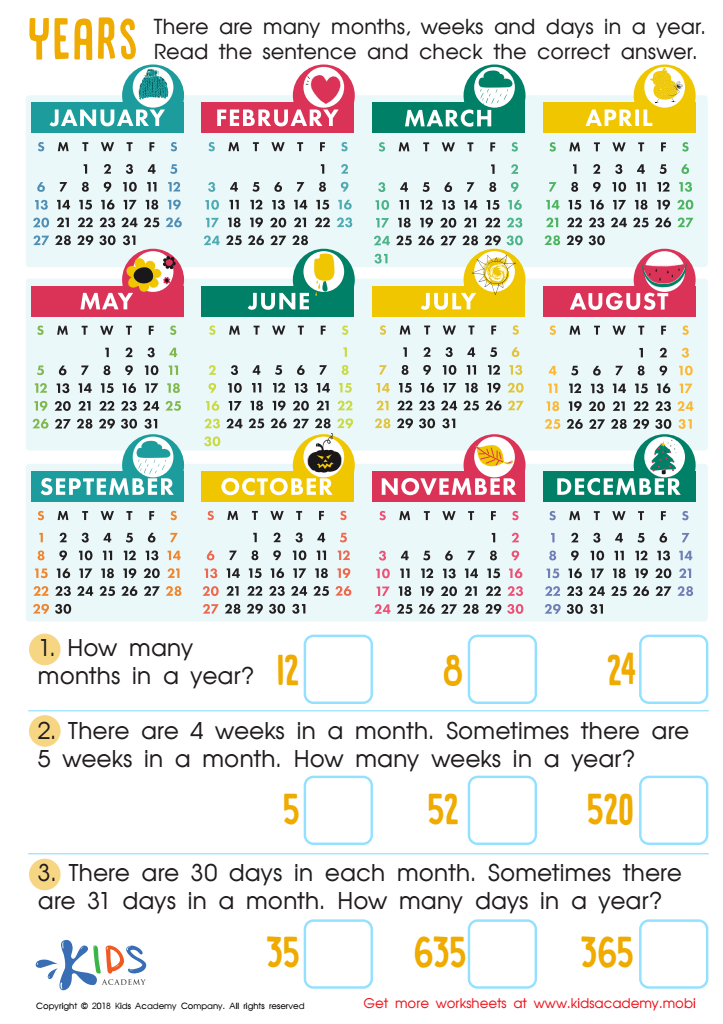
Years Worksheet
 Assign to My Students
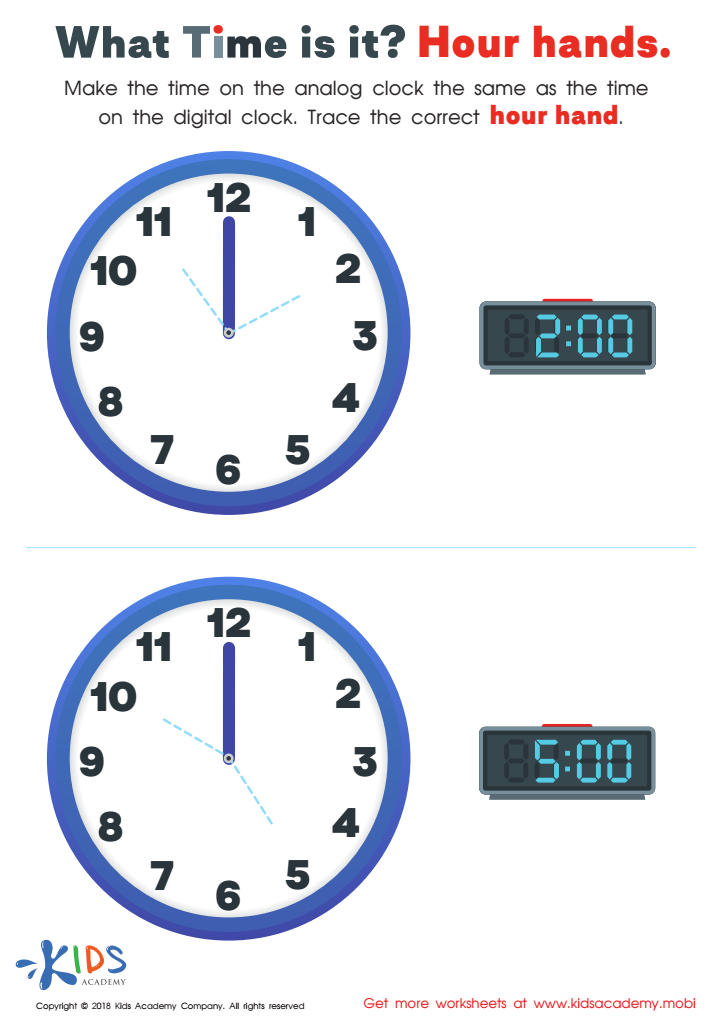
What Time Is it? Hour Hands Worksheet
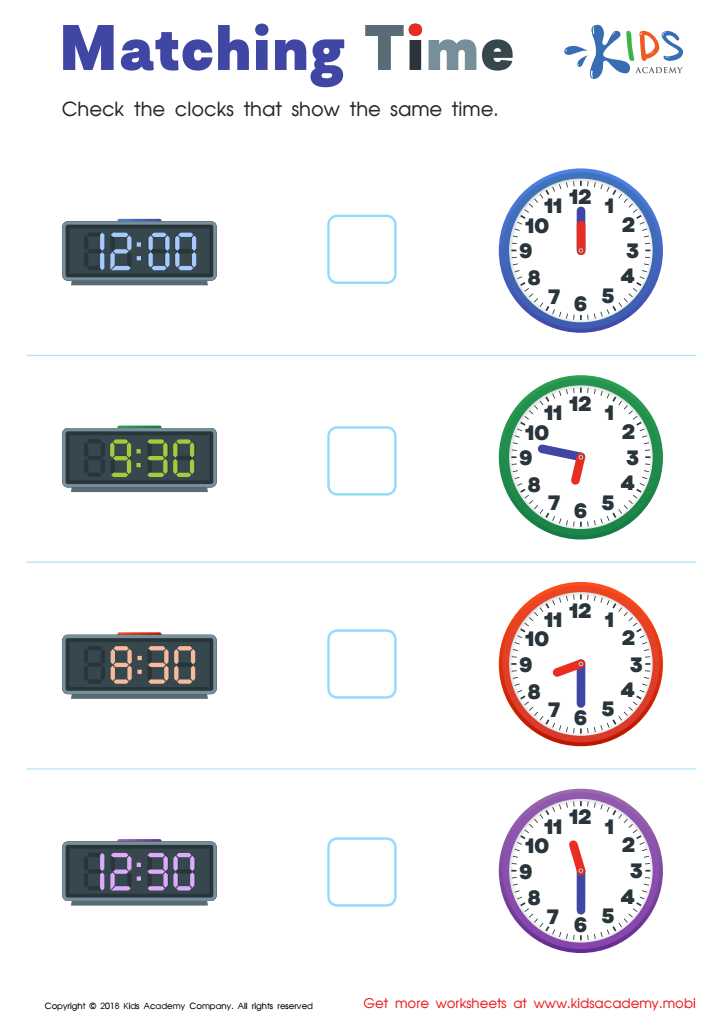
Matching Time Worksheet








Understanding how to read clocks and time is a fundamental skill that plays a crucial role in early childhood development. For parents and teachers, teaching children the concept of time aids in cultivating essential life skills. It not only fosters independence but also encourages responsibility, as children begin to understand the importance of routines and time management in their daily activities.
From ages 3-7, children are naturally curious and eager to learn, making it an ideal time to introduce them to concepts like hours and minutes. Learning to tell time can enhance cognitive skills, such as pattern recognition and sequential thinking, which are applicable in various learning areas. Additionally, knowing how to read a clock helps children develop a sense of temporal awareness, strengthening their understanding of past, present, and future events.
Moreover, engaging with clocks and time encourages communication between parents, teachers, and children, providing an opportunity for interactive learning experiences. This can often spur discussions about schedules, responsibilities, and planning, reinforcing essential social skills. By establishing a solid understanding of time in early childhood, we lay the groundwork for their future academic success and everyday functionality, making it imperative for adults to prioritize teaching this vital skill.








