Motor skills development Building Vocabulary Worksheets for Ages 3-7
3 filtered results
-
From - To
Boost your child’s learning journey with our Motor Skills Development and Building Vocabulary Worksheets, designed for ages 3-7. These engaging, printable worksheets combine essential motor skill exercises with vocabulary-building activities, nurturing your child's physical coordination while enhancing their language skills. Ideal for early education settings or at-home learning, these resources make mastering words fun and interactive. Kids will enjoy tracing letters, matching words with images, and completing creative tasks that spark their imagination. Help your child flourish in literacy and motor skills development with our carefully crafted worksheets, promoting confidence and curiosity in their learning adventure!
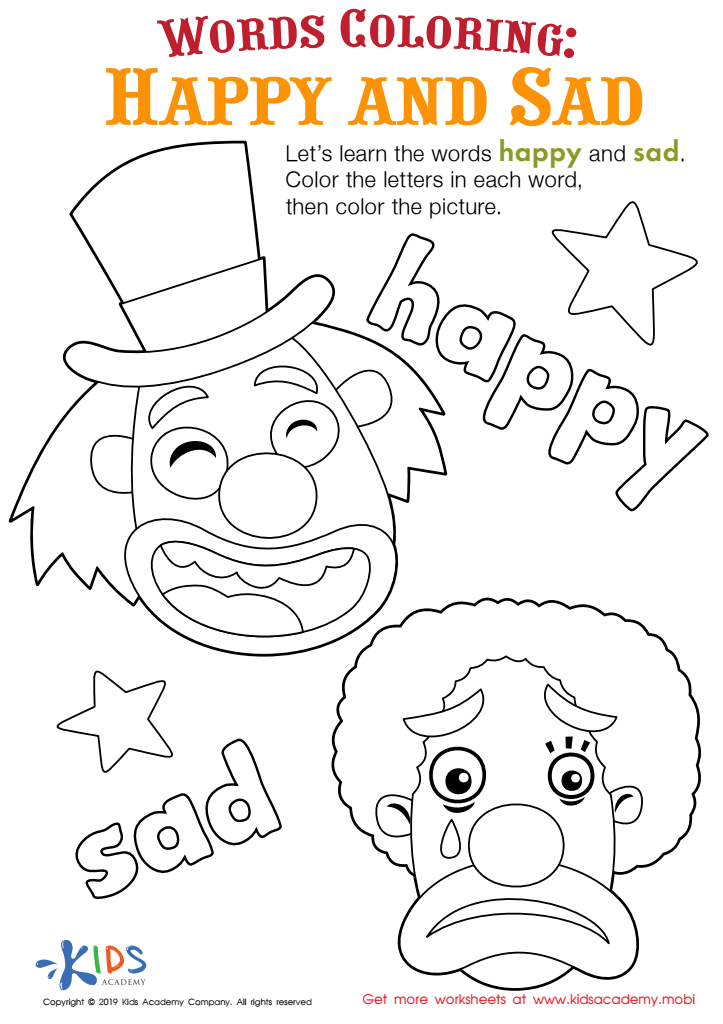
Happy and Sad Words Coloring Worksheet
 Assign to My Students











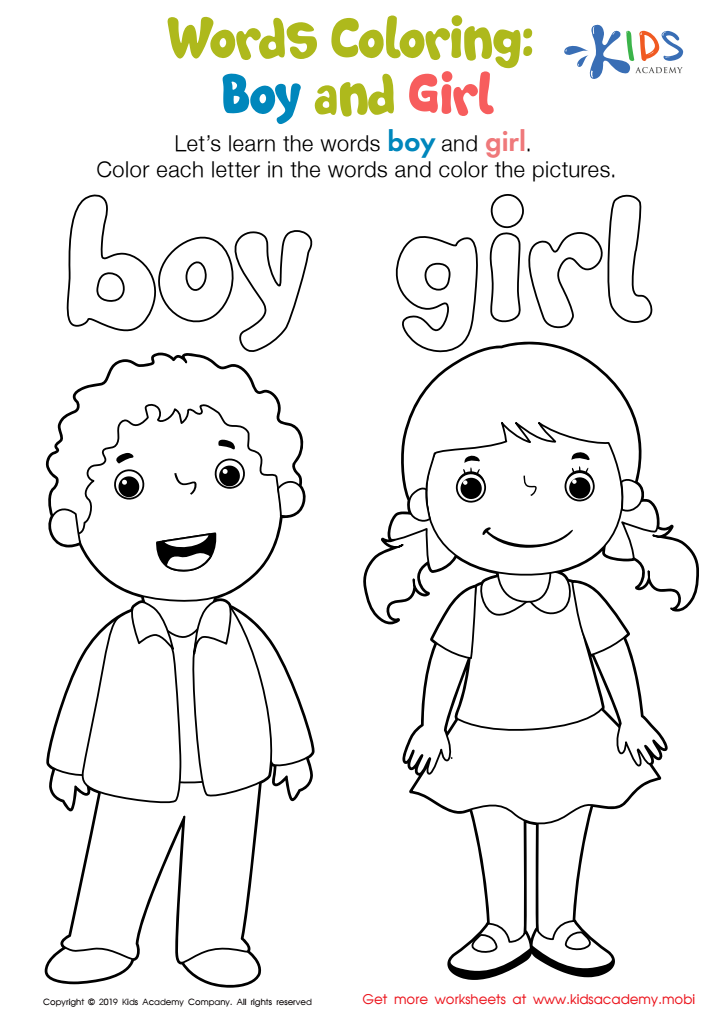
Boy and Girl Words Coloring Worksheet
Assign to My Students
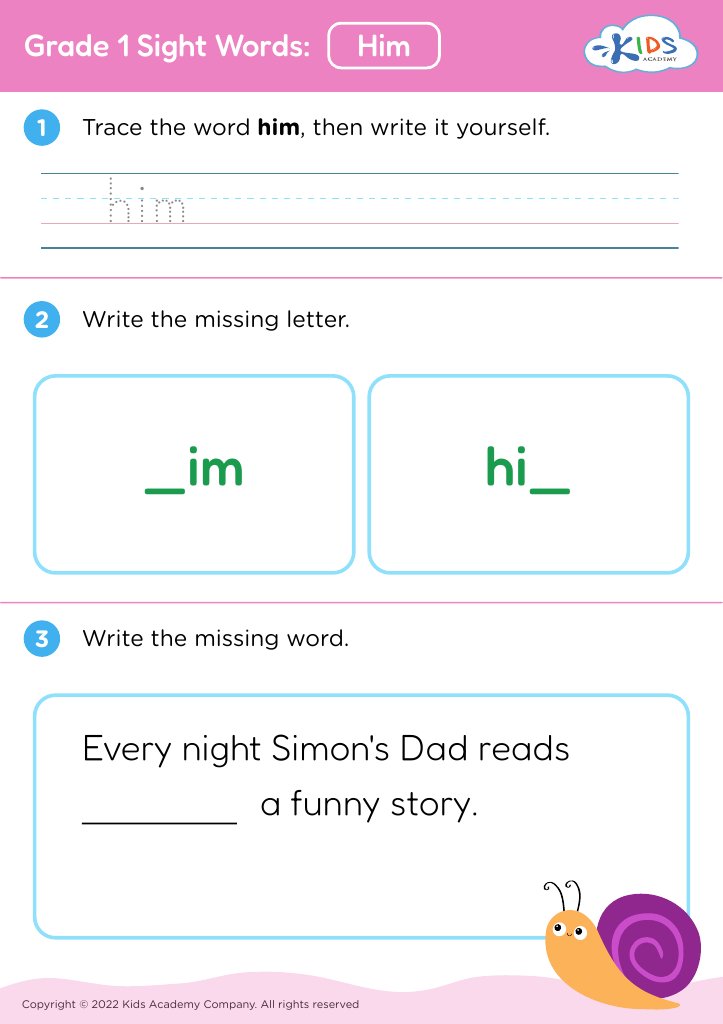








Motor skills development and vocabulary building are crucial components of early childhood education that significantly impact a child’s growth. Parents and teachers should prioritize these skills for children ages 3-7 as they lay the foundation for future learning.
Developing motor skills—both fine (like holding a pencil) and gross (like running or jumping)—enhances a child’s physical coordination, balance, and strength. These skills are vital not just for physical activity but also for classroom participation. Improved motor skills enable children to engage in hands-on activities, fostering creativity and confidence.
Simultaneously, building vocabulary during these formative years enhances cognitive development and communication. As children learn new words, they improve their ability to express thoughts, emotions, and ideas, which is essential for social interactions and academic achievement. A rich vocabulary also correlates with better reading comprehension and success in later educational pursuits.
When parents and teachers actively engage in nurturing both motor skills and vocabulary, they contribute to a holistic approach to learning, encouraging critical thinking, problem-solving, and interpersonal skills. By caring about these developmental areas, caregivers help shape well-rounded individuals ready to face academic challenges and social settings with confidence.








