Reading proficiency Building Vocabulary Worksheets for Ages 3-7
3 filtered results
-
From - To
Enhance your child's reading proficiency with our engaging Building Vocabulary Worksheets, designed for ages 3-7. These worksheets foster essential language skills by introducing new words in a fun and interactive way. Each activity supports young learners in expanding their vocabulary through colorful illustrations, matching games, and context-based exercises. Our comprehensive resources not only promote literacy but also build confidence in reading and comprehension. Perfect for home use or in the classroom, these worksheets are tailored to meet the developmental needs of early learners. Help your child embark on a journey of language discovery and literacy growth today!
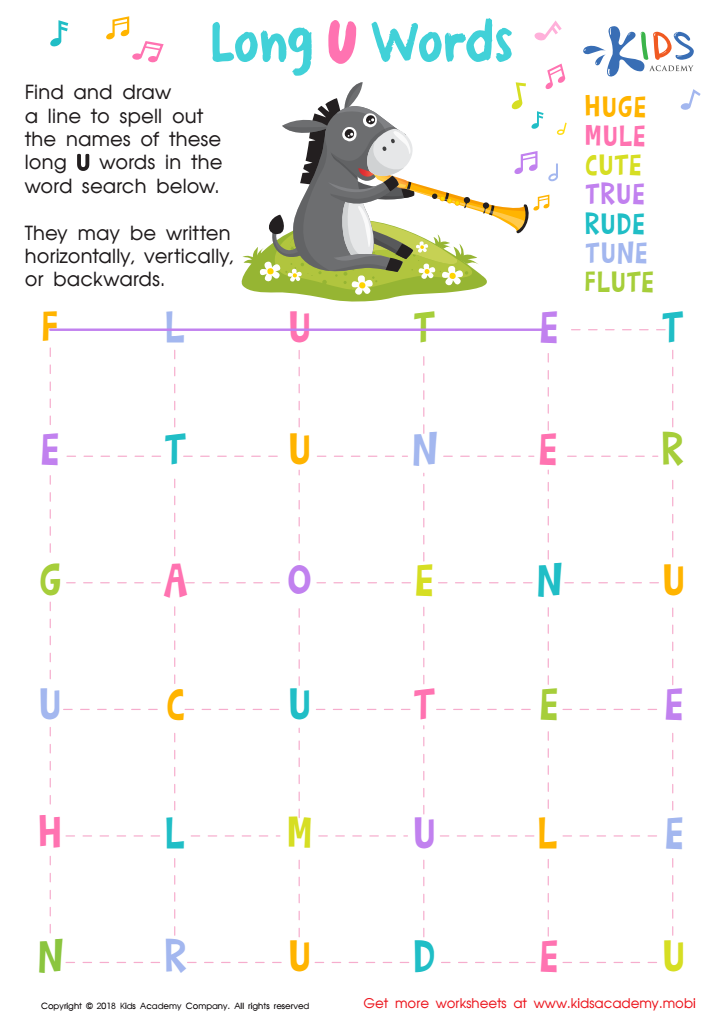
Long /u/ Words Worksheet
 Assign to My Students











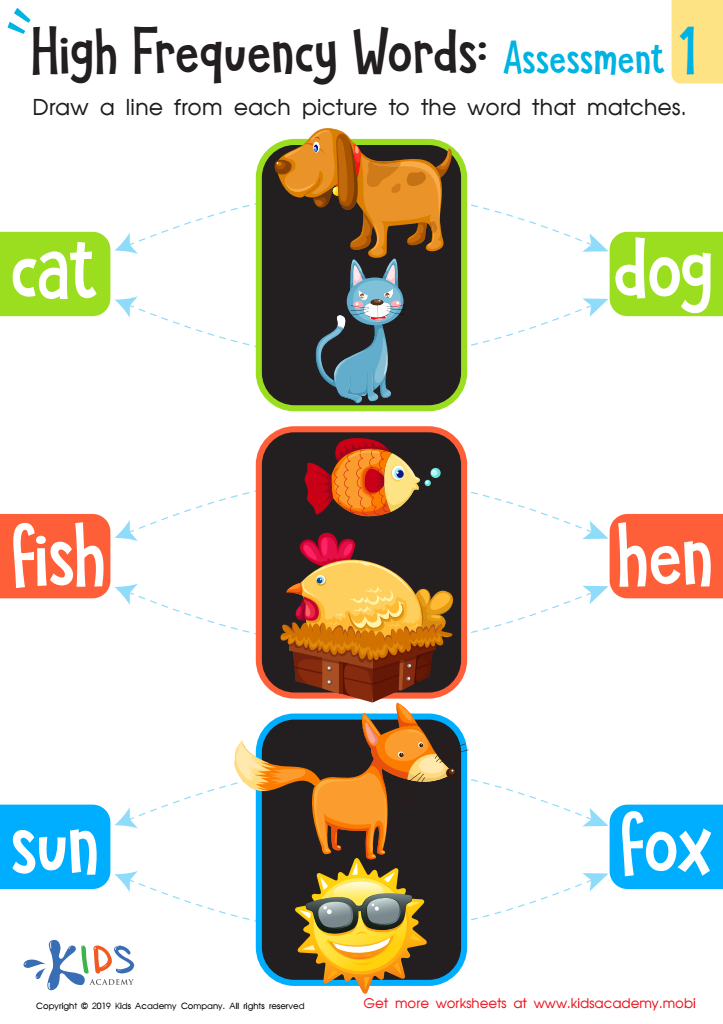
High Frequency Words: Assessment 1 Worksheet
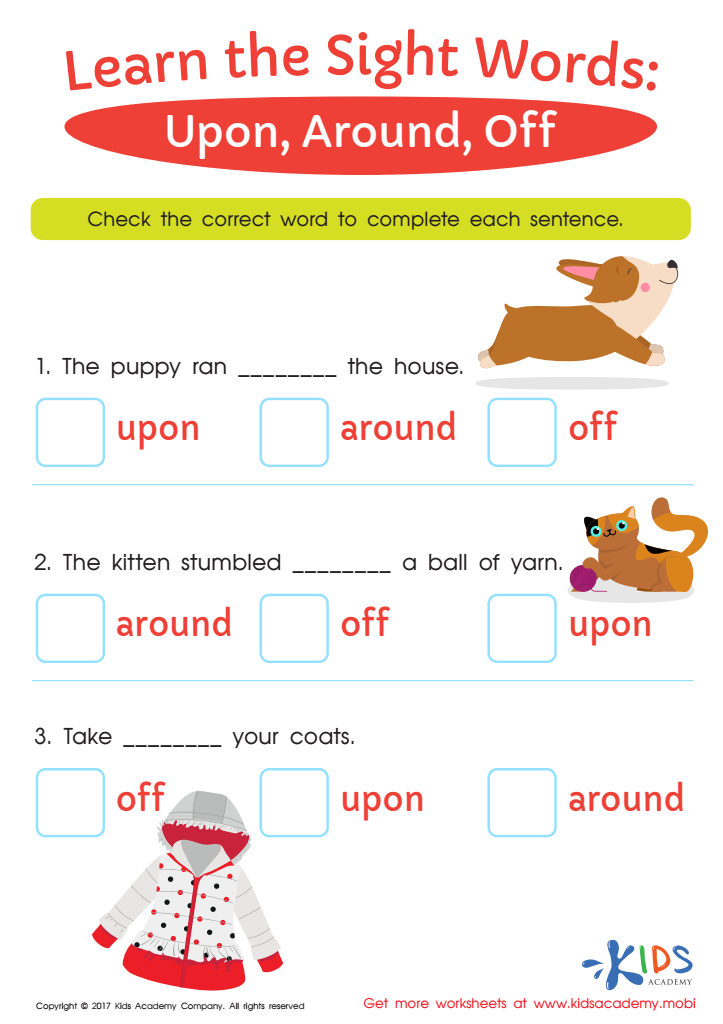
Upon, Around, Off Sight Words Worksheet








Developing reading proficiency and building vocabulary from ages 3 to 7 is crucial for children's lifelong learning and academic success. During these formative years, children's brains are incredibly receptive to language. A rich vocabulary supports better comprehension and expression, allowing young learners to communicate effectively and navigate their world.
Reading proficiency lays the foundation for all future learning. Children who read well are more likely to excel in subjects like math, science, and social studies, as comprehension is key in interpreting texts in these areas. Engaging with diverse vocabulary enables children to articulate their thoughts more clearly and understand complex ideas as they progress in their education.
Moreover, early reading experiences foster a love for literature, encouraging children to seek knowledge independently. These skills promote critical thinking, creativity, and social interaction, essential traits for personal and academic growth. Additionally, research indicates that children with strong vocabulary skills tend to perform better in standardized testing, further emphasizing the long-term benefits of early reading proficiency.
Parents and educators play a vital role in creating language-rich environments—through reading aloud, storytelling, and conversations—which significantly influence children’s engagement with language. Supporting vocabulary development is an investment in their future success and well-being.








