Sight words recognition Building Vocabulary Worksheets for Ages 3-7
3 filtered results
-
From - To
Boost your child's reading skills with our Sight Words Recognition Building Vocabulary Worksheets designed for ages 3-7! These engaging, interactive worksheets help young learners recognize and understand essential sight words, a critical step in developing fluent reading abilities. Packed with fun exercises and colorful visuals, our resources make learning exciting and effective. These worksheets promote vocabulary growth while preparing children for future literacy success. Ideal for both home and classroom use, they cater to different learning styles and encourage active participation. Empower your child’s reading journey today with our thoughtfully crafted sight words worksheets!
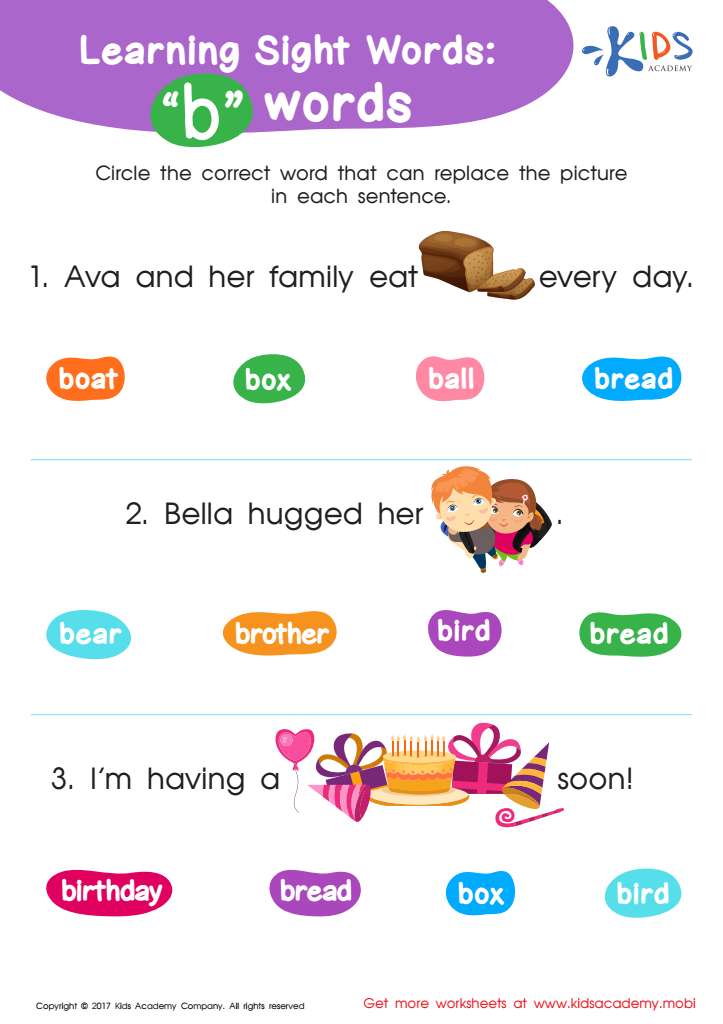
Sight Words Free Worksheet – B Words
 Assign to My Students











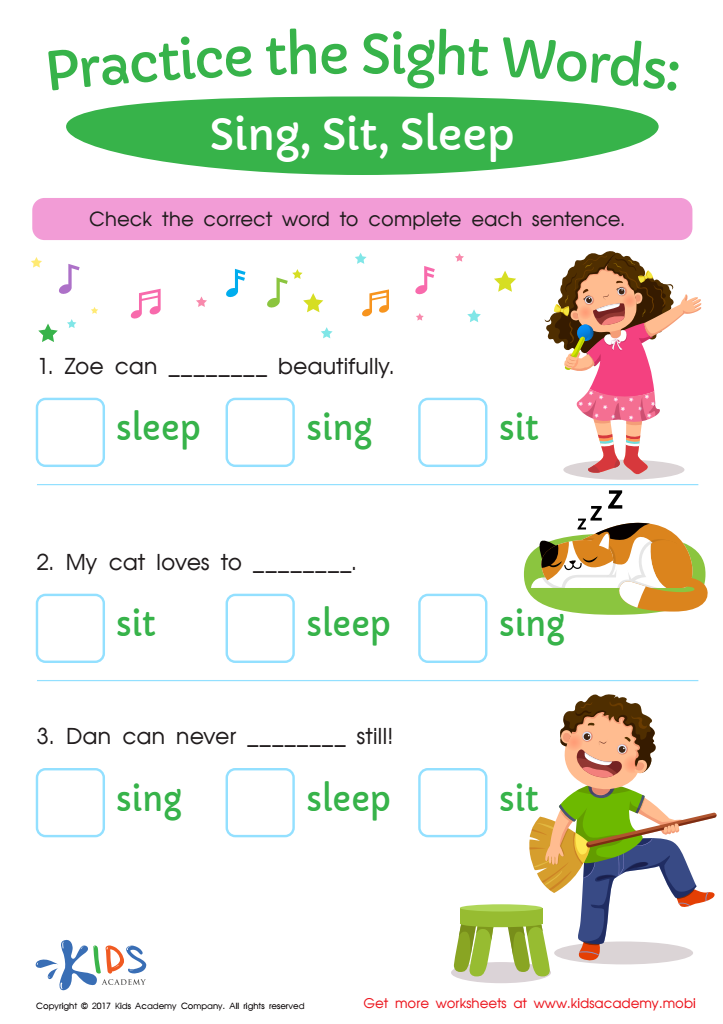
Sing, Sit, Sleep Sight Words Worksheet
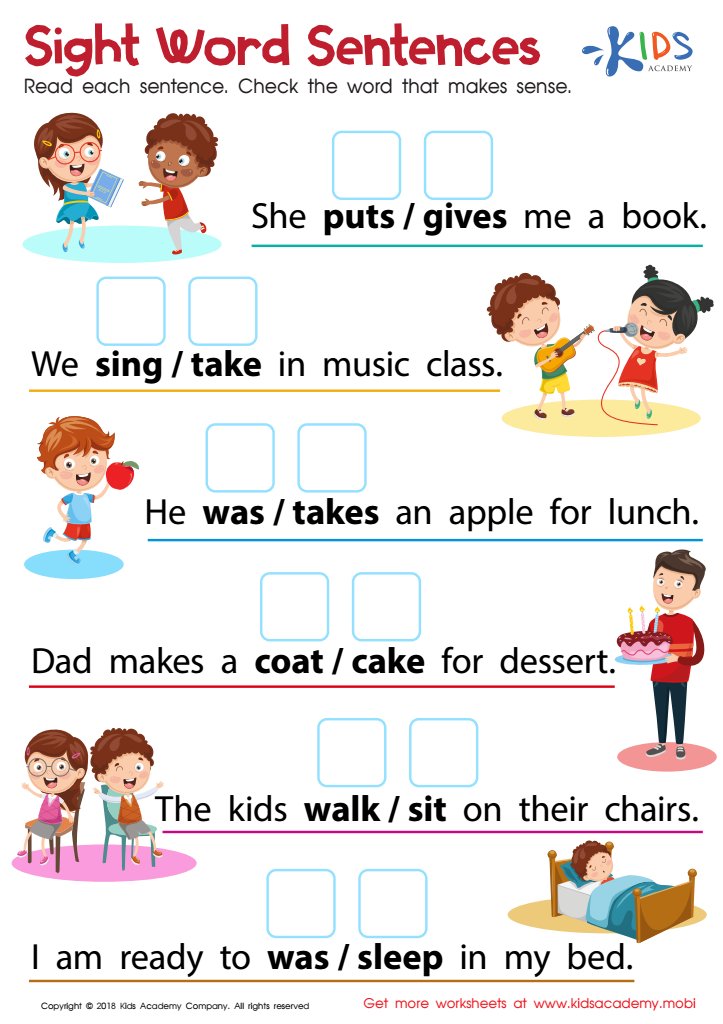
Sight Words Sentences Worksheet







Sight word recognition is crucial for children ages 3-7 as it forms the foundation for their reading skills. Sight words, often high-frequency words, are those that frequently appear in texts and don’t always follow phonetic rules, making them tricky for early readers. By recognizing these words instantly, children can improve their reading fluency and comprehension.
For parents and teachers, promoting sight word recognition helps cultivate a love for reading. When children can read familiar words quickly, they gain confidence and motivation to tackle more challenging texts. This early success fosters a positive attitude toward learning, making them more eager to explore books and language.
Moreover, building vocabulary during these formative years supports cognitive development and communication skills. A strong vocabulary enhances a child's ability to express themselves and understand the world around them. Parents and teachers can incorporate sight words and vocabulary-building activities like interactive games, storytelling, and reading sessions into daily routines to reinforce learning.
Overall, focusing on sight word recognition and vocabulary development not only prepares children for academic success but also instills essential literacy skills that will benefit them throughout their lives. It’s an investment in a child’s future as proficient readers and effective communicators.








