Word identification Building Vocabulary Worksheets for Ages 3-7
3 filtered results
-
From - To
Discover our engaging Word Identification Building Vocabulary Worksheets, designed specifically for children aged 3-7! These interactive resources empower young learners to enhance their vocabulary through fun exercises that promote word recognition and comprehension. Each worksheet features colorful illustrations and age-appropriate activities that make learning enjoyable. Children will develop essential reading skills as they practice identifying words in various contexts. Our worksheets cater to different learning styles, ensuring a comprehensive approach to vocabulary building. Perfect for classroom use or at-home learning, these resources will inspire your child’s language skills and foster a lifelong love of reading. Start their journey today!
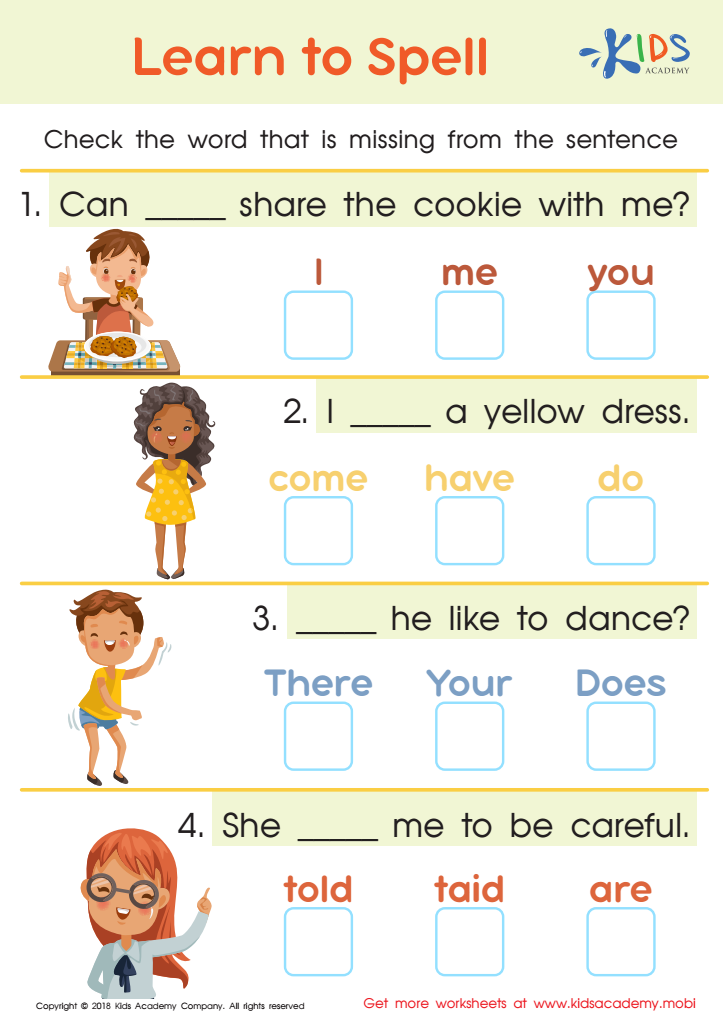
Learn to Spell Worksheet
 Assign to My Students











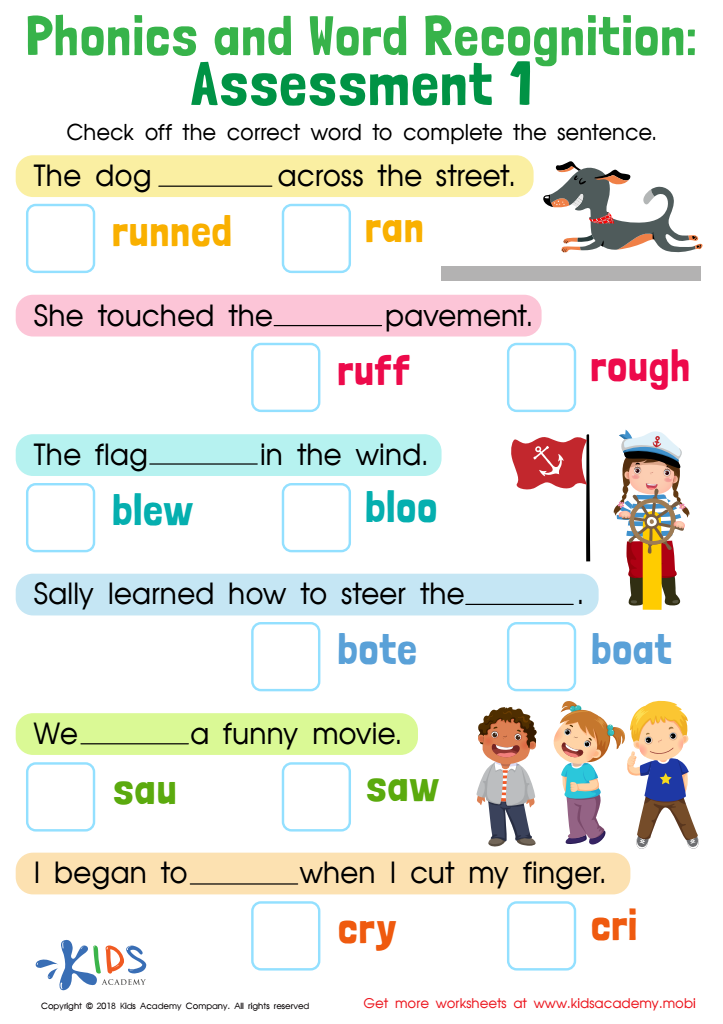
Phonics and Word Recognition: Assessment 1 Worksheet
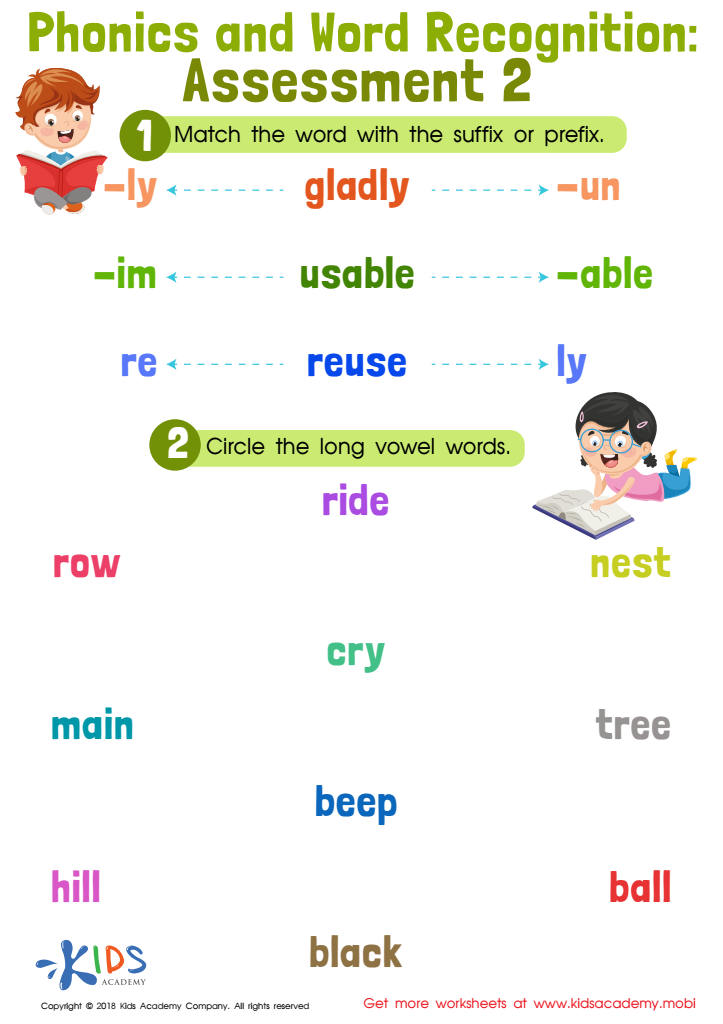
Phonics and Word Recognition: Assessment 2






.jpg)

Parents and teachers should deeply care about word identification and vocabulary building for ages 3-7 because early language development is critical to a child's overall success in school and beyond. During these formative years, children are actively exploring their language capabilities, and the vocabulary they acquire lays a foundation for future reading and writing proficiency.
When children learn to identify words and understand their meanings, they enhance their ability to comprehend stories, follow directions, and engage in conversations, which are essential skills for academic achievement. A robust vocabulary promotes effective communication, allowing children to express their thoughts, feelings, and ideas more clearly.
Furthermore, rich vocabulary exposure boosts cognitive development. It encourages critical thinking and fosters curiosity about the world. Engaging in vocabulary-building activities—like reading aloud, storytelling, and playful word games—can transform learning into a fun experience.
Finally, establishing strong word identification skills early promotes a love for reading and learning. This enthusiasm can lead to lifelong learners who seek knowledge and enjoy exploring new ideas and concepts. For these reasons, prioritizing vocabulary development is an investment in a child’s future, empowering them with the tools necessary for effective communication and academic success.








