
Critical thinking skills Reading Fiction Worksheets for Ages 3-7
3 filtered results
Difficulty Level
Grade
Age
-
From - To
Subject
Activity
Standards
Welcome to our engaging "Critical Thinking Skills Reading Fiction Worksheets" designed for ages 3-7! These beautifully crafted worksheets help young learners expand their critical thinking abilities while diving into the enchanting world of fiction. Each activity fosters comprehension, analytical skills, and creativity through fun and interactive exercises. Our worksheets encourage children to make connections, predict outcomes, and understand characters and settings, empowering them to think deeply about the stories they read. Perfect for both home and classroom use, these resources are an excellent way to nurture a lifelong love for reading and develop essential critical thinking skills.
Favorites
With answer key
Interactive
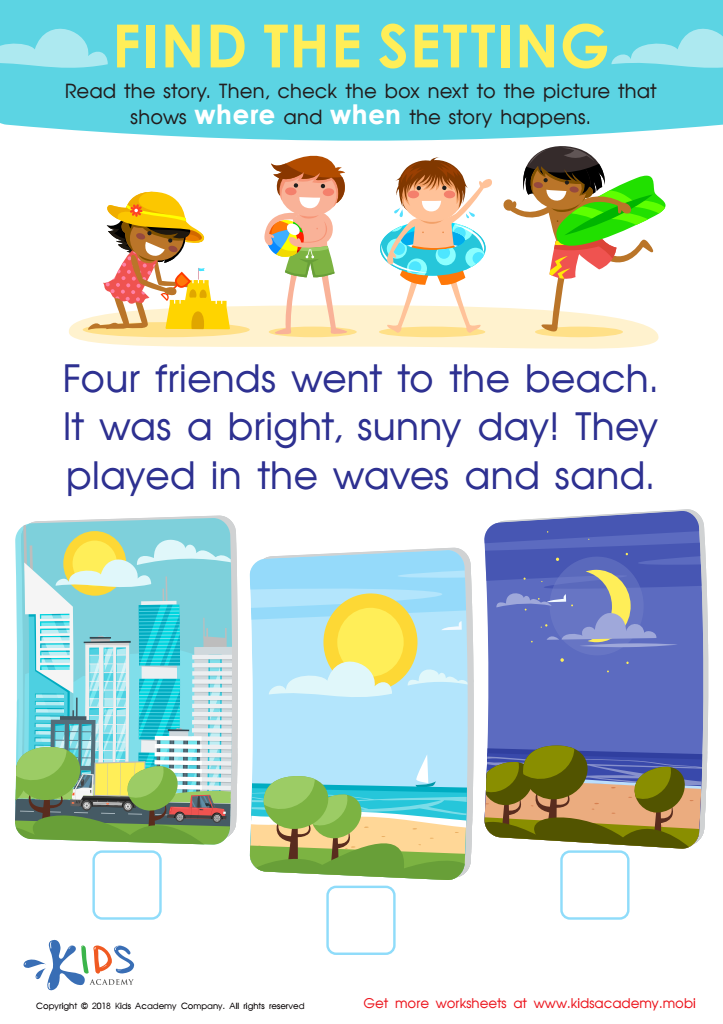
Find the Setting Worksheet
Writing a good story requires decisions about theme, plot, characters, and setting. Setting is the place and time where events occur. Read the story in this fun worksheet with your children and ensure they are paying attention. Guide them to check the box next to the picture that shows the story's setting. 80 words.
 Assign to My Students
Find the Setting Worksheet
Worksheet
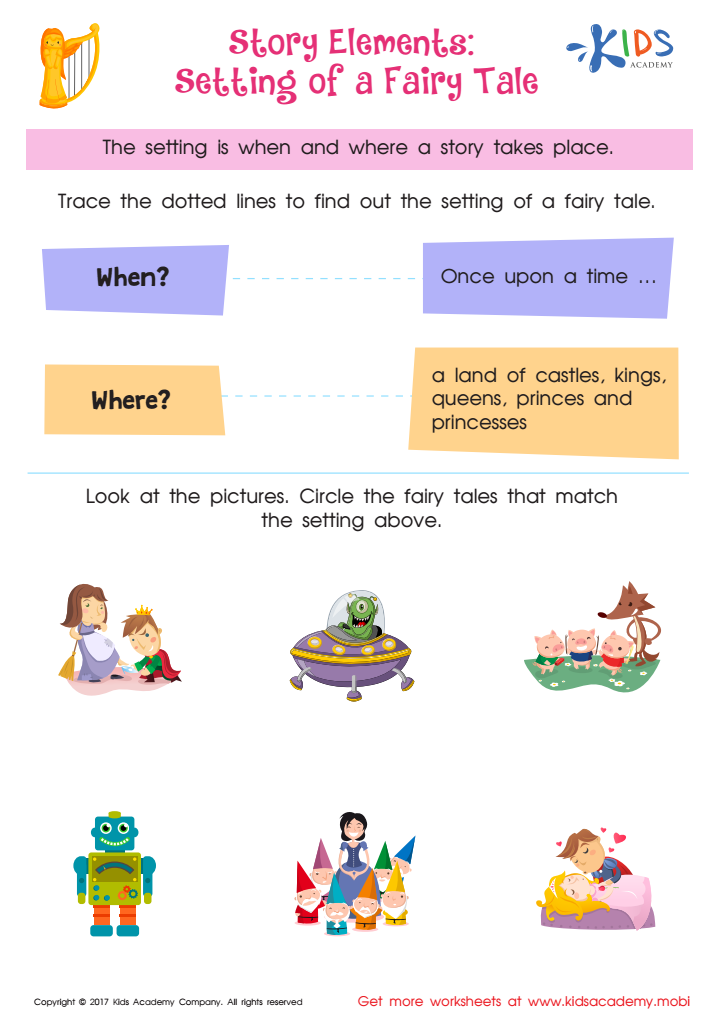
Story Elements: Setting of a Fairy Tale Printable
Help your child learn to analyze stories starting with setting. Use Story Elements worksheet to break down setting into two parts. This will help your child recognize setting quickly and understand its importance in the plot.
Story Elements: Setting of a Fairy Tale Printable
Worksheet
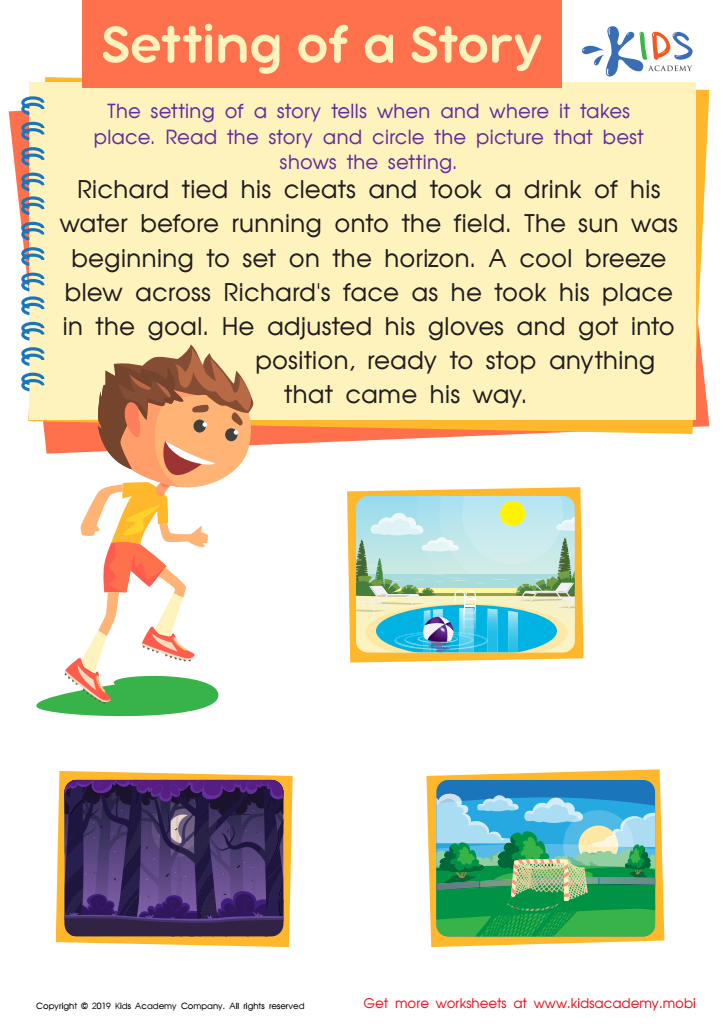
Setting of a Story Worksheet
You need characters, theme, POV, plot and setting to tell a good story. Ask your kids to explain them and use this worksheet with a story to teach them about setting. Read the story with your kids, then have them circle the picture that best shows the setting.
Setting of a Story Worksheet
Worksheet
Join Kids Academy for Free
Who is primarily going to use this learning content?




.jpg)



Critical thinking skills are essential for young learners aged 3-7 because they form the foundation for lifelong cognitive and emotional development. Reading fiction is a powerful tool for cultivating these skills in young minds. When children engage with stories, they encounter various scenarios that require them to evaluate information, understand different perspectives, and make predictions about what might happen next. This process enhances their analytical thinking and problem-solving abilities.
Moreover, fiction reading stimulates imagination, enabling children to envision scenarios beyond their immediate experiences. By understanding characters' feelings, motives, and actions, children develop empathy, an important component of emotional intelligence. This emotional engagement makes critical thinking an enjoyable and enriching experience.
Parents and teachers play a crucial role by selecting age-appropriate fiction that sparks curiosity and discussion. Through guided reading sessions, adults can ask open-ended questions, encouraging children to express their thoughts and reasoning. These interactions not only strengthen cognitive skills but also build communication and social skills as children learn to articulate and negotiate different viewpoints.
In essence, nurturing critical thinking through fiction reading sets the stage for academic success and well-rounded personal development. It helps children become more attentive, reflective, and adaptable, preparing them to navigate the complexities of the world with confidence.








