Logical Reasoning Reading Fiction Worksheets for Ages 3-7
5 filtered results
-
From - To
Enhance your child's critical thinking skills with our "Logical Reasoning Reading Fiction Worksheets" designed for ages 3-7. These engaging worksheets encourage young readers to explore fun stories while developing essential logical reasoning abilities. By interacting with colorful illustrations and age-appropriate texts, children will be guided to make predictions, identify cause-and-effect relationships, and solve problems related to the narratives. Perfect for home or classroom use, our resources support early literacy and cognitive development in a playful manner. Download now to inspire a lifelong love for reading and reasoning in your little ones! Boost their comprehension while having fun!
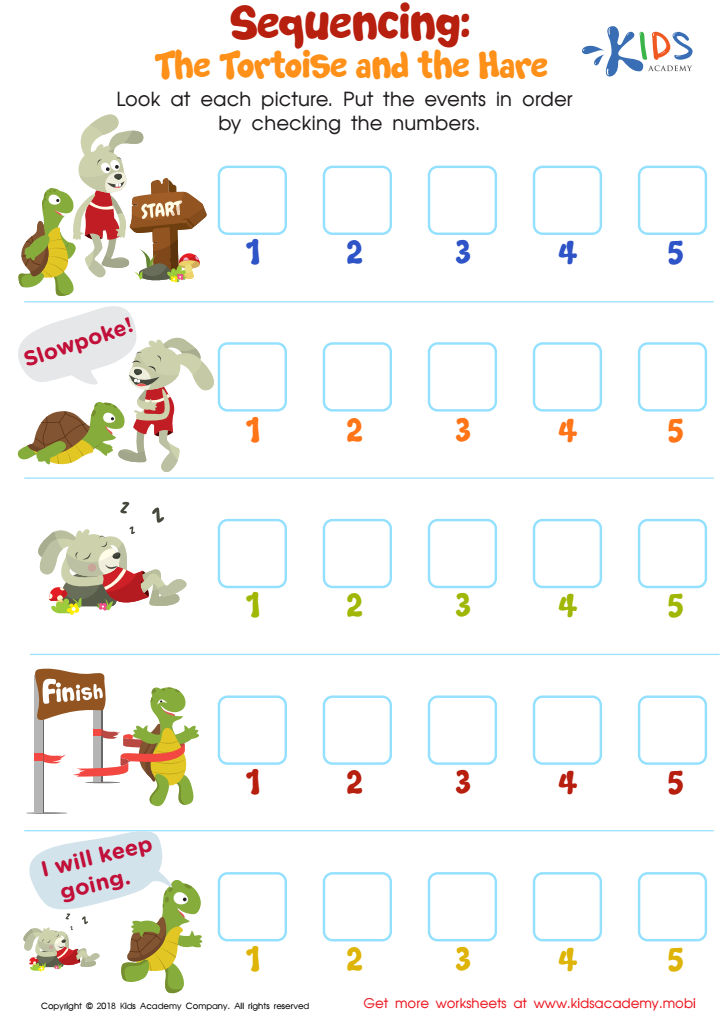
Sequencing: The Tortoise and the Hare Worksheet
 Assign to My Students
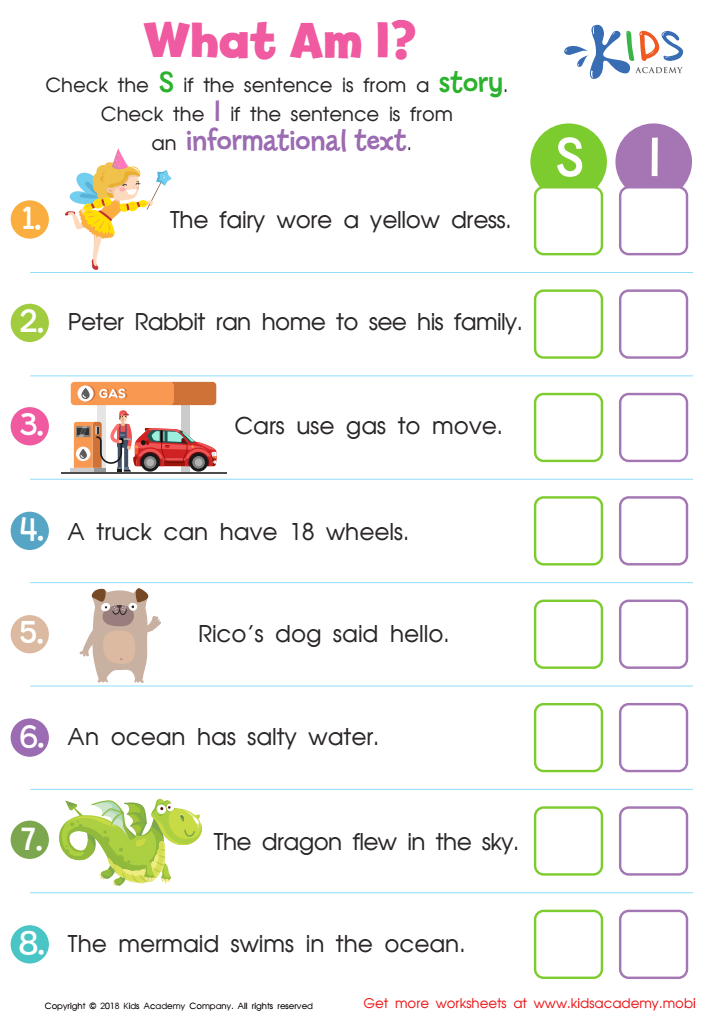
What Am I? Worksheet
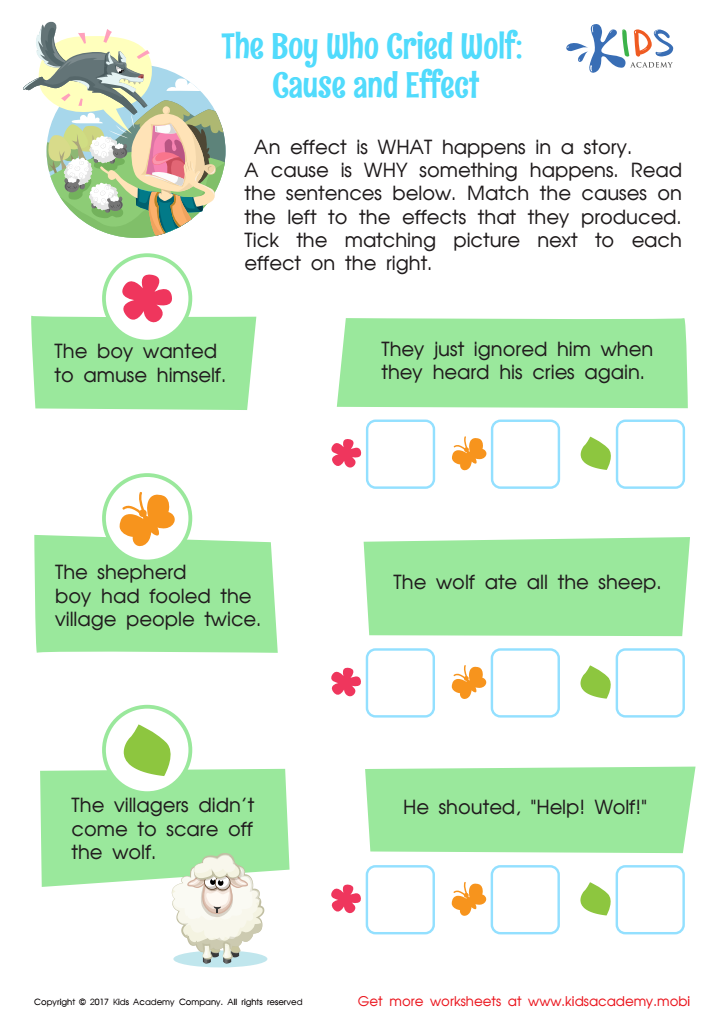
The Boy Who Cried Wolf: Cause and Effect Worksheet
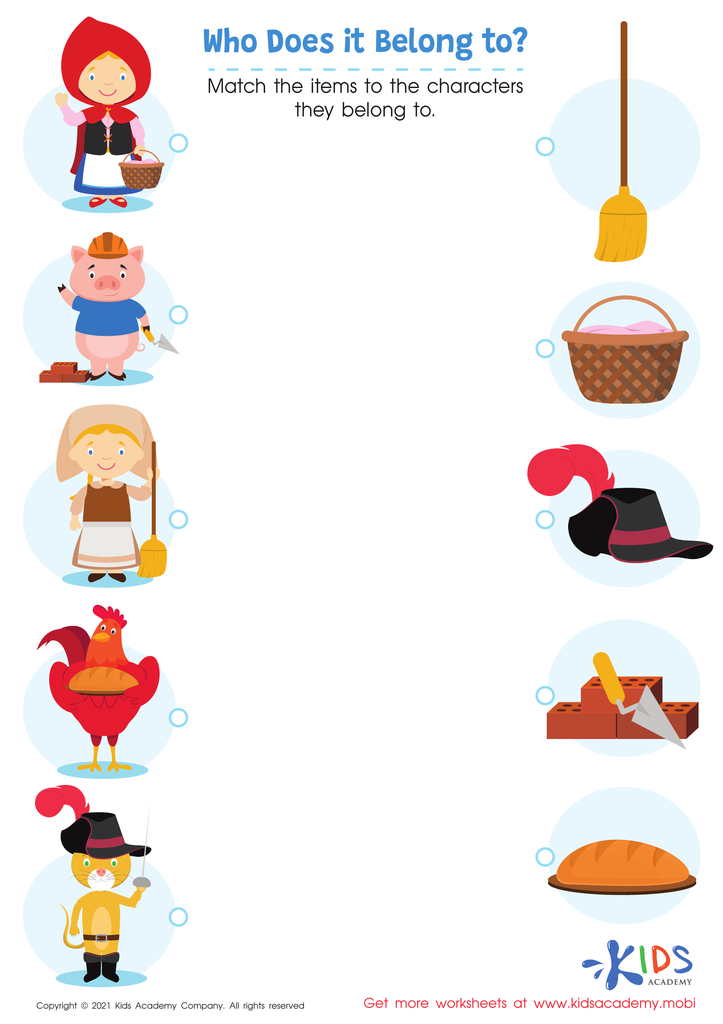
Who Does It Belong To? Worksheet
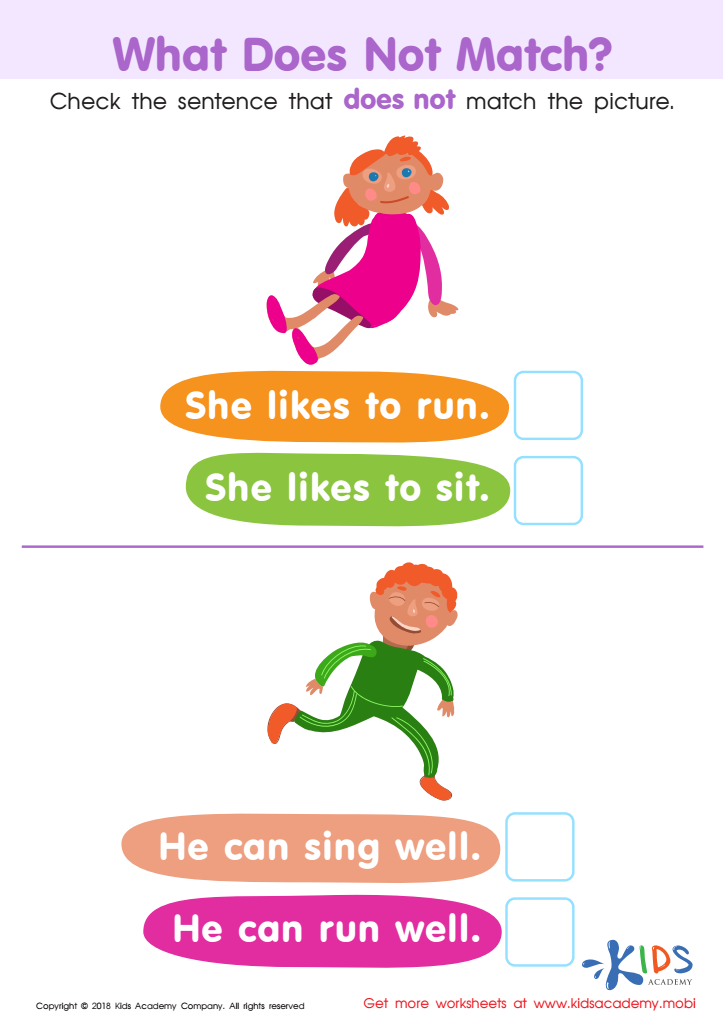
What Does Not Match? Worksheet







.jpg)
Parents and teachers should care about logical reasoning in reading fiction for children aged 3-7 because it plays a crucial role in cognitive development and early literacy skills. Engaging with stories requires children to think critically, make predictions, and understand cause-and-effect relationships, which are fundamental components of logical reasoning. This age group is particularly receptive to stories, making it an ideal time to foster analytical thinking through narratives.
By discussing plot developments or character motivations, adults can guide children to connect ideas and reasoning within the texts. This process enhances comprehension and encourages a deeper understanding of story elements. Moreover, exploring logic in fiction helps cultivate a love for reading by making it interactive and enjoyable.
Encouraging logical reasoning in literature also supports emotional development by fostering empathy, as children learn to navigate complex characters and situations. In essence, integrating logical reasoning with fiction enriches a child's educational experience, prepares them for future academic challenges, and nurtures key critical thinking skills that will benefit their lifelong learning journey. Ultimately, fostering these skills from an early age sets the foundation for successful intellectual engagement and communication.








