
Vocabulary development Reading Fiction Worksheets for Ages 3-7
4 filtered results
Difficulty Level
Grade
Age
-
From - To
Subject
Activity
Standards
Enhance your child's vocabulary development with our engaging Reading Fiction Worksheets designed for ages 3-7! Perfect for early learners, these worksheets incorporate captivating stories and interactive activities that promote a love for reading while expanding vocabulary. Each worksheet features age-appropriate content that encourages comprehension and language skills. Tailored to fit the learning styles of young children, our resources make vocabulary acquisition fun and effective. Parents and educators can easily integrate these worksheets into daily learning routines to foster literacy and language development. Explore our selection today and watch your child's understanding of language flourish through the world of fiction!
Favorites
With answer key
Interactive
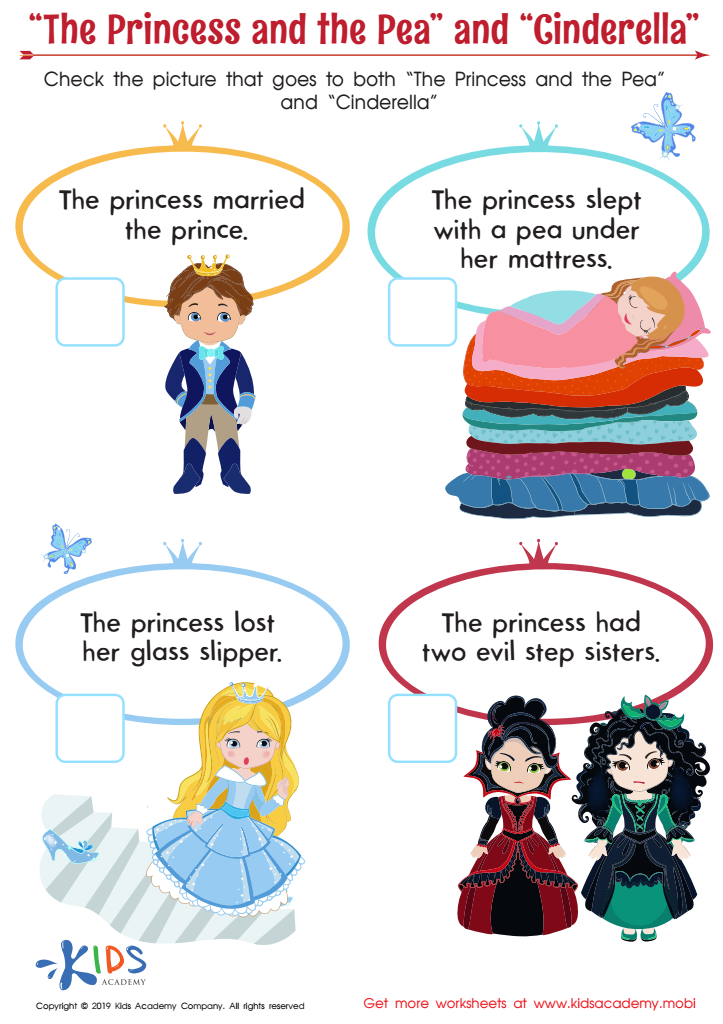
“The Princess and the Pea” and “Cinderella” Worksheet
Read "Cinderella" and "The Princess and the Pea" to your little ones. Ask them what their favorite parts were and what similarities they found in the princesses. This worksheet has four pictures of scenes from the stories. Ask your kids which picture goes with both tales.
 Assign to My Students
“The Princess and the Pea” and “Cinderella” Worksheet
Worksheet
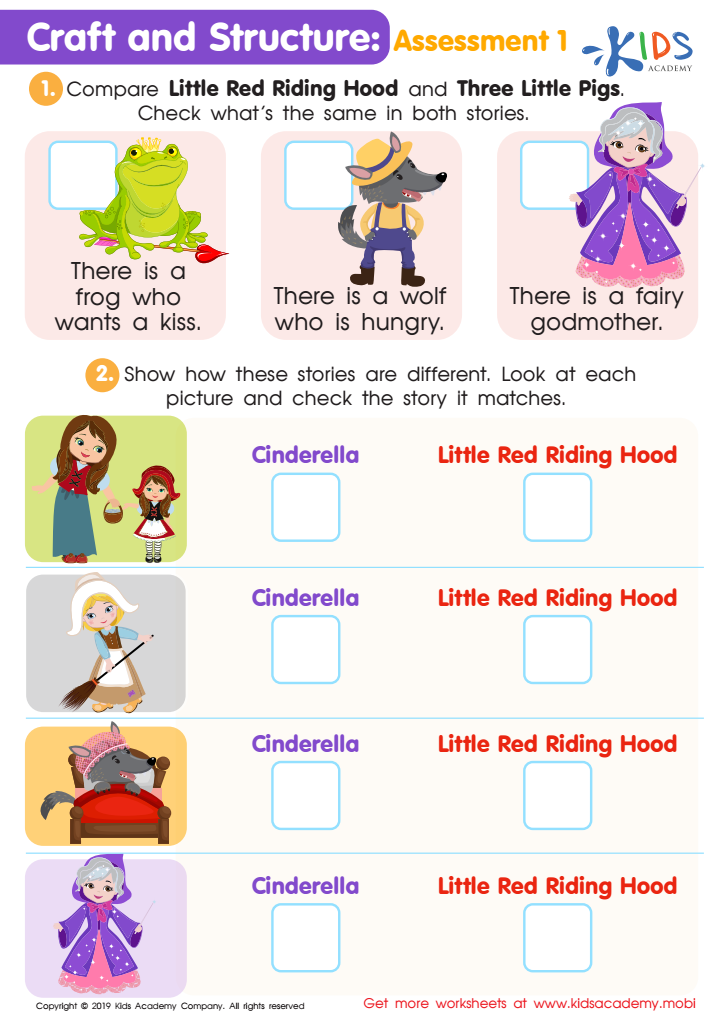
Craft and Structure: Assessment 1 Worksheet
Fairytales are a great way to bond with your kids while teaching them. Popular stories include Little Red Riding Hood and Three Little Pigs. Test how well they understood these two with this assessment worksheet. Ask them to compare the two stories and check what is the same. Doing this will help kids learn new words and sentence construction, as well as teaching them life lessons.
Craft and Structure: Assessment 1 Worksheet
Worksheet
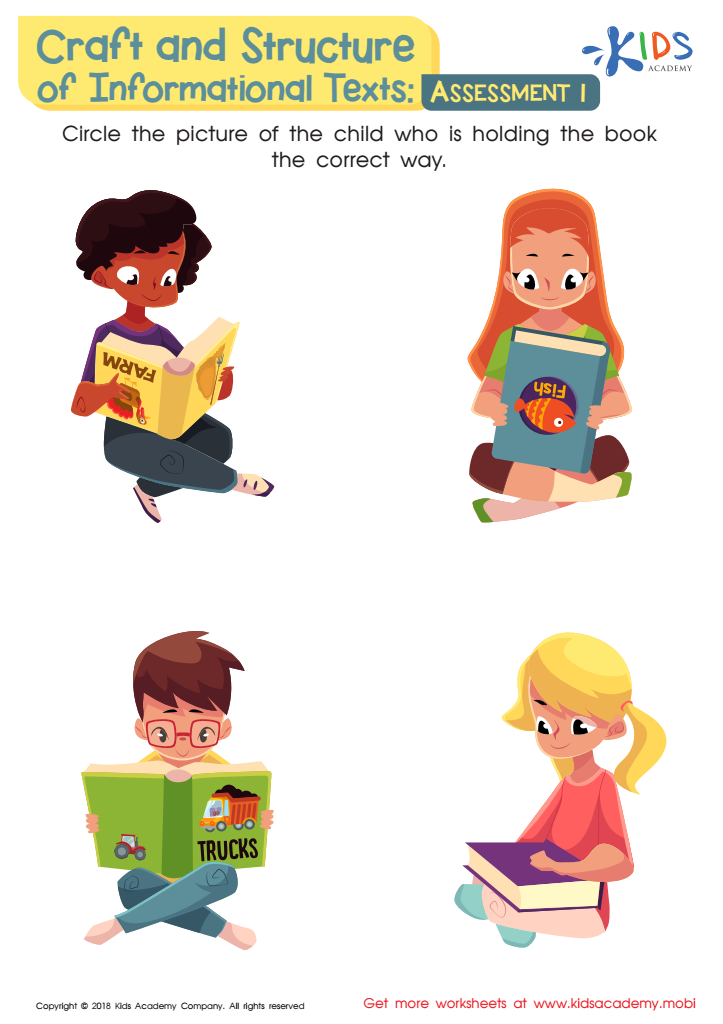
Craft and Structure of Informational Texts: Assessment 1 Worksheet
Young children need to know how to hold books correctly when they start reading. This assessment worksheet helps them show they know what to do. They'll look at the pictures and circle the child who is holding the book correctly. It's a great way to tell they are well on their way to becoming lifetime readers!
Craft and Structure of Informational Texts: Assessment 1 Worksheet
Worksheet
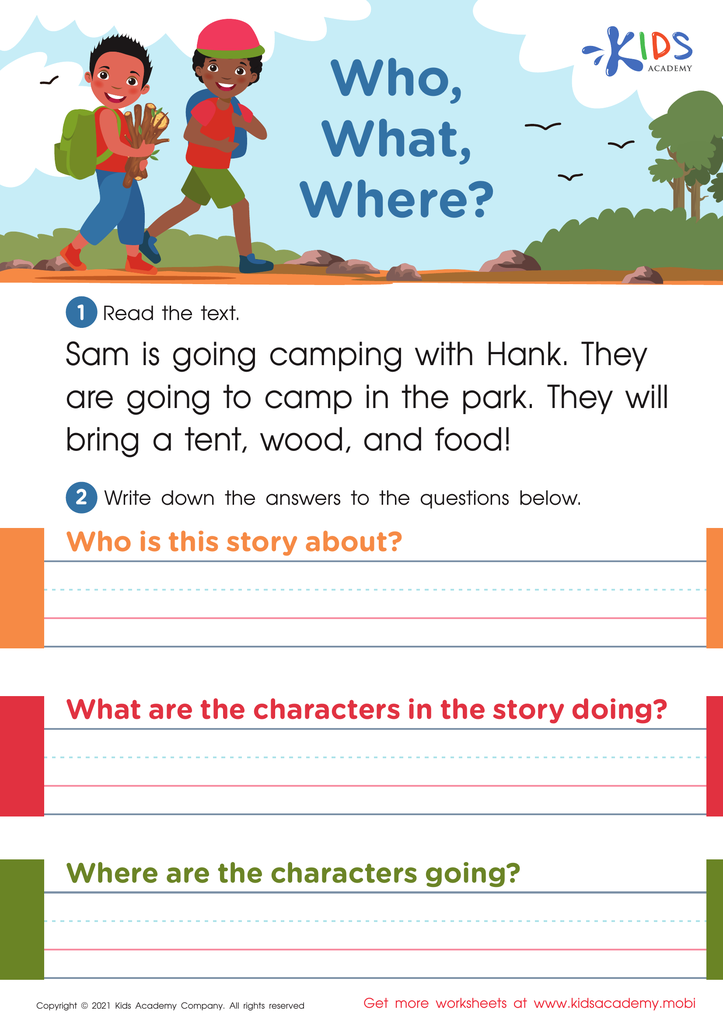
Who, What, Where? Worksheet
The availability of technology has changed the way students learn and interact with their environment in a very meaningful way.
Technology has revolutionized learning and interaction for students. It offers an array of opportunities to engage with their surroundings, leading to a more meaningful educational experience.
Who, What, Where? Worksheet
Worksheet
Join Kids Academy for Free
Who is primarily going to use this learning content?







Vocabulary development during the critical ages of 3-7 is foundational for a child's academic success and language skills. Reading fiction is particularly beneficial as it introduces children to rich language, diverse vocabulary, and imaginative concepts. Fictional stories often contain descriptive language that enhances word understanding and usage, enabling children to express themselves more effectively.
When parents and teachers engage young children in reading fiction, they foster necessary listening and comprehension skills. This interaction supports language acquisition by contextualizing new words within stories, making them memorable and relatable. Exposure to different themes and characters also broadens children's worldviews, nurturing empathy and social awareness.
Moreover, this stage of development is pivotal, as children absorb language naturally. A robust vocabulary enhances reading comprehension, aiding in future learning and school performance. Discussions around storylines encourage critical thinking, advancing both cognitive and linguistic abilities. By prioritizing vocabulary development through fiction, parents and teachers empower children with essential tools for communication and lifelong learning.
Ultimately, nurturing vocabulary in toddlers and early grade schoolers sets the stage for their overall literacy and confidence while boosting their love for reading—a gift that lasts a lifetime.








