Understanding patterns Sight Words Worksheets for Ages 3-7
8 filtered results
-
From - To
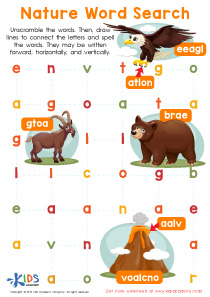
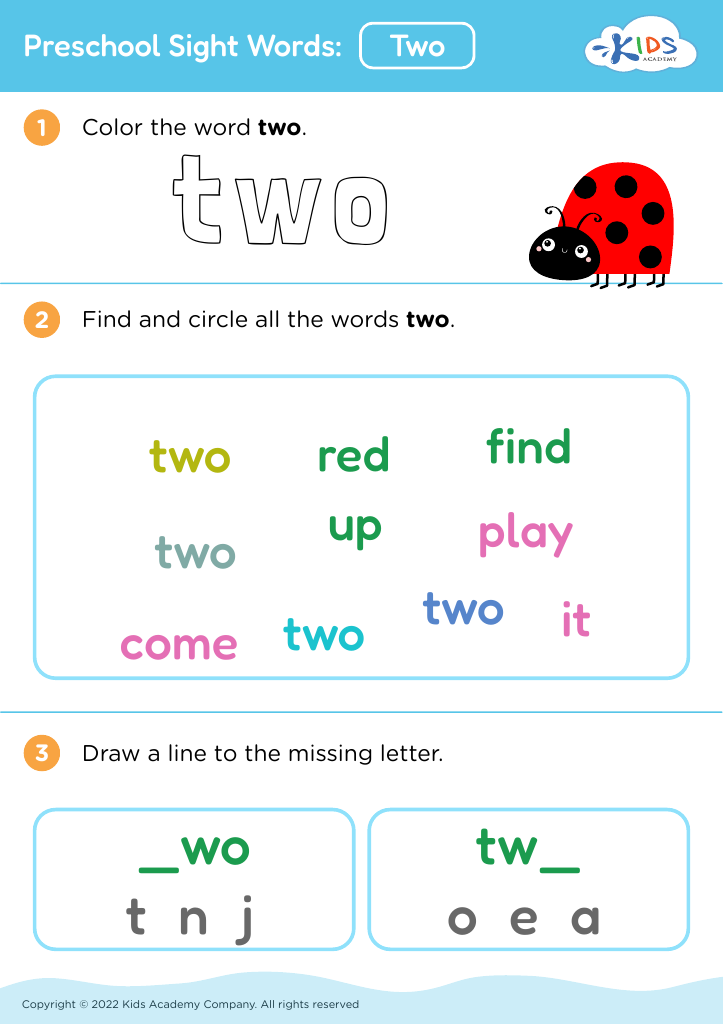
Discover our "Understanding Patterns Sight Words Worksheets" designed for children ages 3-7. These engaging worksheets help young learners identify and recognize sight words through fun pattern recognition activities. Practicing sight words in a patterned format not only enhances vocabulary but also promotes critical thinking skills essential for reading fluency. Our user-friendly printables include colorful illustrations and playful exercises that captivate children's imaginations, making learning enjoyable. Perfect for teachers and parents, these resources are suitable for home or classroom use. Foster a love for reading and lay a solid foundation for literacy skills with our exciting worksheets tailored specifically for early learners.







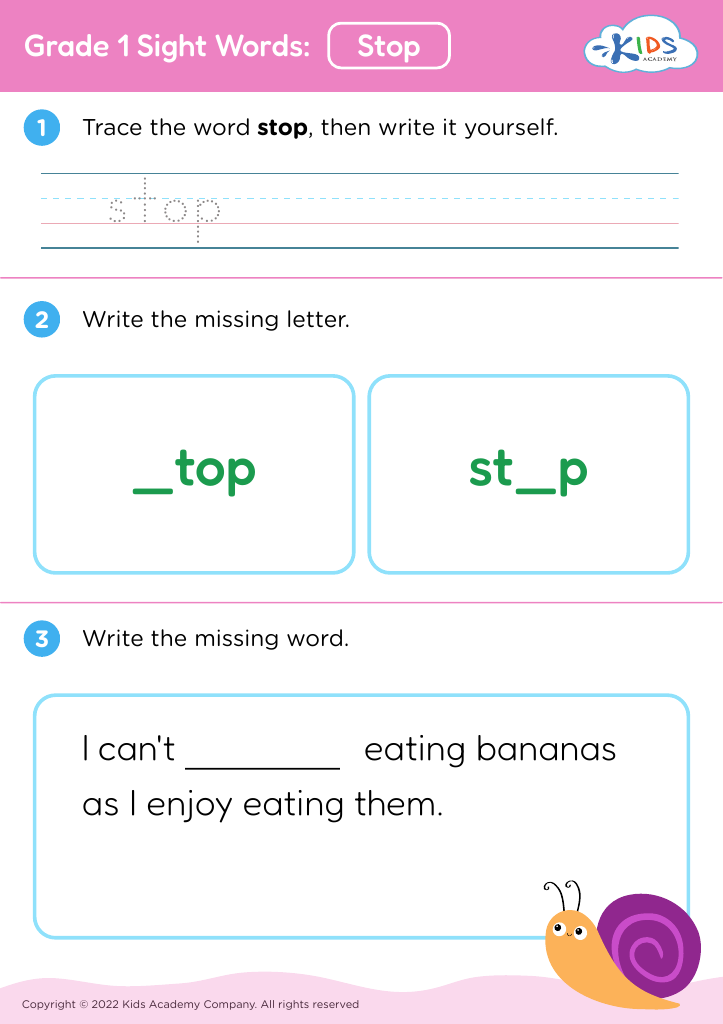
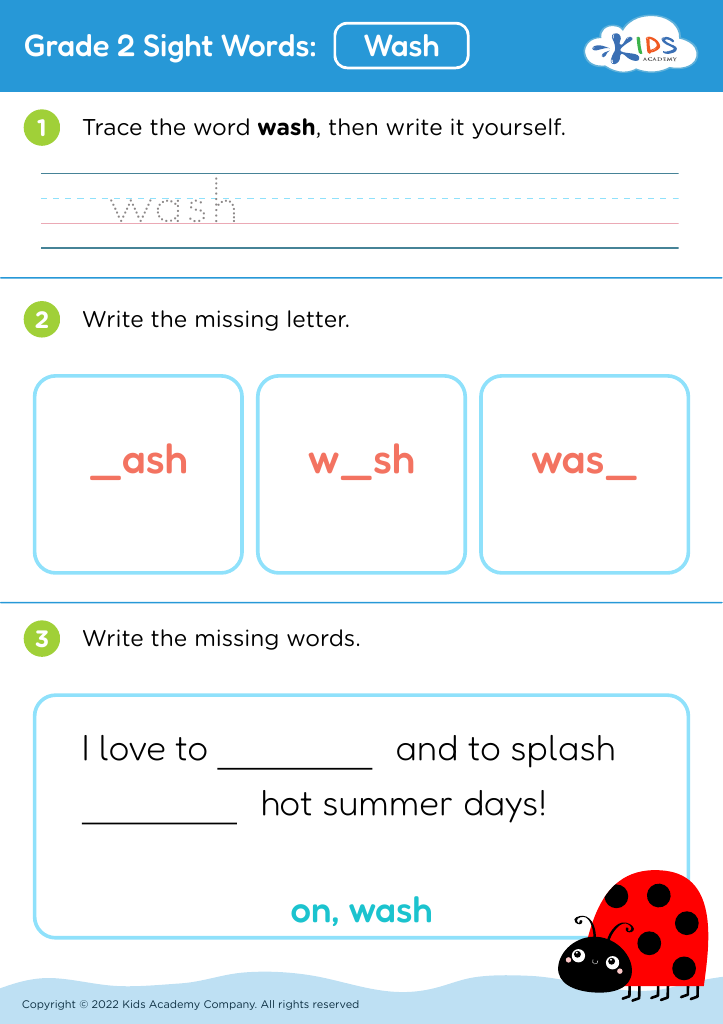
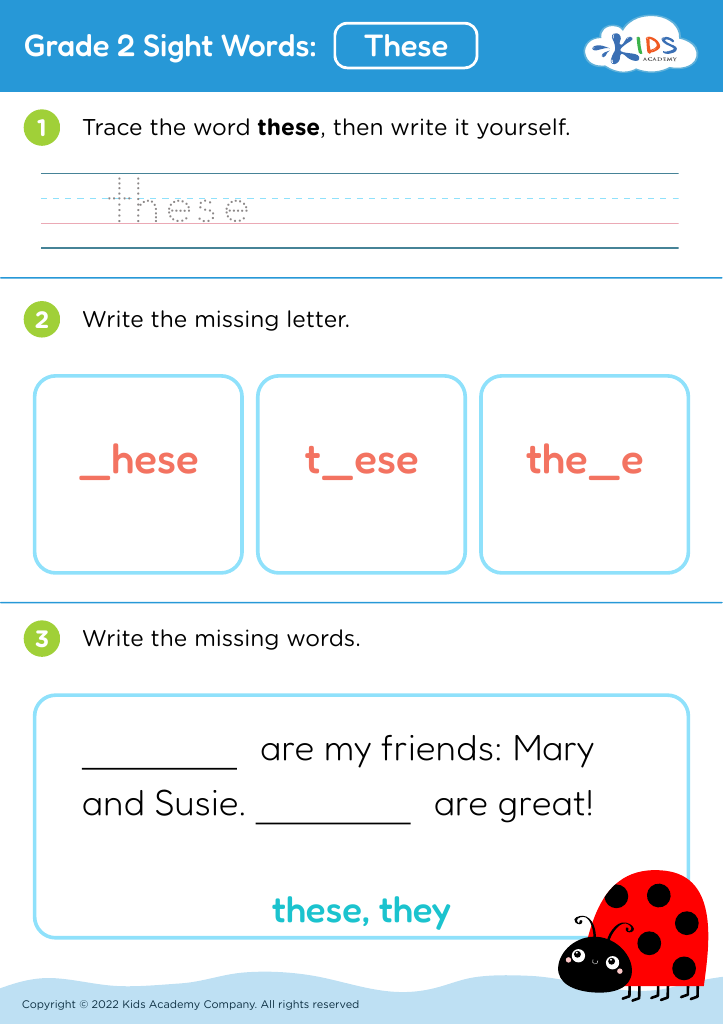
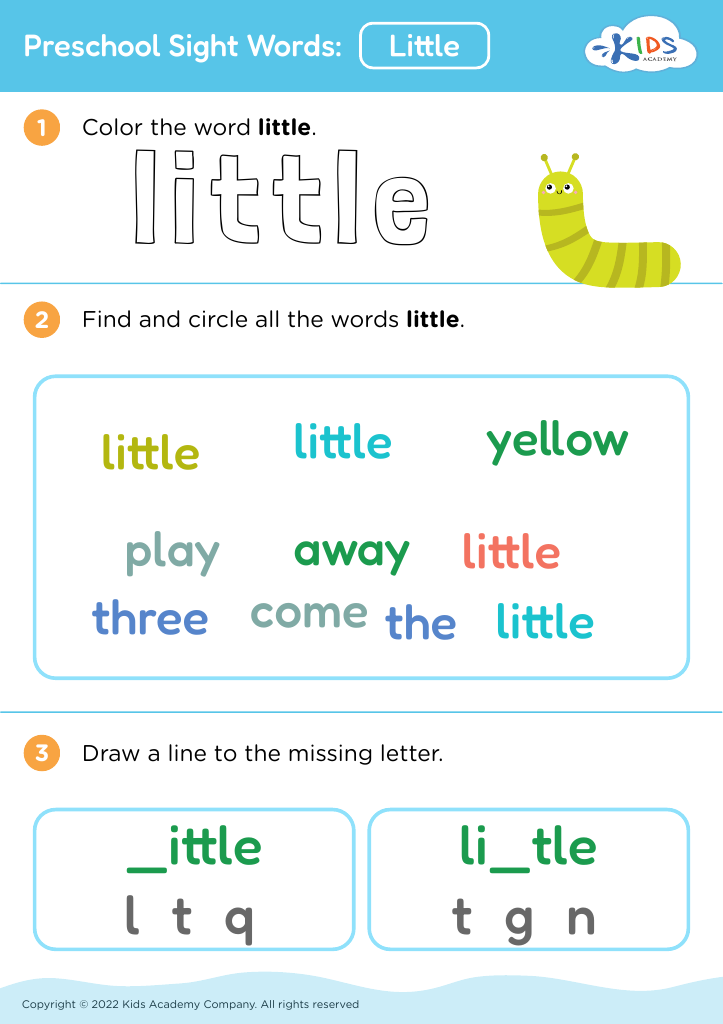
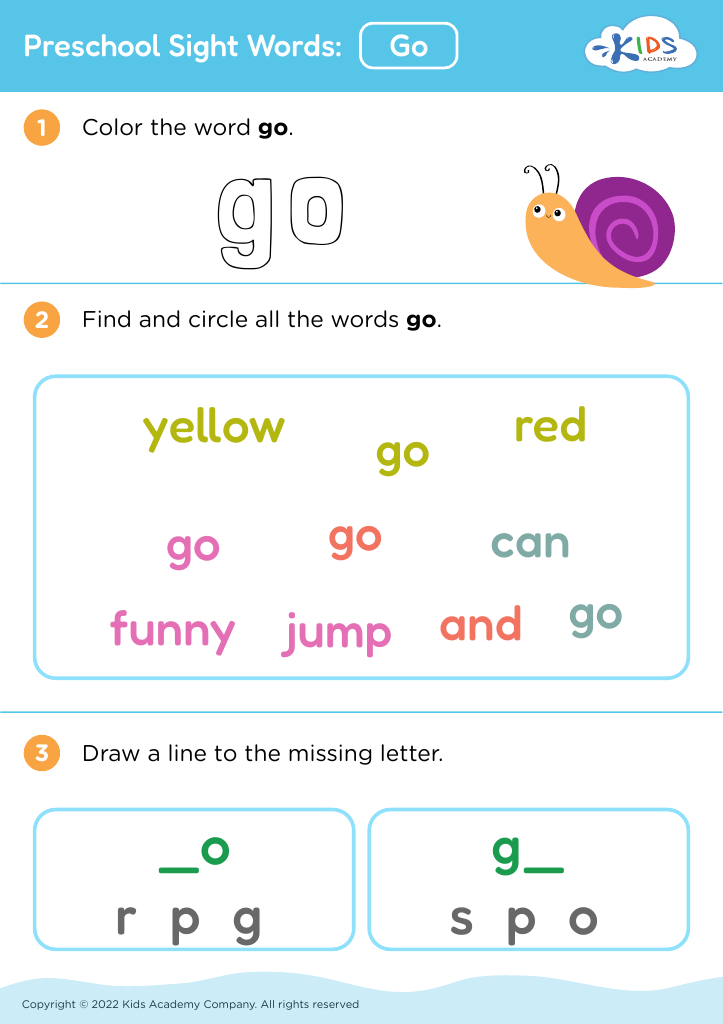
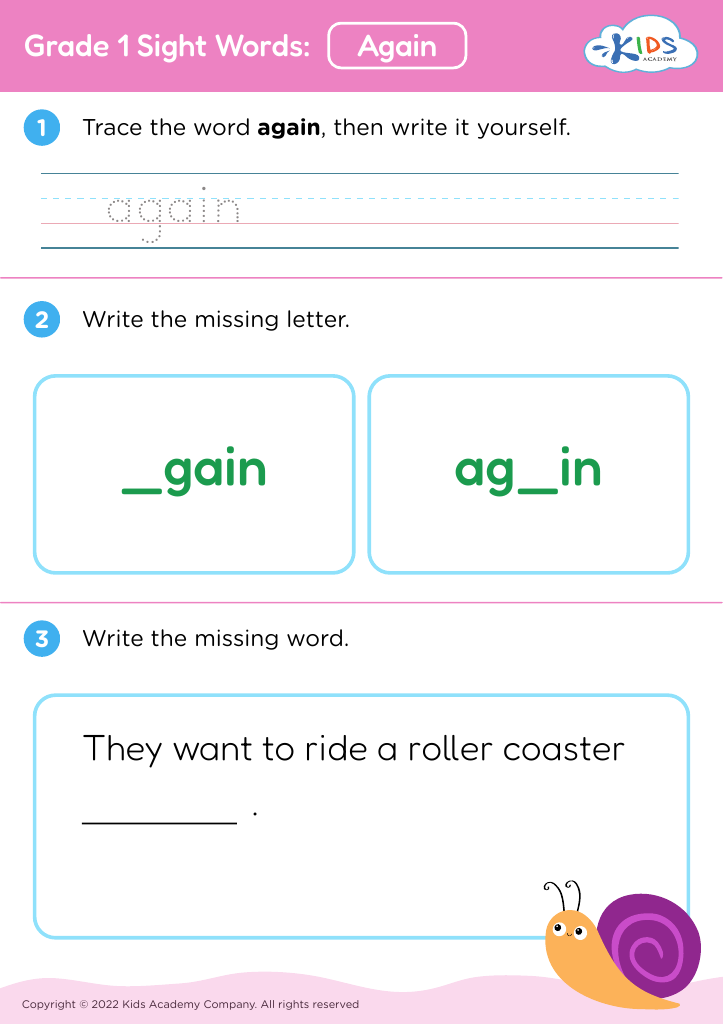
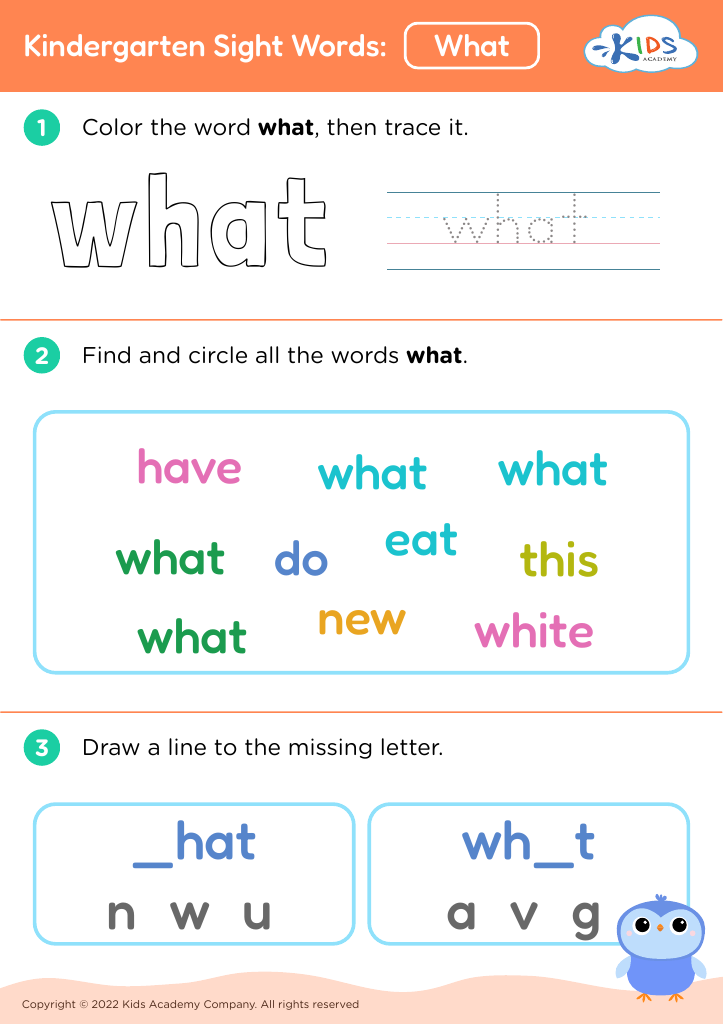








Understanding patterns and sight words is essential for early literacy development in children aged 3-7. For parents and teachers, fostering these skills can significantly enhance a child's reading fluency and comprehension. Patterns in language, such as rhymes and syllables, help young learners recognize the structure of words and sentences, making it easier for them to decode new information.
Sight words are commonly used words that children are encouraged to recognize instantly without having to sound them out. These words often do not follow standard phonetic rules, making them cumbersome for beginning readers to decode. Familiarity with sight words enables children to read more smoothly, encouraging confidence and motivation as they progress in their literacy journey.
Moreover, understanding both patterns and sight words fosters critical thinking and analytical skills. It allows children to identify relationships in language and make connections between words and their meanings. For parents and teachers, the emphasis on these elements means providing children with a solid foundation for future reading and writing success, which is critical in their overall academic growth. Thus, cultivating these skills early on will pave the way for lifelong learning and a love of reading.