Categorization skills World Around Us Worksheets for Ages 3-7
3 filtered results
-
From - To
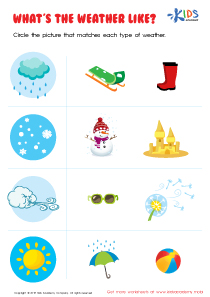
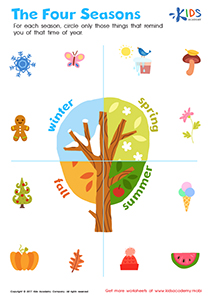
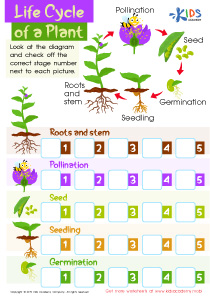
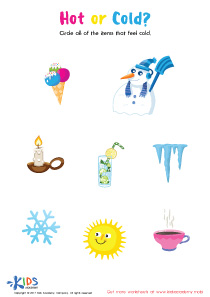
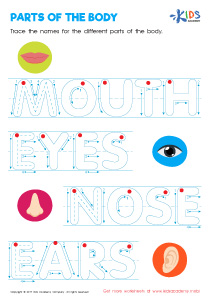
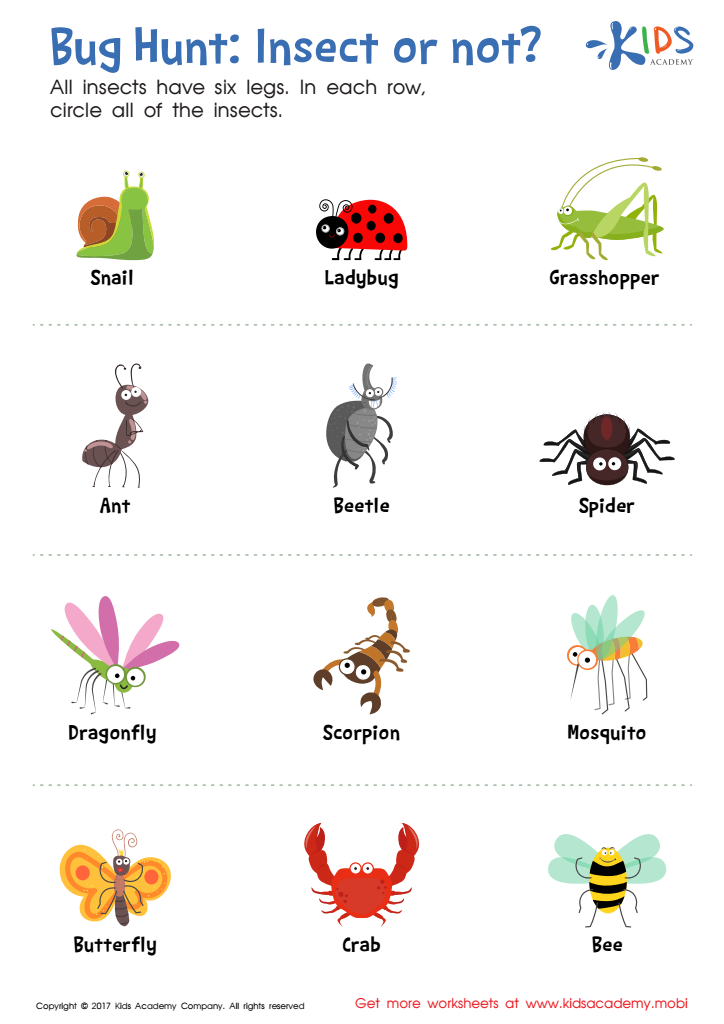
Jumpstart vital cognitive skills with our "Categorization Skills: World Around Us Worksheets" tailored for kids ages 3-7! Designed to engage young minds, these fun, interactive worksheets help children identify, classify, and organize objects in their environment. Enhance focus, logical thinking, and pattern recognition through exciting exercises that combine learning with play. An essential resource for parents and teachers aiming to boost early childhood development, these worksheets provide foundational skills for future academic success. Explore the world with your child in a structured, enjoyable format that makes learning an adventure!
 Assign to My Students
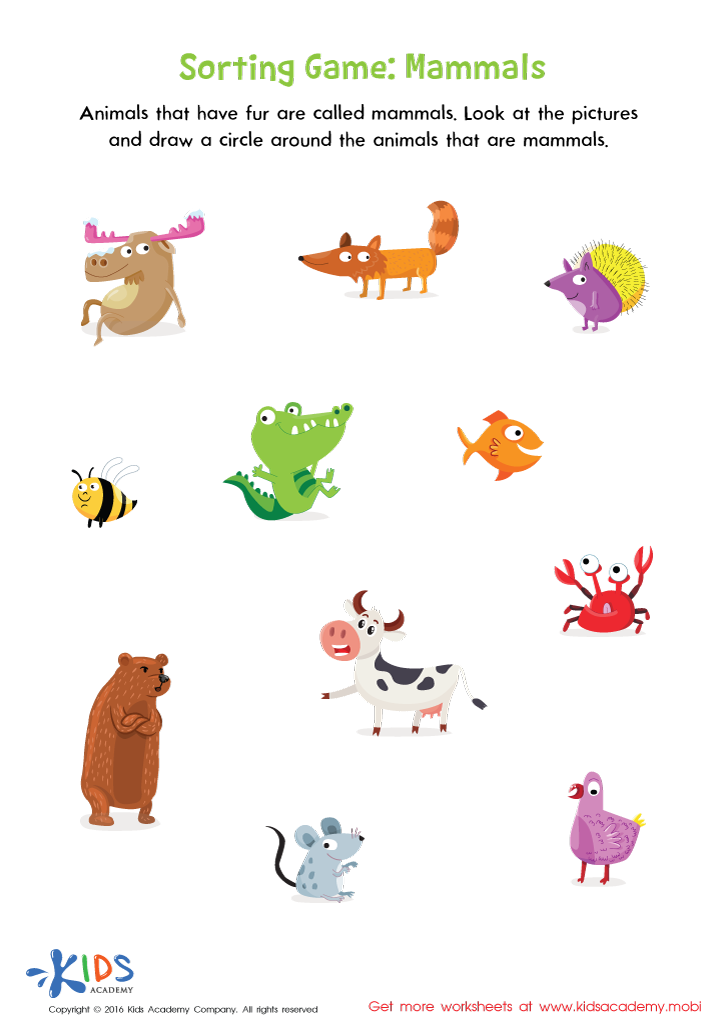
Mammals Sorting Worksheet
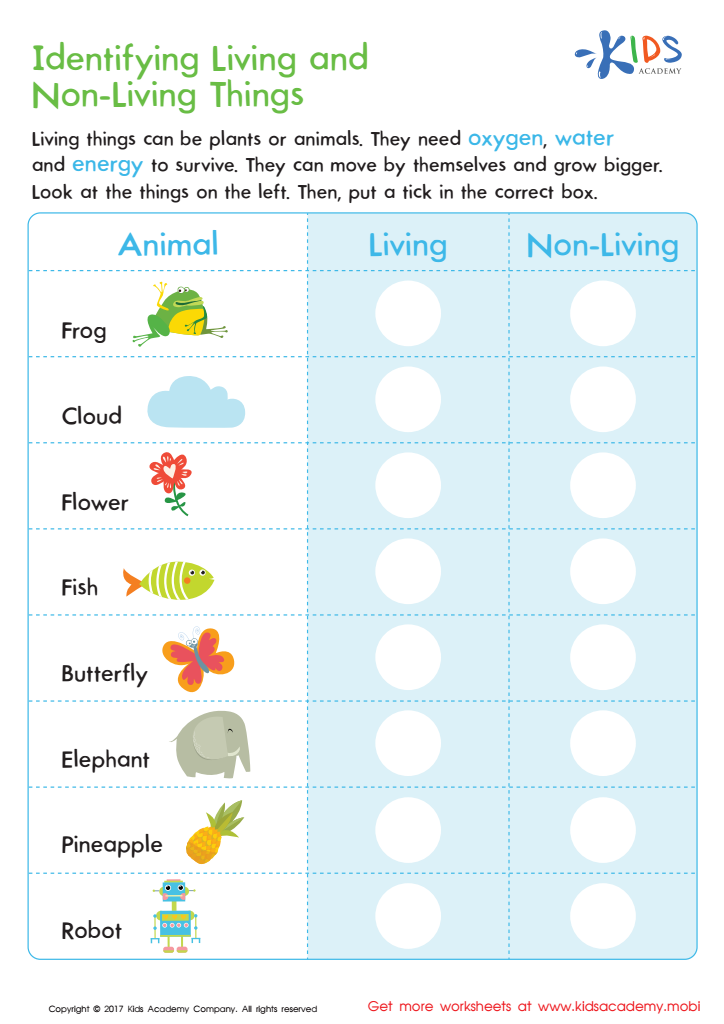
Identifying Living or Non–living Worksheet



.jpg)

Categorization skills are fundamental cognitive abilities that allow children aged 3-7 to make sense of the world around them by grouping objects, ideas, or information based on shared characteristics. For parents and teachers, nurturing these skills is crucial because they form the foundation for more complex learning and thinking processes.
Firstly, categorization helps children organize their thoughts and understand relationships between different items or concepts. For instance, recognizing that both apples and oranges are fruits enables children to grasp the larger category of "fruits" and understand nutritional or culinary contexts better.
Secondly, strong categorization abilities enhance language development. As children learn to group objects and ideas, they expand their vocabulary by associating words with specific categories. This linguistic growth is essential for effective communication and learning in school settings.
Additionally, categorization is closely tied to early math skills. Sorting objects by size, color, shape, or quantity helps children understand basic math concepts like counting, comparing, and pattern recognition, which are essential for future mathematical learning.
Finally, understanding categorization skills aids social interactions and emotional development. Recognizing social cues and distinguishing between different types of relationships, such as family members versus friends, helps children navigate their social environment more effectively.
In summary, fostering categorization skills in young children equips them with critical cognitive, linguistic, mathematical, and social abilities, paving the way for well-rounded intellectual and emotional development.