Weather Vocabulary World Around Us Worksheets for Ages 3-7
3 filtered results
-
From - To
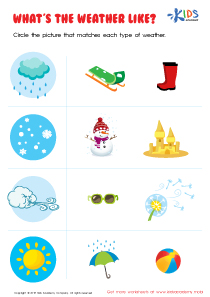
Explore our "Weather Vocabulary World Around Us Worksheets for Ages 3-7" and turn weather learning into an exciting adventure! Perfect for young learners, these printable worksheets help kids grasp essential weather terms through fun, engaging activities. Children will encounter words like sunny, rainy, windy, and snowy, while boosting their language and cognitive skills. Thanks to vibrant illustrations and interactive content, your little ones will enjoy every moment of their educational journey. Discover endless learning possibilities tailored to nurture curious minds and spark an interest in the world around them. Download now to make weather exploration enjoyable and educational!
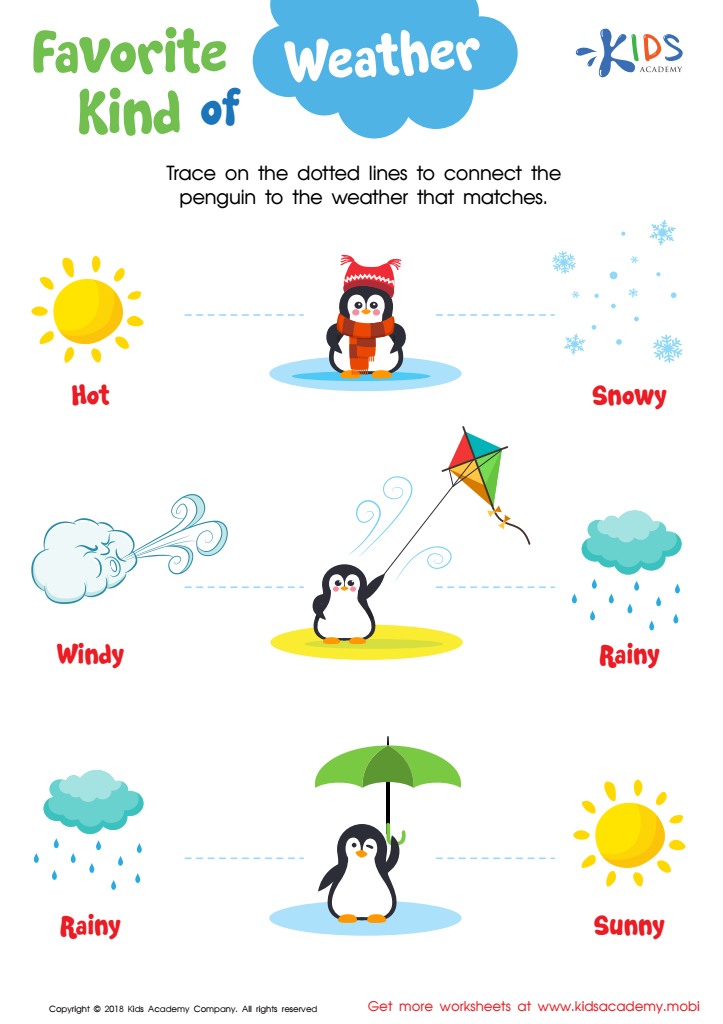
Favorite Kind of Weather Worksheet
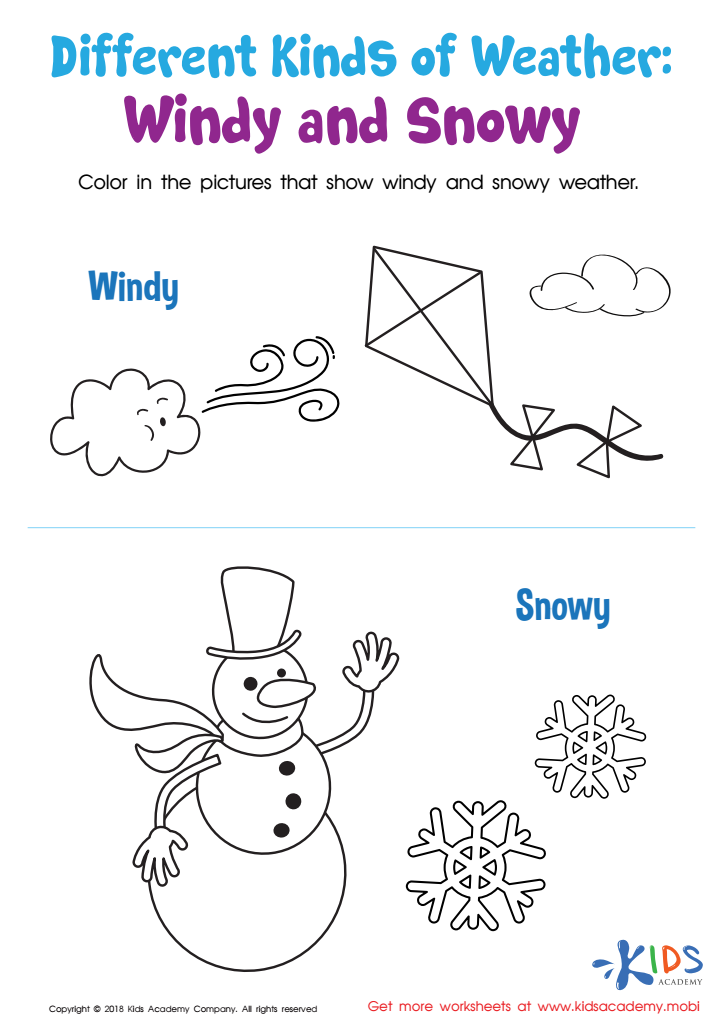
Different Kinds of Weather: Windy and Snowy Worksheet
 Assign to My Students







Understanding weather and its vocabulary is crucial for young children aged 3-7 as it helps them make sense of the world around them. For parents and teachers, teaching weather terms such as "sunny," "rainy," "cloudy," or "windy" fosters children's language development and comprehension skills. This foundational knowledge extends beyond vocabulary—it enhances critical thinking as children learn to observe and discuss changes in their environment.
Introducing weather vocabulary also promotes science learning at an early age. Kids learn the basics of meteorology, providing them with the context for understanding seasons, dressing appropriately, and planning outdoor activities. This knowledge encourages curiosity and inquiry-based learning, which are fundamentals of scientific literacy.
Moreover, talking about the weather can improve daily communication. Simple conversations about weather conditions can become engaging discussion starters, helping children improve social skills and recognize patterns, such as predicting what might come next.
Lastly, understanding weather phenomena aids in building resilience and awareness of their immediate environment. For instance, recognizing stormy weather helps children understand safety precautions. In sum, focusing on weather vocabulary for young children supports linguistic, cognitive, and social-emotional development, making it a vital part of early education.