Categorization skills Plants and Animals Worksheets for Ages 3-7
3 filtered results
Difficulty Level
Grade
Age
-
From - To
Subject
Activity
Standards
Enhance your child's understanding of the natural world with our "Categorization Skills: Plants and Animals Worksheets" designed specifically for ages 3-7. These engaging worksheets encourage early learners to explore and differentiate between various plants and animals, promoting critical thinking and observational skills. Each activity is tailored to foster cognitive development and includes fun and interactive formats that make learning exciting. Your child will enjoy sorting, classifying, and identifying different species in a vibrant, educational way. Perfect for home or classroom use, these worksheets ensure that children gain valuable skills while enjoying the wonders of nature. Start categorizing today!
Favorites
With answer key
Interactive
 Assign to My Students
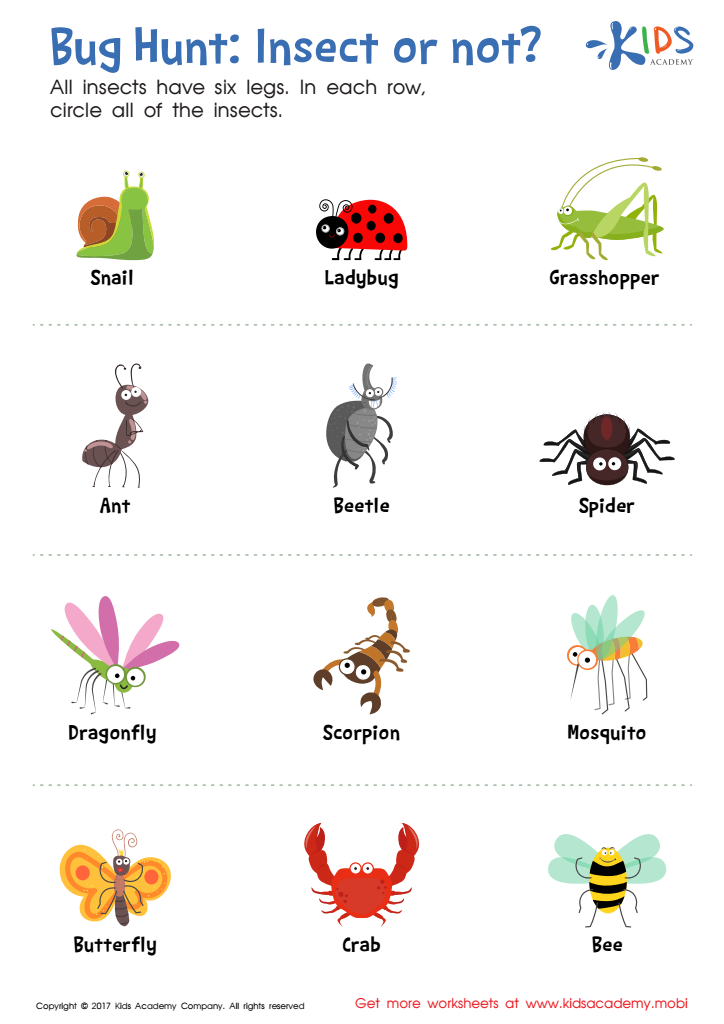
Insect or Not? Worksheet
Worksheet











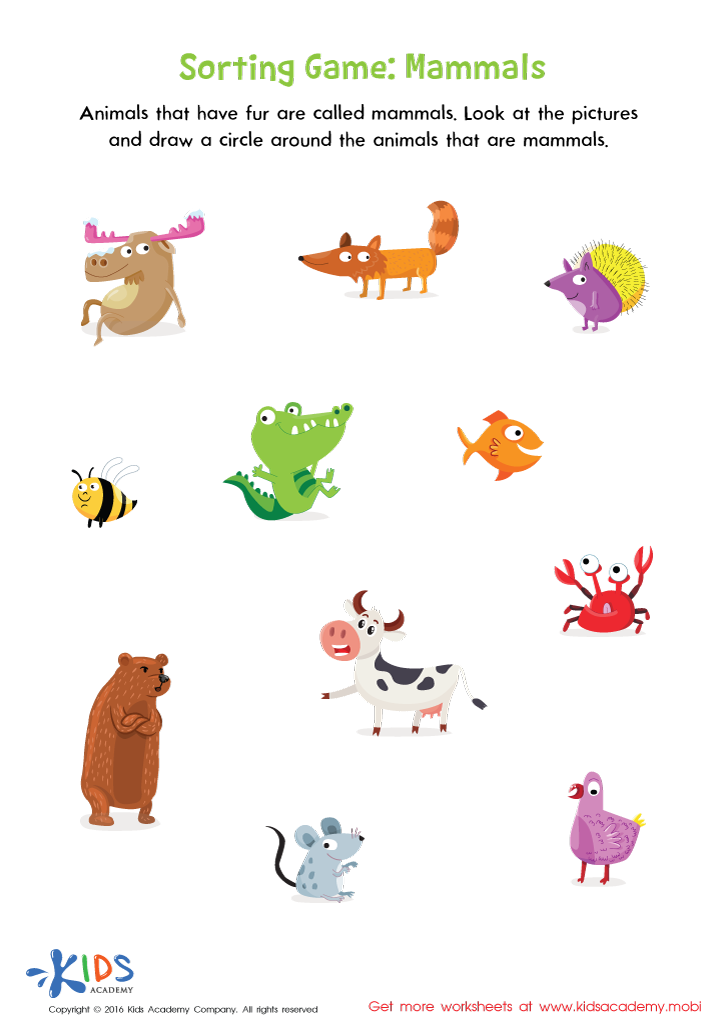
Mammals Sorting Worksheet
They'll practice sorting animals and learn their features with this fun worksheet.
Kids can test their scientific knowledge with this fun worksheet! They'll view pictures of animals, identify mammals based on their fur, and practice sorting them. This colorful worksheet is a great way for kids to learn about the differences between mammals and other animals.
Mammals Sorting Worksheet
Worksheet
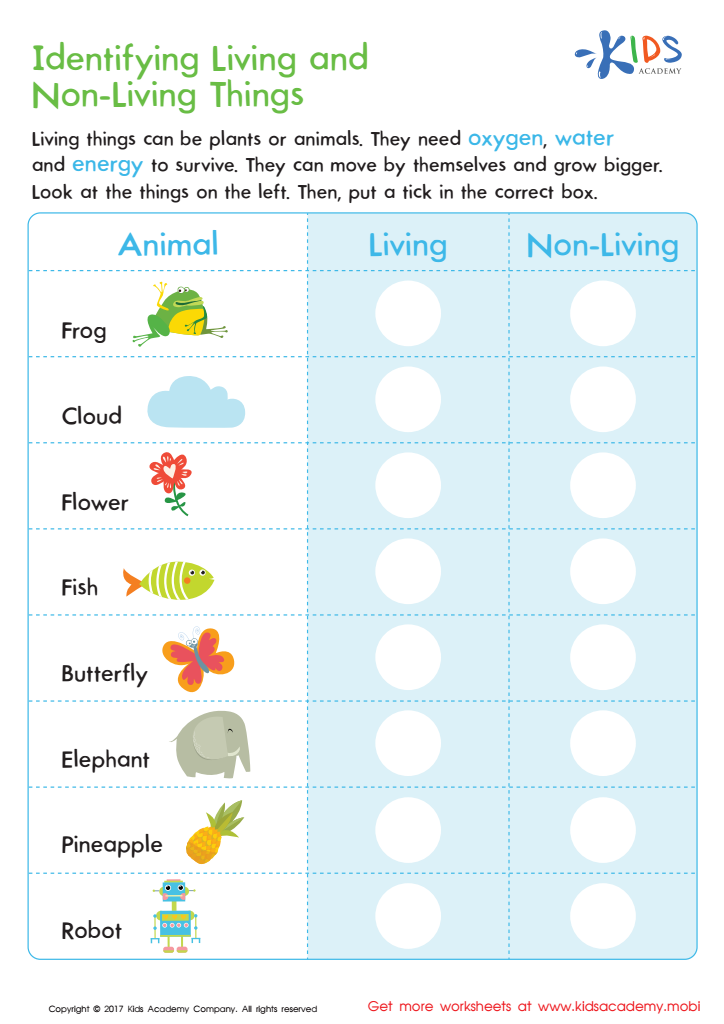
Identifying Living or Non–living Worksheet
Help your child learn to sort and categorize in a new way! Teach them to classify things as living or non-living using this worksheet. It's the perfect way to build their scientific understanding, and to have some learning fun! Print this worksheet and watch them discover the world of science!
Identifying Living or Non–living Worksheet
Worksheet
Join Kids Academy for Free
Who is primarily going to use this learning content?






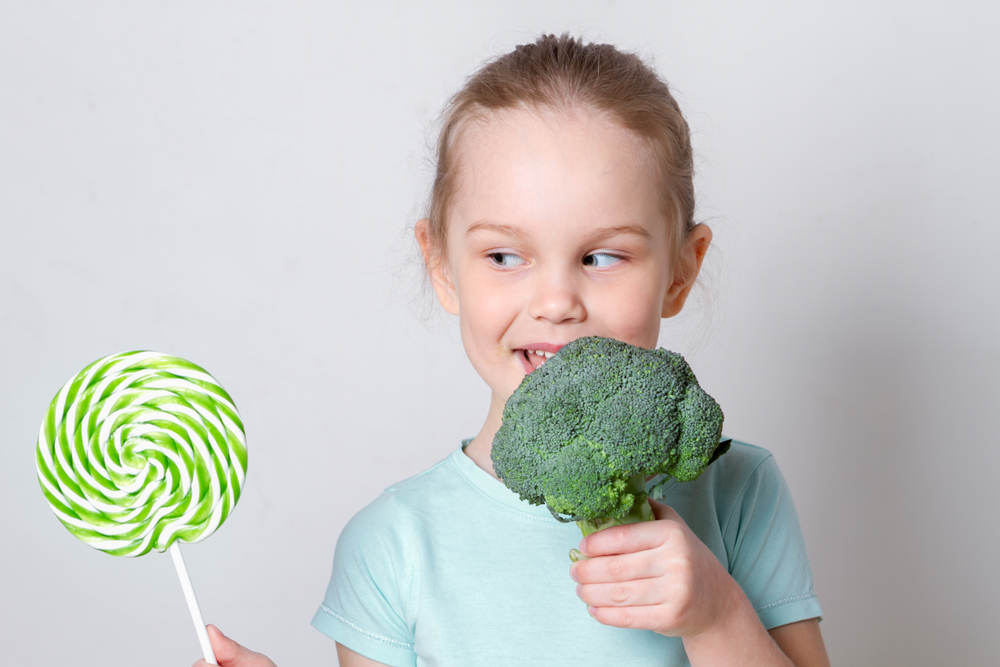

Categorization skills, particularly in the realm of plants and animals, are crucial for children aged 3-7 as they lay the foundation for critical thinking and cognitive development. Understanding the differences and similarities between various categories, such as types of plants and animals, helps young learners make sense of the world around them. These skills foster observational abilities, enabling children to notice characteristics and differences, which is essential in science and problem-solving.
Moreover, categorization aids language development. As children learn to classify plants and animals, they expand their vocabulary and communication skills, discussing concepts like habitats, diets, and physical traits. These discussions not only enhance language skills but also promote social interaction and collaborative learning among peers.
Furthermore, nurturing categorization skills cultivates curiosity. Children become more inclined to explore their environment, ask questions, and seek answers—an essential trait for lifelong learning. For parents and teachers, encouraging these skills fosters an early love of science, promoting inquisitive minds that will tackle complex topics in the future. Ultimately, by nurturing categorization skills in kids, adults prepare them for a rich academic journey, enabling them to navigate various subjects in school and life effectively.