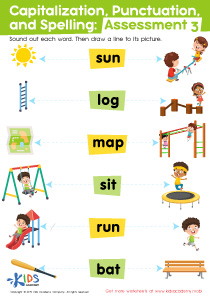
Word identification Grammar Worksheets for Ages 3-7
6 filtered results
-
From - To
Welcome to our Word Identification Grammar Worksheets for children ages 3-7! Our engaging and interactive worksheets are designed to foster early literacy skills through vocabulary development and word recognition. Each activity encourages young learners to identify and learn various words in a fun, playful manner. By using colorful illustrations and age-appropriate content, we make learning enjoyable, helping children build a strong foundation for reading and writing. Whether at home or in the classroom, these worksheets are perfect for supplementing your child’s education and boosting their confidence. Explore our collection and watch your little ones thrive as they master word identification!
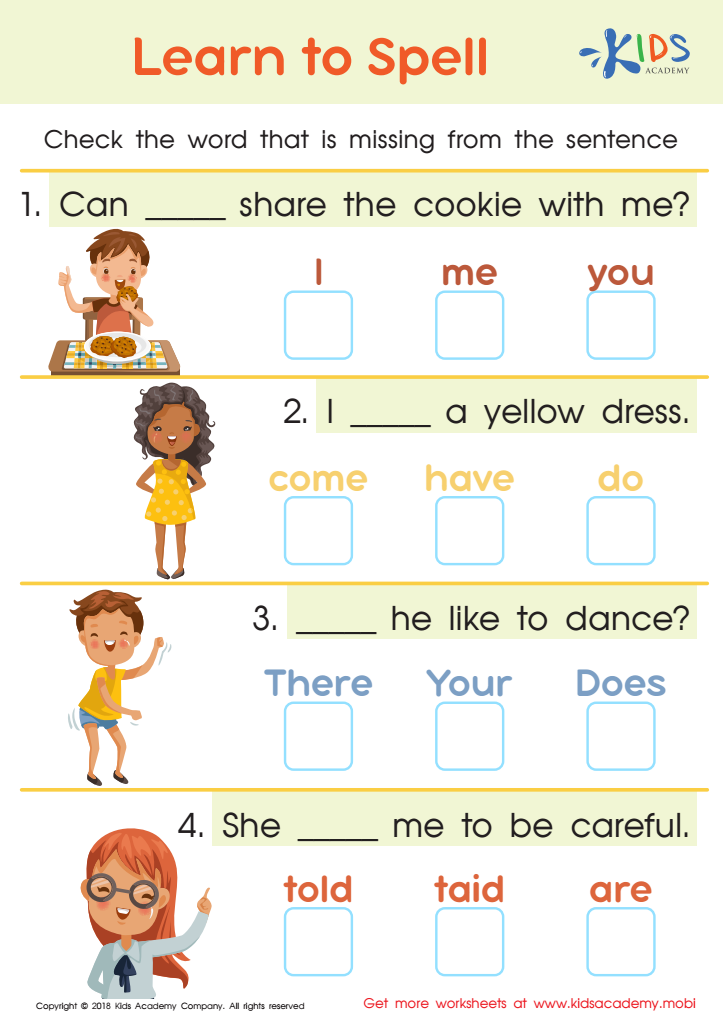
Learn to Spell Worksheet
 Assign to My Students
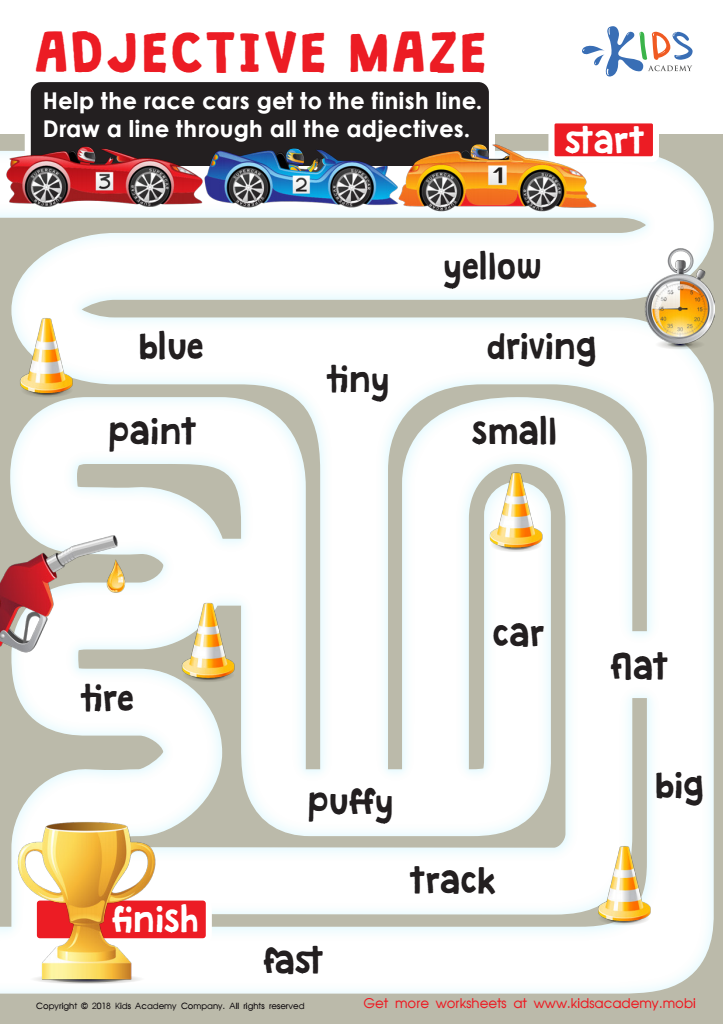
Adjective Maze Worksheet
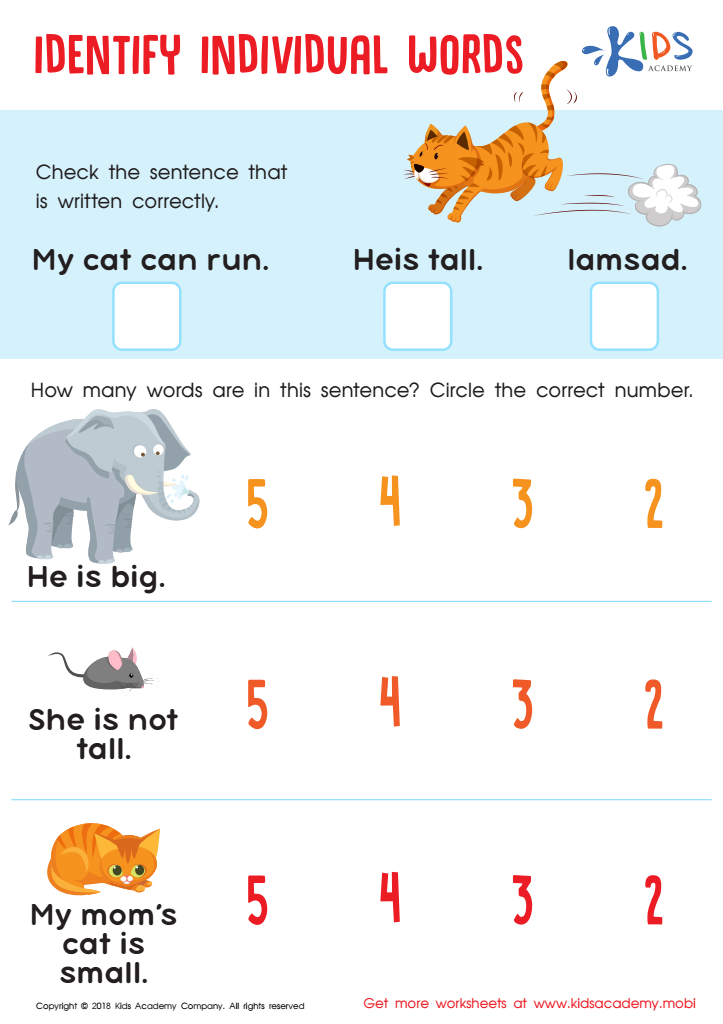
Identify Individual Words Worksheet
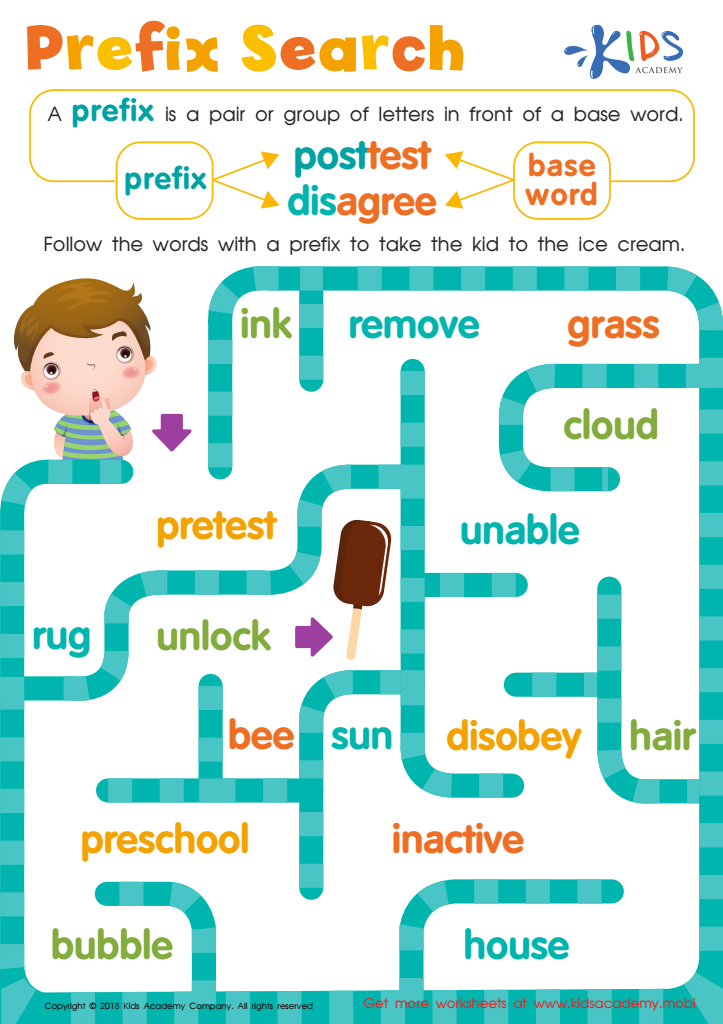
Reading: Prefix Search Worksheet
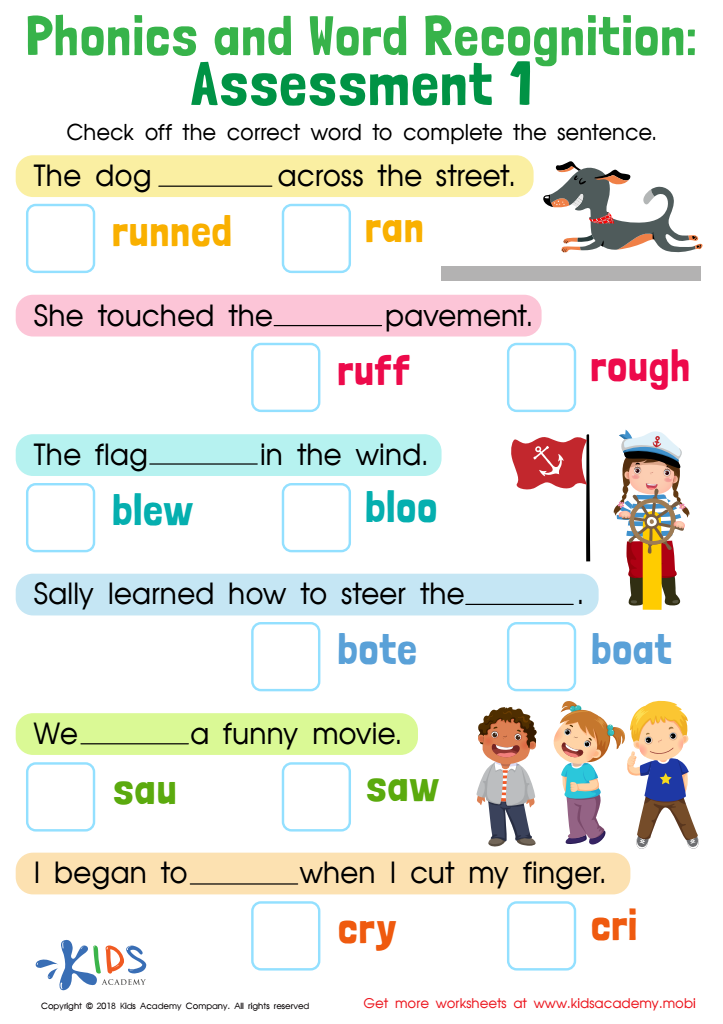
Phonics and Word Recognition: Assessment 1 Worksheet
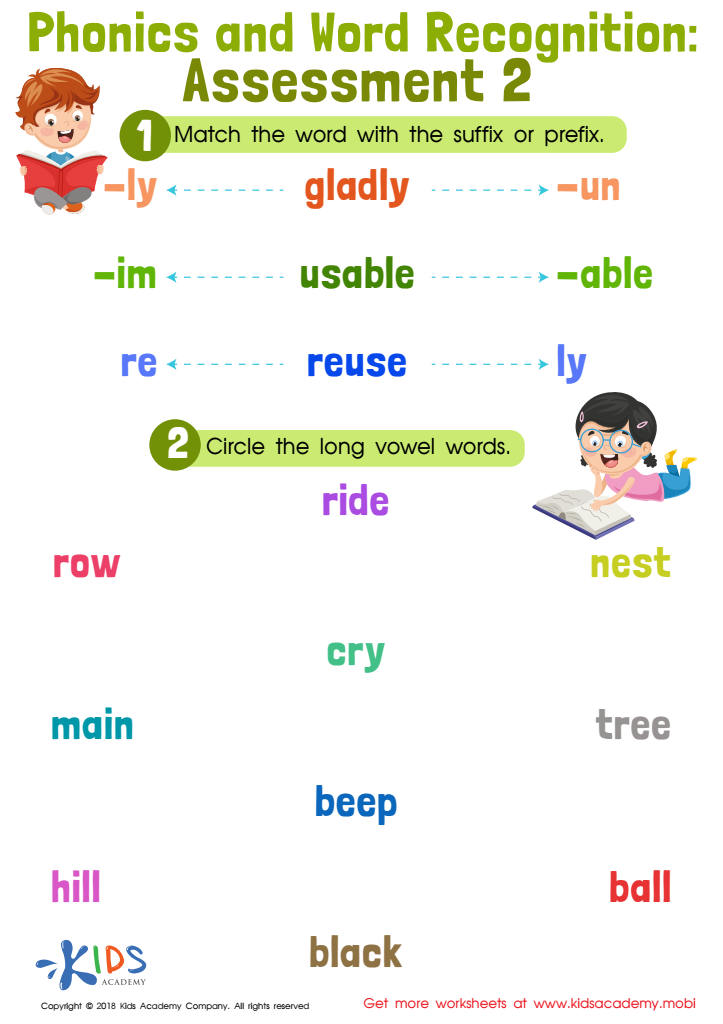
Phonics and Word Recognition: Assessment 2





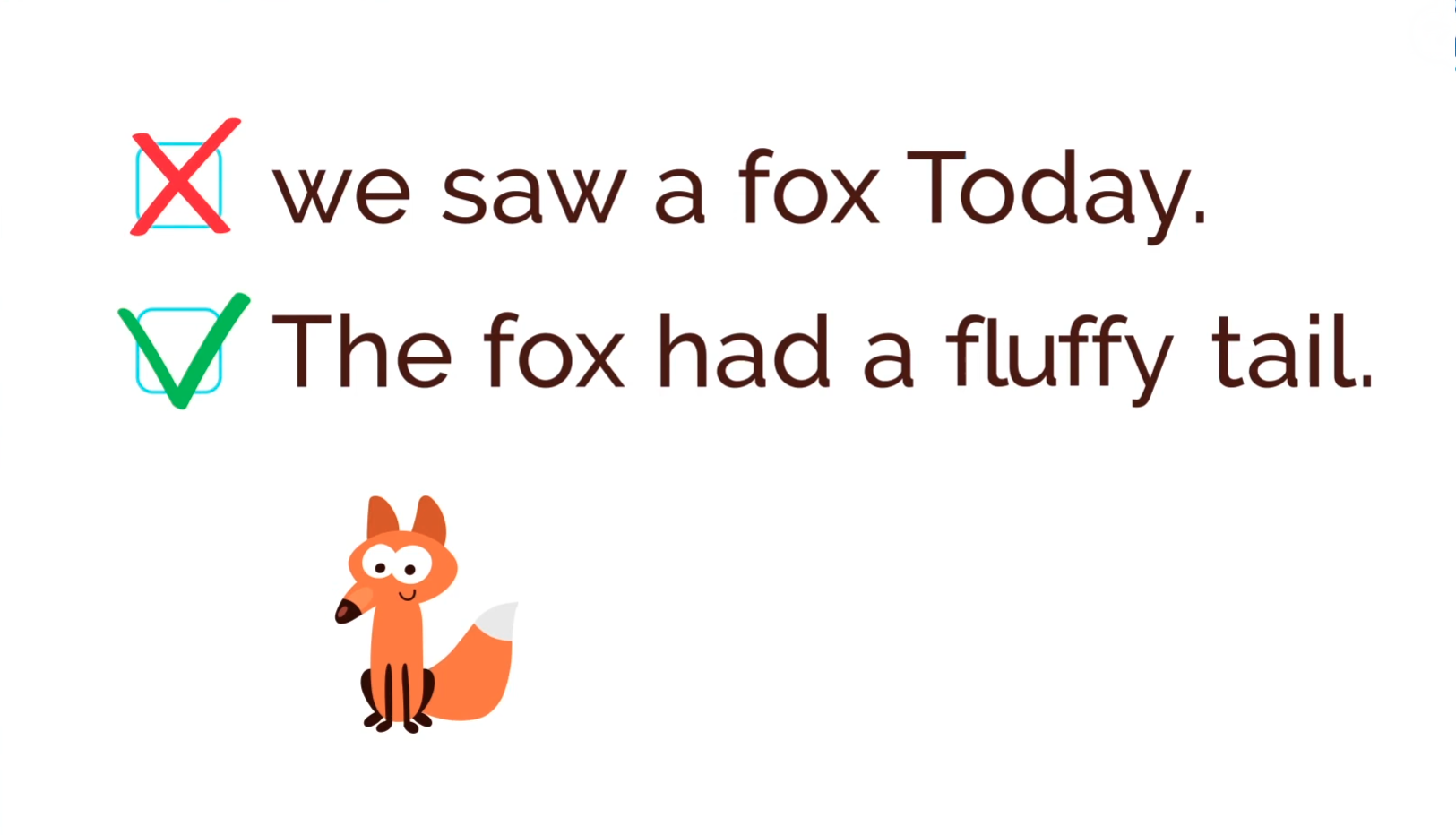

Word identification and grammar are foundational skills for children aged 3-7, serving as the building blocks for literacy and effective communication. At this crucial developmental stage, children's brains are primed for learning language, making it the ideal time for parents and teachers to foster strong word identification skills. These skills help kids recognize and decode words, paving the way for reading fluency and comprehension.
Moreover, understanding basic grammar enhances children’s abilities to construct sentences and express their thoughts coherently. By learning how to use different parts of speech (nouns, verbs, adjectives), children can develop richer and more varied language skills, enhancing both their self-expression and social interactions.
Encouraging word identification and grammar at an early age has lasting benefits. Research shows that early literacy skills are strongly linked to later academic success. When children can read well and express themselves clearly, their confidence and engagement in learning increase.
Ultimately, parents and teachers play a crucial role in creating an environment where young children feel excited about language. Through engaging activities, positive reinforcement, and modeling language usage, adults can significantly impact a child's literacy journey, helping to instill a lifelong love of reading and communication.