
Alphabetical order understanding ABC Letters Worksheets for Ages 3-8
3 filtered results
Difficulty Level
Grade
Age
-
From - To
Subject
Activity
Standards
Enhance your child's literacy skills with our engaging "Alphabetical Order Understanding ABC Letters Worksheets" designed for ages 3-8. These printable resources offer fun, interactive activities that teach children how to arrange letters and words in alphabetical order. By using colorful images and easy-to-follow exercises, kids will not only grasp the concept of sorting but also improve their overall reading and writing proficiency. These worksheets foster a love for learning, helping young learners build a strong foundation in language skills. Enhance their educational journey today by exploring our diverse range of worksheets that cater to their unique developmental needs!
Favorites
With answer key
Interactive
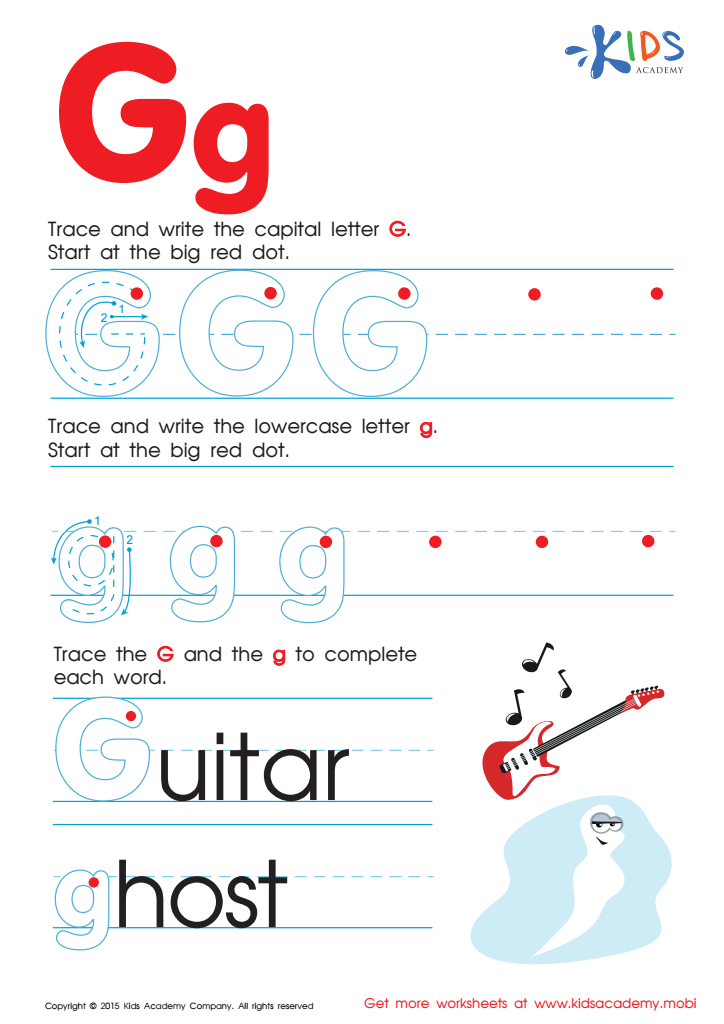
Letter G Tracing Page
Get ready to trace the letter "G" – with a big red spot as the starting point, trace the lines and watch the letter appear. Uppercase and lowercase letters are both easy and fun to write. Give it a go and finish the word "go". Play the guitar and say "hello" to a funny ghost!
Letter G Tracing Page
Worksheet


Letter J Coloring Sheet
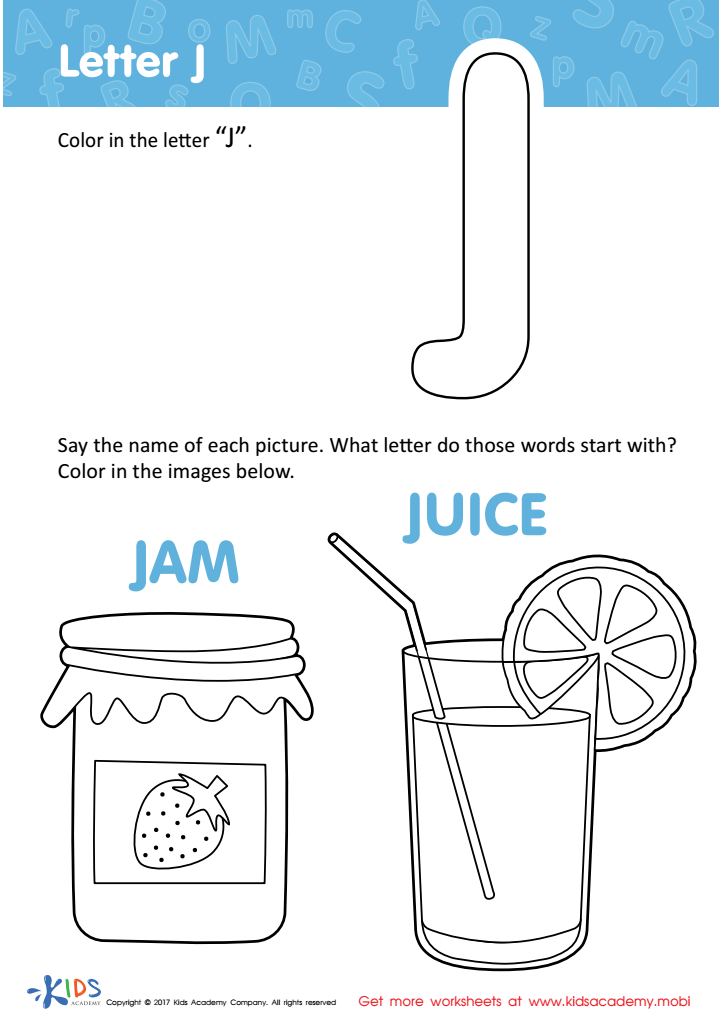
Practice the letter 'J' with your little one with this fun coloring page! Pictures of jar, juice, jam and jelly make it an enjoyable experience for kids. Learning the letter and coloring is fun for even the youngest learners.
Download (PDF)
 Assign to My Students
Assign to My Students
Letter J Coloring Sheet
Worksheet
Letter K Coloring Sheet
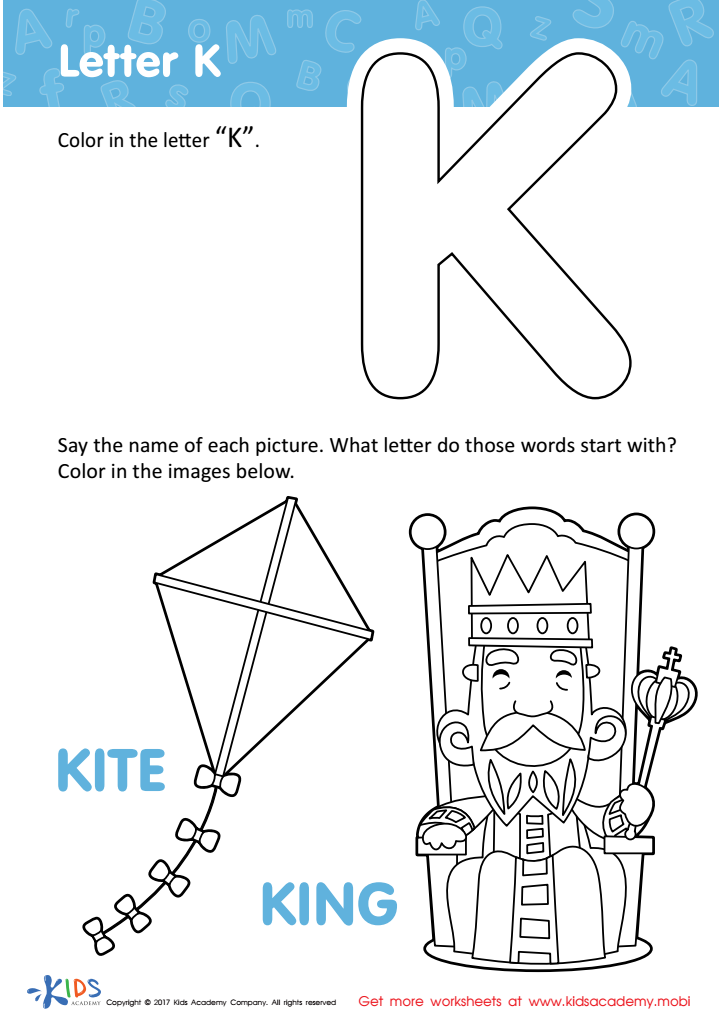
This letter K coloring page captivates your child's creativity while learning the letter! Showcasing a king and kite, common words for their age group, it's sure to spark their imagination.
Download (PDF)
Assign to My Students
Assign to My Students
Letter K Coloring Sheet
Worksheet
Join Kids Academy for Free
Who is primarily going to use this learning content?







Understanding alphabetical order and the ABCs is a fundamental building block for literacy in young children, particularly for those aged 3 to 8. This comprehension is crucial for several reasons.
Firstly, mastering the alphabet helps children recognize letters and associate them with sounds, forming the basis of phonemic awareness. This skill is vital when they begin to read and write, allowing them to decode words and understand text.
Secondly, alphabetical order plays a significant role in organizational skills. Learning to order letters helps children grasp categorization, an essential cognitive skill. These skills transfer to various subjects, including math and science, as kids learn to organize their thoughts and understand sequences.
Moreover, mastering the ABCs enhances vocabulary development. Recognizing words in alphabetical sequences, like in dictionaries or online searches, equips children to expand their language abilities effectively.
Lastly, confidence builds as children master the alphabet. This sense of accomplishment fosters a positive attitude towards learning, encouraging them to explore new ideas and concepts. Parents and teachers should invest in alphabet-learning activities, reinforcing these foundational skills essential for academic success. Promoting early literacy through fun, engaging activities sets the stage for lifelong learning and intellectual curiosity.







