
Handwriting Skills ABC Letters Worksheets for Ages 3-8
8 filtered results
Difficulty Level
Grade
Age
-
From - To
Subject
Activity
Standards
Enhance your child's handwriting skills with our engaging ABC letters worksheets, designed for ages 3-8. These meticulously crafted activities help young learners familiarize themselves with letter formation while developing fine motor skills. Each worksheet offers fun tracing exercises, letter recognition, and enjoyable illustrations to keep your little ones motivated. By incorporating playful elements into learning, children can confidently improve their handwriting with practice. Suitable for both classroom and home use, our worksheets provide a perfect resource for early education. Start your child's journey to clear and confident writing today with our comprehensive collection of handwriting skills worksheets!
Favorites
With answer key
Interactive
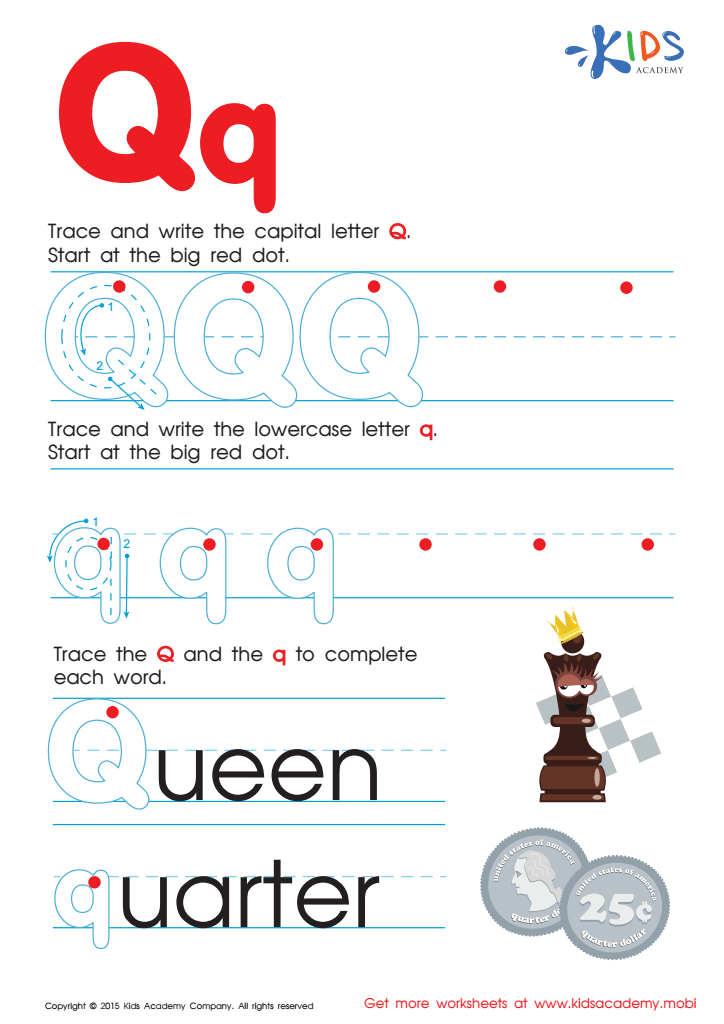
Letter Q Tracing Page
Learn the letter "Q"! Trace and write it a few times in upper and lowercase. Then help the Queen by writing her initial letter. Finally, write "quarters" and practice with more alphabet worksheets.
Letter Q Tracing Page
Worksheet


Letter W Tracing Page
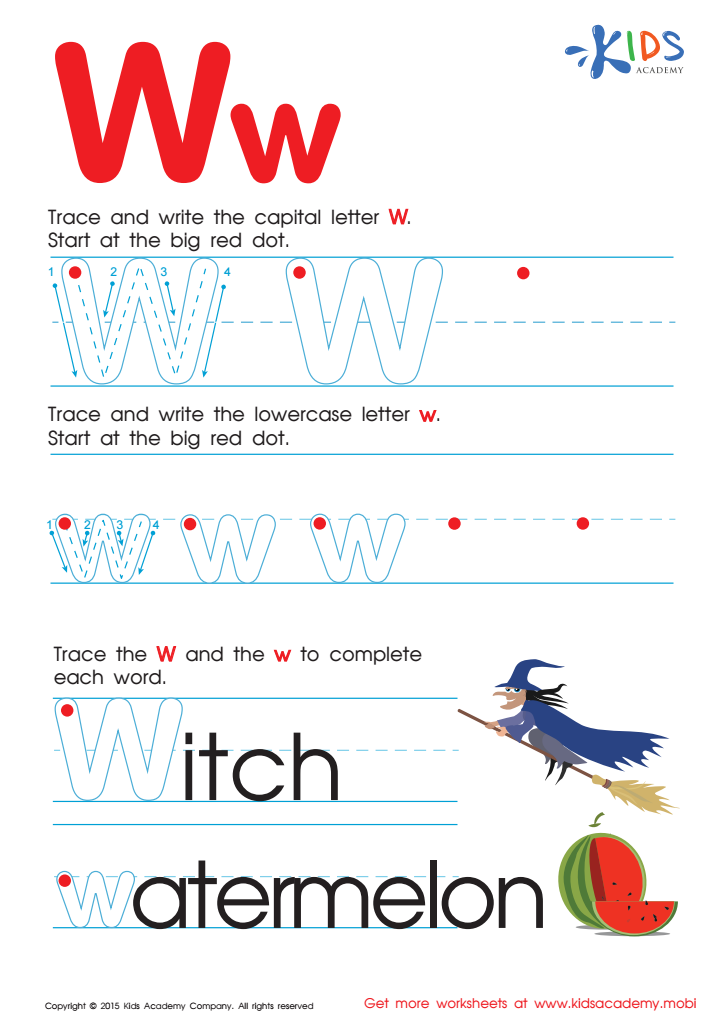
Trace and write the capital and lowercase letter W with this free letter tracing worksheet by Kids Academy. Complete the words "Witch" (capital) and "watermelon" (lowercase). Check out our other kindergarten alphabet worksheets!
Letter W Tracing Page
Worksheet
Letter L Tracing Page
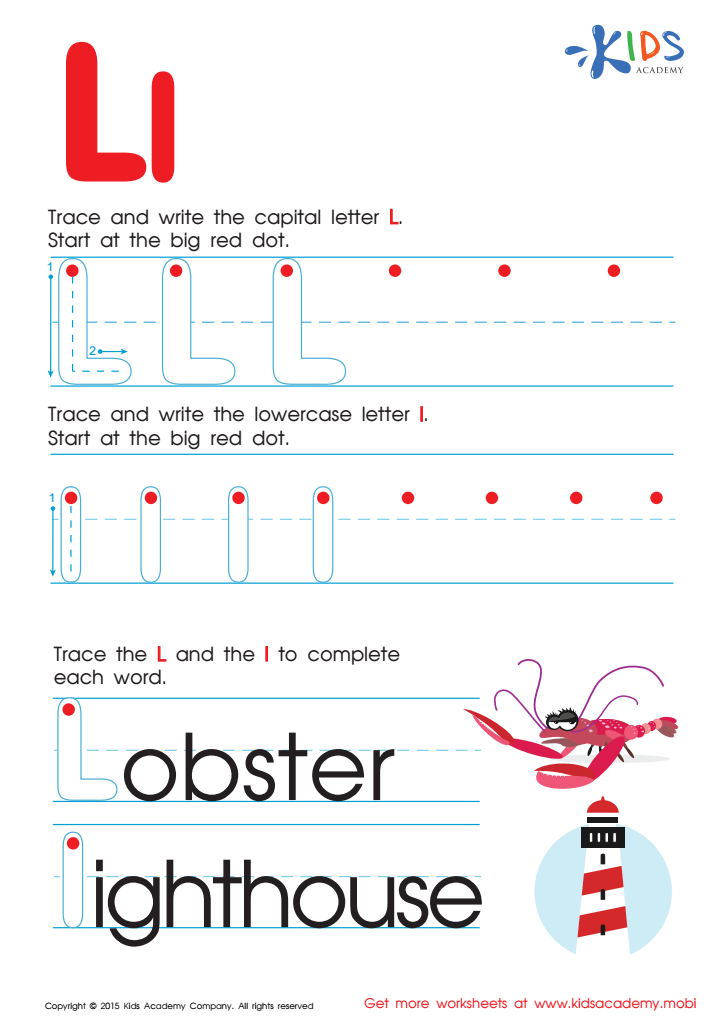
Trace uppercase and lowercase letters to practice writing. Pay attention to the lowercase letters, like the "L", that are not as tall as an uppercase "I" or as short as a lowercase "i". Words like "lobster" and "lighthouse" are waiting to be completed. Enjoy!
Letter L Tracing Page
Worksheet
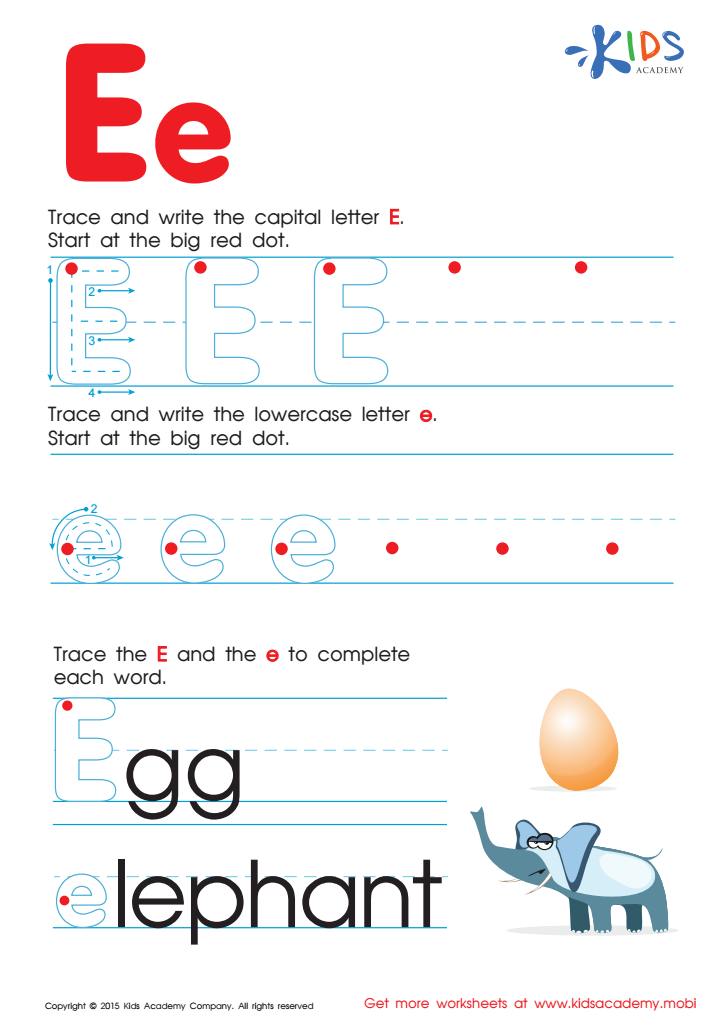
Letter E Tracing Page
Trace and write the uppercase and lowercase "E" starting at the big red dot. Complete words to perfect letter writing. Egg and Elephant must be written carefully. More alphabet worksheets for kindergarten are available for download to spend more time with your children learning.
Letter E Tracing Page
Worksheet
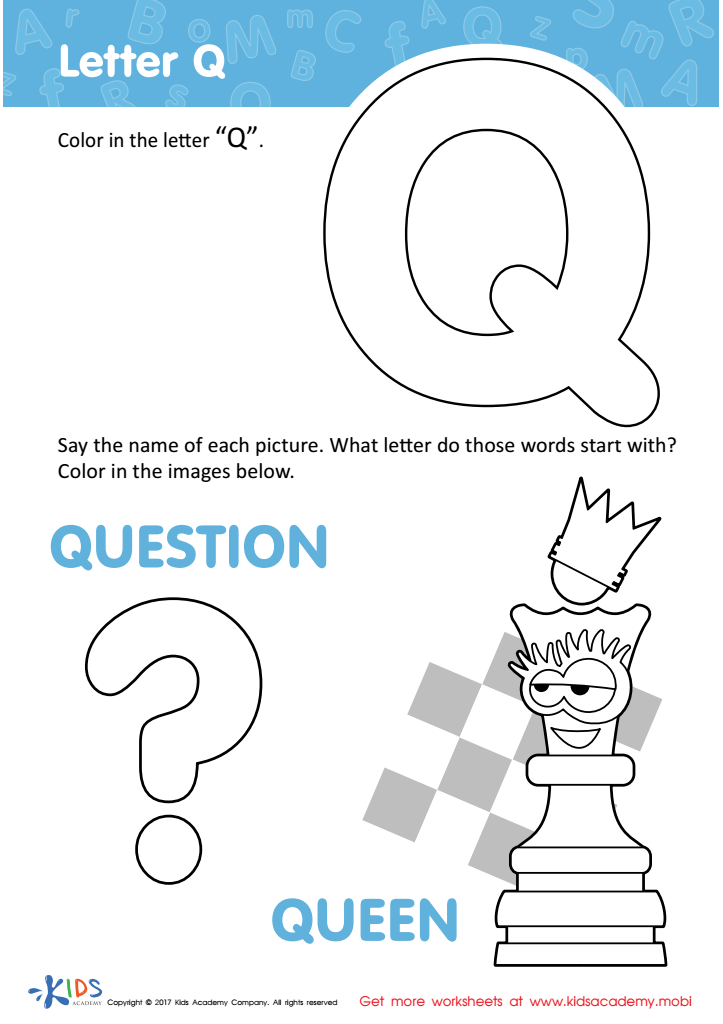
Letter Q Coloring Sheet
Kids need practice with letters not seen often. Give your child a boost with this letter "Q" coloring page! Have them color in the queen and question mark, while learning the sound "Q" makes. Fun and educational!
Download (PDF)
 Assign to My Students
Assign to My Students
Letter Q Coloring Sheet
Worksheet
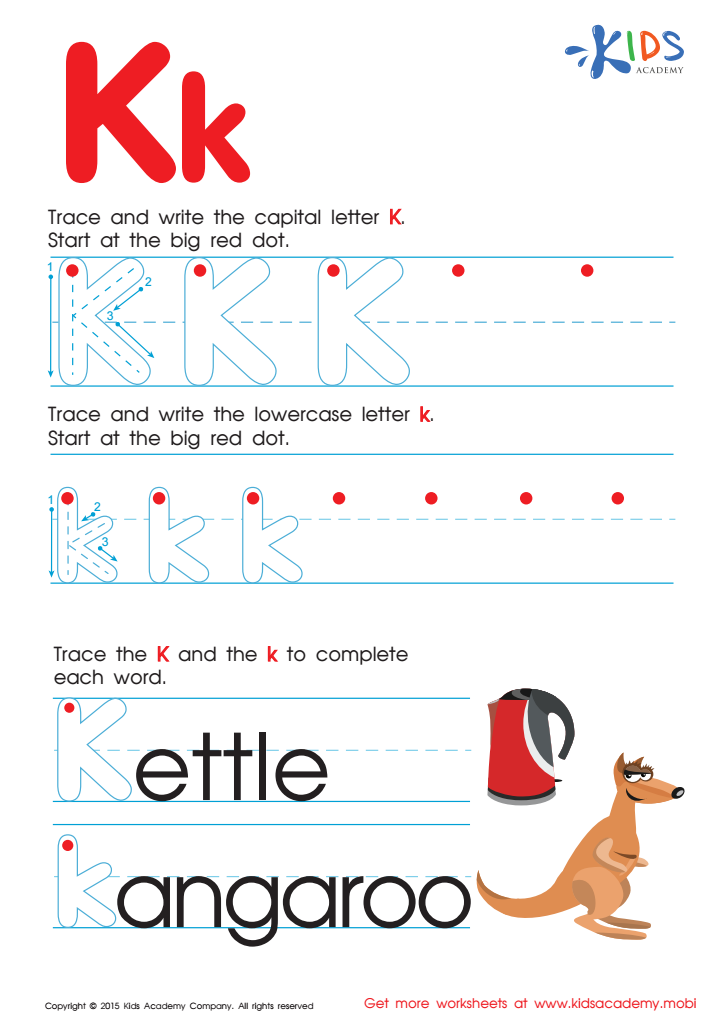
Letter K Tracing Page
Trace and write the letter K; start at the big red dot. Use it to complete words like "Kettle" and "Kangaroo". Visit Kids Academy for more free alphabet worksheets for kindergarten.
Letter K Tracing Page
Worksheet
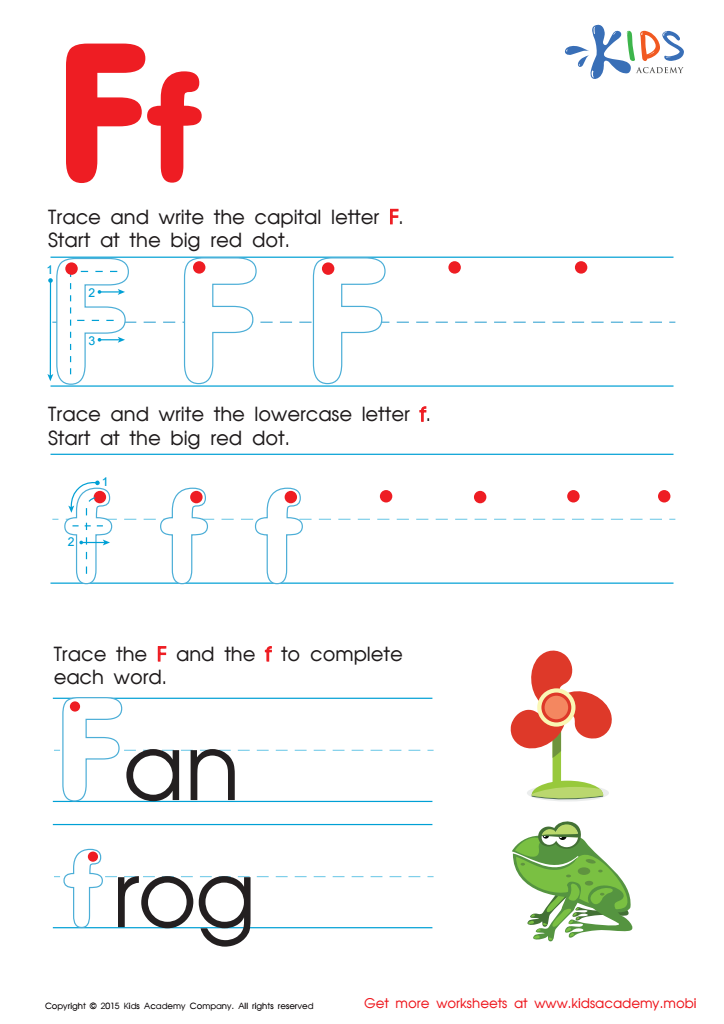
Letter F Tracing Page
Trace "F" with your pencil! Start at the red dot and draw lines — it's fun! Check it out — it looks great! Keep practicing to make it even better. Then, try completing words. Help out the broken fan and funny frog! Get free alphabet worksheets and activities for your kids. Come see our new tracing pages!
Letter F Tracing Page
Worksheet
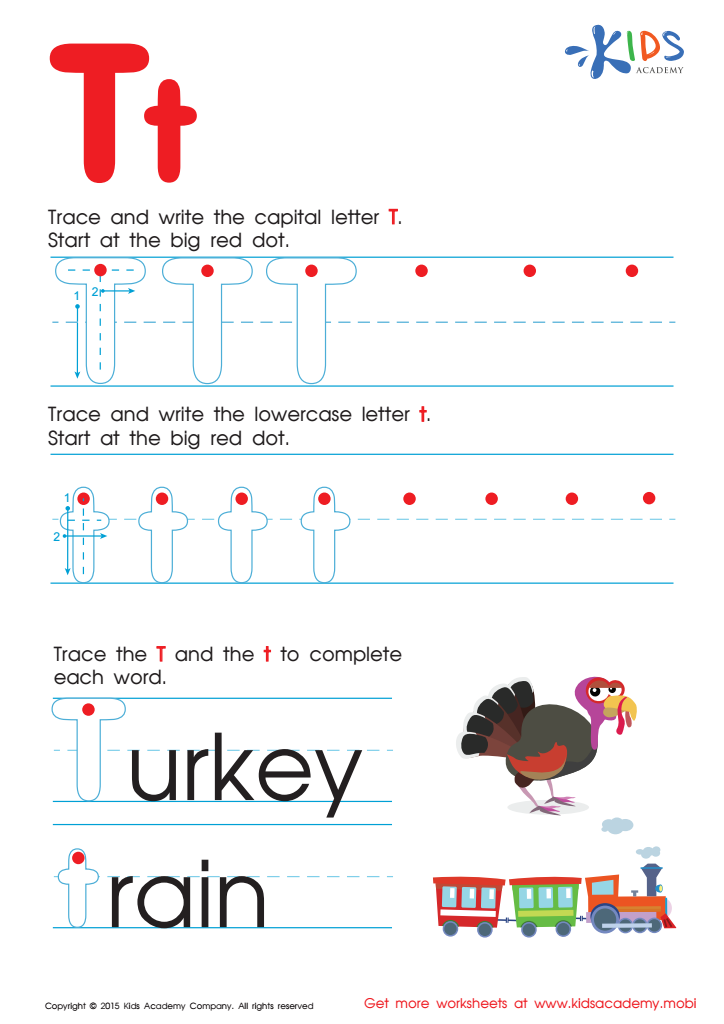
Letter T Tracing Page
Trace letters, complete words, draw pictures and see your kids having fun!
Kids Academy offers alphabet tracing worksheets to learn to write letters. Start with the big red dot, trace the letter, then write it. Practice uppercase and lowercase. Have fun completing words with a Turkey or a rain-train and draw pictures. Get more printable worksheets to make learning enjoyable.
Letter T Tracing Page
Worksheet
Join Kids Academy for Free
Who is primarily going to use this learning content?







Handwriting skills, particularly for ages 3-8, are foundational in a child's development and learning process. During these formative years, children are not just learning to write letters; they are also developing their fine motor skills, hand-eye coordination, and cognitive abilities. Mastering handwriting fosters a sense of accomplishment and boosts self-esteem as children see their progress and ability to communicate through writing.
Parents and teachers should be concerned about handwriting skills because they impact academic success. Legible handwriting is essential for completing assignments, expressing ideas during tests, and effective communication with peers and teachers. Additionally, developing proper grip and letter formation from a young age can prevent future struggles and promote a love for writing.
Furthermore, handwriting is linked to brain development. Engaging in writing activities activates multiple areas of the brain, enhancing memory retention, concentration, and creativity. In contrast, reliance on technology for communication can lead to a decline in handwriting skills.
Ultimately, cultivating handwriting skills in early education is not just about learning the alphabet but laying the groundwork for literacy and communication skills that serve children well into adulthood. Parents and teachers must prioritize these abilities to ensure holistic development in our digital age.







