Introduce your child to the elegant world of cursive writing with our Cursive Alphabet Worksheets designed for ages 3-8. At Kids Academy, our fun and engaging worksheets make learning cursive a delightful experience. Each worksheet focuses on individual letters, guiding young learners through smooth, flowing strokes that foster muscle memory. Our tailored exercises help children build fine motor skills, develop hand-eye coordination, and enhance their writing fluency. With colorful illustrations and clear guidance, kids will be excited to draw and trace each cursive letter. Give your child a head start in beautiful penmanship with Kids Academy's Cursive Alphabet Worksheets!

Check out this FREE Trial Lesson on Cursive Alphabet for age 3-8!

H

Favorites
With answer key
Interactive
  • 3-8
  • Cursive writing practice
  • Cursive Alphabet
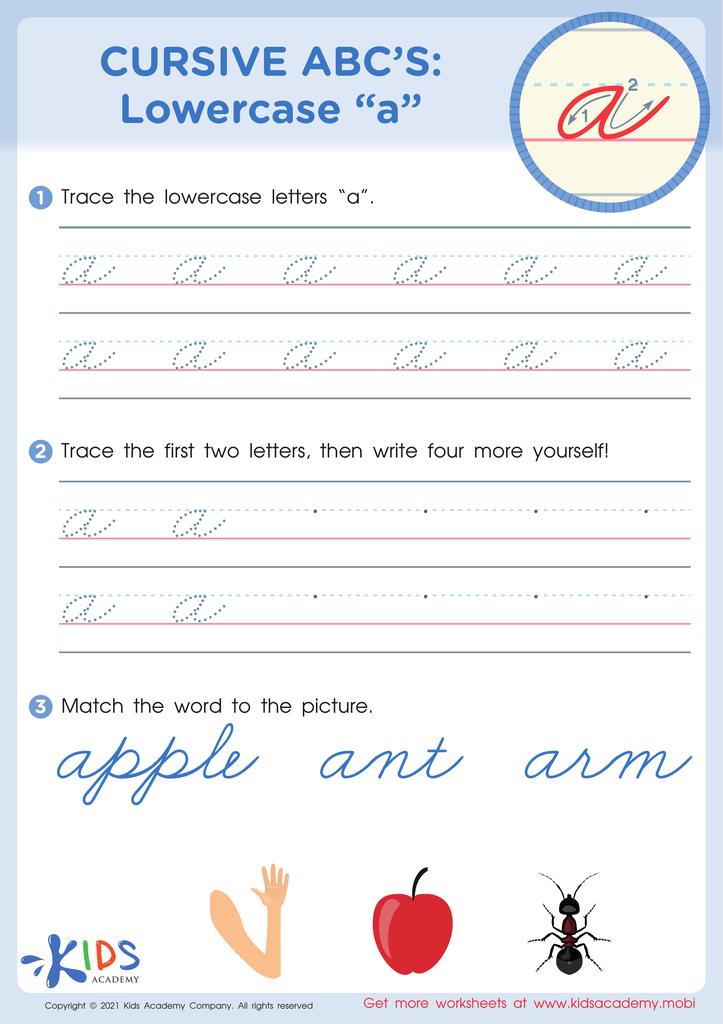
Cursive ABCs: Lowercase a

Cursive ABCs: Lowercase a

Help your children learn to write cursive letters with these free tracing sheets. They'll practice their handwriting, develop printing skills and build vocabulary. By tracing the lowercase letter “a” multiple times, they'll learn how it's formed and be ready to write it on their own. The colorful pictures at the bottom of each page also offer new words beginning with the letter 'a'.
Cursive ABCs: Lowercase a
Worksheet
Cursive ABCs: Lowercase f

Cursive ABCs: Lowercase f

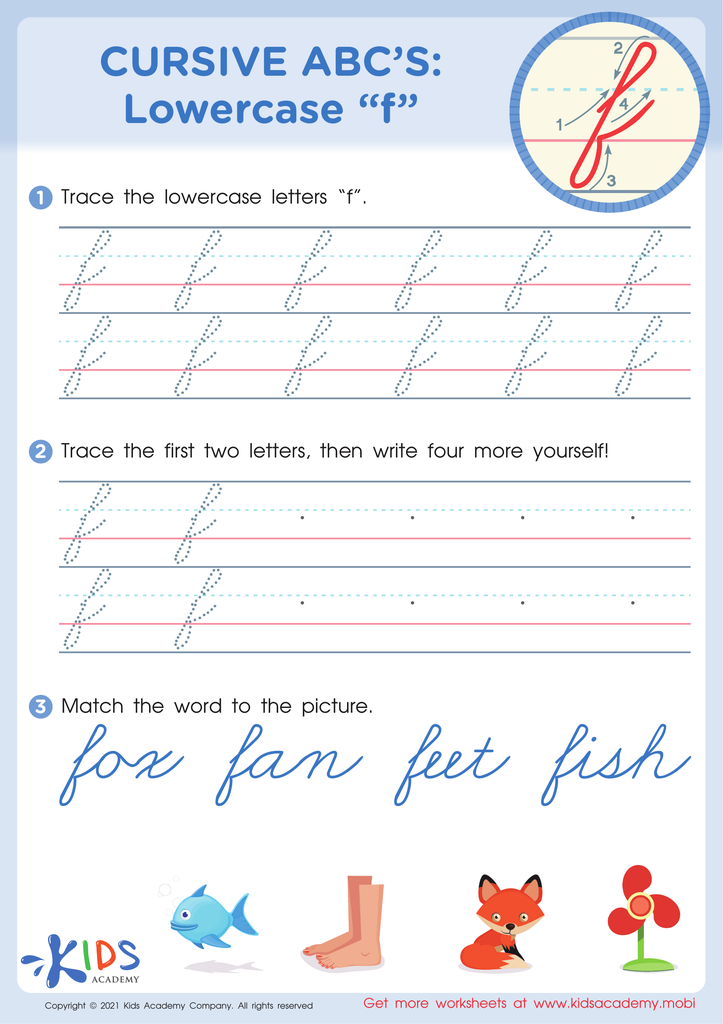
This worksheet helps your child improve letter writing and recognition. Each letter has its own form, so teaching is important. Practicing the lowercase letter 'f' helps kids memorize its shape and recognize it in words. With practice, they'll be able to write the letter correctly and identify it quickly.
Cursive ABCs: Lowercase f
Worksheet
Cursive ABCs: Uppercase F

Cursive ABCs: Uppercase F

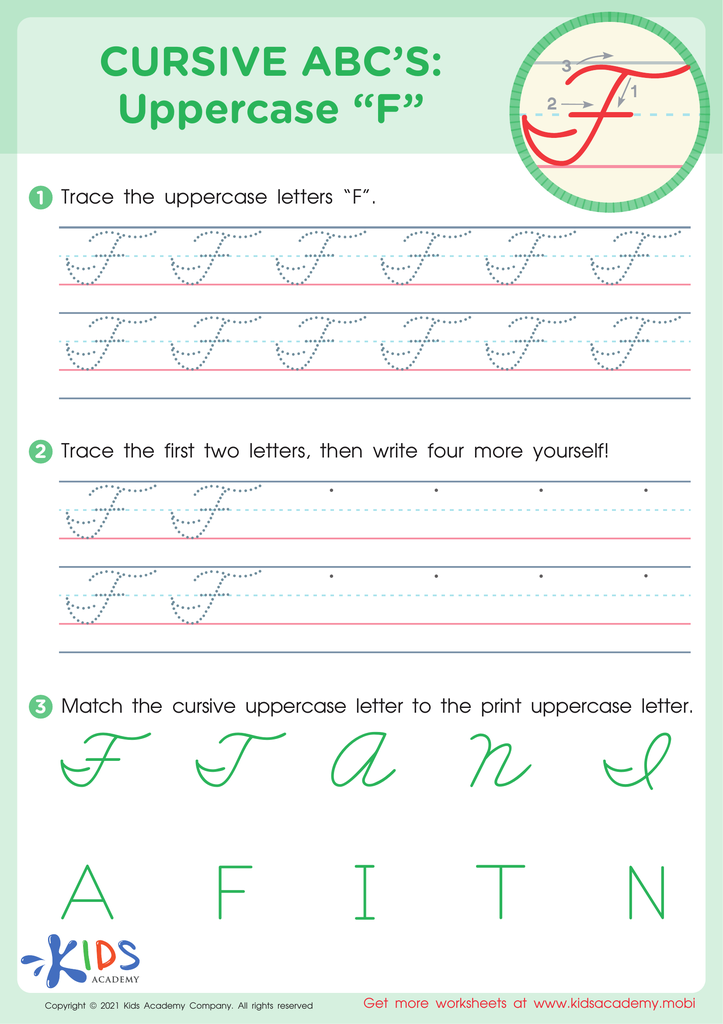
Help your kids trace the letters in these worksheets and watch their confidence grow as they learn to write cursive uppercase and lowercase letters. Ask them to identify the letters in words and give examples of words that start with an uppercase 'F', then have them write some letters on their own and assess their progress.
Cursive ABCs: Uppercase F
Worksheet
Cursive ABCs: Uppercase G

Cursive ABCs: Uppercase G

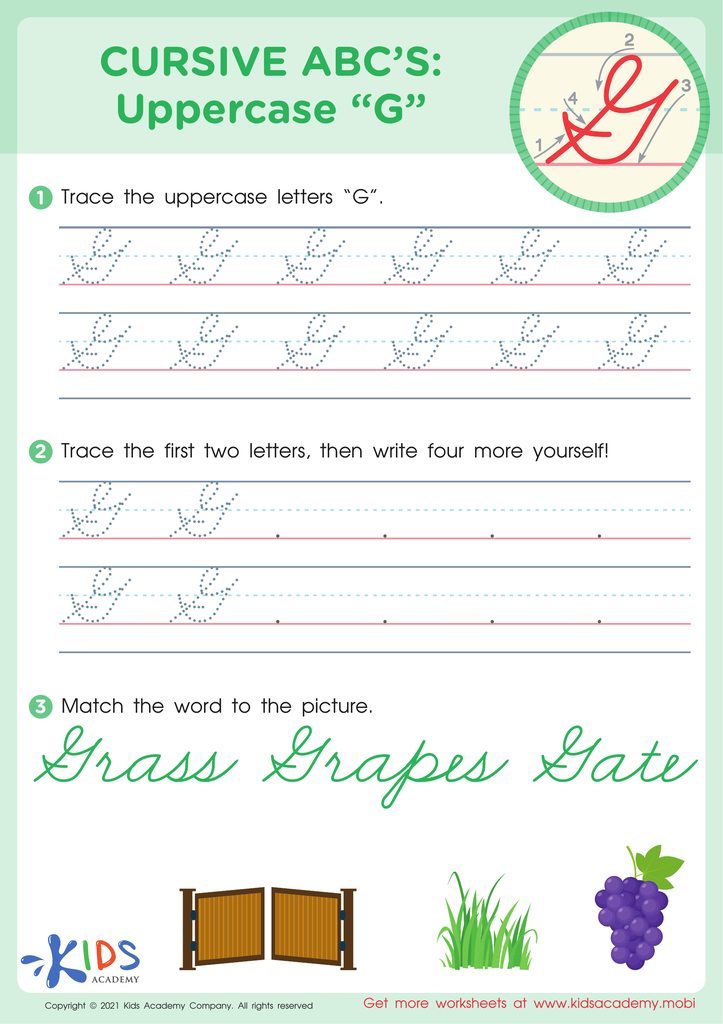
Remind your kids of words beginning with 'G' like 'girl' and 'goat'. Ask them to give examples too. Use this tracing worksheet to help your kids practice writing the cursive uppercase 'G'. It'll help them perfect their motor skills and get better at cursive letters.
Cursive ABCs: Uppercase G
Worksheet
Cursive ABCs: Uppercase B

Cursive ABCs: Uppercase B

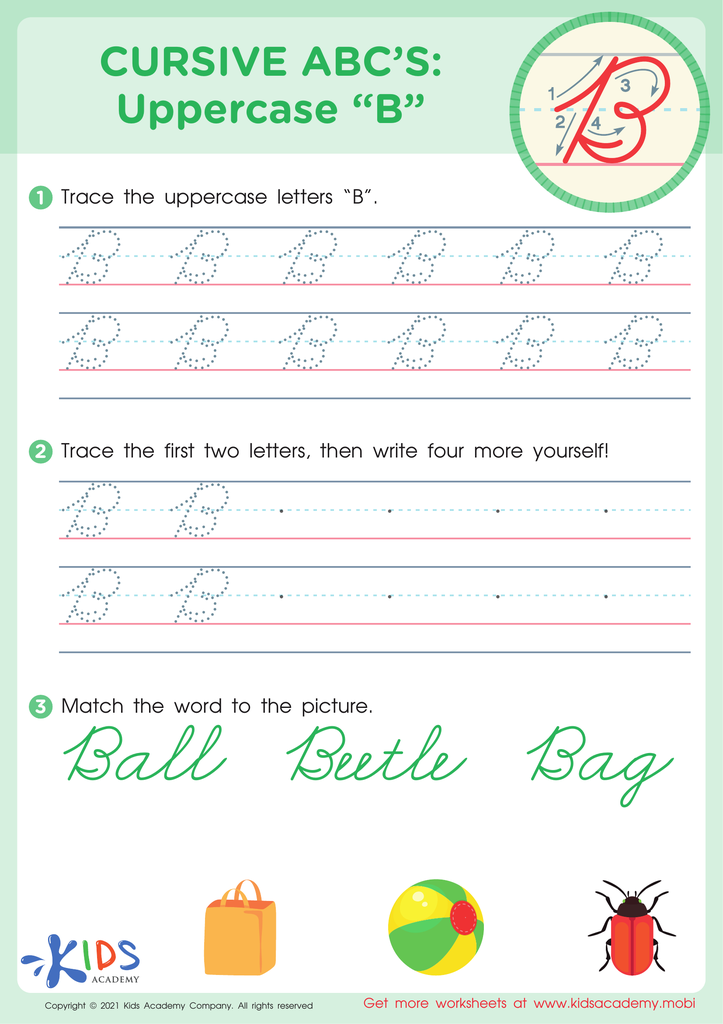
Help your kids learn the alphabet: have them identify, give examples and sound out letters, then use tracing worksheets to perfect cursive uppercase writing. Show them how to trace the letter ‘B’, then watch them write it on their own. This will give them the skills needed for further writing!
Cursive ABCs: Uppercase B
Worksheet
Cursive ABCs: Uppercase D

Cursive ABCs: Uppercase D

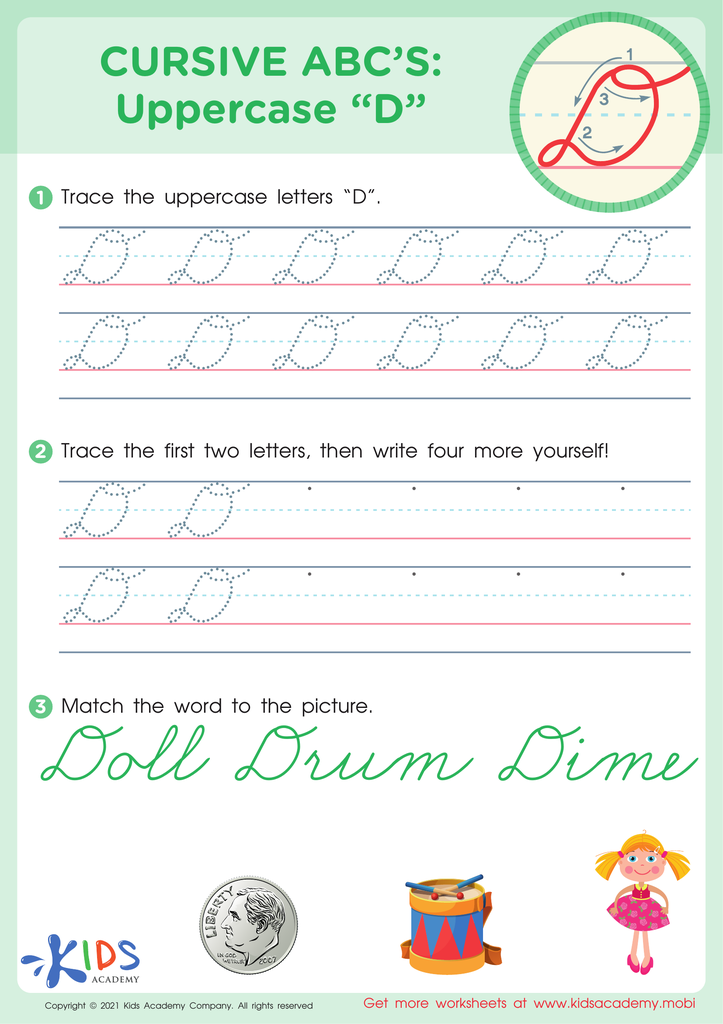
Help your kids learn to write the uppercase letter 'D' in cursive with the help of this tracing worksheet. Show them how to trace it over and over. When they're ready, let them write the letter on their own. Match pictures to words that start with 'D' and your kids will be pros in no time!
Cursive ABCs: Uppercase D
Worksheet
Cursive ABCs: Uppercase C

Cursive ABCs: Uppercase C

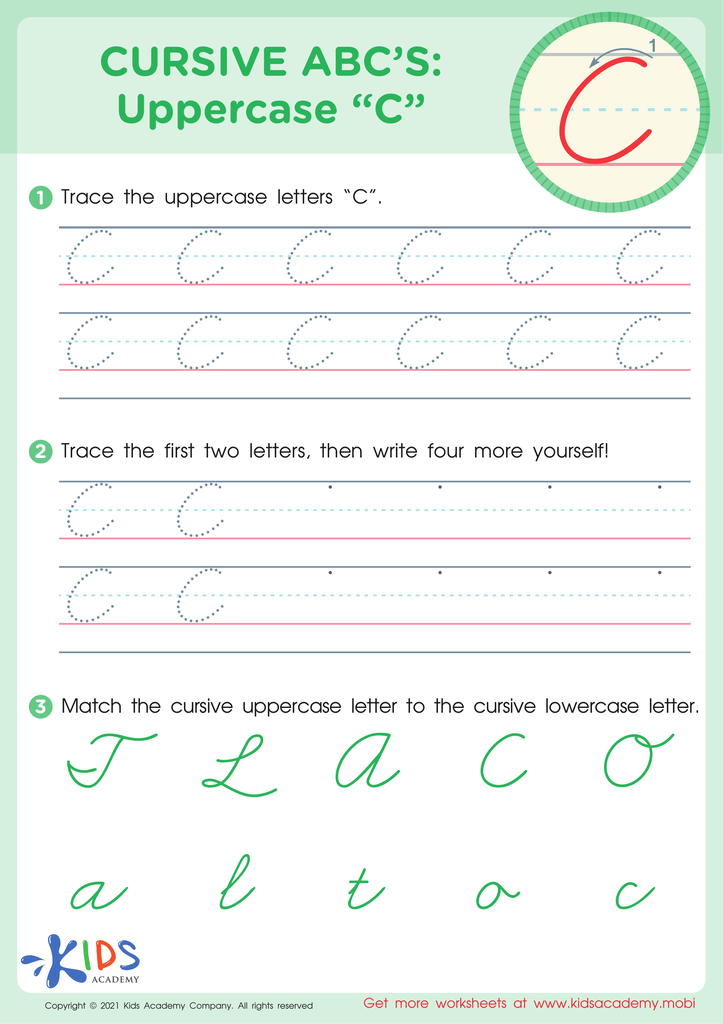
These worksheets are perfect for those wanting to improve their handwriting or learn letter recognition. The tracing exercises help younger students sharpen their writing skills and teach how to write the 'C' in cursive. First, they trace the given examples and then practice writing it solo. A letter recognition test is at the bottom of the page to check progress.
Cursive ABCs: Uppercase C
Worksheet
Cursive ABCs: Lowercase c

Cursive ABCs: Lowercase c

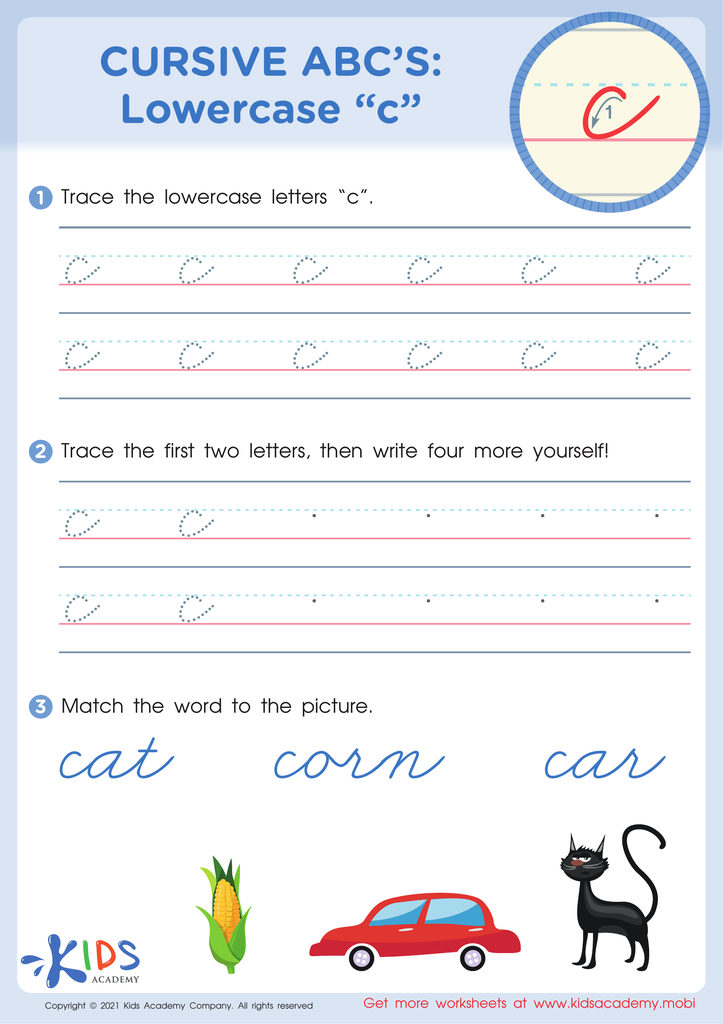
Once your child has successfully printed their letters, help them learn to recognize and write the alphabet in cursive. Struggling? This worksheet is perfect to assist them. Writing is an essential skill for kids to learn, so do all you can to help them. Use these tracing worksheets and guide them as they write the lowercase letter 'c' in cursive.
Cursive ABCs: Lowercase c
Worksheet
Cursive ABCs: Lowercase h

Cursive ABCs: Lowercase h

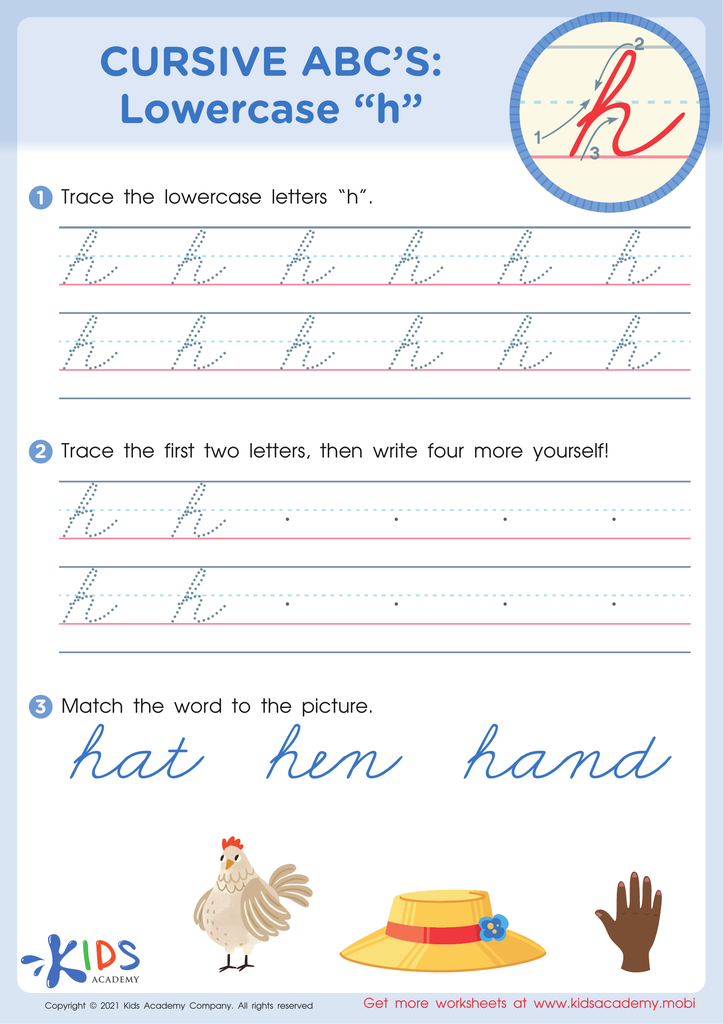
Your children will need more than just reciting the alphabet; they need to learn how to identify and write it. Cursive writing helps with neatness, and these tracing worksheets are great learning aids and offer exercises to practice writing lowercase 'h'. With these, your children get better writing skills and learn new words.
Cursive ABCs: Lowercase h
Worksheet
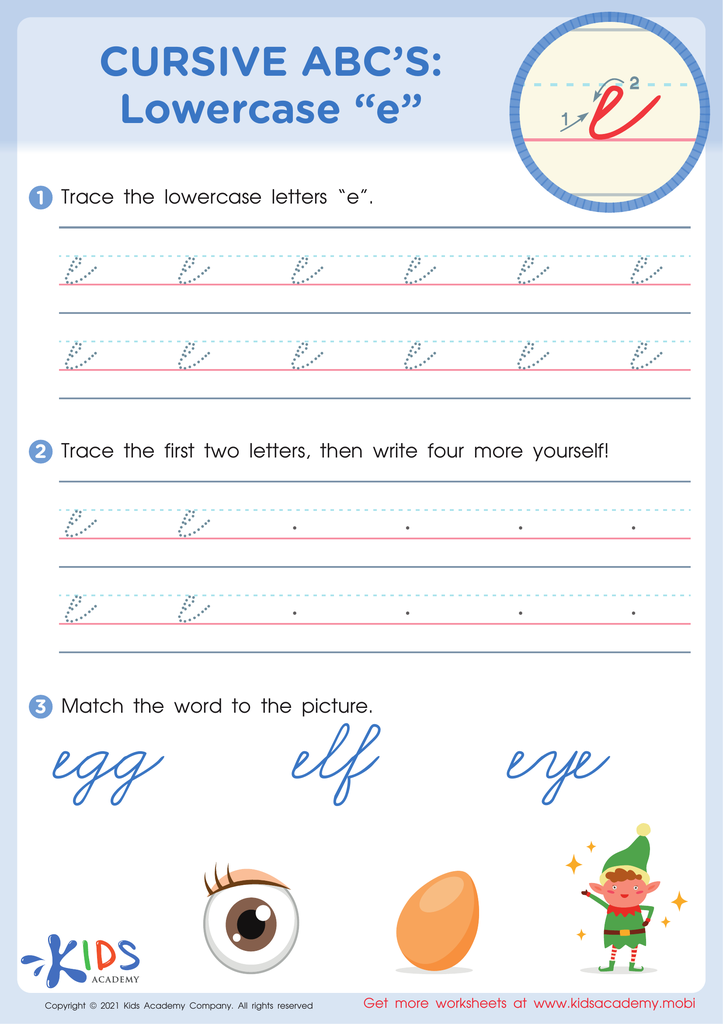
Cursive ABCs: Lowercase e

Cursive ABCs: Lowercase e

Traceable worksheets are great for kids wanting to practice writing alphabet letters. Help them improve their skills by tracing dotted lines to form 'e', then writing it on their own. They'll also learn new words beginning with letters of the alphabet.
Cursive ABCs: Lowercase e
Worksheet
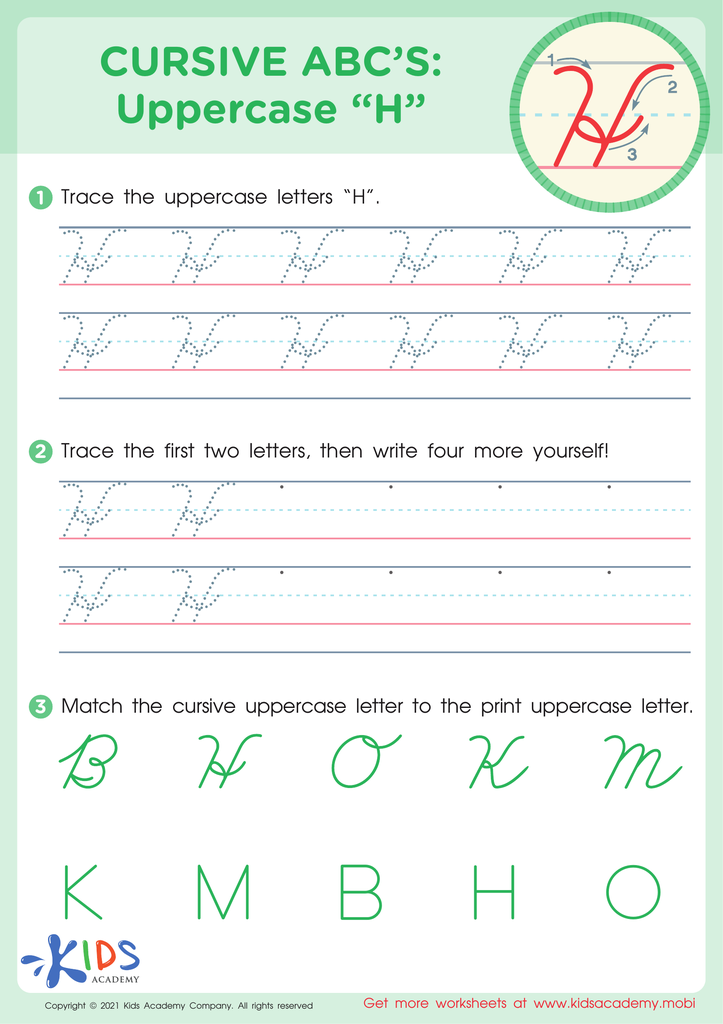
Cursive ABCs: Uppercase H

Cursive ABCs: Uppercase H

Have your child recite the alphabet and give you words beginning with H. This tracing sheet is perfect to help them improve their handwriting. Guide their hands as they trace the uppercase H, then have them practise writing it alone. At the bottom is an exercise to check their letter recognition.
Cursive ABCs: Uppercase H
Worksheet


Encouraging children ages 3-8 to practice cursive writing yields numerous cognitive, motor, and developmental benefits that warrant the attention of both parents and teachers. Firstly, learning cursive improves fine motor skills through the deliberate and precise movements required to form each letter, thereby refining hand-eye coordination. Secondly, cursive practice enhances literacy and reading skills, as children become more familiar with letter shapes and can distinguish similar-looking characters more easily. The connected nature of cursive writing also helps reinforce the directionality of writing from left to right, aiding in smoother transitions between letters.

Moreover, studies suggest that writing in cursive activates different neural pathways than print writing, potentially enhancing brain development in areas related to thinking, memory, and language. This can translate into better information retention and thorough comprehension. For young children learning cursive, there is also the element of acquiring a historical skill, building their understanding of traditional texts and documents written in cursive.

Lastly, consistent practice in cursive writing fosters patience, attention to detail, and discipline, traits that are invaluable in both academic and real-life contexts. Thus, integrating cursive writing practice into daily routines benefits children’s overall educational and personal growth, making it a practice worthy of careful consideration and investment by both parents and teachers.