
Reading comprehension Elementary Phonics Worksheets for Ages 3-8
9 filtered results
Difficulty Level
Grade
Age
-
From - To
Subject
Activity
Standards
Enhance your child's reading skills with our engaging Elementary Phonics Worksheets designed for ages 3-8. Our carefully crafted activities focus on building strong phonics foundations, improving reading comprehension, and fostering a love for learning. Each worksheet combines fun illustrations and interactive exercises to help young learners recognize letters, understand sounds, and develop critical reading skills. Perfect for at-home practice or classroom use, these worksheets will support your child's journey toward becoming a confident and proficient reader. Explore our diverse collection and watch your little one’s literacy skills flourish!
Favorites
With answer key
Interactive
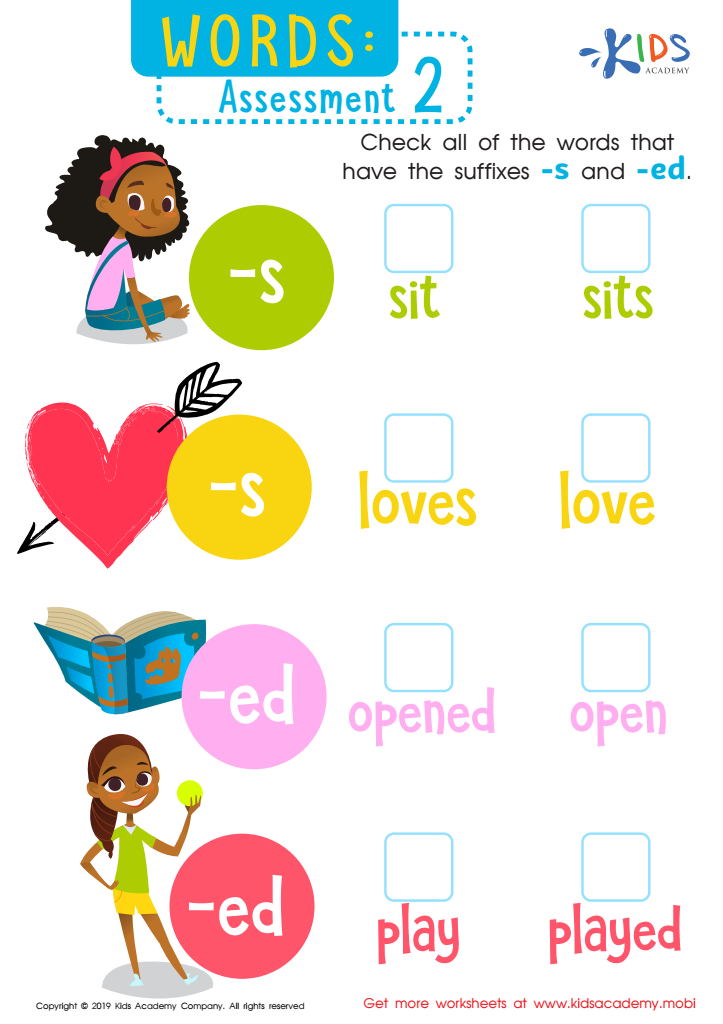
Words: Assessment 2 Worksheet
Test your child’s knowledge of -s and -ed word endings with this fun worksheet! They'll look at images and read the words, then choose the correct suffix to finish each one. Vivid illustrations make this an enjoyable learning experience!
Words: Assessment 2 Worksheet
Worksheet
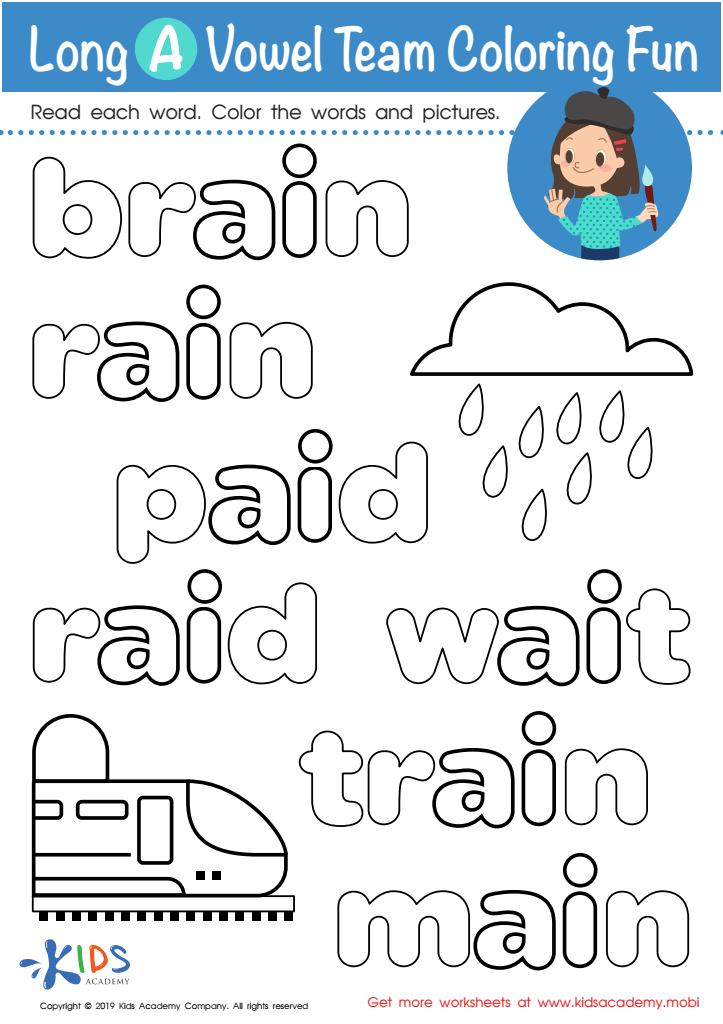
Long A Vowel Team Coloring Fun Worksheet
Divide your class into teams, give each a printout, then have them read aloud words with a long "A" sound (e.g. brain, paid). As they listen, let them reinforce this lesson by coloring in the words and pictures. Make phonics fun and interactive with this great coloring page!
Download (PDF)
 Assign to My Students
Assign to My Students
Long A Vowel Team Coloring Fun Worksheet
Worksheet
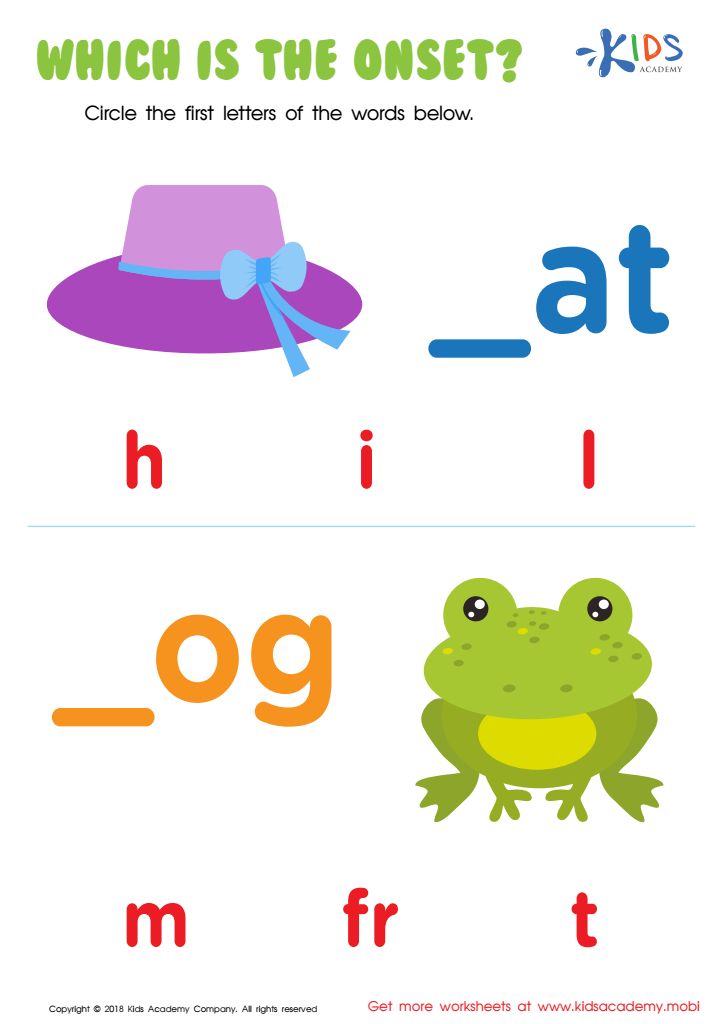
Which Is the Onset? Worksheet
Help your children learn to spell with this bright, fun worksheet. Struggling with spelling small words can make reading and writing sentences difficult. Encourage them to look at the pictures, say the names aloud and circle the correct first letter from the options. They will soon overcome any reluctance to spell.
Which Is the Onset? Worksheet
Worksheet
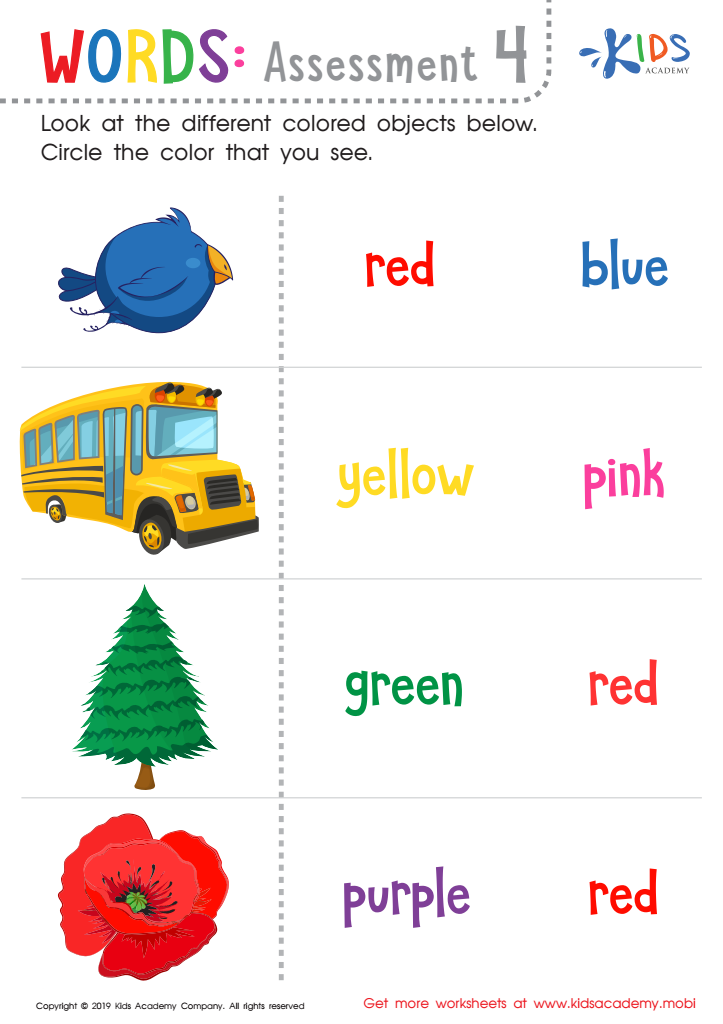
Words: Assessment 4 Worksheet
Look at the pictures and have your child circle the color they see. This free worksheet is great for assessing their knowledge of vocabulary words. It offers familiar images with words for kids to read and match with the colors. Help your child build their reading and understanding skills with this fun activity!
Words: Assessment 4 Worksheet
Worksheet
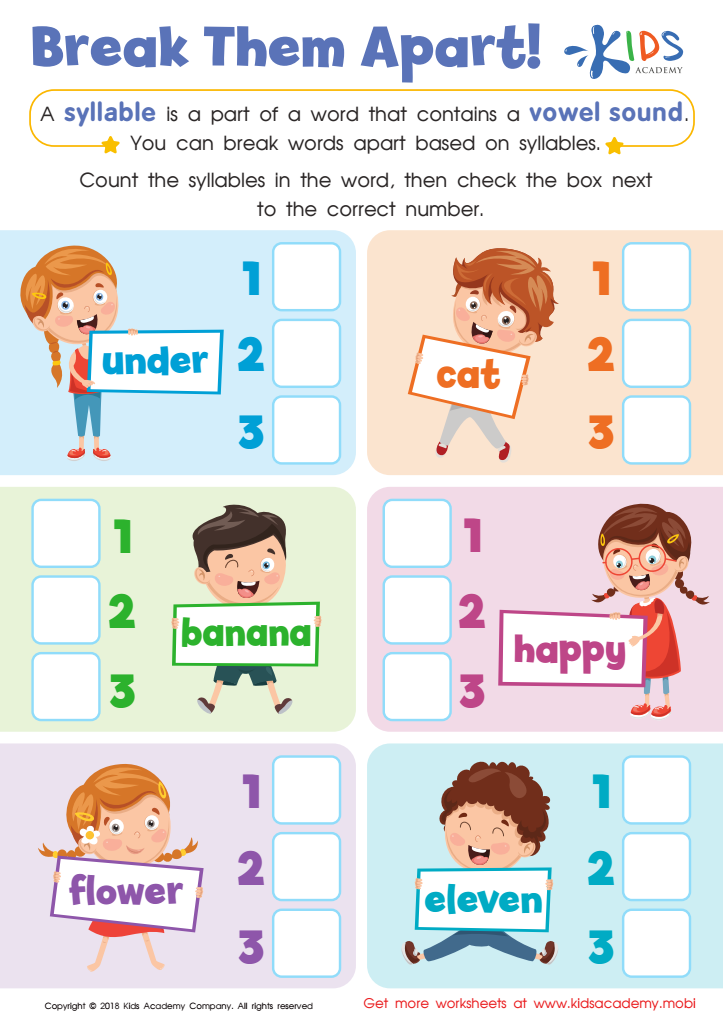
Reading: Break Them Apart Worksheet
See if students understand syllables with this fun worksheet. It teaches them that a syllable is a word part with a vowel sound. Kids read each word and choose how many parts it has. Doing this often helps them decode new words and gain confidence.
Reading: Break Them Apart Worksheet
Worksheet
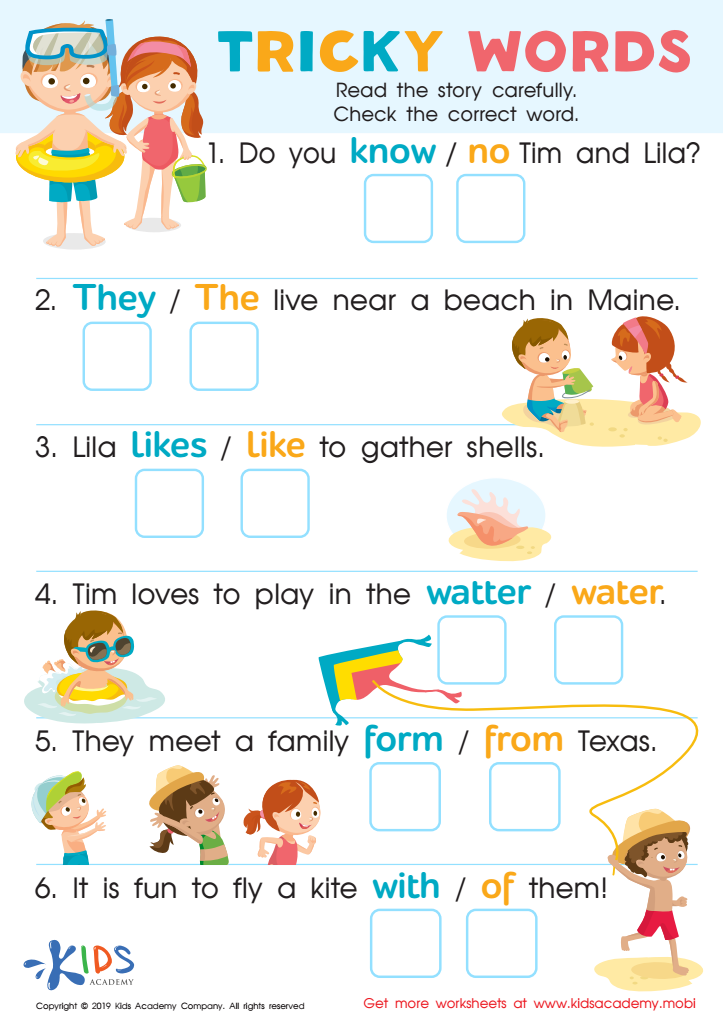
Tricky Words Worksheet
Reading can be tricky to start with, but this worksheet helps kids learn the basics of editing and strengthens their attention to detail. They'll select the right word from tricky choices, improving their reading and grammar skills.
Tricky Words Worksheet
Worksheet
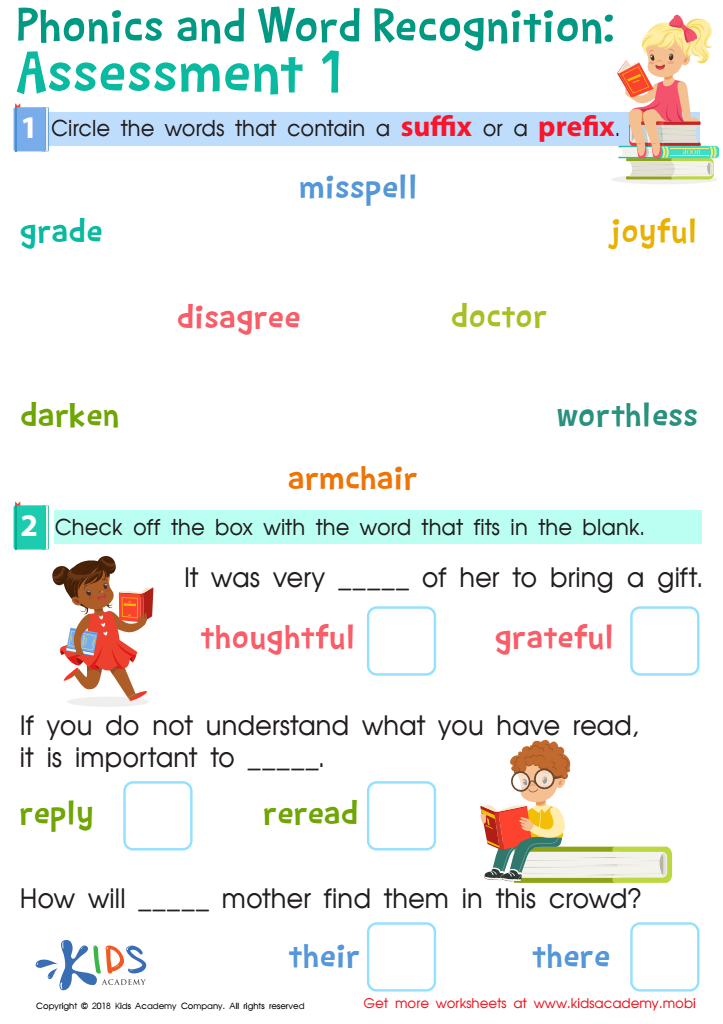
Phonics and Word Recognition: Assessment 1 Worksheet
Explain prefixes (words added to start of another word to give it a new meaning) and suffixes (added to end of word to change its meaning) to your kids with examples like 'unhappy' (prefix) and 'forgetful' (suffix). Now, help your child complete this worksheet, including circling words and checking boxes.
Phonics and Word Recognition: Assessment 1 Worksheet
Worksheet
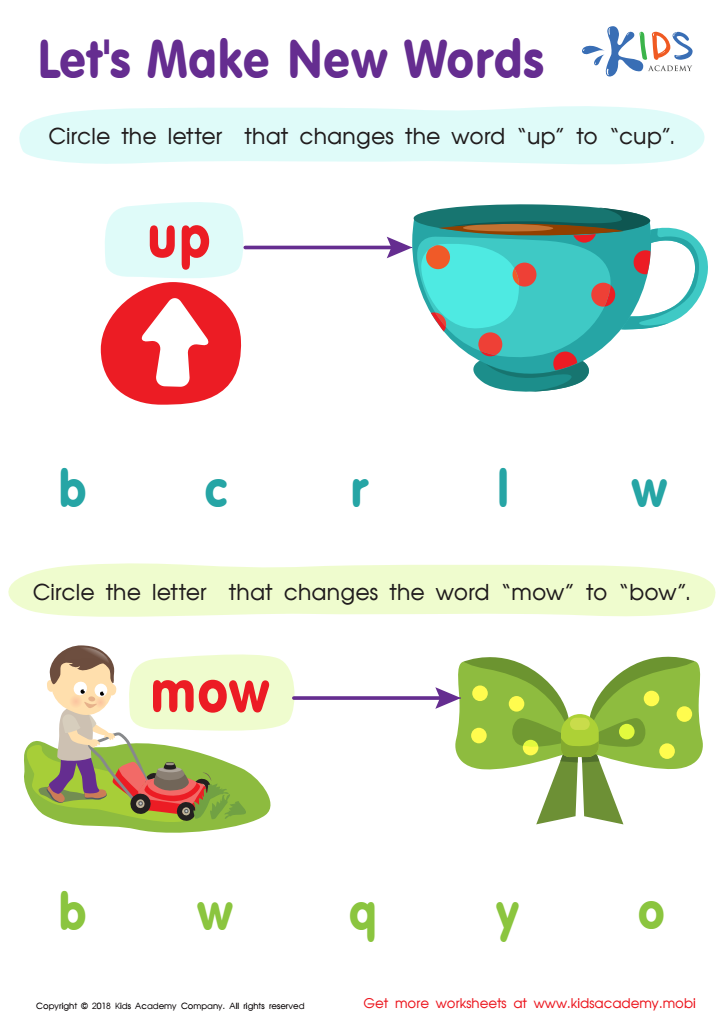
Let's Make New Words Worksheet
This fun and colorful downloadable worksheet is perfect for helping young readers to build confidence and practice their skills. They'll circle the letters to magically make new words, while developing fine motor skills. It'll be so much fun, they won't even realize they're honing their reading skills!
Let's Make New Words Worksheet
Worksheet

Long and Short E Worksheet
This fun printout makes learning phonics enjoyable for Grade 3 students. Get them to read the words “tree” and “bed” to recognize the different sounds of the letter “E”. After hearing the words they can color the words and the pictures to understand differences between long and short vowels.
Download (PDF)
Assign to My Students
Assign to My Students
Long and Short E Worksheet
Worksheet
Join Kids Academy for Free
Who is primarily going to use this learning content?




Parents and teachers should care deeply about reading comprehension and elementary phonics for children aged 3-8 because these early literacy skills are foundational to future academic success. During this crucial developmental period, children are highly receptive to learning the basics of language, including how sounds correspond to letters (phonics) and how those letters form words, sentences, and stories.
Reading comprehension is equally important; it's not enough for a child to merely decode words—they must also understand and internalize the meaning of what they read. Good comprehension skills enable children to grasp new information, follow instructions, and engage with text on a critical level, which fuels imagination, empathy, and cognitive growth.
Acquiring strong skills in phonics and reading comprehension early on can prevent future struggles with reading, which is a critical skill for all subjects. Proficiency in reading opens doors to a world of knowledge and learning. The ability to read fluently and comprehend effectively empowers children to seek information, think critically, and express their ideas clearly, setting a firm foundation for lifelong learning.
By prioritizing these skills during instruction, parents and teachers set children on a path to academic success and personal growth, brightening their future prospects and fostering a love for learning.







