Sound-letter correlation Alphabet Worksheets for Ages 3-8
3 filtered results
-
From - To
Unlock the world of literacy with our engaging Sound-Letter Correlation Alphabet Worksheets, designed specifically for children ages 3-8. These thoughtfully crafted resources help young learners connect sounds to their corresponding letters, enhancing phonemic awareness and aiding in effective reading skills development. With a variety of fun activities, including matching, tracing, and coloring, children will enjoy exploring the alphabet while building a solid foundation for reading and writing. Perfect for home or classroom use, our worksheets cater to diverse learning styles and provide an interactive way to support early literacy. Start your child’s journey towards reading success today!
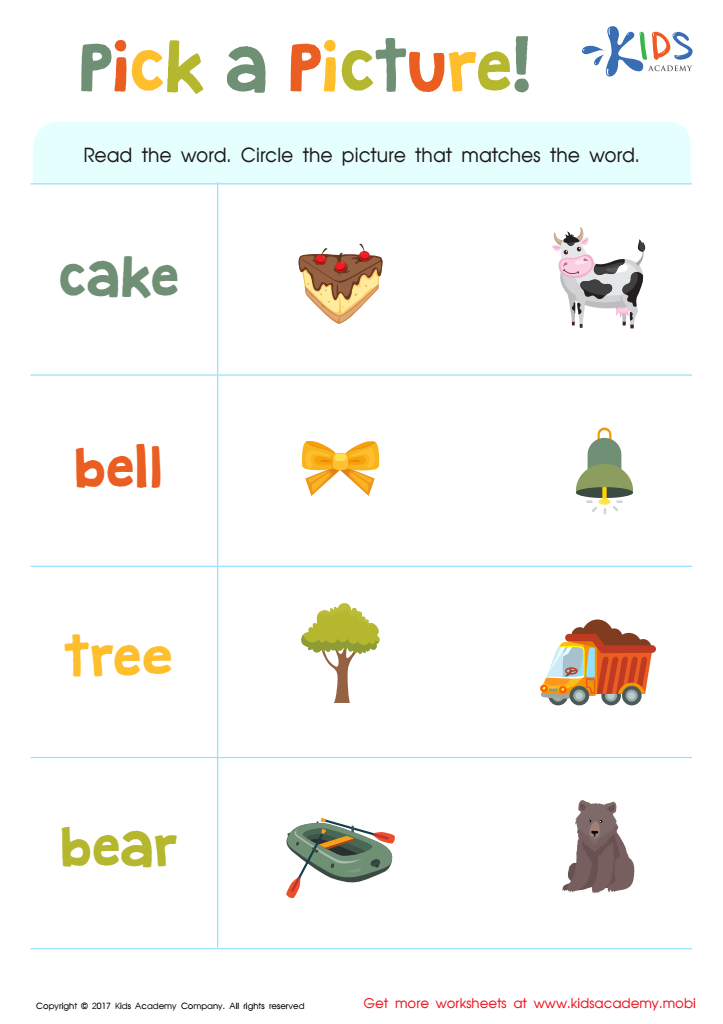
Pick a Picture Word Recognition Worksheet
 Assign to My Students
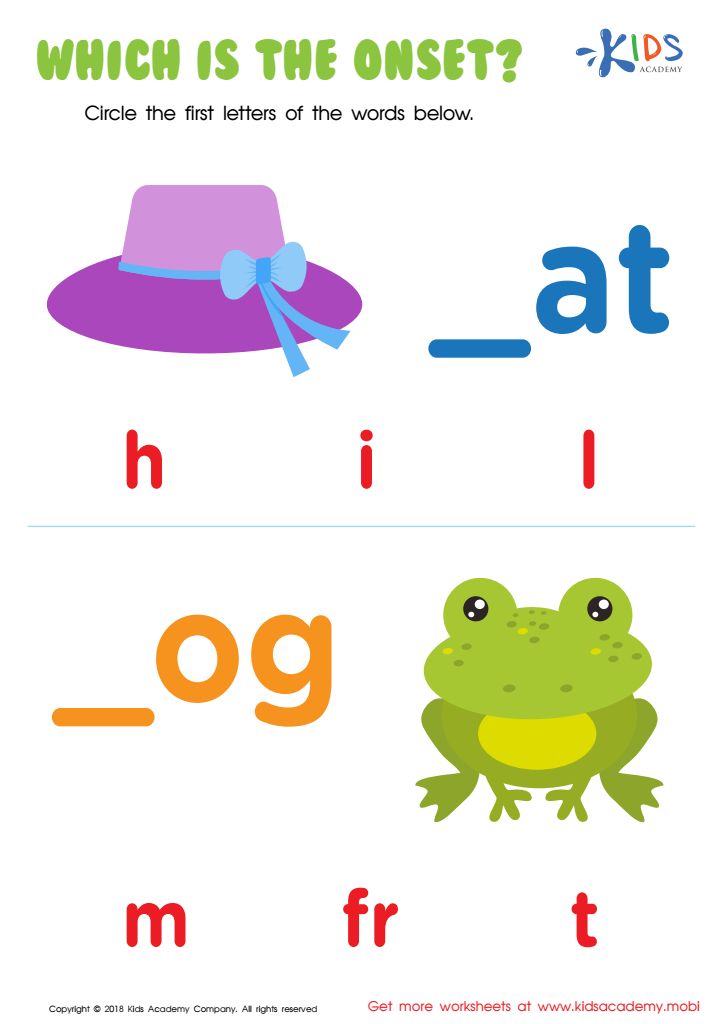
Which Is the Onset? Worksheet
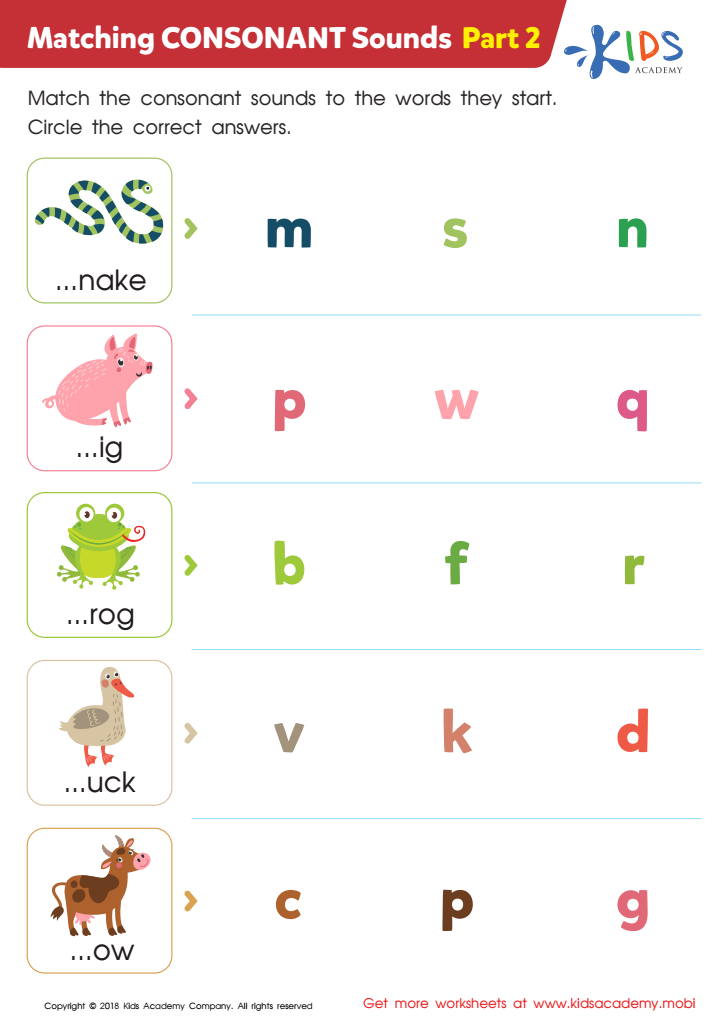
Matching Consonant Sounds: Part 2 Worksheet







Sound-letter correlation, often referred to as phonics, is a fundamental component in literacy development for children aged 3 to 8. Understanding the connection between sounds and their corresponding letters is crucial for early reading and writing skills. For parents and teachers, fostering this awareness is essential for several reasons.
Firstly, sound-letter correlation provides the foundational skills necessary for decoding words. Children who grasp this concept can sound out unfamiliar words, enhancing their reading fluency and comprehension. This ability also promotes a love for reading as they become more confident in tackling new texts.
Secondly, phonics instruction supports spelling and writing. When children recognize the sounds associated with letters, they can transcribe their thoughts into written form more easily, aiding in effective communication skills.
Furthermore, consistent exposure to phonics activities enriches vocabulary development. Word games, songs, and interactive practices can make learning enjoyable and engaging.
Lastly, early literacy skills are predictors of later academic success. Parents and teachers who actively nurture sound-letter correlation set the stage for lifelong learning, as strong readers are often more successful in various subjects throughout their education. Therefore, investing time and resources into phonics education is a crucial step in supporting children's overall development.







