Understanding syllables Alphabet Worksheets for Ages 3-8
4 filtered results
-
From - To
Explore our "Understanding Syllables Alphabet Worksheets" designed specifically for children ages 3-8. These engaging, printable resources help young learners grasp fundamental syllable concepts through fun activities focused on phonics, letter recognition, and word structure. Each worksheet is crafted tomake learning interactive and enjoyable, encouraging kids to visualize syllables while enhancing their reading and language skills. By working through these exercises, children will develop essential literacy competencies, laying a strong foundation for future academic success. Start your child’s phonetic journey today with our thoughtfully designed worksheets that combine education with play! Perfect for classrooms, homeschooling, or supplementary learning.
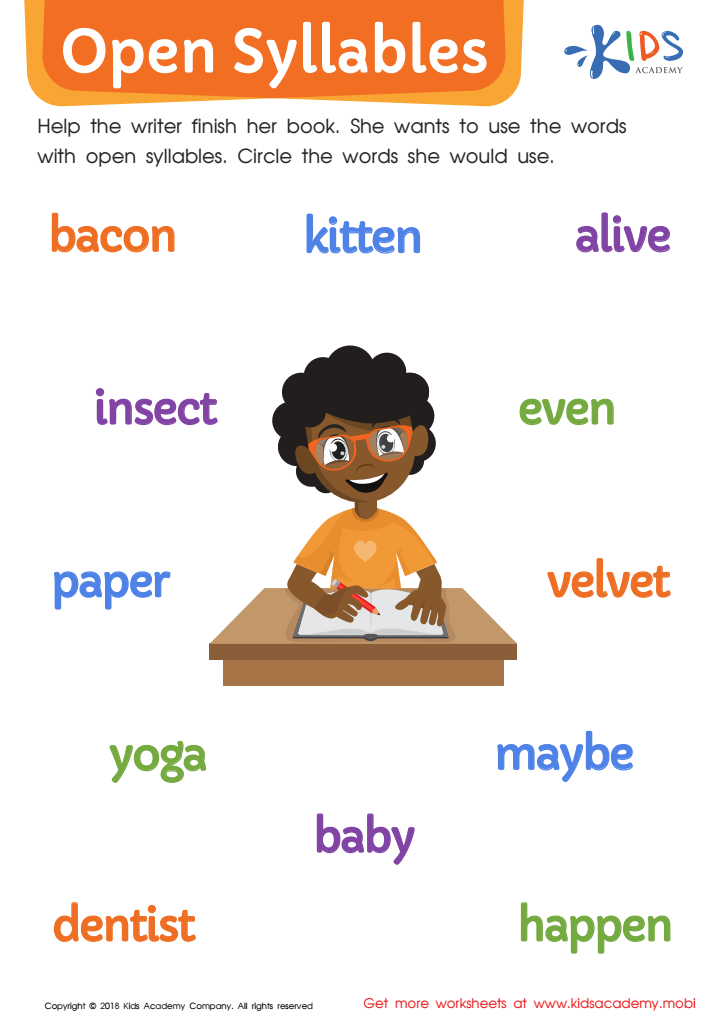
Open Syllables Worksheet
 Assign to My Students
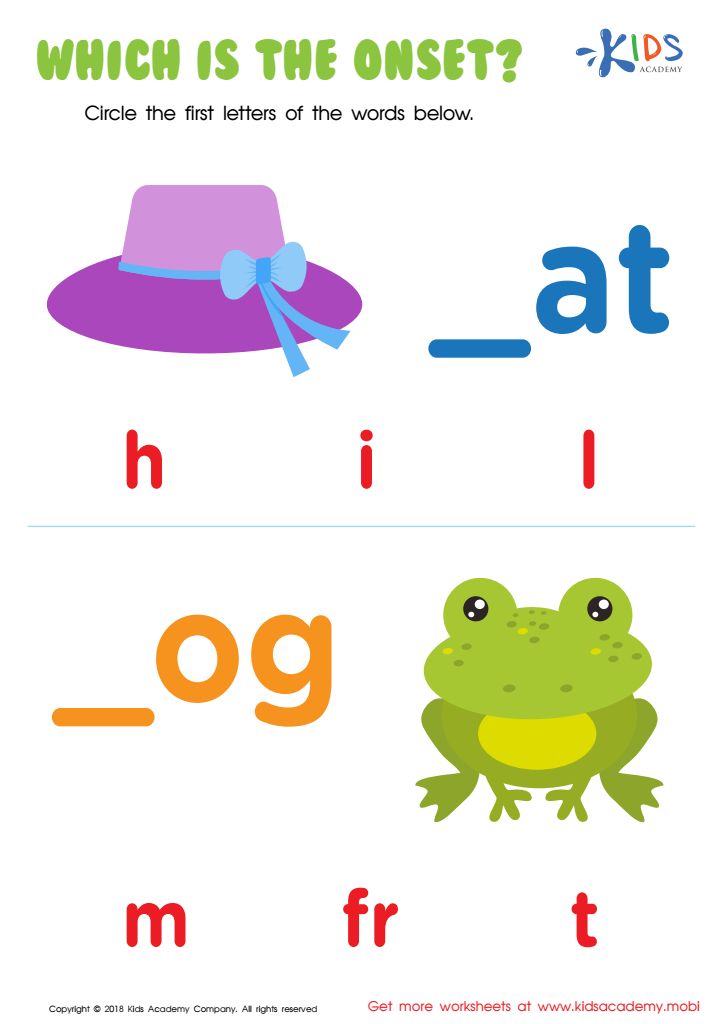
Which Is the Onset? Worksheet
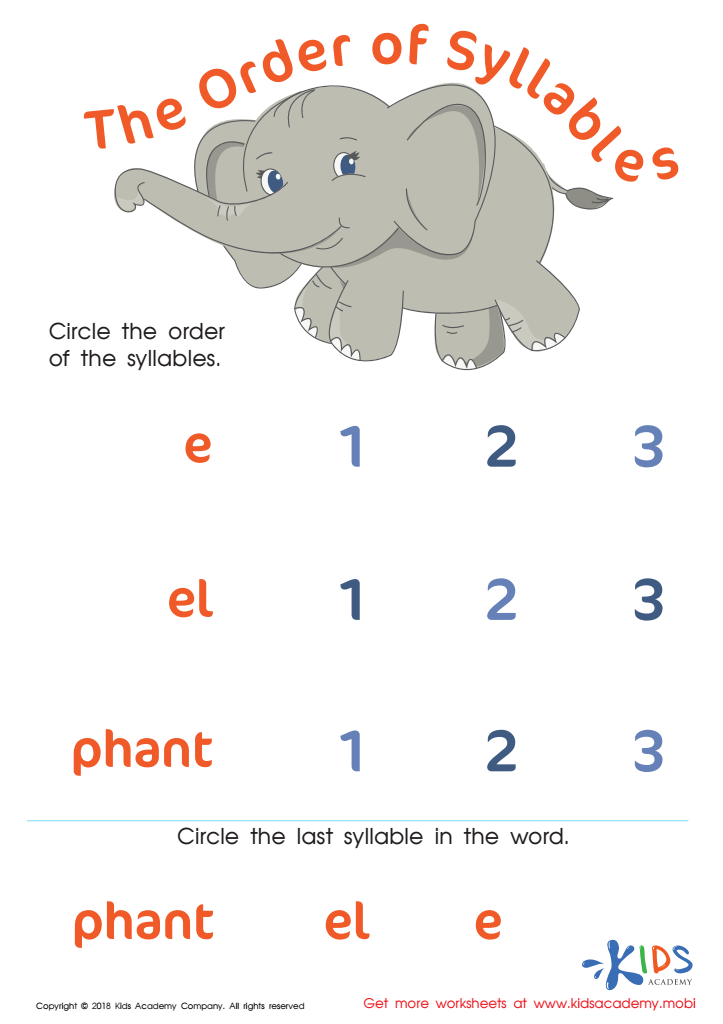
The Order of Syllables Worksheet
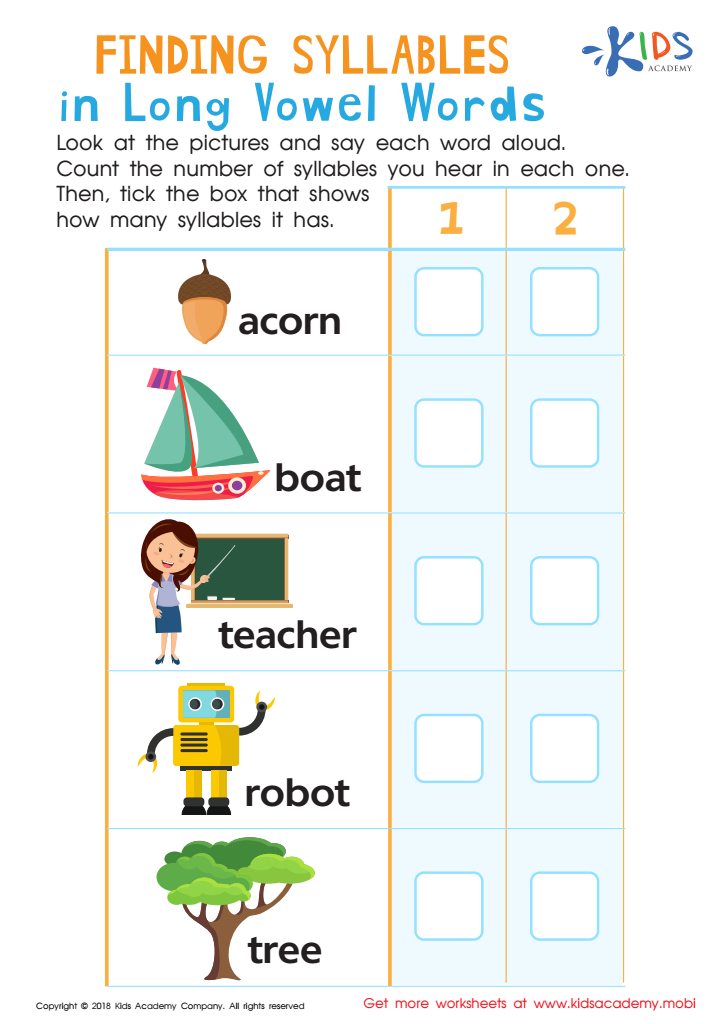
Finding Syllables in Long Vowel Words Worksheet




.jpg)


Understanding syllables and the alphabet is crucial for children aged 3-8 as it forms the foundation for reading and writing skills. Parents and teachers should care about this because early literacy development significantly impacts a child's overall academic success.
Syllable awareness helps children break down words into manageable parts, making it easier to decode unfamiliar words. This skill enhances phonological awareness, assisting in spelling and improving vocabulary comprehension. For young learners, mastering the alphabet is vital, as knowledge of letters and their corresponding sounds allows them to identify words and build their reading fluency.
Moreover, engaging with syllables and letters fosters a love for language and storytelling. When children play with syllables through rhyme and rhythm, they not only enhance their linguistic skills but also develop creativity and critical thinking. Parents and teachers can facilitate learning by incorporating fun activities, such as syllable clapping games or alphabet songs, making literacy enjoyable.
Investing time and effort into understanding syllables and the alphabet during these formative years sets children on a positive learning trajectory, empowering them to become confident readers and writers. In essence, these foundational skills pave the way for lifelong communication and learning success.







