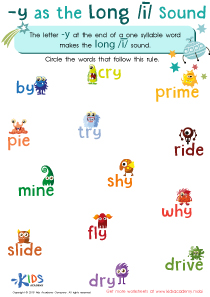
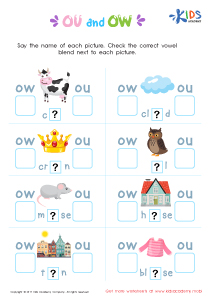
Vocabulary expansion Long Vowels Worksheets for Ages 3-8
8 filtered results
-
From - To
Unlock your child's reading potential with our Vocabulary Expansion Long Vowels Worksheets for Ages 3-8! Designed to make learning fun, these printables help young learners recognize and practice long vowel sounds, enhancing their phonetic skills. Each engaging activity focuses on word identification, pronunciation, and usage, fostering both vocabulary development and reading fluency. Perfect for early learners, our expertly crafted worksheets are ideal for home or classroom use. Kickstart your child's educational journey with interactive exercises that make mastering long vowels easy and enjoyable. Help your child discover the joy of reading and expand their vocabulary today!
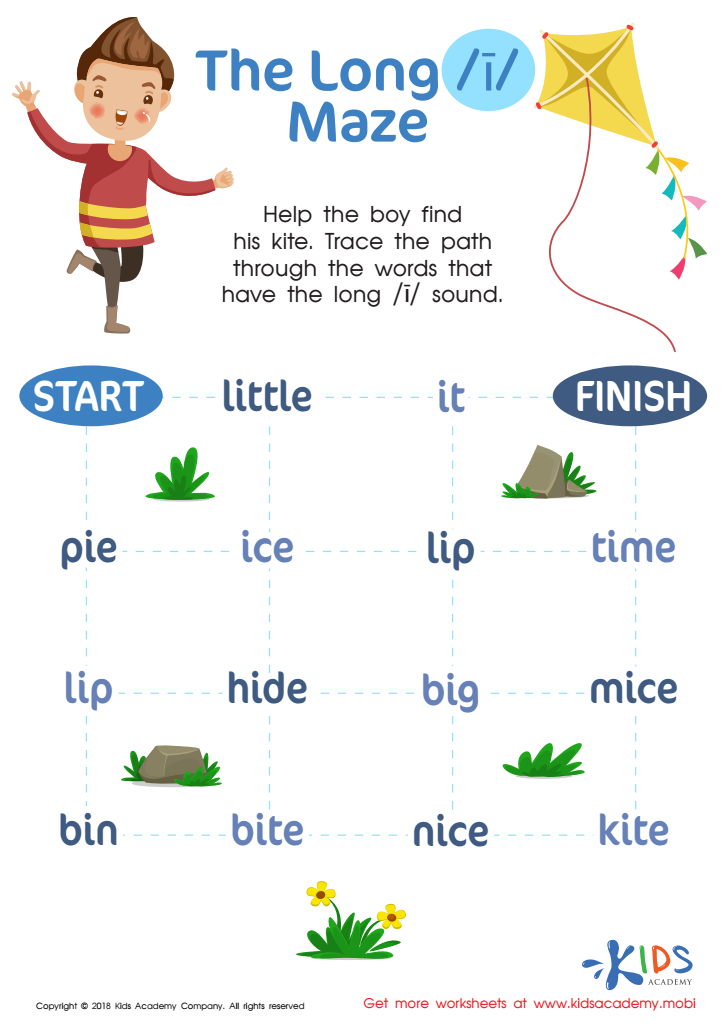
The Long I Maze Reading Worksheet
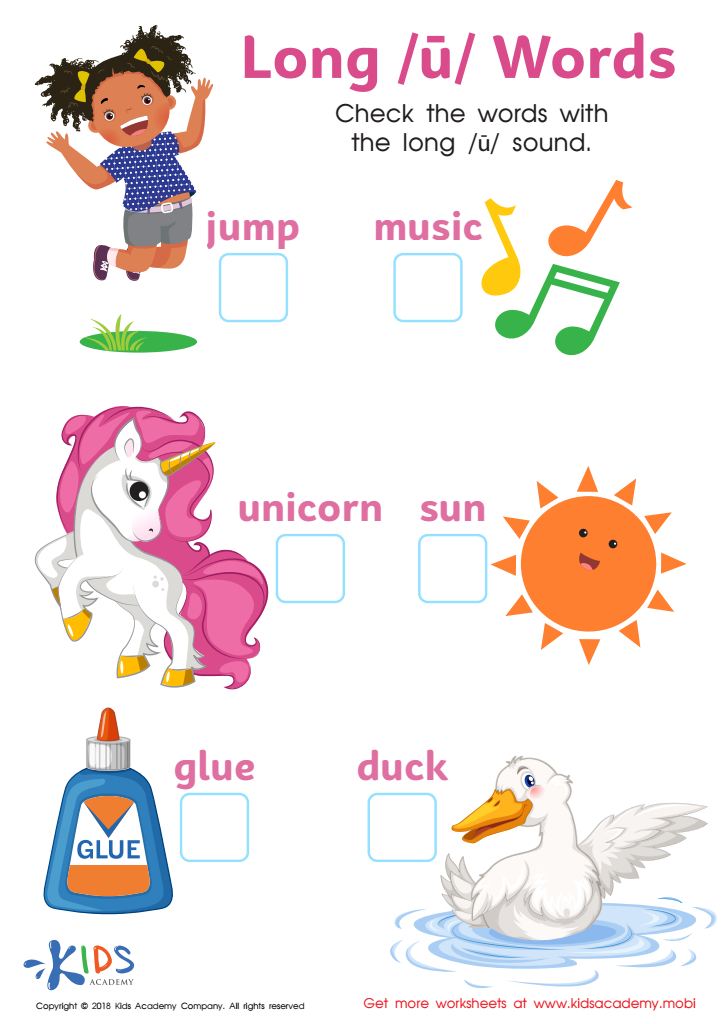
Long U Words Reading Worksheet
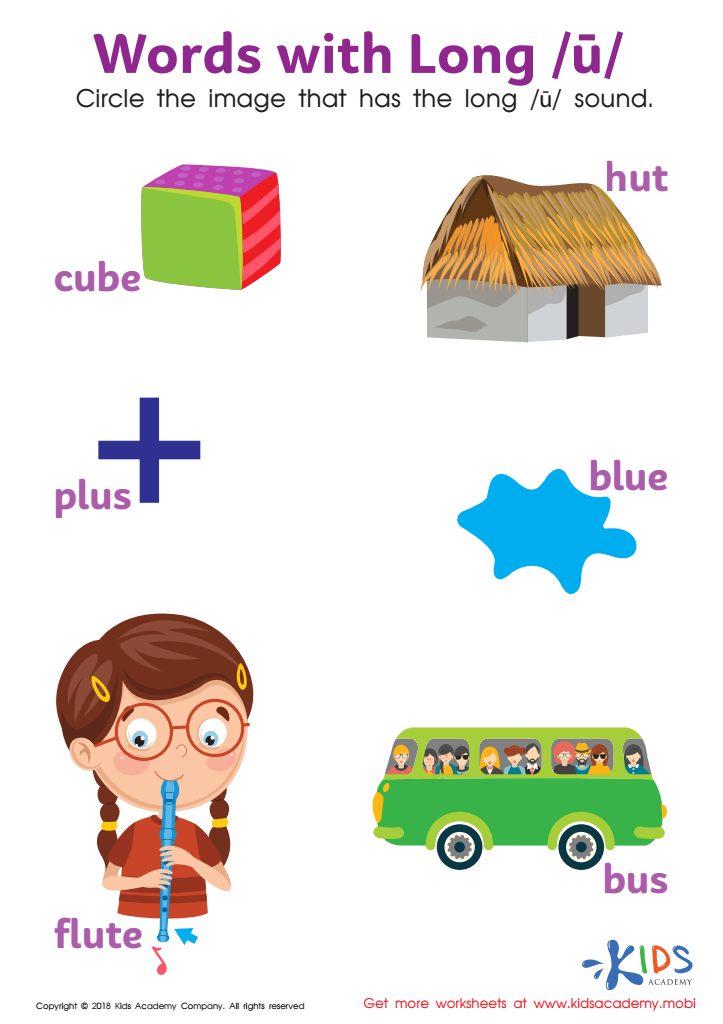
Words with Long U Reading Worksheet
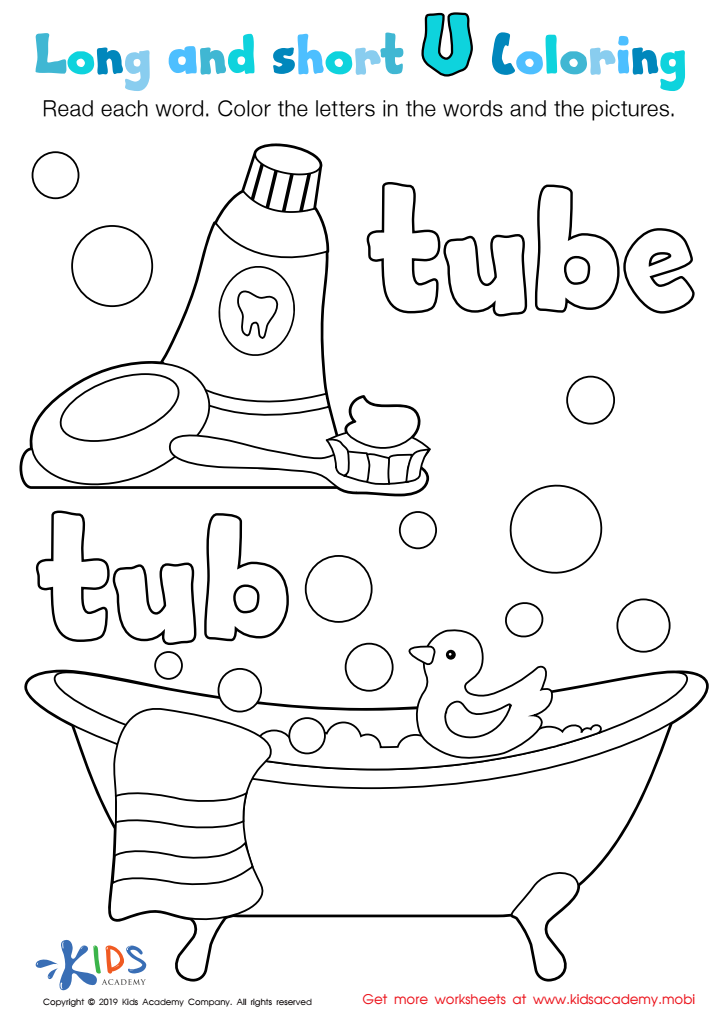
Long and Short U Worksheet
 Assign to My Students
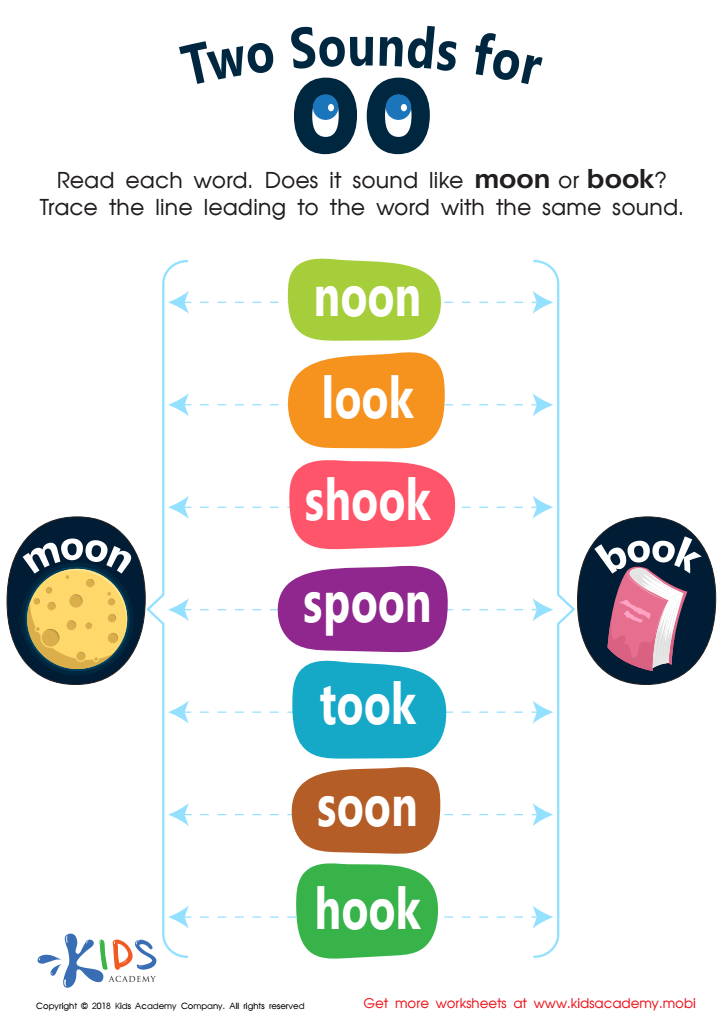
Two Sounds for OO Worksheet
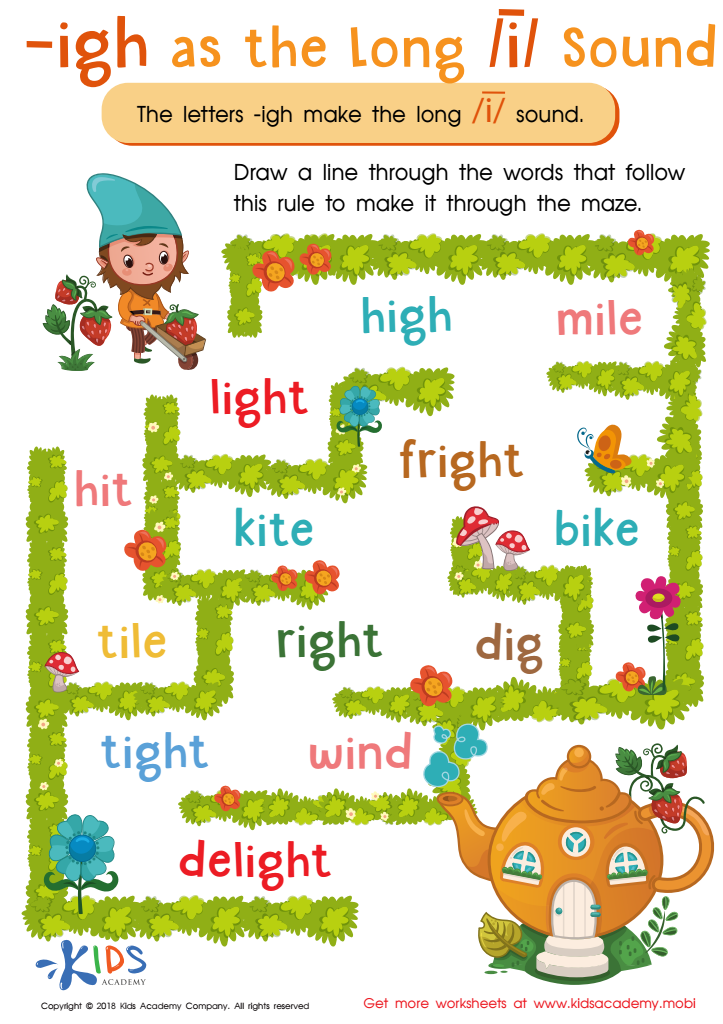
Reading: IGH as Long I Worksheet
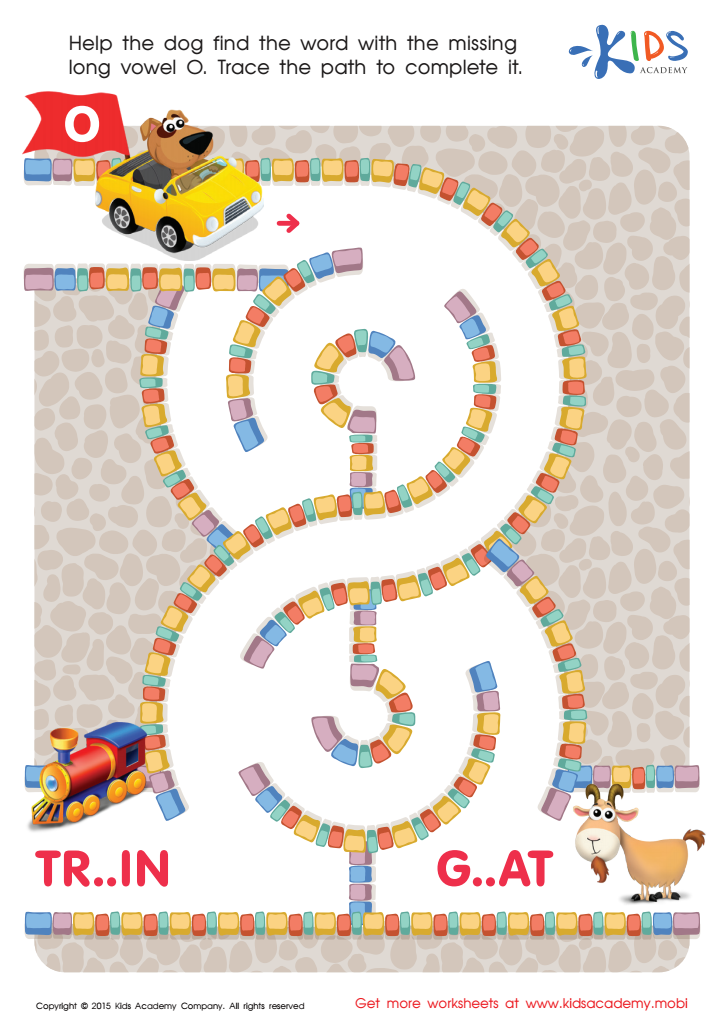
Long Vowel Sound O Worksheet
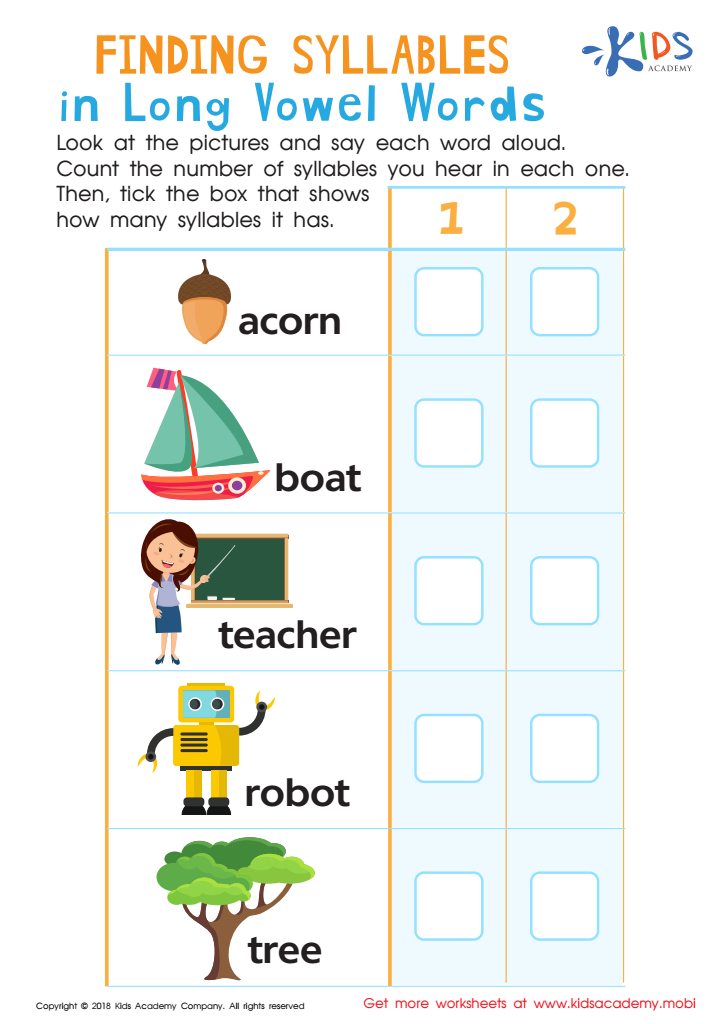
Finding Syllables in Long Vowel Words Worksheet



Vocabulary expansion, particularly focusing on long vowels, is crucial for children aged 3-8 as it lays the foundation for effective reading and communication skills. During these formative years, children are highly receptive to language acquisition. By mastering long vowels, they enhance their phonemic awareness, which is essential for decoding words while reading. For instance, understanding the difference between short and long vowel sounds in words like "bit" and "bite" improves their ability to read accurately and fluently.
A rich vocabulary supports better comprehension and allows children to articulate their thoughts clearly. It fosters confidence in both their spoken and written communication, facilitating stronger academic performance. Engaging with long vowels helps in distinguishing subtle differences in pronunciation and meaning, thus improving spelling skills.
Moreover, exposure to varied vocabulary, including words with long vowels, nurtures cognitive development. Children develop critical listening and thinking skills as they encounter new words and concepts. This early linguistic competence becomes a predictor of future academic success and effective communication.
For parents and teachers, prioritizing vocabulary expansion and phonemic awareness makes a significant impact on a child's learning trajectory. Activities like reading aloud, playing phonics games, and interactive conversations can seamlessly integrate these important skills into everyday learning, ensuring children build a robust foundation for their educational journey.