Middle Vowel Worksheets for Ages 3-8
4 filtered results
-
From - To
Discover our engaging Middle Vowel Worksheets designed specifically for children aged 3-8! These expertly crafted resources help young learners master the concept of middle vowels through fun, interactive activities. Each worksheet features colorful images and exercises that stimulate creativity while reinforcing phonetic understanding. Perfect for both classroom settings and home-schooled environments, our worksheets promote literacy, enhance vocabulary, and boost confident reading skills. With a variety of puzzles, tracing, and fill-in-the-blank formats, children will enjoy learning as they solidify their grasp of middle vowels. Explore our collection today to help your child develop a strong foundation in reading!
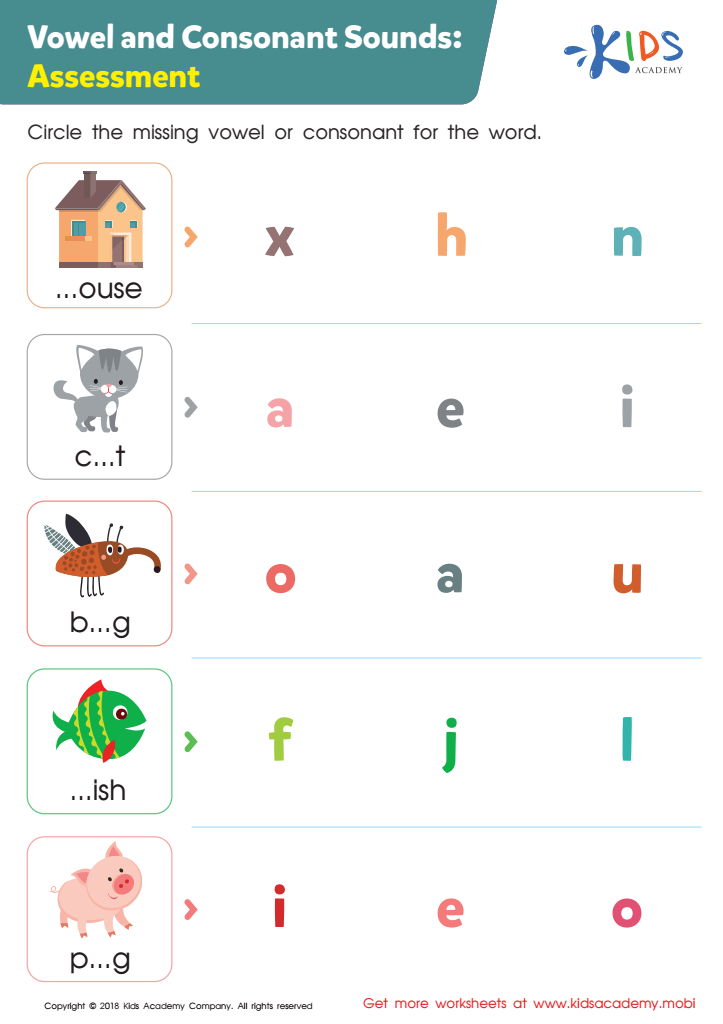
Vowel and Consonant Sounds: Assessment Worksheet
 Assign to My Students
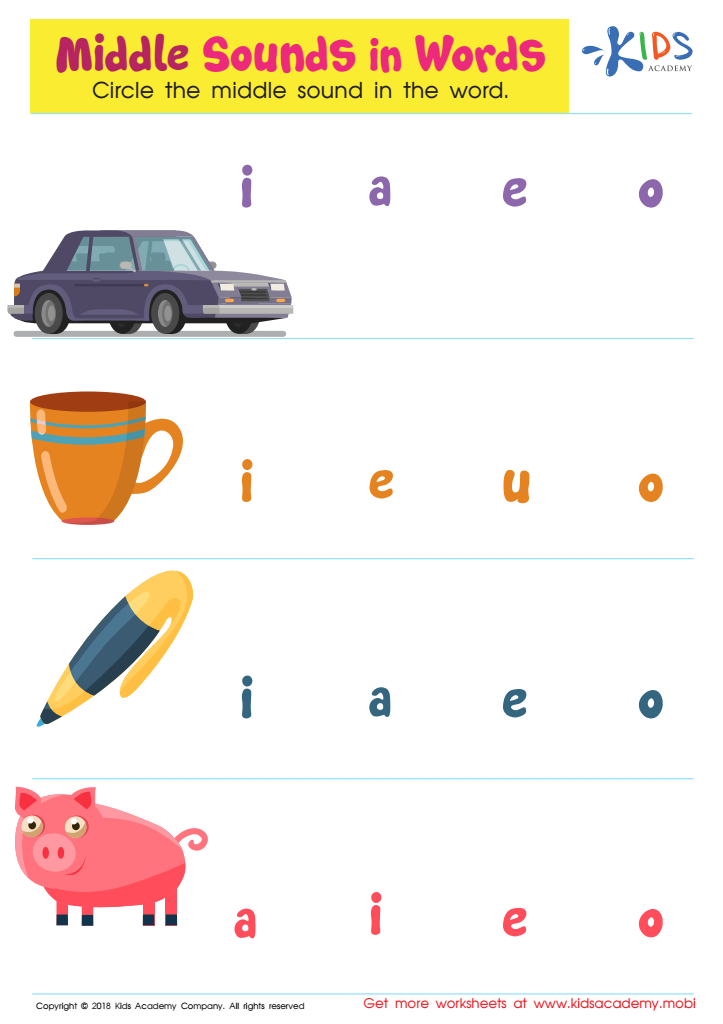
Middle Sounds in Words Worksheet
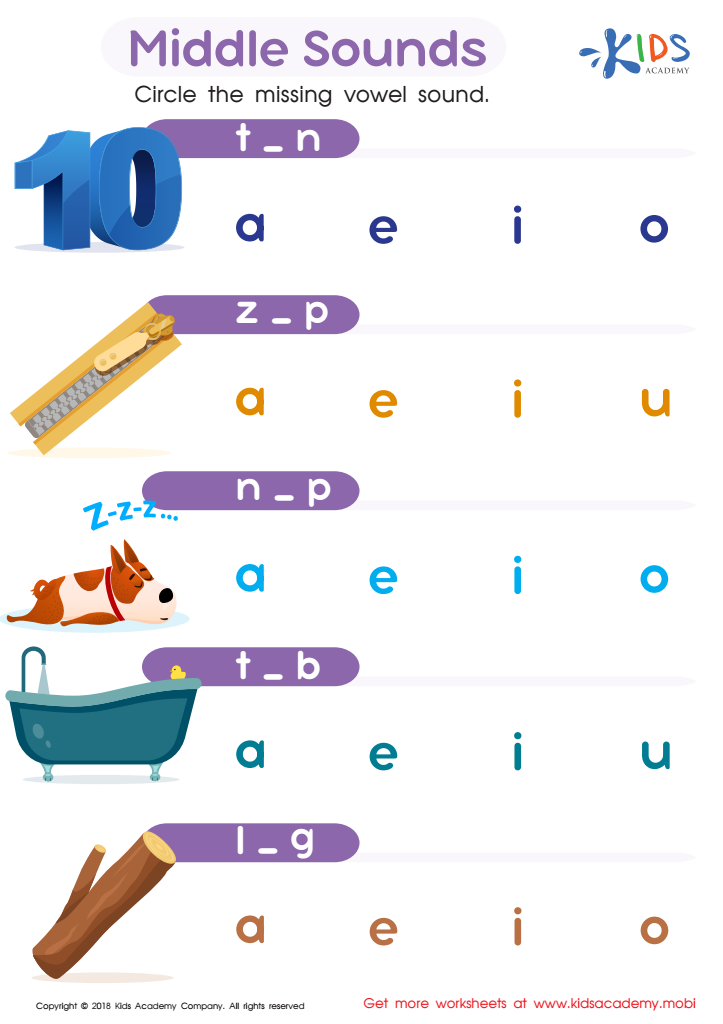
Middle Sounds Worksheet
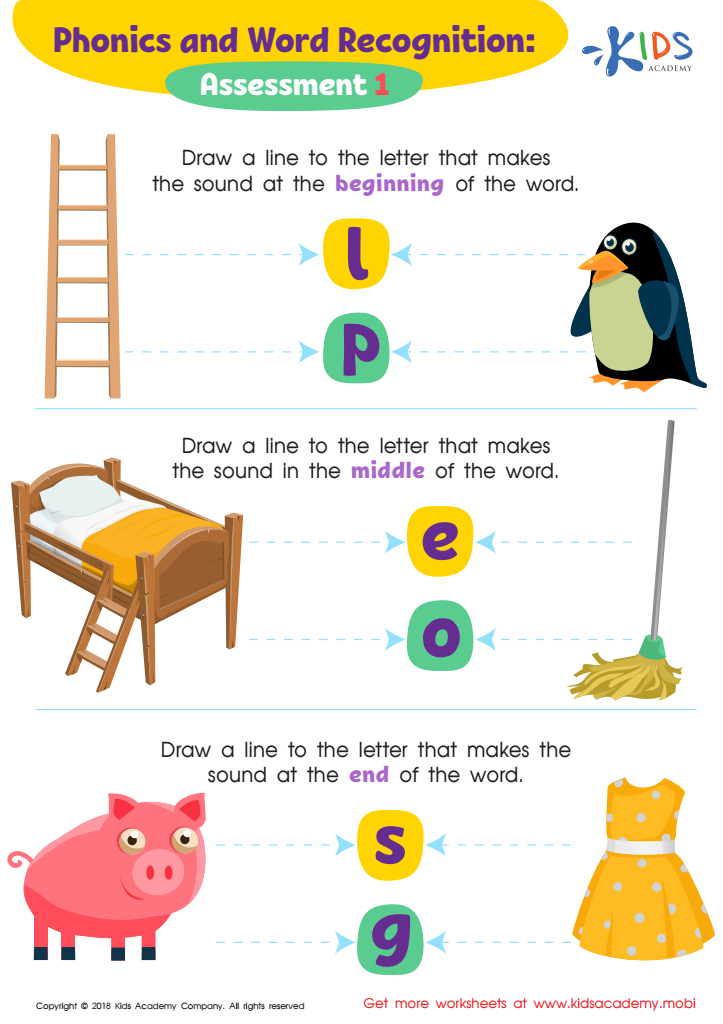
Phonics and Word Recognition: Assessment 1 ELA Worksheet



Understanding middle vowels is crucial for young learners, particularly between ages 3-8, as it lays the foundation for reading and writing skills. Middle vowels, found in words like "cat," "bed," and "hop," are essential in various activities, including phonics, spelling, and vocabulary development. When children grasp the concept of middle vowels, they improve their ability to decode words, an essential skill for reading fluency.
For parents and teachers, not addressing middle vowel sounds may lead to difficulties in literacy later in life, potentially impacting academic success. Engaging children in games, songs, and activities that emphasize middle vowels allows for interactive learning experiences, making the process enjoyable and memorable.
Moreover, focusing on middle vowels encourages phonemic awareness, an understanding of how sounds work in spoken language, fostering confidence in children as they begin to experiment with creating their own words.
Overall, being attentive to middle vowel development benefits children's communication skills immensely, promoting not only literacy but also critical thinking and creativity in language use. By prioritizing this linguistic foundation, parents and teachers can effectively equip children with the necessary tools for lifelong learning and effective expression.