Discover our engaging Letter-Sound Correlation Phonics Worksheets designed specifically for children ages 3-8. These specialized resources help young learners connect letters with their corresponding sounds, building a essential foundation for reading and literacy. Our worksheets feature colorful illustrations and interactive activities that effectively capture children's interest while reinforcing their understanding of phonics. As kids practice identifying letter sounds, they develop crucial skills that enhance their reading abilities and boost confidence. Ideal for both classroom and home use, our phonics worksheets make early learning fun and effective, setting the stage for future academic success. Explore and download yours today!

Check out this FREE Trial Lesson on Phonics for age 3-8!

Rearrange Sounds to Make Words

Favorites
With answer key
Interactive
  • 3-8
  • Letter-sound correlation
  • Phonics
Beginning Sounds Assessment Printable

Beginning Sounds Assessment Printable

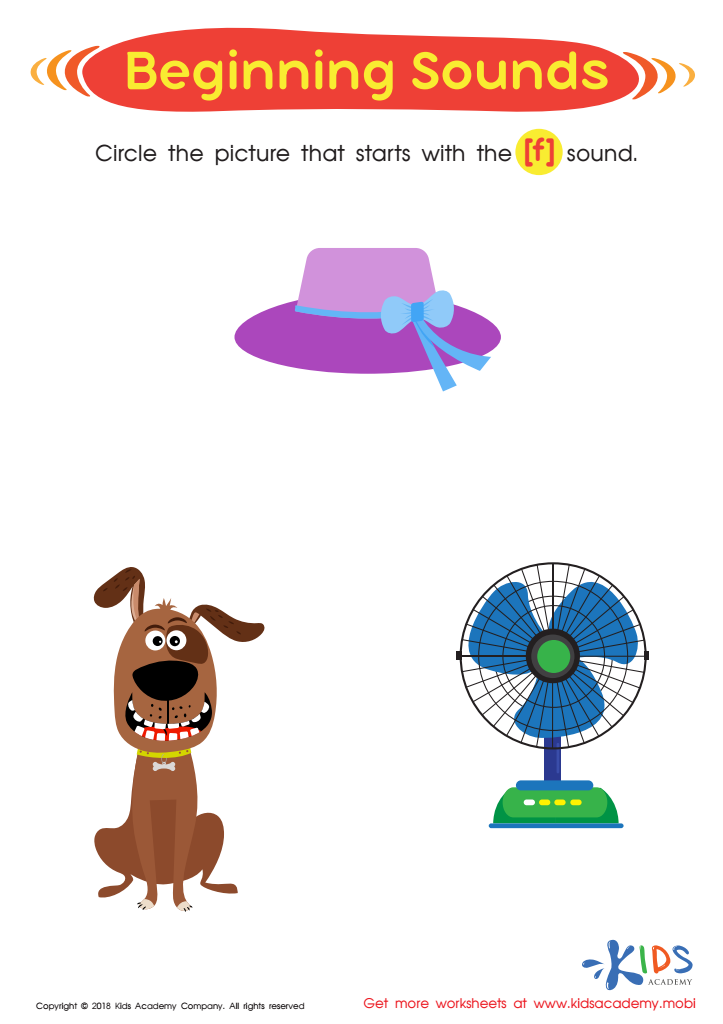
Test your child's knowledge of the alphabet. Ask them to recite the whole alphabet and the words for each letter. For example: A for apple, B for boy. Identify objects on this worksheet, then ask your child which one starts with the letter "f" and have them circle it.
Beginning Sounds Assessment Printable
Worksheet
Letter A Sounds Worksheet

Letter A Sounds Worksheet

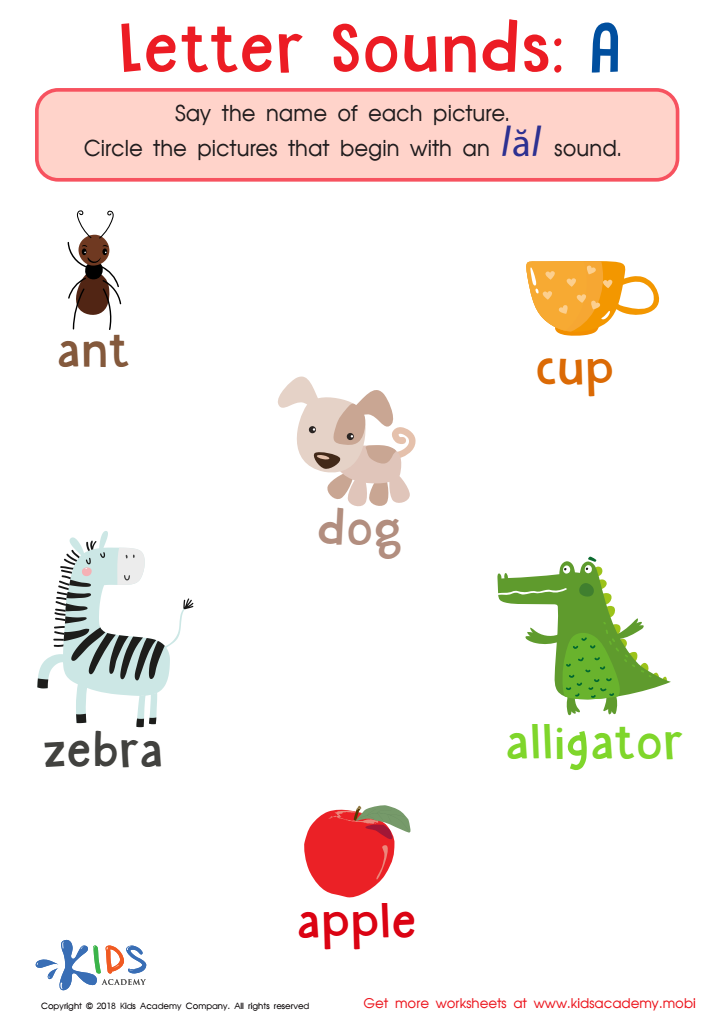
Encourage your new reader to practice the «ă» sound with this fun, free PDF worksheet. With the help of picture clues, they'll say the name of each word and trace circles around the items that start with «ă». This worksheet is an effective way to boost beginning sound skills while having fun!
Letter A Sounds Worksheet
Worksheet
Letter Sounds: J Printable Worksheet

Letter Sounds: J Printable Worksheet

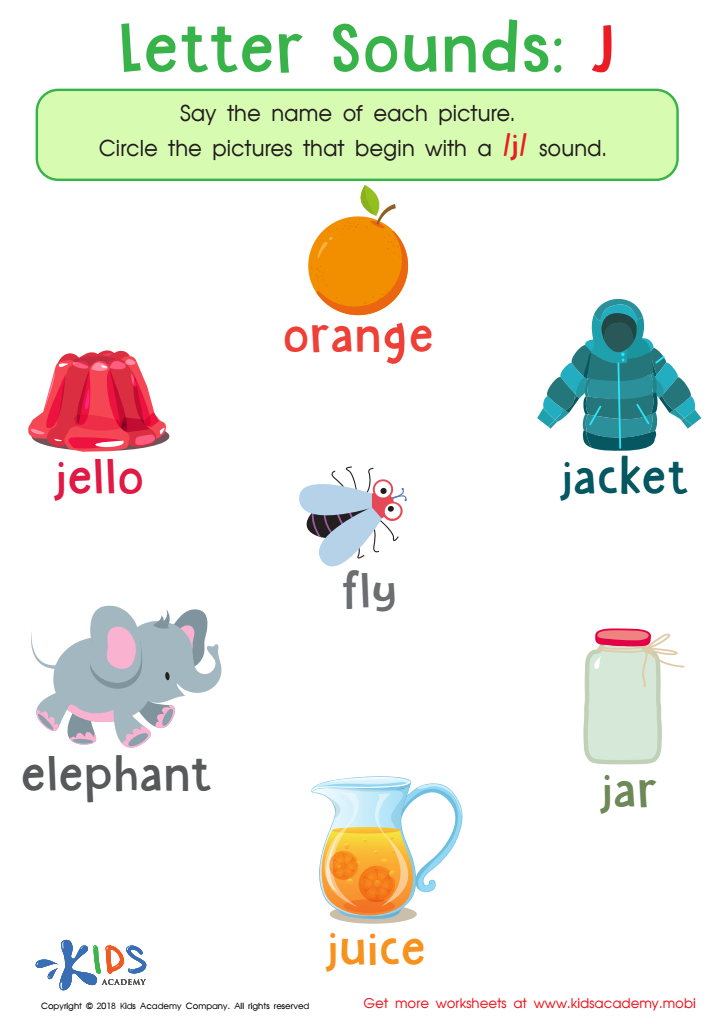
Preschoolers can learn to identify letter sounds by focusing on beginning sounds. This cute and colorful worksheet reviews the hard “j” sound. Kids can point it out by naming the words and circling only those starting with the “j” sound. Read the text out loud and listen closely!
Letter Sounds: J Printable Worksheet
Worksheet
Letter U Sounds Worksheet

Letter U Sounds Worksheet

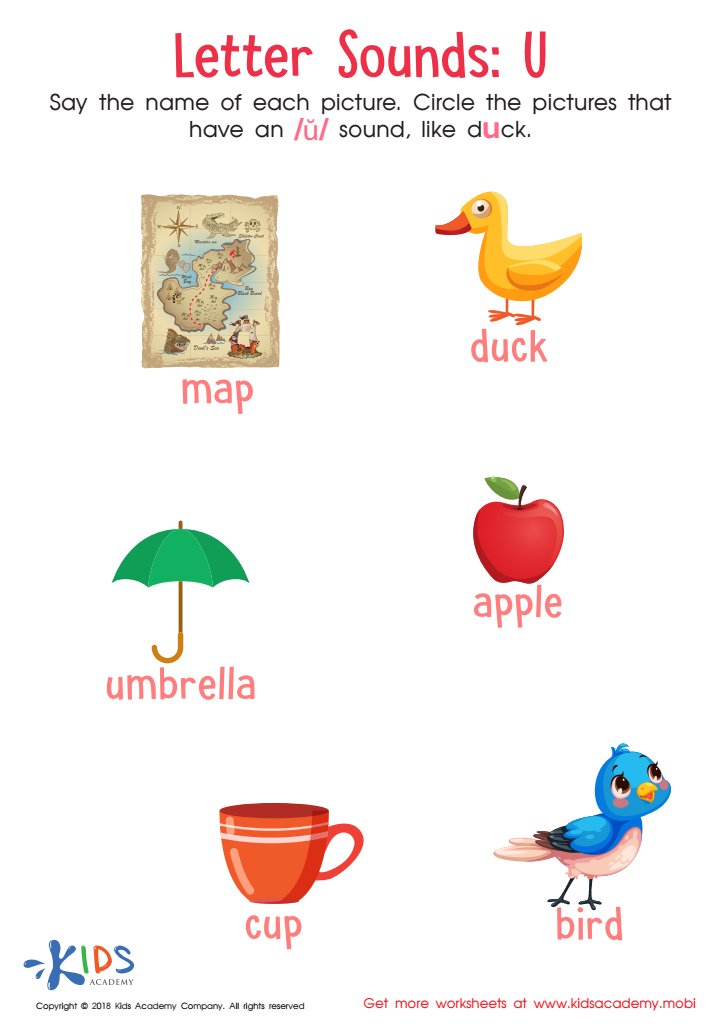
The letter U is special with multiple pronunciations. This worksheet helps kids identify the short «u» in words like duck and cup. Read the words aloud and listen closely to the sounds. Circle only words with the correct sound to complete the sheet. Kids will quickly know that words like "map" don't contain a U.
Letter U Sounds Worksheet
Worksheet
Letter t sounds worksheet

Letter T Sounds Worksheet

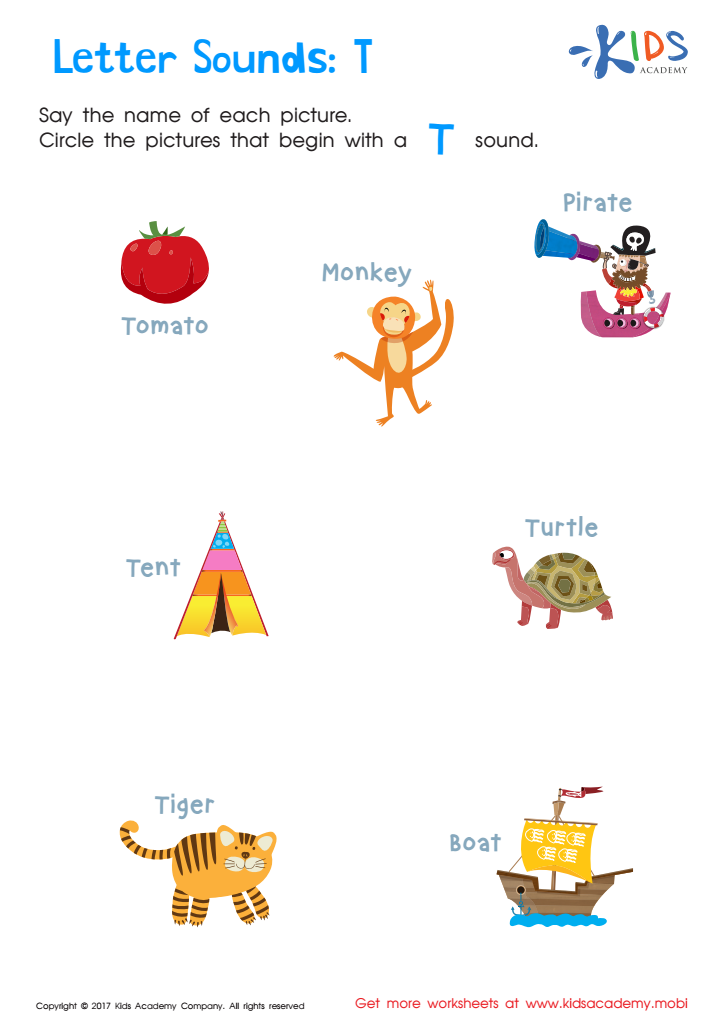
This worksheet is a fun way to help kids learn the t sound. It has familiar pictures and an easy-to-follow format, so kids can quickly recognize and learn the letter t.
Letter T Sounds Worksheet
Worksheet
The SH Digraph Worksheet

The SH Digraph Worksheet

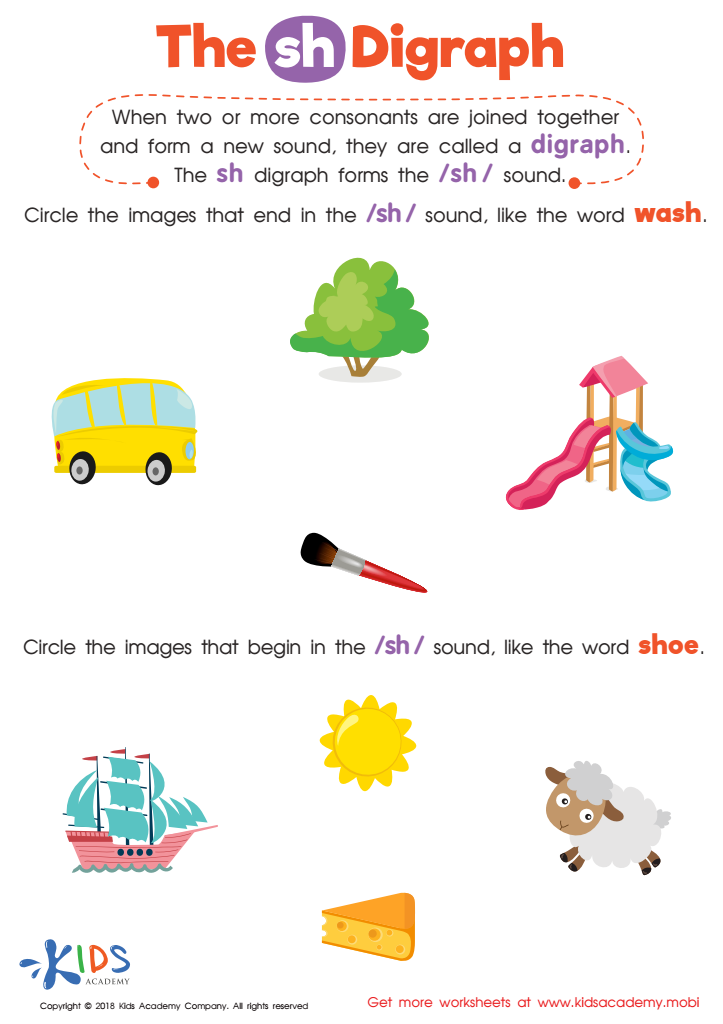
There are many phonetic sounds, each with its own unique sound. When two or more consonants are combined to create a new sound, it's called a digraph. Example: the sh digraph creates the /sh/ sound. Have kids look at the pictures and say the words aloud. Help them circle the images ending with /sh/, like 'wash'.
The SH Digraph Worksheet
Worksheet
Matching Consonant Sounds - Part 1 Worksheet Preview

Matching Consonant Sounds: Part 1 Worksheet

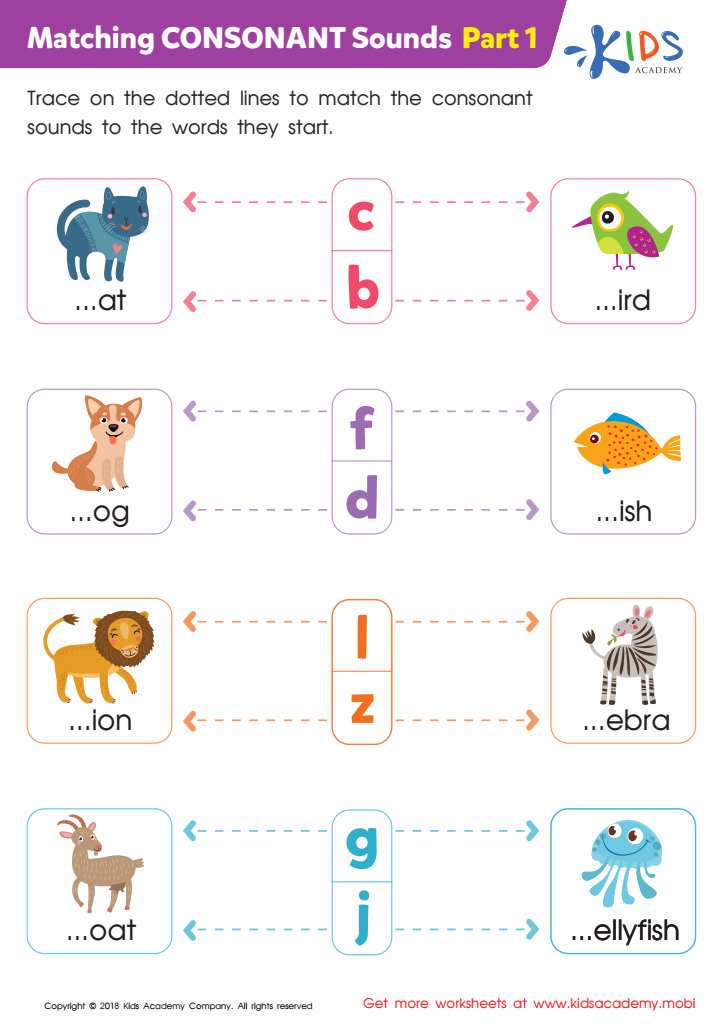
Decide which letter matches each word and picture in this fun phonics worksheet. Slide your finger over each word, trying out each letter to check for matches. Once each pair is solved, trace the dotted lines with pencil to complete the printable. Who knew learning could be so enjoyable?
Matching Consonant Sounds: Part 1 Worksheet

Worksheet


Parents and teachers should prioritize letter-sound correlation phonics for children aged 3-8 because it serves as the foundation for reading proficiency. Understanding the relationship between letters (graphemes) and sounds (phonemes) is crucial for young learners as it facilitates word decoding. When children can connect sounds to their corresponding letters, they gain the ability to read new words independently, thus boosting their confidence and fostering a love for reading.

Strong phonics skills promote vocabulary development and comprehension. As students learn to decode words accurately, they engage with texts more meaningfully, allowing for better understanding of language and context. Additionally, phonics instruction can enhance spelling abilities since children apply their knowledge of letter-sound relationships.

Early intervention in phonics education can prevent reading difficulties later on, ensuring that children remain on track in their literacy journey. Moreover, a solid grasp of phonics paves the way for more advanced reading and writing skills as students progress in school.

By investing time in letter-sound correlation, parents and teachers set their children up for academic success, enabling them to communicate effectively, think critically, and navigate the world through the lens of literacy. Overall, phonics is an essential component of early childhood education that ensures long-term educational benefits.