Listening skills Phonics Worksheets for Ages 3-8
8 filtered results
-
From - To
Enhance your child's reading foundation with our Listening Skills Phonics Worksheets, designed for ages 3-8. At Kids Academy, we create engaging and educational materials that help young learners improve their phonetic awareness and listening abilities. These worksheets are perfect for developing critical skills such as sound recognition, letter identification, and word decoding. By integrating fun activities and interactive exercises, we ensure that learning is enjoyable and effective. Invest in your child's literacy and communication skills today with our expertly crafted phonics worksheets, and watch them thrive in their early reading journey.
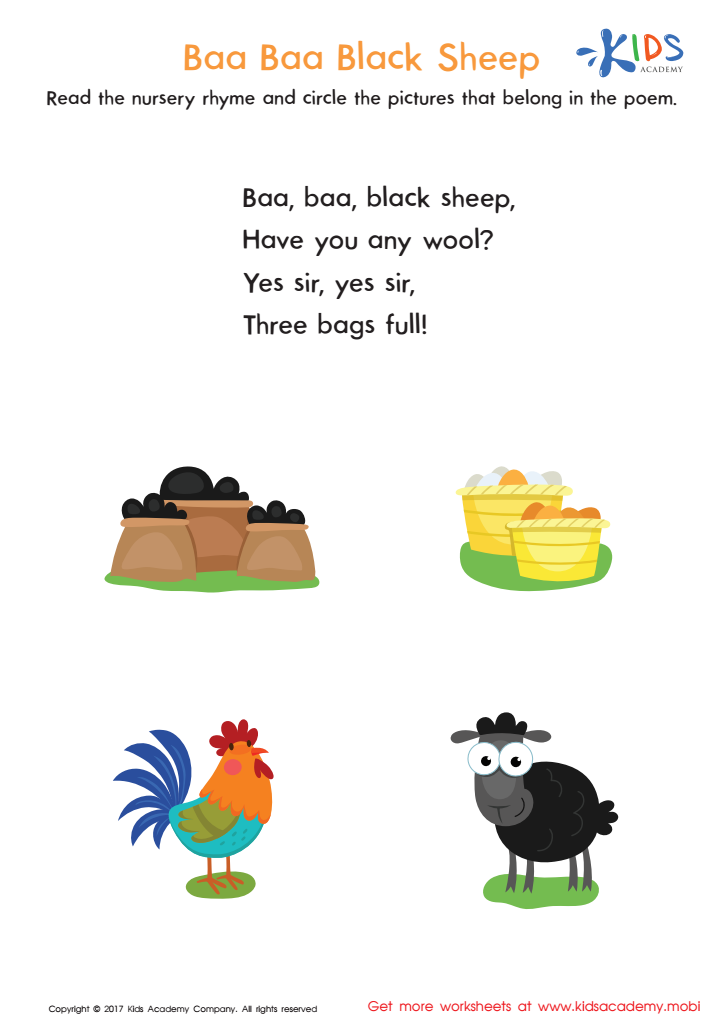
Baa Baa Black Sheep Printable
 Assign to My Students
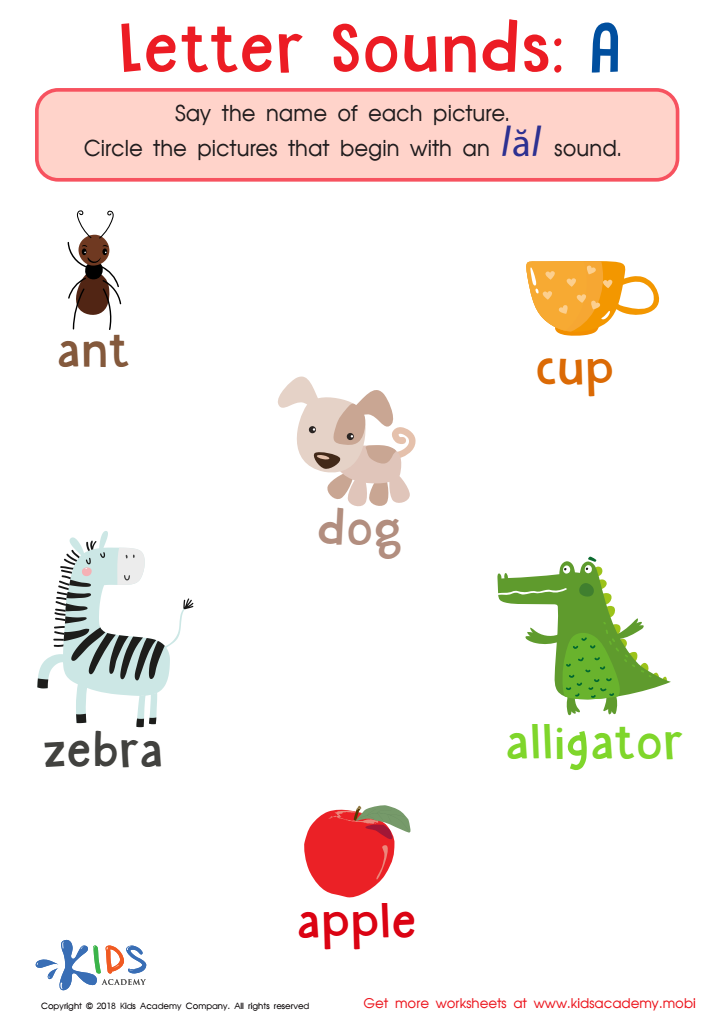
Letter A Sounds Worksheet
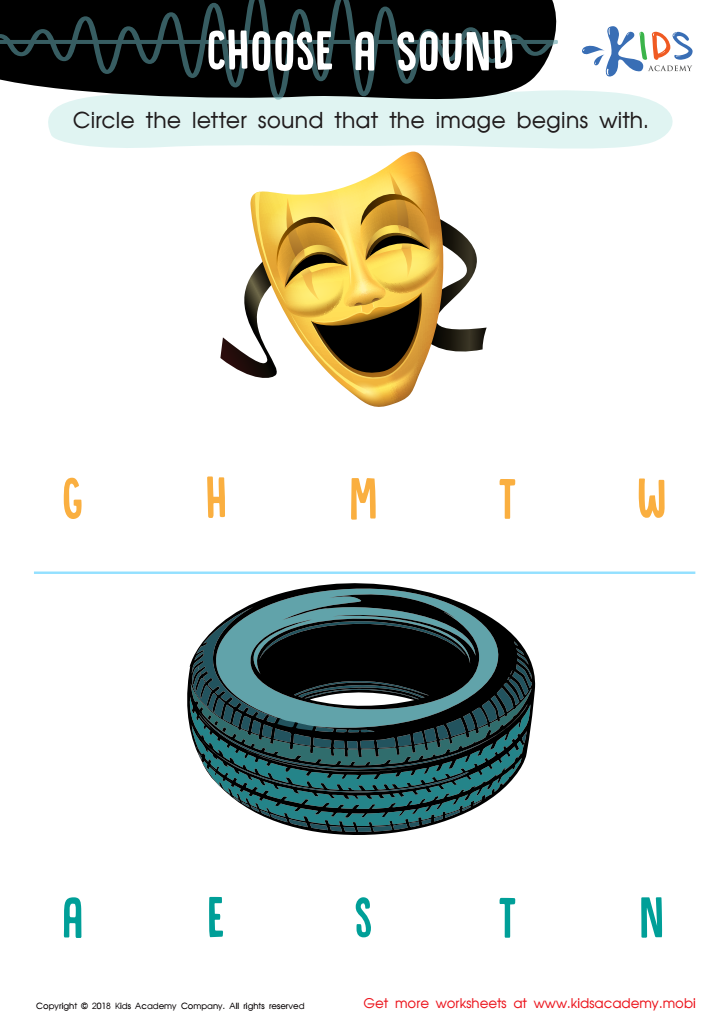
Choose a Sound Worksheet
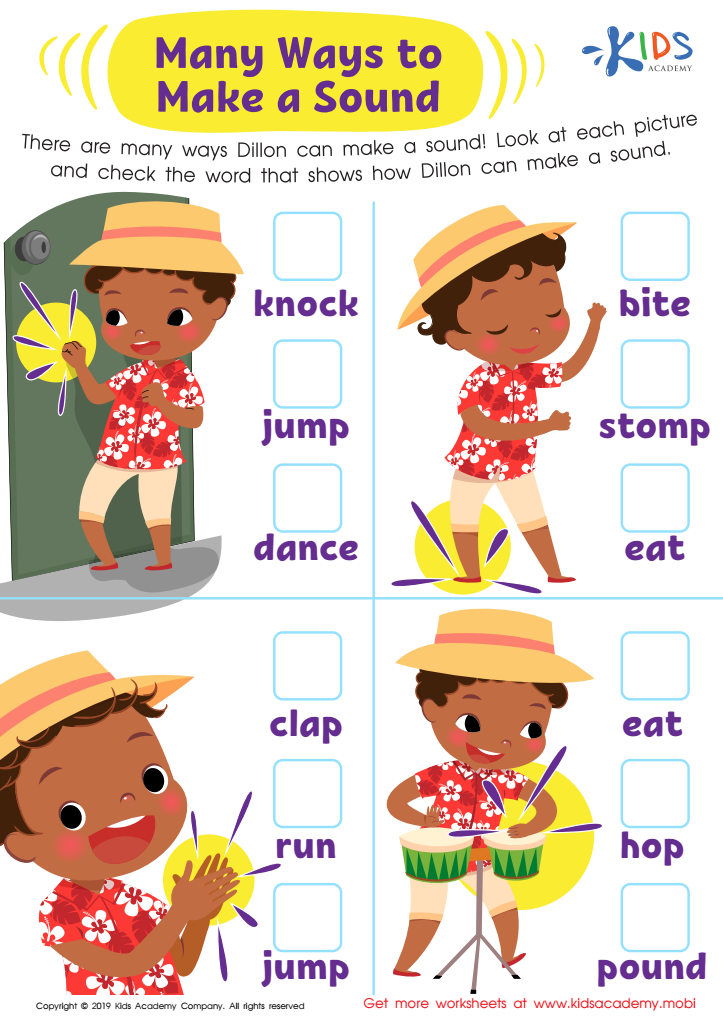
Many Ways to Make a Sound Worksheet
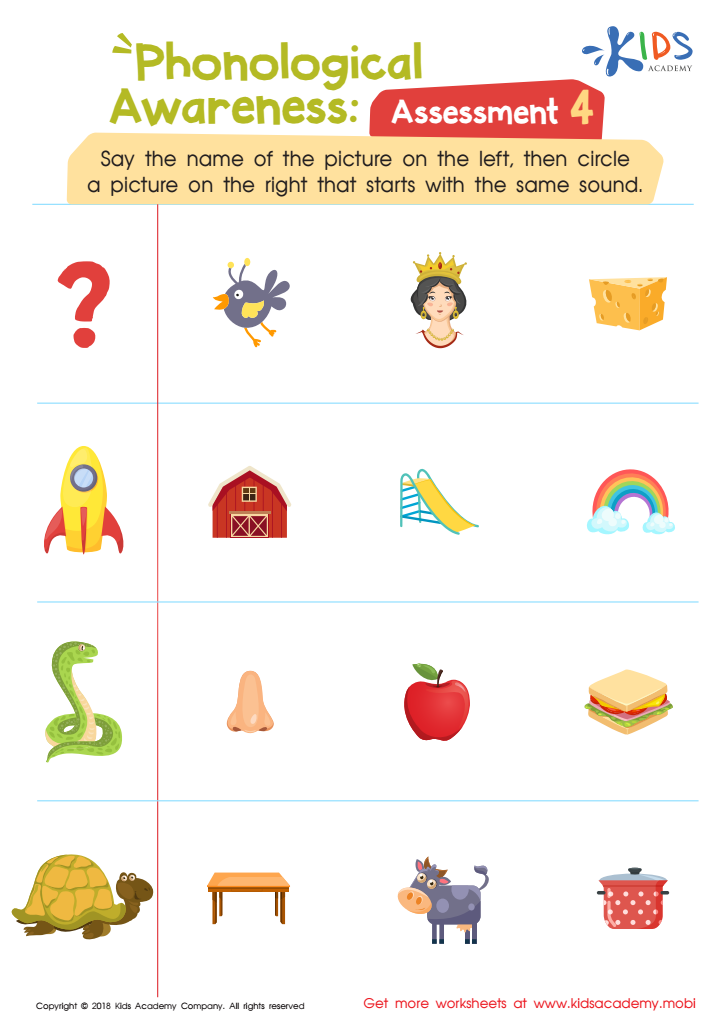
Phonological Awareness: Assessment 4 Worksheet
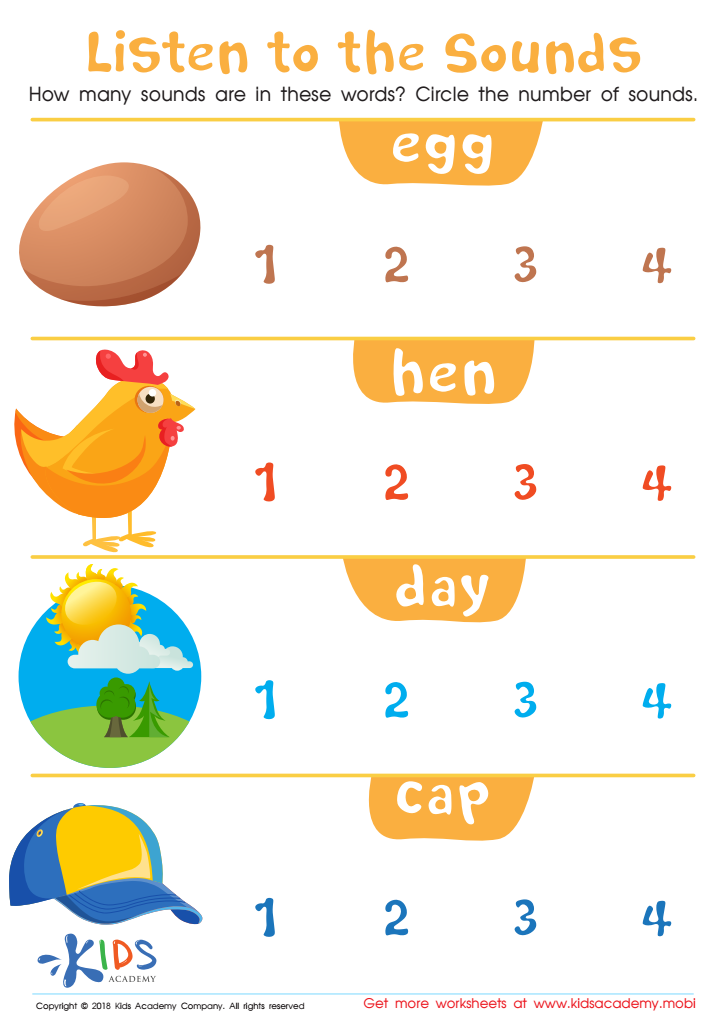
Listen to the Sounds Worksheet
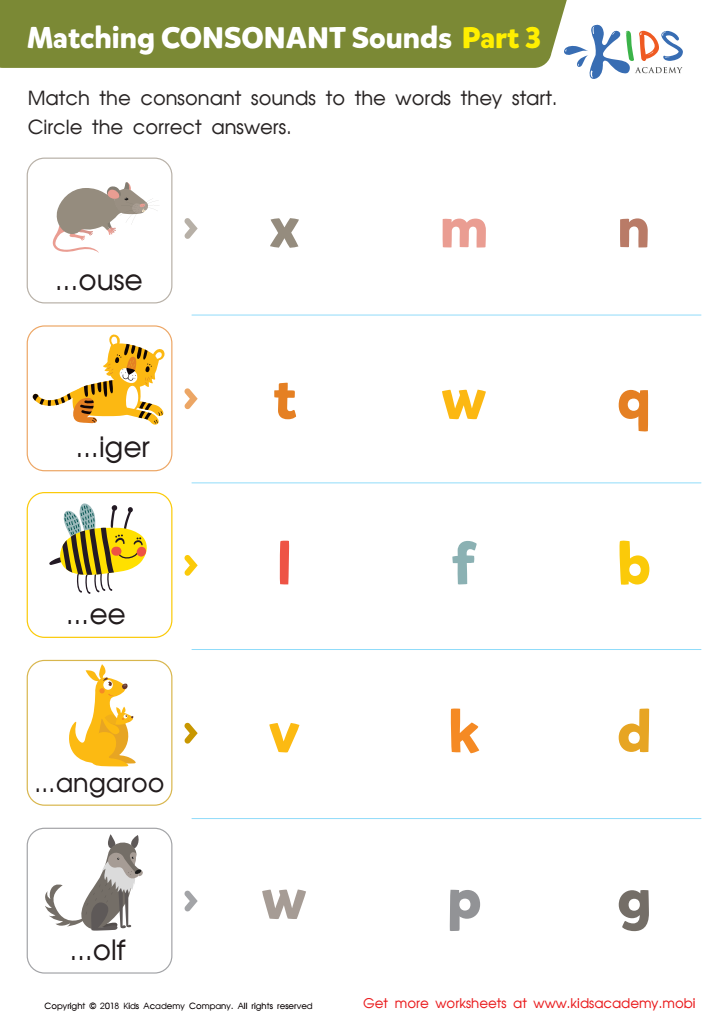
Matching Consonant Sounds: Part 3 Worksheet
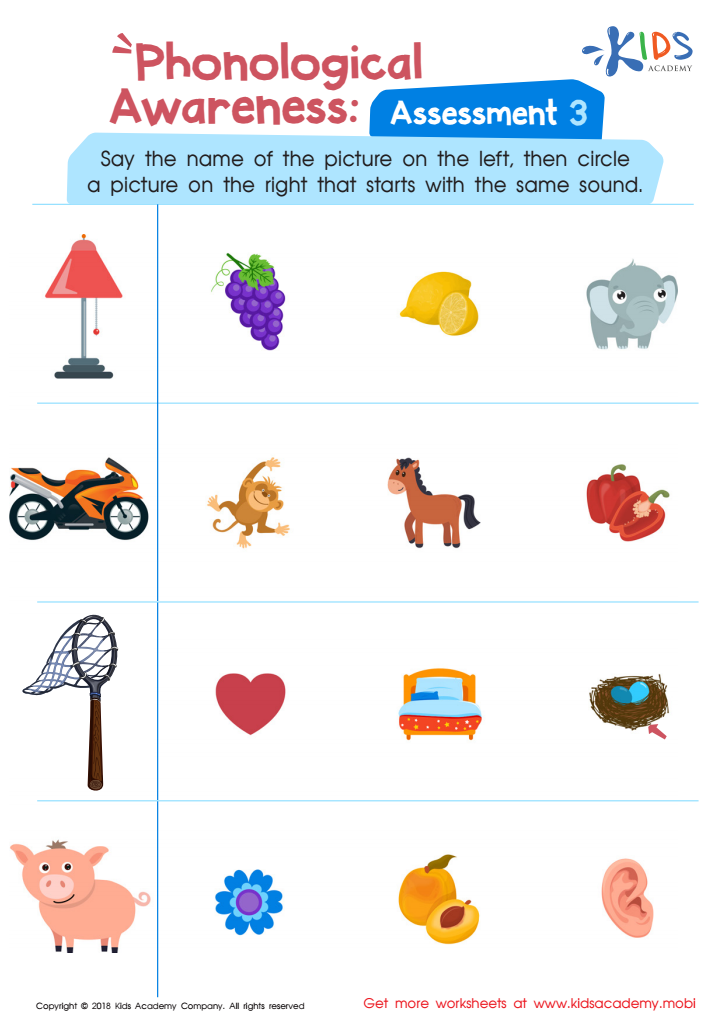
Phonological Awareness: Assessment 3 Worksheet








Listening skills and phonics are foundational elements of early childhood literacy, and investing in these areas during the ages of 3-8 sets children up for long-term academic success. Here are several core reasons why parents and teachers should prioritize these skill sets:
Language Development: Phonics teaches children the relationships between letters and sounds, a crucial aspect of learning to read. Strong listening skills help children accurately hear and reproduce these sounds, aiding their overall reading fluency.
Comprehension: Good listening skills enable children to understand instructions, participate in class discussions, and comprehend stories or lessons. This comprehension is closely tied to their ability to grasp phonics rules and apply them, which further enhances reading skills.
Academic Success: Research has shown that early proficiency in phonics strongly predicts later reading success. Solid listening and phonics skills contribute to better performance not just in language arts, but across all subjects, as reading is integral to learning.
Confidence: Children who develop strong listening and phonics skills early often feel more confident in their abilities to learn and engage in classroom activities. This confidence can foster a positive attitude toward school and learning in general.
Communication: Developing listening skills isn't just about academics; it also helps children communicate more effectively with peers, teachers, and family members.
By focusing on these skills, parents and teachers help build a strong educational foundation, fostering not only immediate academic gains but also lifelong learning and effective communication skills.







