Rhyming skills development Phonics Worksheets for Ages 3-8
5 filtered results
-
From - To
Enhance your child's phonics learning with our Rhyming Skills Development Worksheets, designed specifically for ages 3-8. These engaging printable resources promote early literacy through fun and interactive activities. Children will develop essential phonemic awareness by identifying, solving, and creating rhymes, which are crucial for reading and spelling success. With vibrant illustrations and easy-to-follow exercises, these worksheets make learning enjoyable and effective. Whether in school or at home, our worksheets help young learners cultivate their creativity and language skills while building a solid foundation for future reading comprehension. Explore our collection today and support your child's journey to becoming a confident reader!
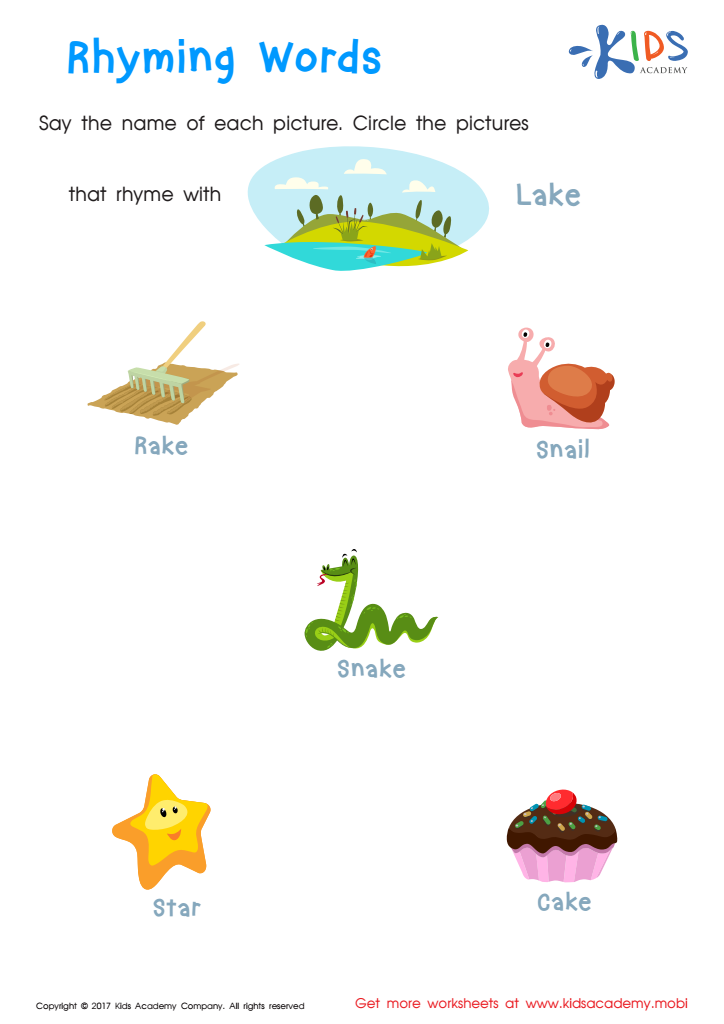
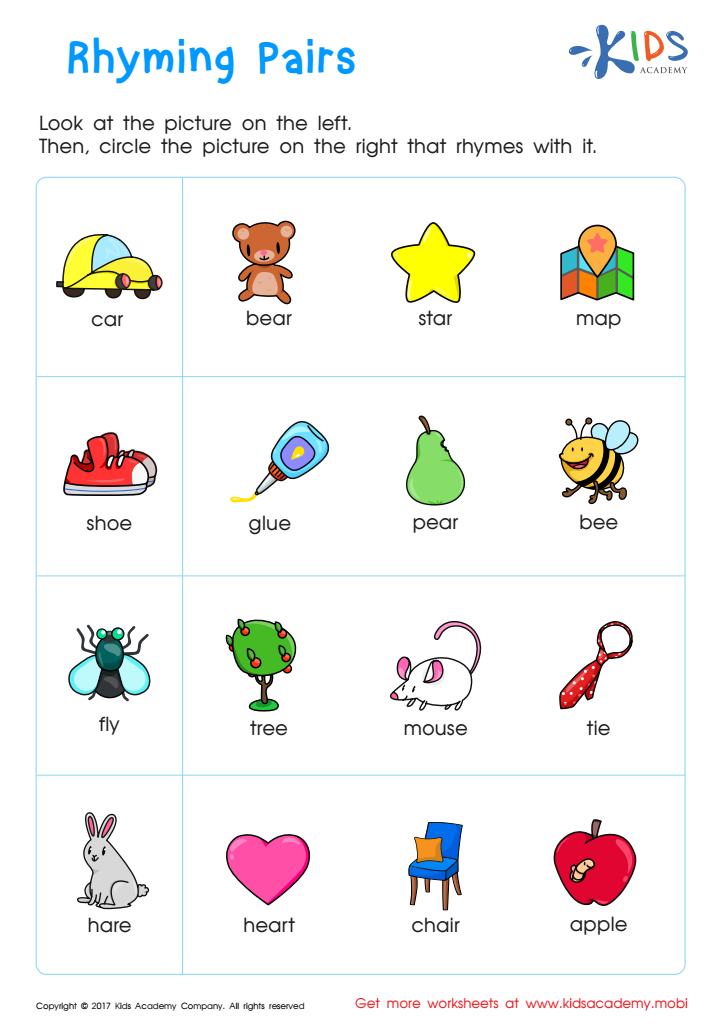
Rhyming Words Rhyming Worksheet
 Assign to My Students
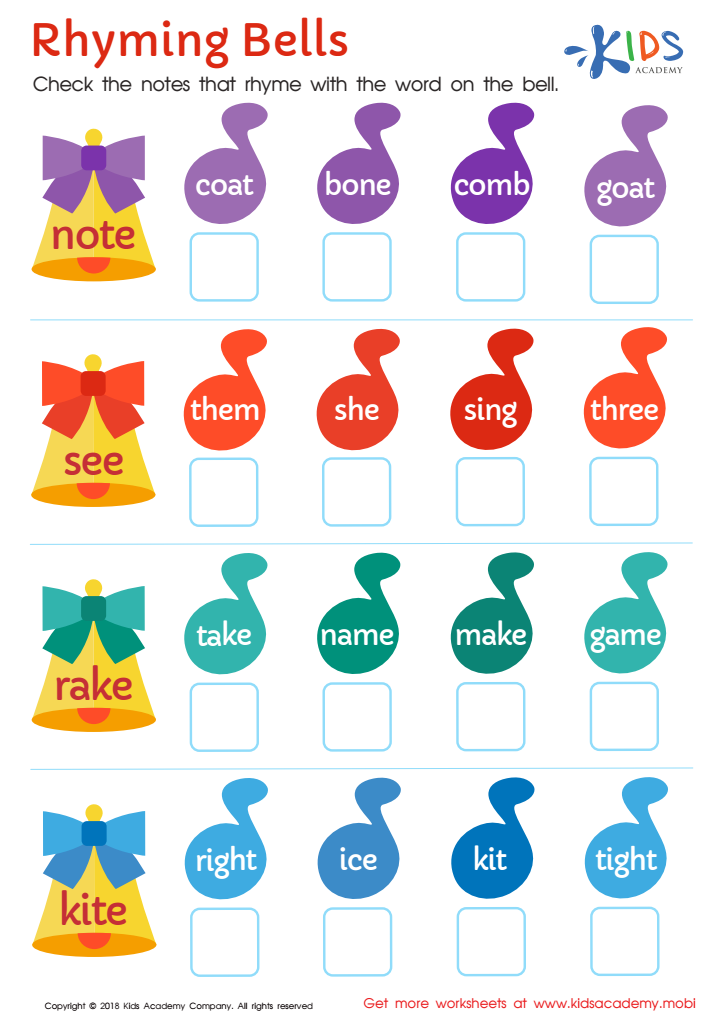
Rhyming Bells Worksheet
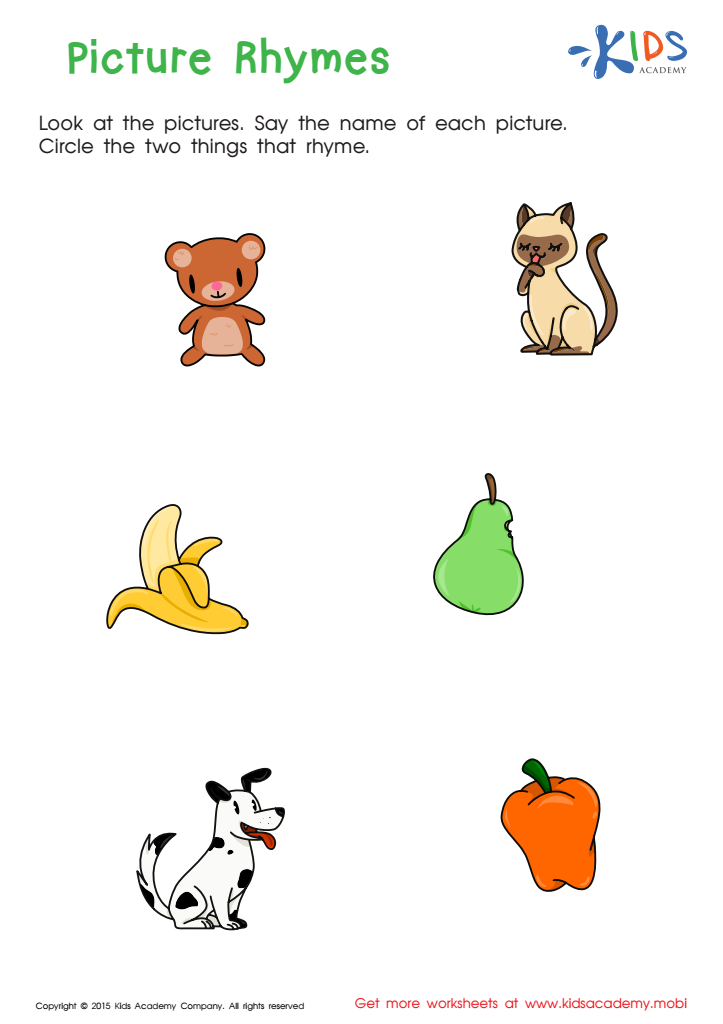
First Words: Picture Rhymes Worksheet
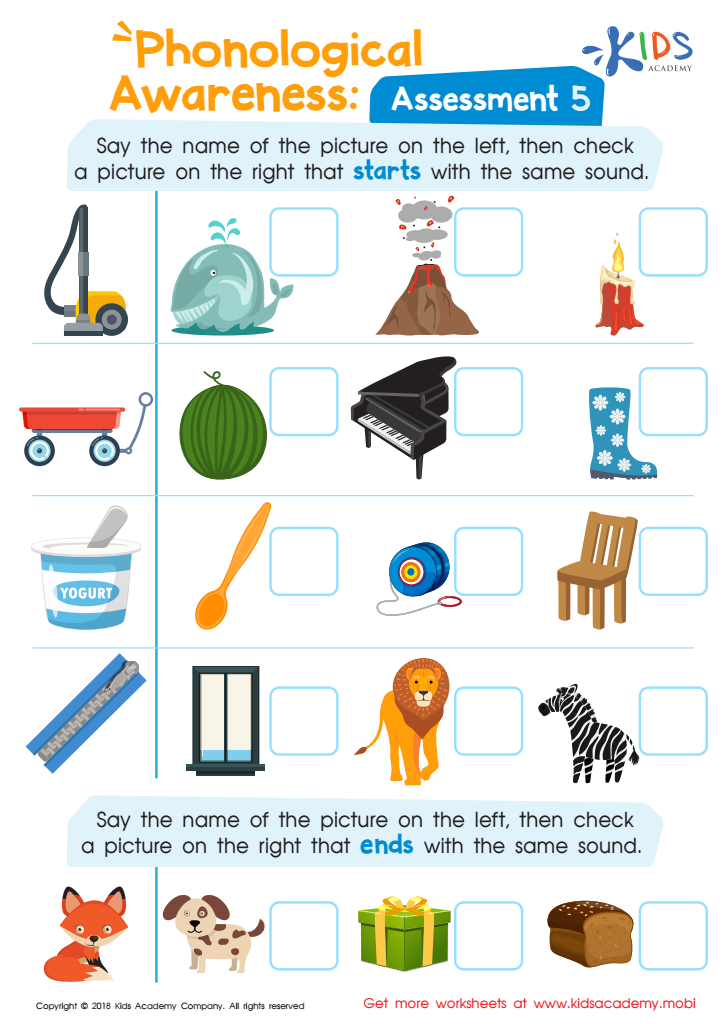
Phonological Awareness: Assessment 5 Worksheet








Rhyming skills are a crucial aspect of phonics development for children aged 3-8, and both parents and teachers should prioritize nurturing these skills. First, rhyming helps children recognize phonetic patterns in words, which enhances their ability to decode sounds, a fundamental skill for reading. When children can hear and produce rhymes, they are practicing auditory discrimination, laying the groundwork for understanding how letters link to sounds.
Additionally, engaging with rhymes fosters vocabulary acquisition. Through playful rhyme games, songs, and stories, children encounter new words in a memorable, context-rich way. This exposure not only builds their lexicon but also improves pronunciation and spelling, vital for literacy development.
Moreover, rhyming is fun and encourages a love of language. It enhances listening skills and supports cognitive development by promoting memory recall and critical thinking. As children learn to play with words, they cultivate creativity and self-expression.
Finally, rhyming activities often strengthen the bond between parents, teachers, and children, as shared reading sessions create enriching experiences. By focusing on rhyming skills, we empower children with essential tools for reading success and enhance their overall linguistic enjoyment. This foundation is key to a lifetime of literacy and learning.







