Sound differentiation Phonics Worksheets for Ages 3-8
4 filtered results
-
From - To
Explore our engaging Sound Differentiation Phonics Worksheets, designed for children aged 3 to 8! These resources are perfect for enhancing early literacy skills, helping young learners identify and differentiate between various sounds. With a vibrant array of activities, including interactive games and exercises, children can strengthen their understanding of phonetic sounds through fun and play. Our worksheets cater to different learning styles, making phonics accessible and enjoyable for every child. Whether for home schooling or classroom use, these engaging phonics resources promote a solid foundation in reading and pave the way for confident, successful learners. Start the learning journey today!
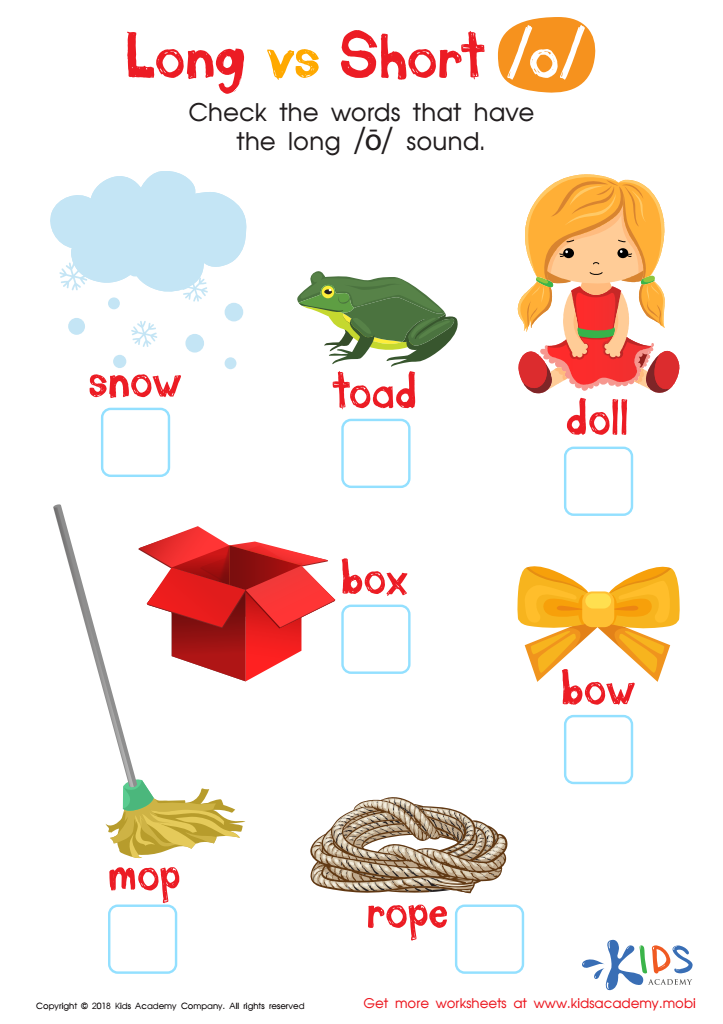
Long vs Short O Reading Worksheet
 Assign to My Students
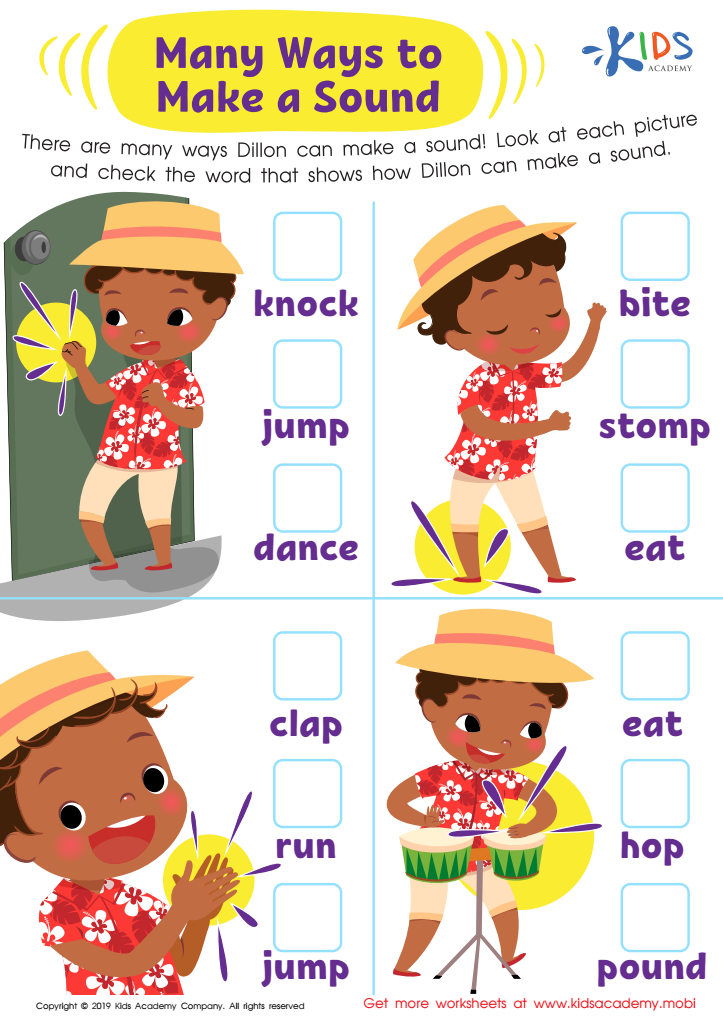
Many Ways to Make a Sound Worksheet
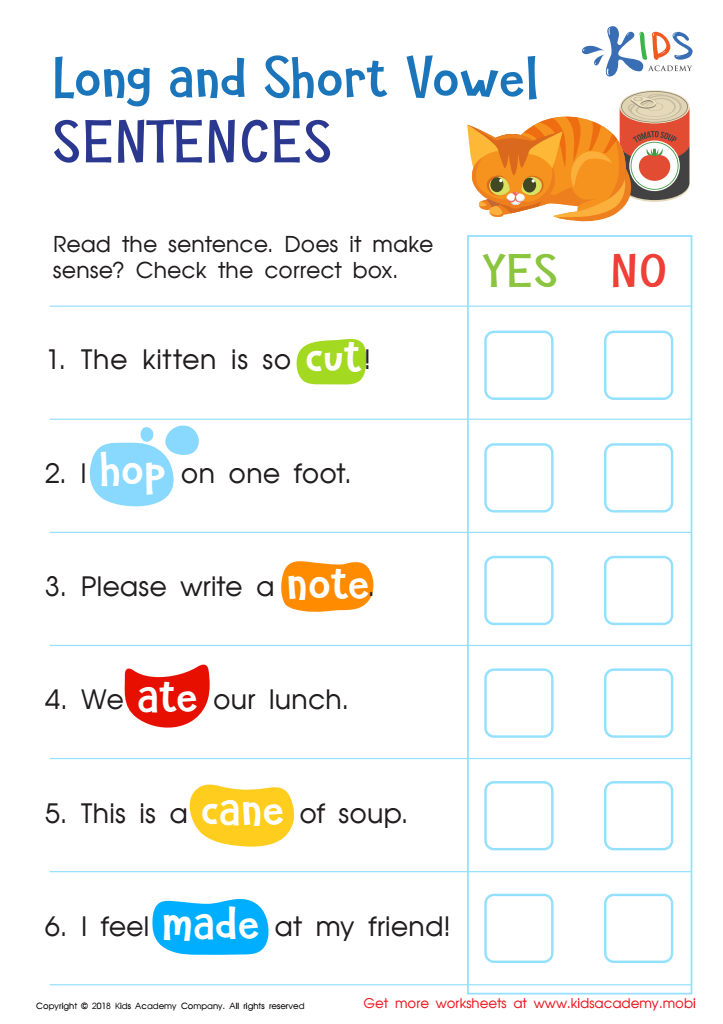
Long and Short Vowel Sentences: Assessment Worksheet
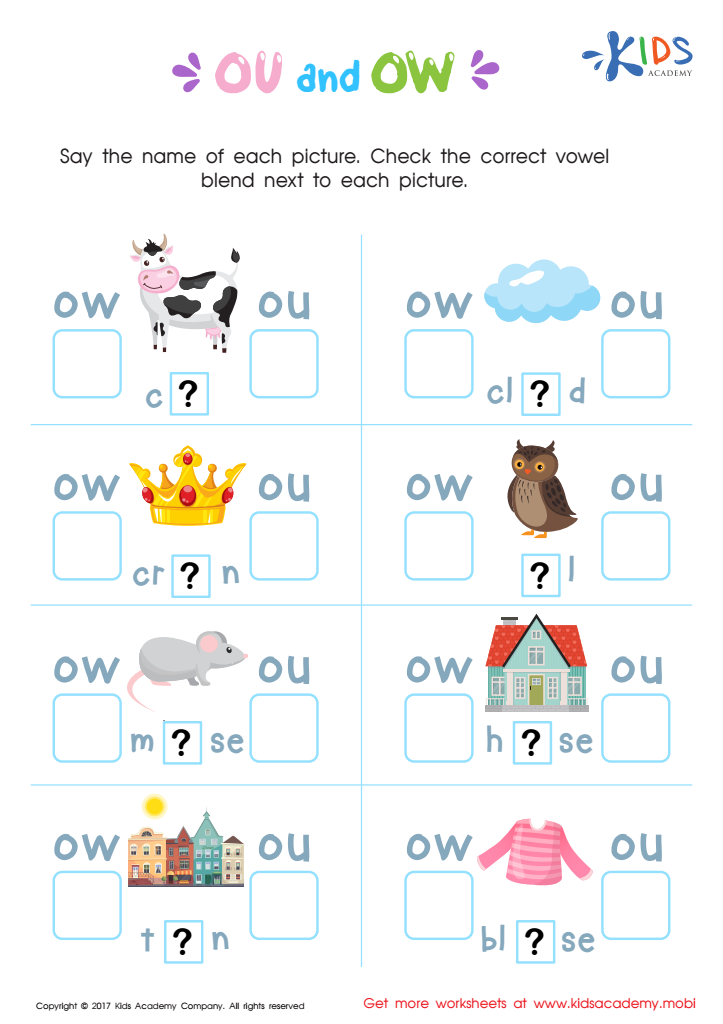
OU and OW Words Worksheet








Sound differentiation phonics is essential for children aged 3-8 as it lays the foundation for effective reading and writing skills. During this critical developmental period, children are learning to recognize the different sounds, or phonemes, that make up words. Understanding how to differentiate these sounds enhances their ability to decode words, which is vital for literacy development.
Parents and teachers play a crucial role in introducing and nurturing phonics into children's learning. Engaging activities, such as rhyming games and sound manipulation exercises, foster phonemic awareness, allowing children to hear and distinguish similar sounds. This not only aids in reading fluency but also improves spelling and vocabulary.
Moreover, sound differentiation phonics supports cognitive development. It encourages critical thinking as children learn to connect sounds with letters, aide in the differentiation of similar sounds, and enhances memory skills. Additionally, this knowledge contributes to greater confidence in their reading abilities, reducing anxiety and frustration.
Ultimately, by prioritizing sound differentiation phonics, parents and teachers empower children with the essential skills needed for academic success, opening doors to a world enriched by literacy and communication. Early investment in these skills leads to lifelong learning habits.







