Sound identification Phonics Worksheets for Ages 3-8
4 filtered results
-
From - To
Explore our engaging Sound Identification Phonics Worksheets designed for children ages 3 to 8! Perfect for enhancing early literacy skills, these worksheets guide young learners in recognizing and matching sounds with letters and words. Featuring colorful illustrations and interactive activities, children will enjoy identifying sounds associated with various objects. These resources support phonemic awareness, laying a strong foundation for reading and writing. Ideal for classroom use or home practice, our worksheets encourage educational fun while developing essential skills. Dive into a world of phonics and help your child become a confident reader with our thoughtfully designed sound identification worksheets!
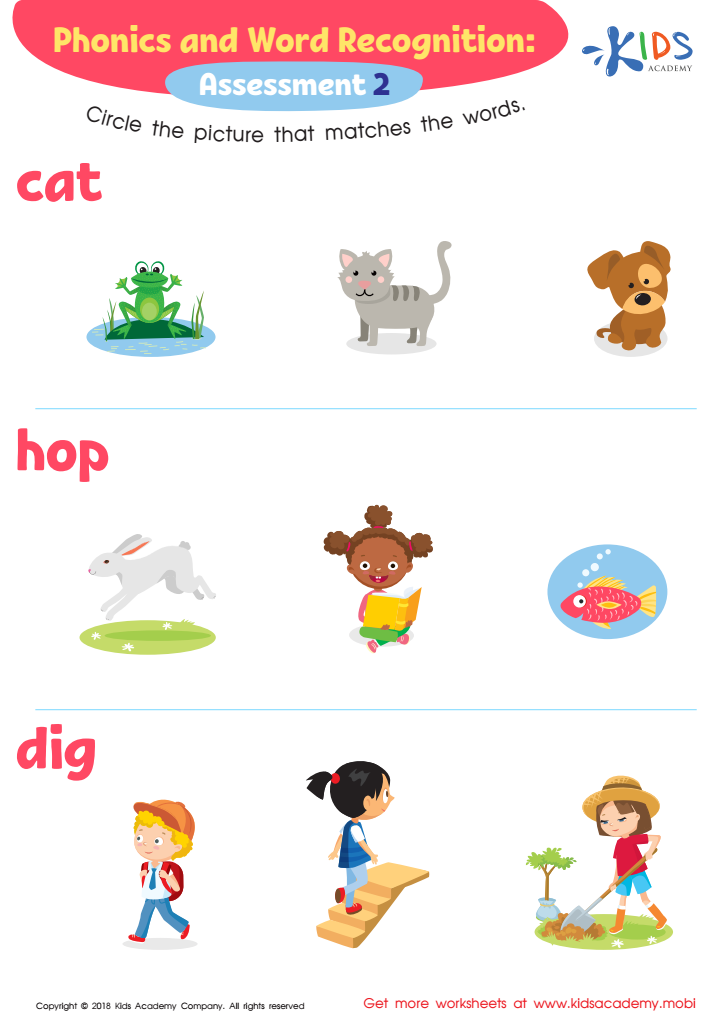
Phonological Awareness: Assessment 2 ELA Worksheet
 Assign to My Students
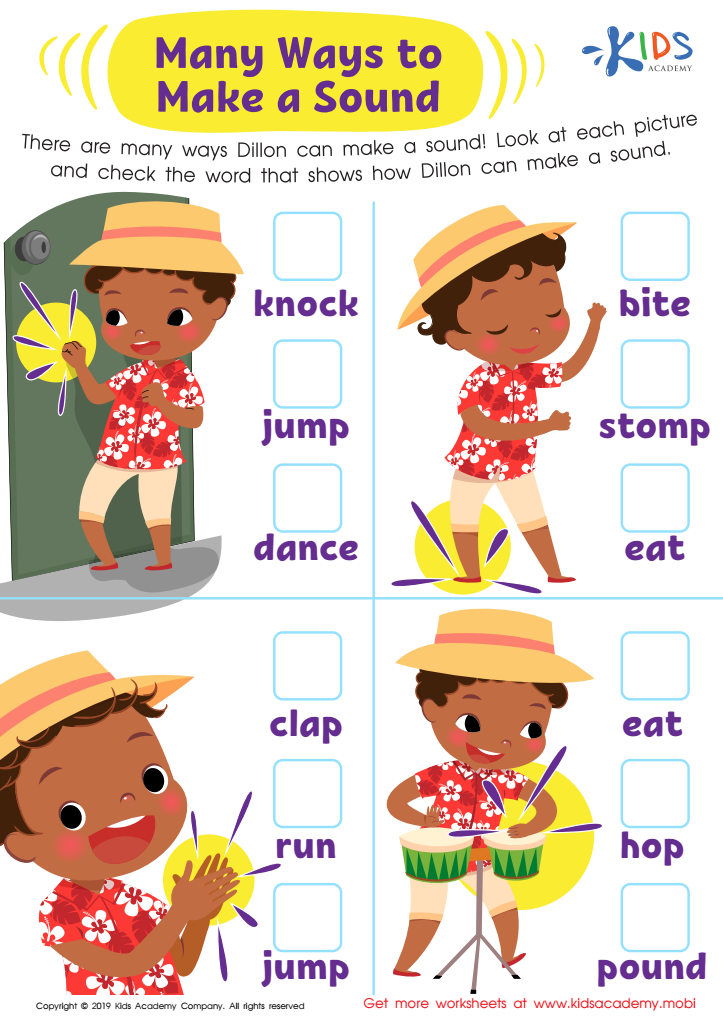
Many Ways to Make a Sound Worksheet
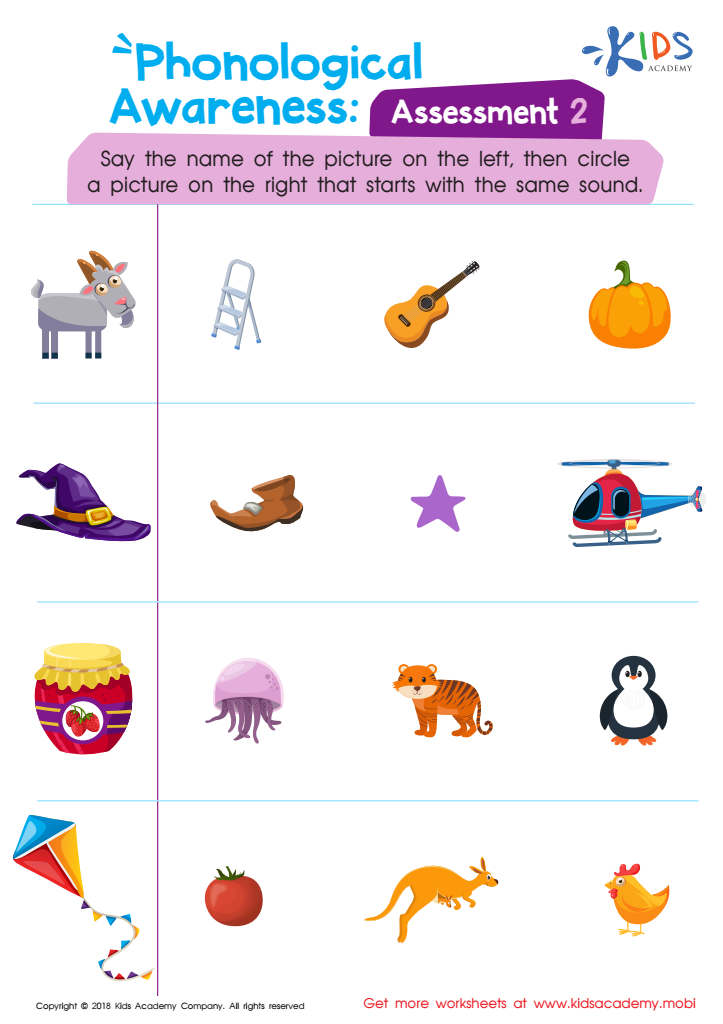
Phonological Awareness: Assessment 2 Worksheet
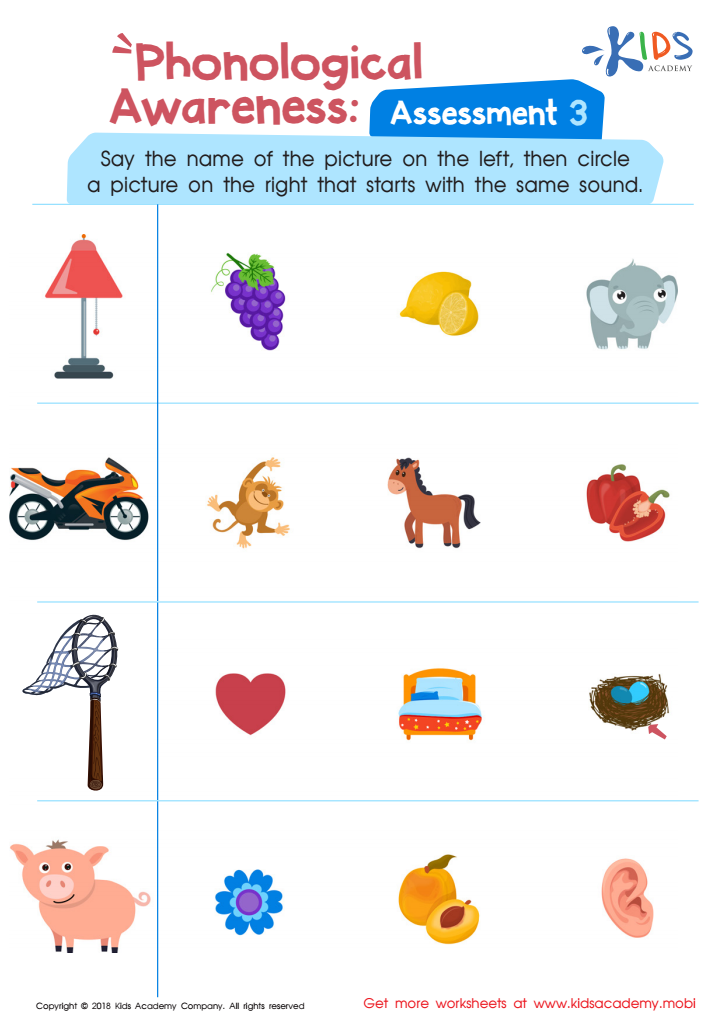
Phonological Awareness: Assessment 3 Worksheet








Sound identification phonics is a crucial skill for children ages 3-8, as it serves as the foundation for reading and literacy development. Parents and teachers should prioritize this competency because it enhances children's ability to decode words, recognizing that letters and sounds are connected. Mastery in sound identification supports improved vocabulary, comprehension, and spelling abilities, which contribute to academic success in later grades.
Early familiarity with sounds can also foster children's confidence and motivation towards learning. Engaging young learners in phonics activities can be enjoyable and interactive, using games, songs, and storytelling that make the learning process exciting. Furthermore, proficient sound identification aids in making the transition from spoken language to written language smoother, which is essential for effective communication.
Moreover, in today's digital age, literacy skills open doors to future opportunities, making it imperative that children receive adequate support in their early education. Teachers and parents play a vital role in this development; consistent reinforcement at home and school leads to lifelong reading habits. By investing time in sound identification during these formative years, adults not only aid in academic achievement but also help shape confident, empowered learners prepared to navigate the world of information effectively.







