Reading Skills Short Vowels Worksheets for Ages 3-8
4 filtered results
Difficulty Level
Grade
Age
-
From - To
Subject
Activity
Standards
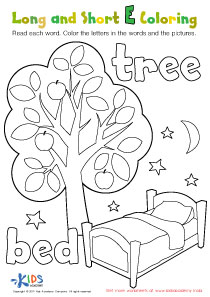
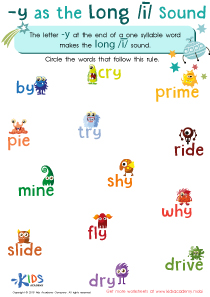
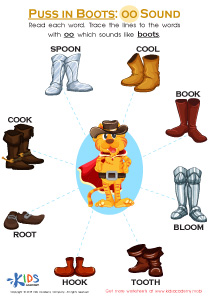
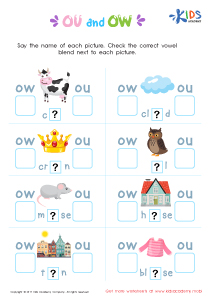
Enhance your child's reading skills with our engaging Short Vowels Worksheets, designed specifically for ages 3-8. These interactive worksheets emphasize the fundamental building blocks of reading by focusing on short vowel sounds. Kids will enjoy exploring a variety of fun activities, including matching, coloring, and tracing, that make learning enjoyable. Our resources are perfect for early learners, reinforcing phonemic awareness and helping them develop essential decoding skills. As they work through the short vowel exercises, children will gain confidence in their reading abilities. Foster a love for reading from an early age with our comprehensive, easy-to-use worksheets!
Favorites
With answer key
Interactive
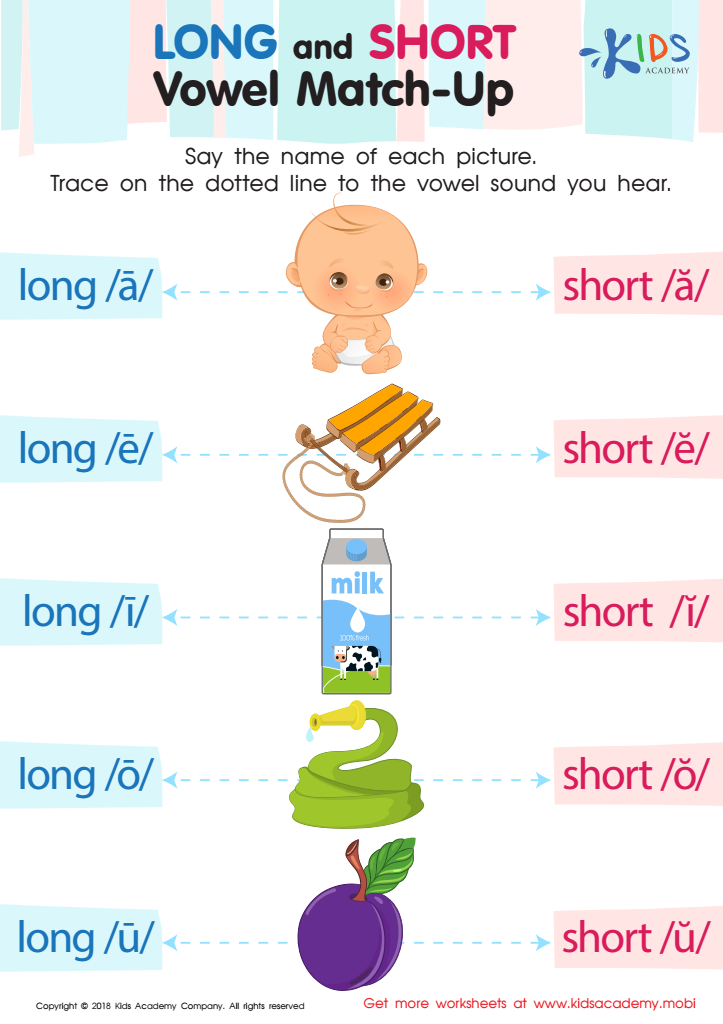
Long and Short Vowel Match up Reading Worksheet
Help your reader build confidence and refine their decoding skills! This worksheet combines long and short vowel recognition with a traceable component to improve fine motor skills. Your learner will name each picture and trace the dotted lines to get to the correct vowel sounds.
 Assign to My Students
Long and Short Vowel Match up Reading Worksheet
Worksheet
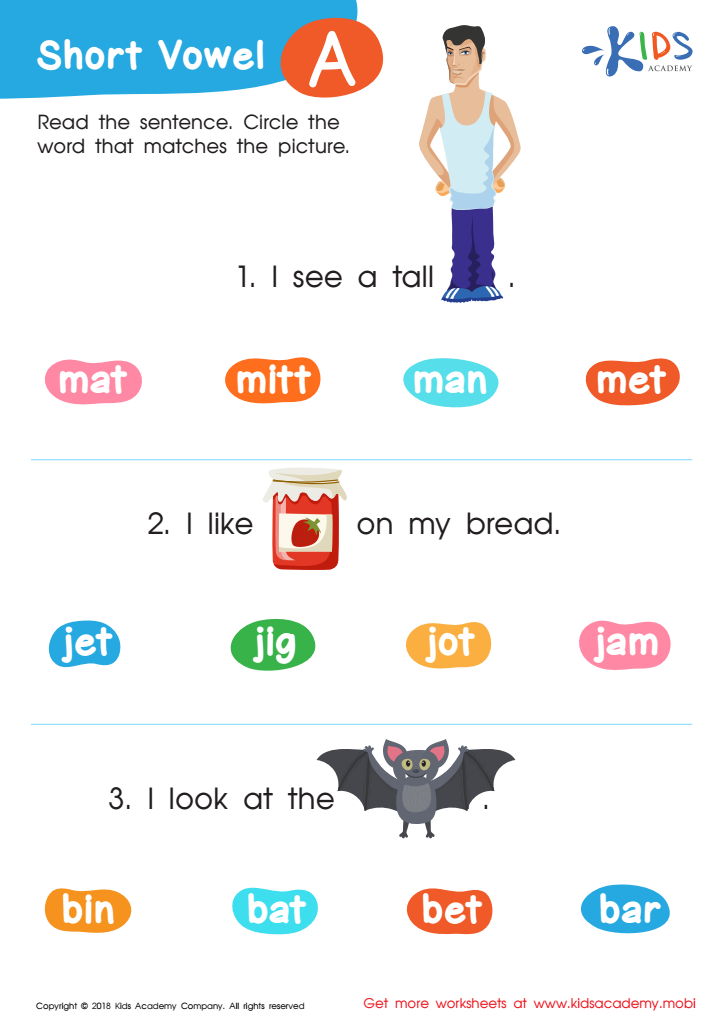
Short Vowel /a/ Worksheet
This free PDF helps new readers use sight words and pictures to read basic sentences. Then, they use accompanying word choices to find the correct word with the short a vowel sound. A key early reading skill, discriminating between short vowel sounds can be tricky in monosyllabic words, so use this PDF to help your reader reinforce it.
Short Vowel /a/ Worksheet
Worksheet
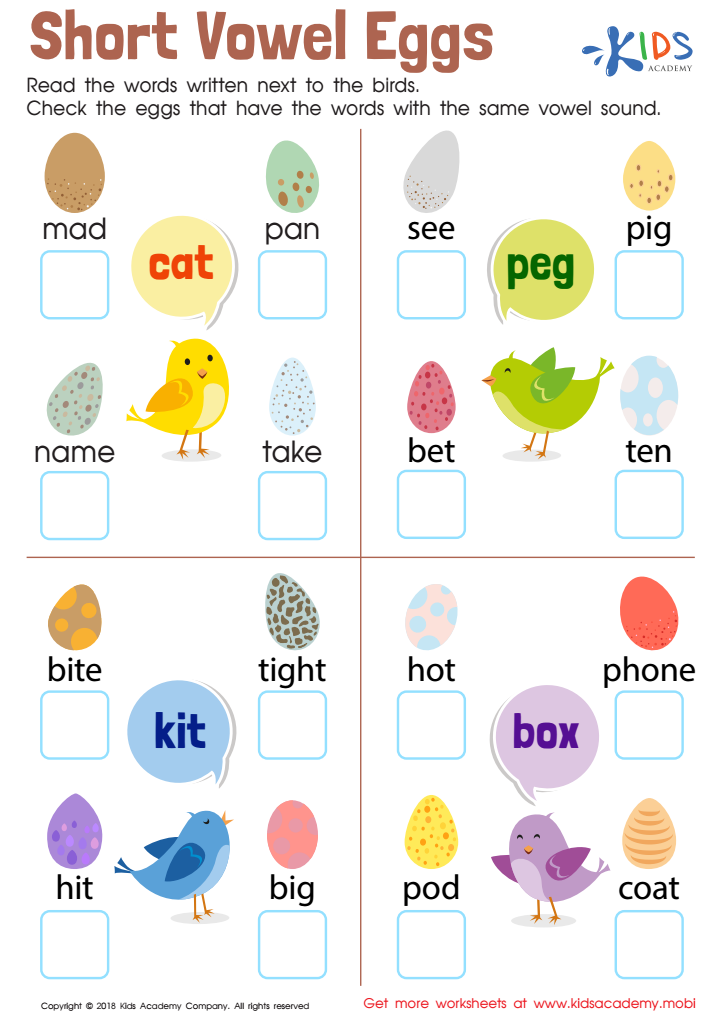
Short Vowel Eggs Worksheet
Your students will love helping these birdies pick the short vowel eggs! Have them read the words in the thought bubbles, then check off the boxes with the same short vowel sounds. The bright colors of this free Worksheet will draw them in and get them practicing their vowels!
Short Vowel Eggs Worksheet
Worksheet
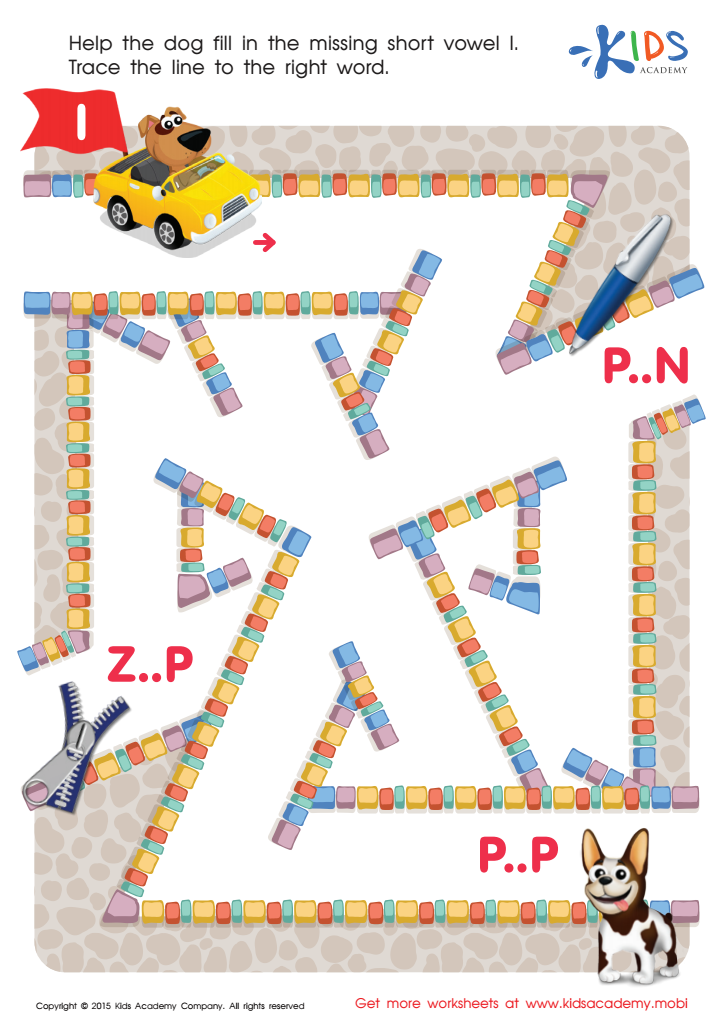
Short Vowel Sound I Worksheet
This free printable phonics worksheet will get your kid prepped for reading! It's a maze to help the dog complete the word “zip” with the missing letter I. Have your kid say the word aloud to learn the I sound. It's a great way to practice reading, writing and spelling skills. Check out here for more phonics worksheets!
Short Vowel Sound I Worksheet
Worksheet
Join Kids Academy for Free
Who is primarily going to use this learning content?



Reading skills, particularly understanding short vowels, are crucial for young learners aged 3-8. During this formative stage, children are building foundational literacy skills, and short vowel recognition plays a significant role. Short vowels—the sounds of 'a,' 'e,' 'i,' 'o,' and 'u' in words like "cat," "pet," and "dog"—are pivotal in developing phonemic awareness, essential for decoding words. Mastery of short vowels enhances children's ability to sound out unfamiliar words, facilitating independent reading.
Parents and teachers should care about fostering these skills as they directly impact a child’s confidence and motivation to read. Engaging in activities that strengthen short vowel recognition often leads to improved vocabulary and comprehension. Moreover, a solid grasp of these sounds lays the groundwork for understanding complex language concepts as children advance.
Additionally, focusing on short vowels can promote early success in reading, which is linked to overall academic achievement. Children who struggle with reading early on are at a higher risk of falling behind in other subjects, making these skills crucial for long-term educational outcomes. By prioritizing short vowel instruction, parents and teachers enhance engagement, reduce frustration, and help children discover the joy of reading, all of which are key for lifelong learning.