Silent Vowels Worksheets for Ages 3-8
5 filtered results
-
From - To
Discover engaging Silent Vowels Worksheets designed for kids ages 3-8 at Kids Academy! These interactive worksheets provide a fun and educational way for young learners to explore silent vowels through captivating activities. Our carefully crafted exercises help children develop essential language skills, enhance word recognition, and improve spelling while learning about silent letters. With colorful visuals and age-appropriate content, these worksheets make learning enjoyable and effective for early graders. Ideal for classroom use or at-home practice, our Silent Vowels Worksheets will have children eager to master this important aspect of reading. Start their literacy journey today and watch them flourish!
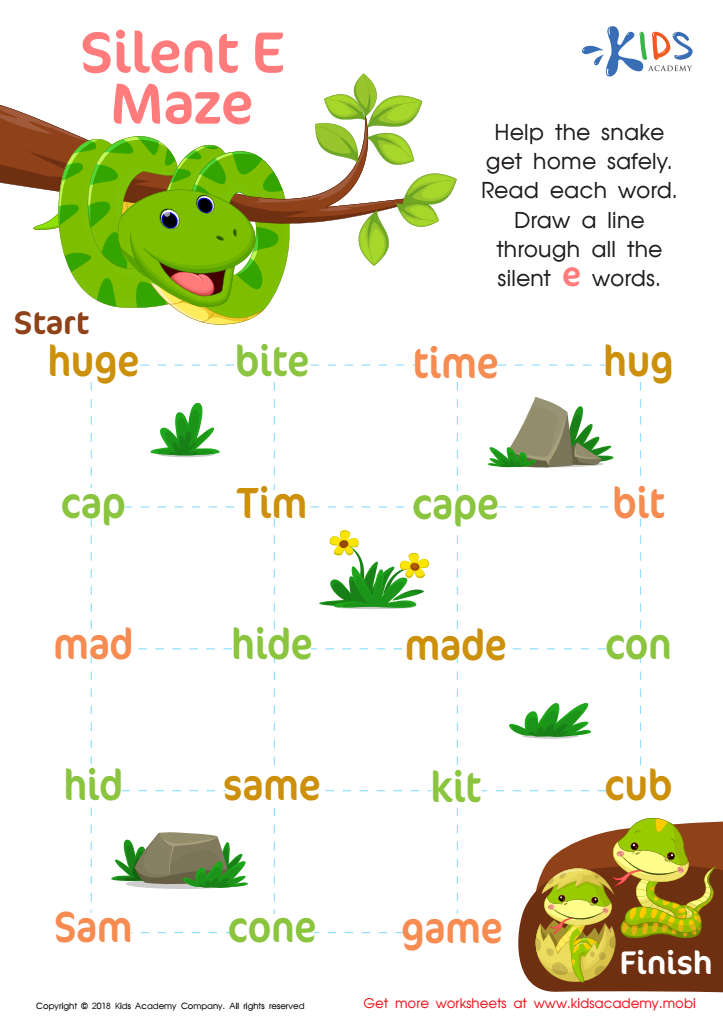
Silent E Maze Worksheet
 Assign to My Students
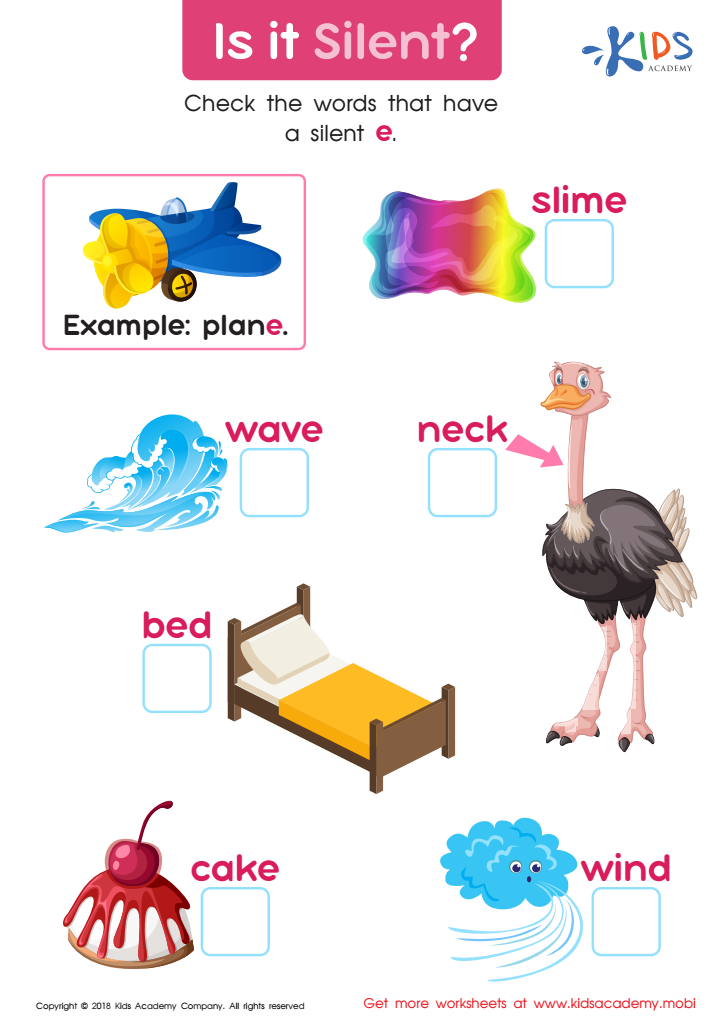
Is It Silent? Worksheet
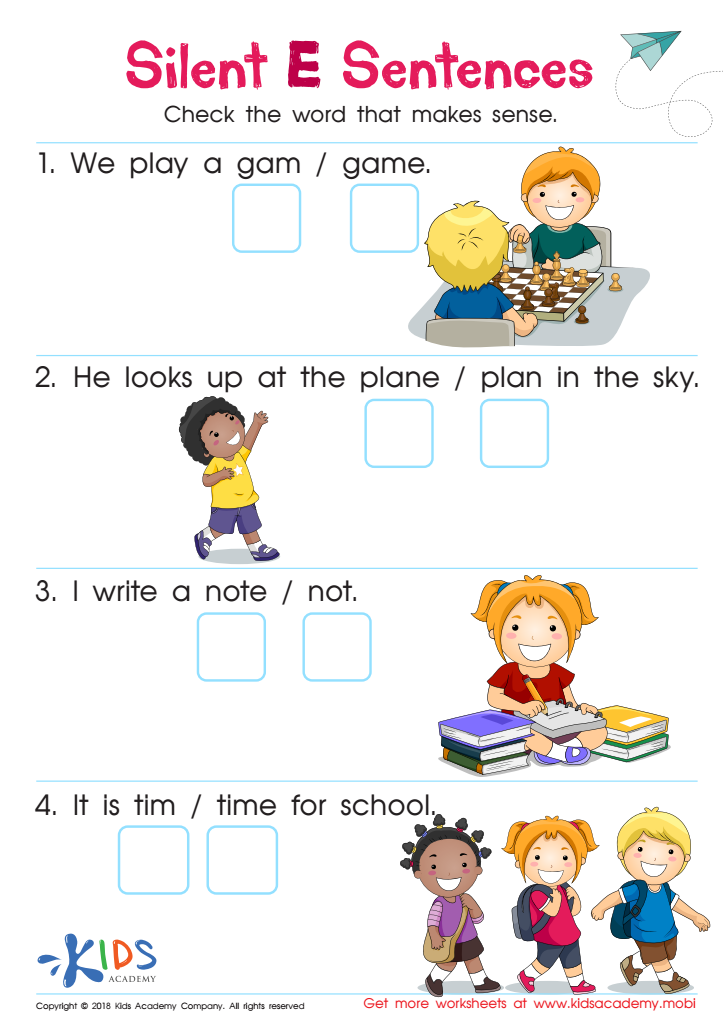
Silent E Sentences Worksheet
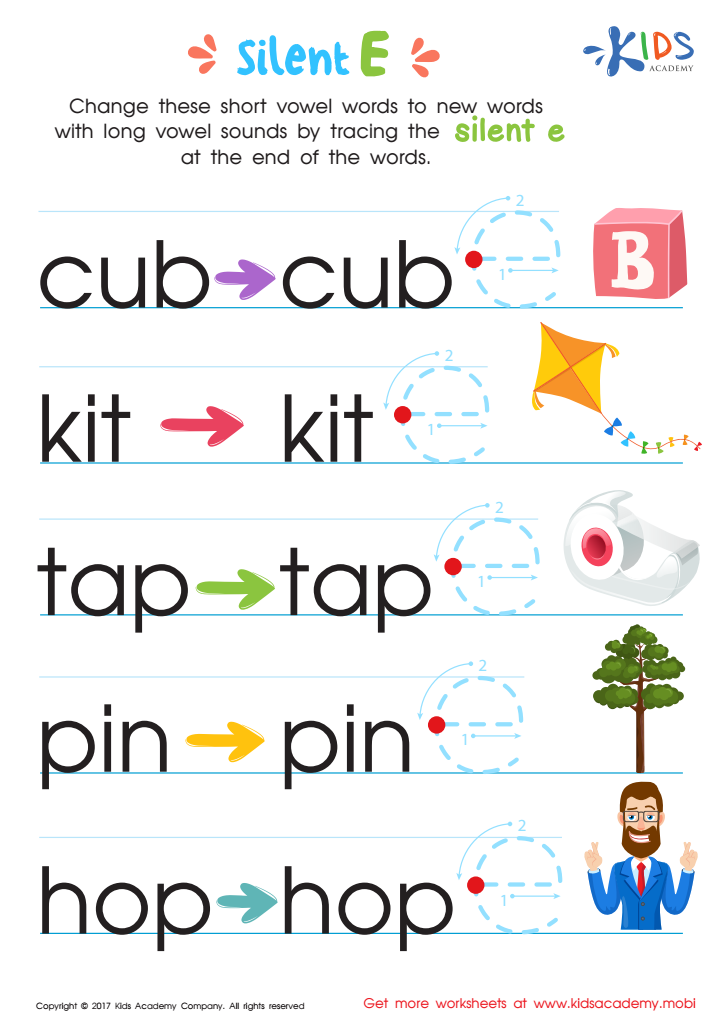
Silent E Words Worksheet
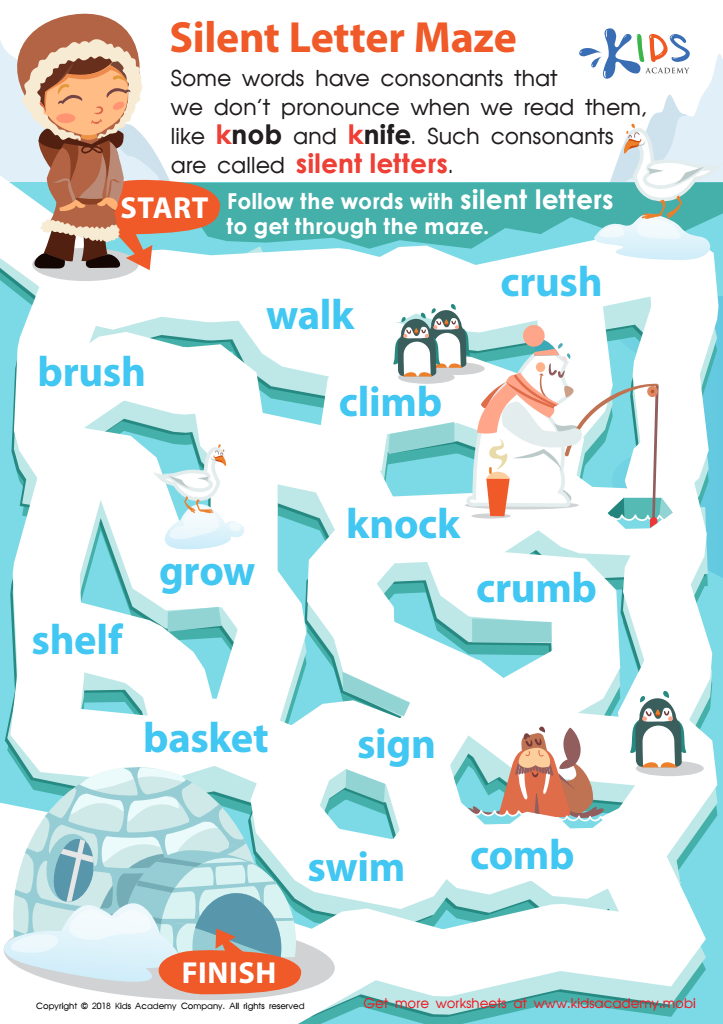
Silent Letter Maze Worksheet


Silent vowels, though often overlooked, play a significant role in early language development for children aged 3 to 8. Understanding silent vowels can enhance phonemic awareness, a key skill for reading and writing. It helps children recognize that letters can have different sounds, deepening their comprehension of language structure.
When children learn about silent vowels, such as the ‘e’ in “make” or the ‘a’ in “bread,” they develop critical thinking skills as they begin to decode words more efficiently. This contributes to their ability to read fluently, allowing them to focus on comprehension rather than laboriously sounding out every letter. Fluency in reading is crucial because it lays the foundation for future literacy skills.
Moreover, practicing with silent vowels can be a fun and engaging activity. When teachers and parents introduce playful strategies like rhymes, songs, or interactive games, they create a positive learning environment that encourages exploration of language nuances.
Recognizing silent vowels also aids vocabulary development as children encounter a broader range of words. Ultimately, an understanding of silent vowels enriches children’s literacy experiences, promotes confident readers and writers, and cultivates a love for language, making it an essential focus for both parents and educators.