Letter recognition Tracing Letters Worksheets for Ages 3-8 - Page 2
26 filtered results
-
From - To
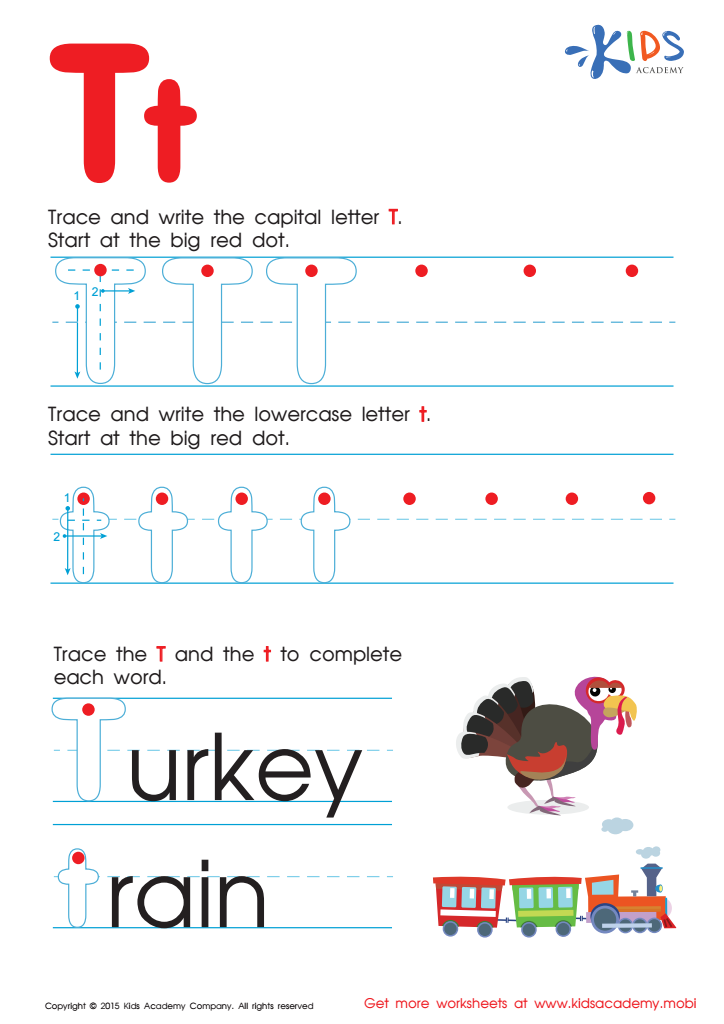
Letter T Tracing Page
 Assign to My Students

Letter D Tracing Page







Letter recognition and tracing activities are vital for children aged 3-8, as they form the foundation for literacy development. When children can recognize letters, they are better equipped to learn phonics, spelling, and reading. Early exposure to the alphabet enhances their ability to connect sounds with letters, allowing them to decode words more effectively.
Tracing letters engages fine motor skills, aiding in the development of hand-eye coordination and control, both essential for handwriting later on. This physical engagement not only makes learning more interactive but also helps reinforce memory retention. As children trace, they visualize the letters' shapes, strengthening their recognition abilities.
Furthermore, letter recognition fosters confidence. When children can identify and write letters, they gain a sense of accomplishment, encouraging them to explore reading and writing further. For parents and teachers, fostering these skills at an early age can build a strong literacy foundation, paving the way for academic success.
In essence, letter recognition and tracing activities are crucial components of early childhood education, promoting cognitive, physical, and emotional development, and instilling a lifelong love for learning. Prioritizing these activities can significantly impact a child's educational journey.








