
Vocabulary enhancement Tracing Letters Worksheets for Ages 3-8
3 filtered results
Difficulty Level
Grade
Age
-
From - To
Subject
Activity
Standards
Boost your child’s vocabulary and writing skills with our Vocabulary Enhancement Tracing Letters Worksheets, designed specifically for ages 3-8. These interactive worksheets offer young learners the chance to practice letter tracing while expanding their vocabulary. As kids trace each letter, they engage with relevant words, enhancing word recognition and pronunciation skills. Our fun visual aids and engaging activities keep children motivated and excited about learning. Perfect for both home and classroom settings, these worksheets help develop fine motor skills and reinforce the connection between letters and their meanings. Empower your little ones to become confident early readers and writers today!
Favorites
With answer key
Interactive
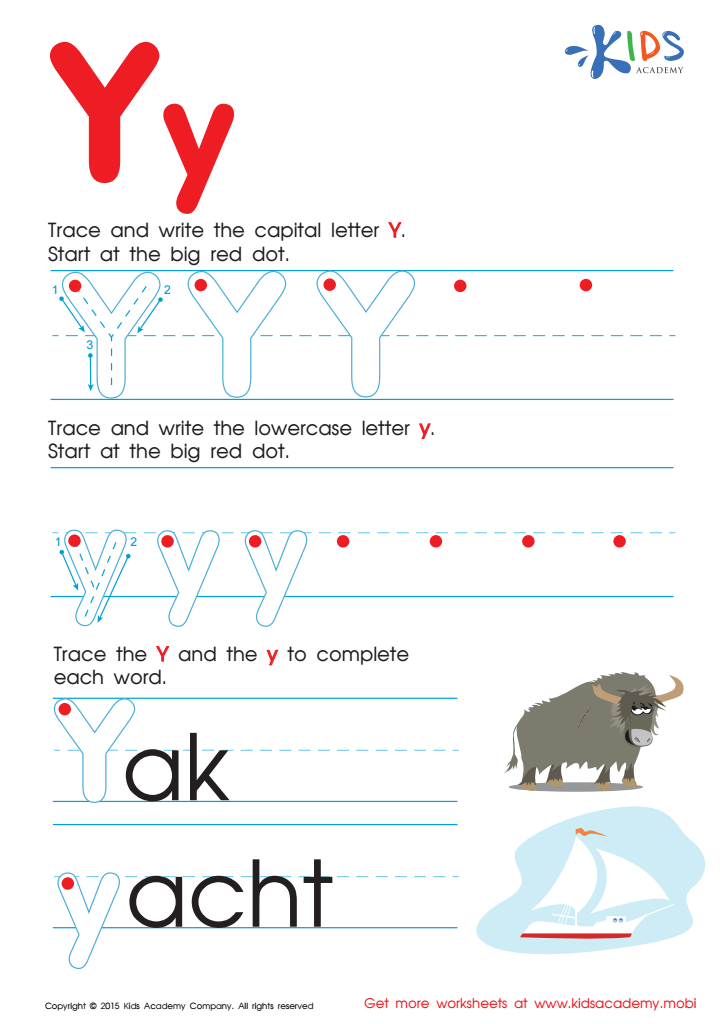
Letter Y Tracing Page
Trace the capital letter "Y" on the red dot, then trace and write the lowercase letter. Complete the words to help the Yak walk and the yacht swim. More worksheets at Kids Academy.
 Assign to My Students
Letter Y Tracing Page
Worksheet
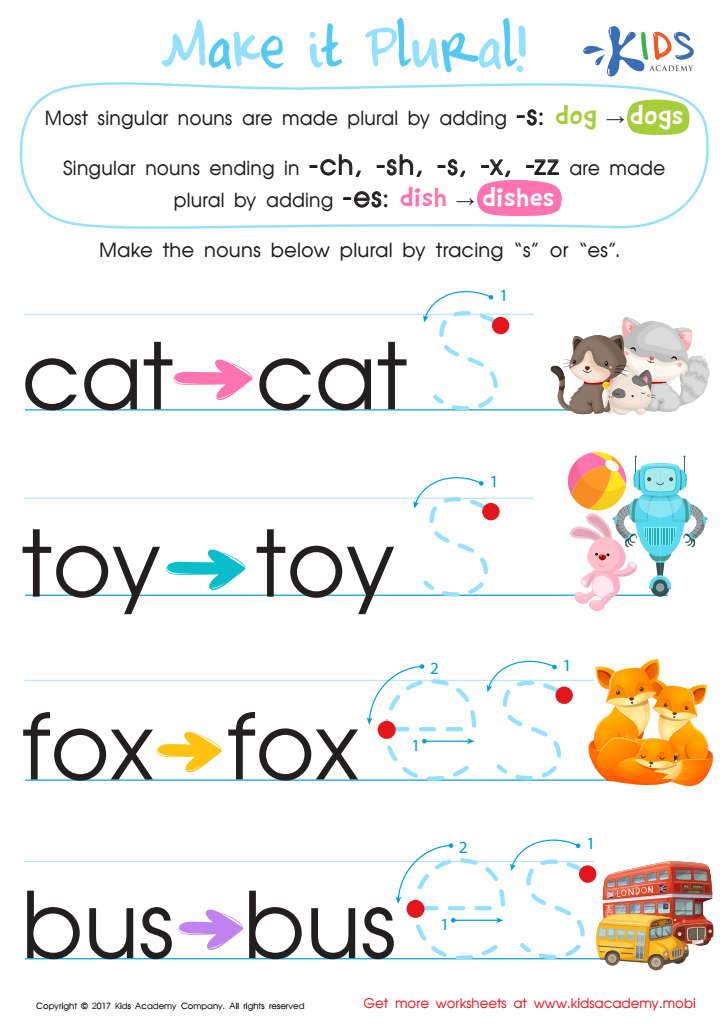
Make it Plural Worksheet
Changing words from singular to plural can be tricky as there are many word endings with special rules. Most words just need an -s, while endings like -ch, -sh, -s, -x or -zz need -es. This worksheet helps kids read words and trace the correct ending for each, making it easier to master these rules!
Make it Plural Worksheet
Worksheet
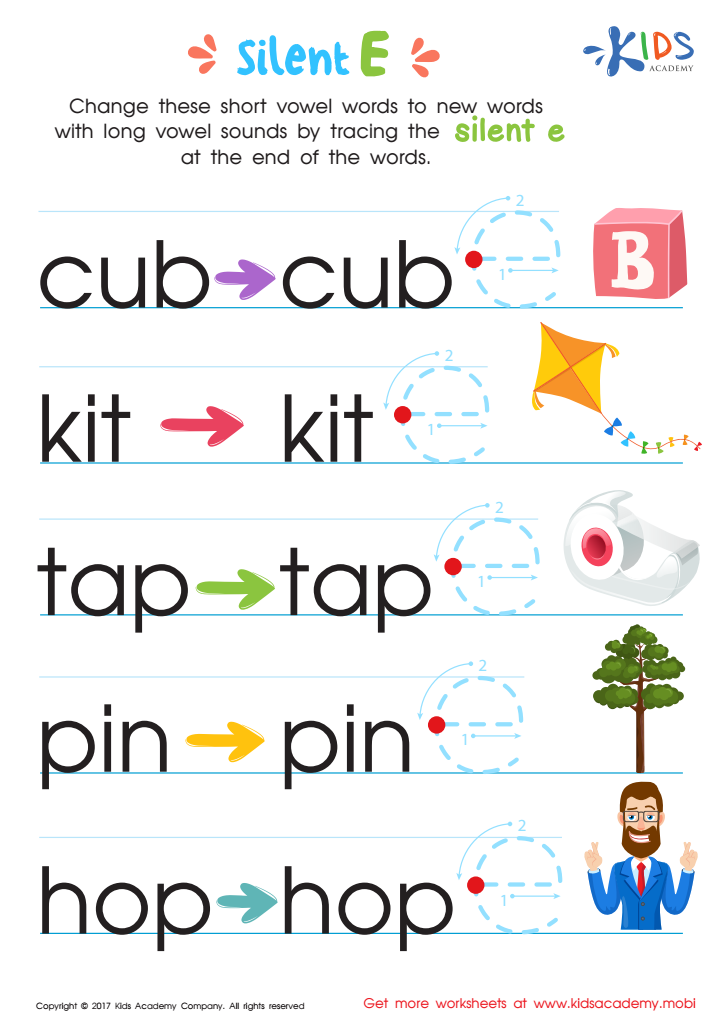
Silent E Words Worksheet
The letter e is amazing - it changes words without making a sound! Boost spelling and phonics with this Silent e worksheet from Kids Academy - fun and colorful!
Silent E Words Worksheet
Worksheet
Join Kids Academy for Free
Who is primarily going to use this learning content?








Vocabulary enhancement and tracing letters are crucial components of early childhood education, especially for children aged 3-8. This developmental stage is pivotal for language acquisition and literacy skills, forming the foundation for future academic success. Engaging children in vocabulary-building activities helps them understand the world around them, express their thoughts, and develop critical thinking skills.
Tracing letters enhances fine motor skills, hand-eye coordination, and cognitive development. As children trace letters, they begin to recognize letter shapes and sounds, facilitating the learning of phonics, which is essential for reading. This hands-on approach helps reinforce vocabulary as children connect letters with spoken words, thereby improving their language retention.
Moreover, a rich vocabulary contributes significantly to children's confidence in communication, encouraging them to articulate their ideas more effectively. This ability is essential for social interactions, overall academic achievement, and lifelong learning.
By caring about vocabulary and letter tracing, parents and teachers are actively participating in shaping children's language skills, promoting a love for reading, and ultimately fostering enthusiastic and informed learners prepared for future educational challenges. Hence, these activities are not just educational; they're foundational steps toward holistic child development.








