Reading comprehension Vowel Diphthongs Worksheets for Ages 3-8
15 filtered results
-
From - To
Enhance your child's reading skills with our specially designed Reading Comprehension Vowel Diphthongs Worksheets for Ages 3-8. These worksheets are crafted to help young learners recognize and pronounce vowel diphthongs, enhancing their reading fluency and comprehension. Through engaging exercises, children will explore exciting stories, improve vocabulary, and develop critical thinking. Ideal for both classroom and home use, our worksheets make learning enjoyable, laying a strong foundation for future reading success. Download now from Kids Academy and watch your child’s reading abilities flourish with guidance and practice in vowel diphthongs!
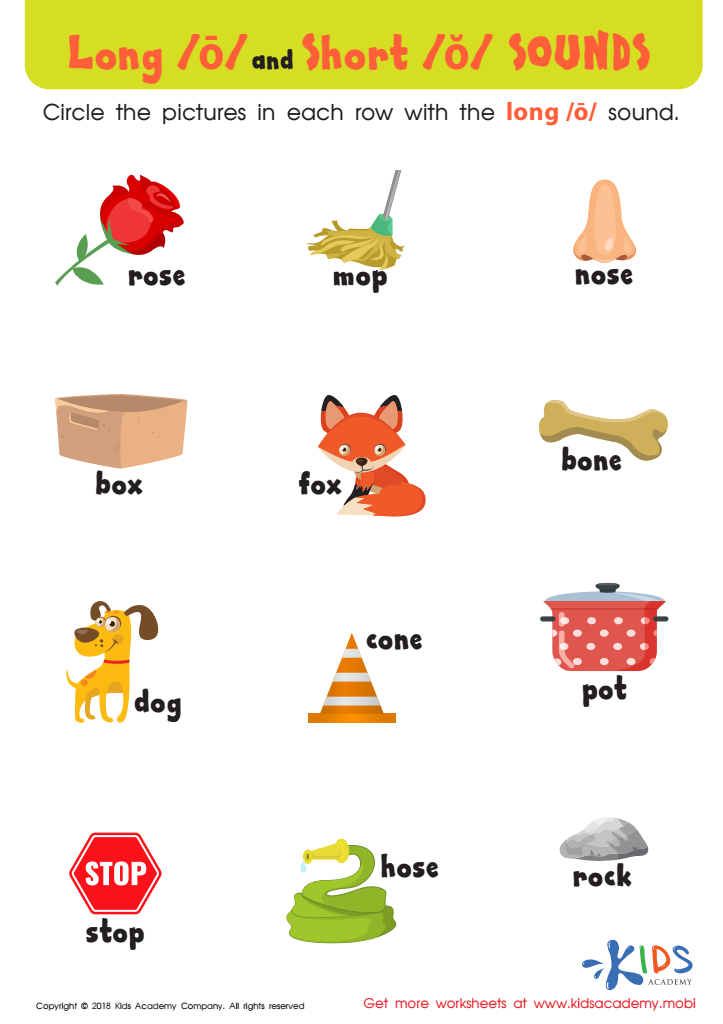
Reading: Long O and Short O Sounds Worksheet
 Assign to My Students
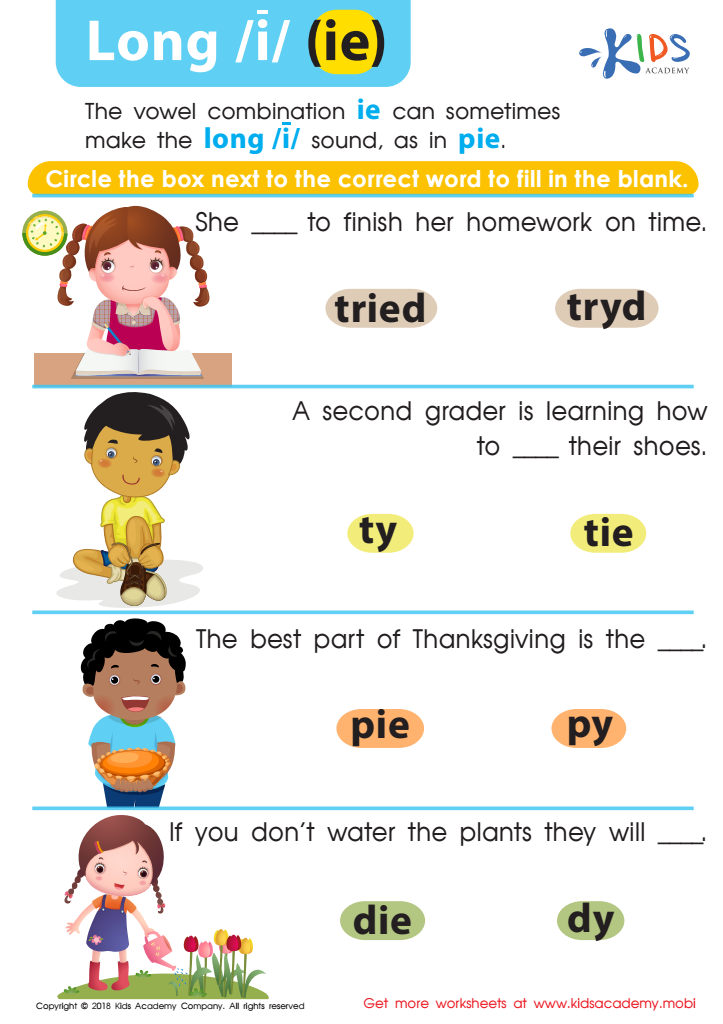
Reading: Long I and IE Worksheet
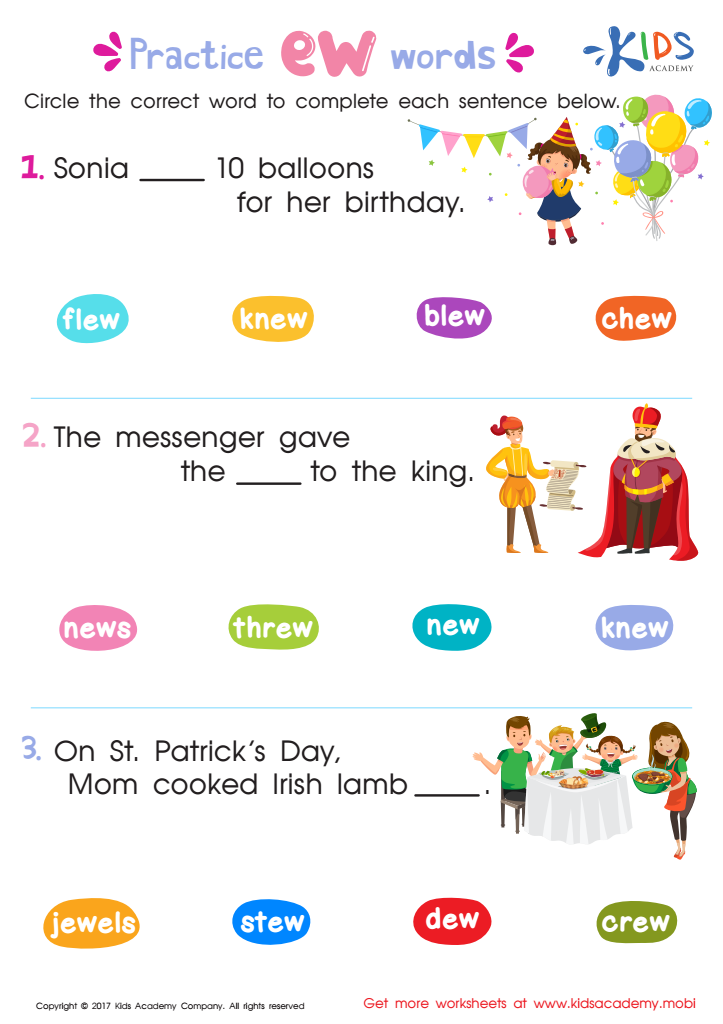
EW Words Worksheet
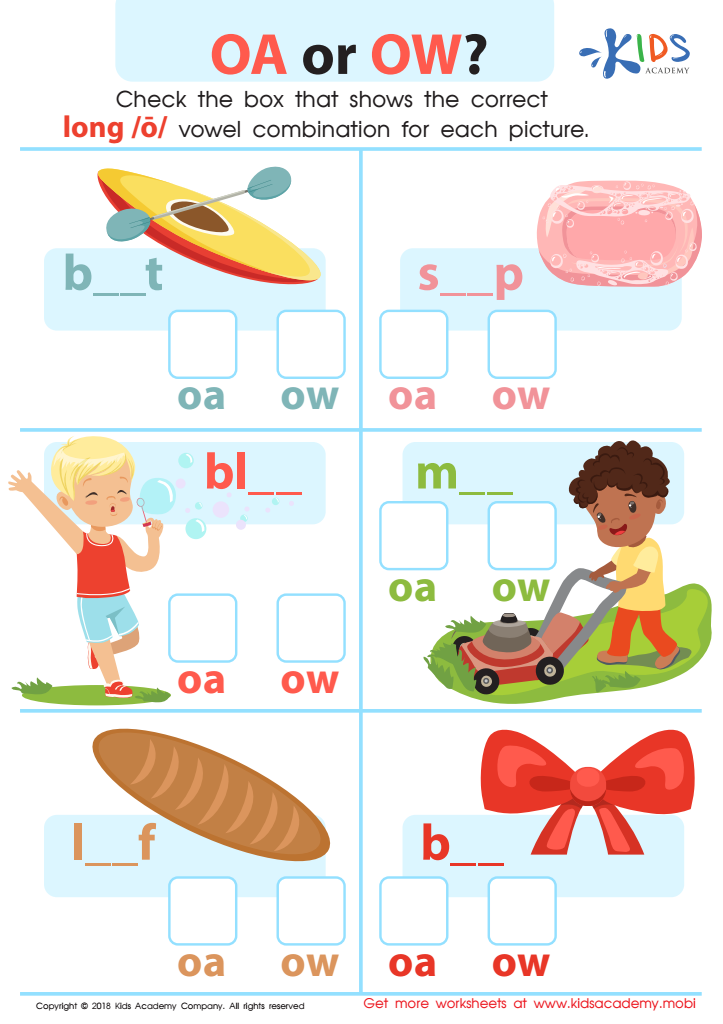
Reading: OA or OW Worksheet
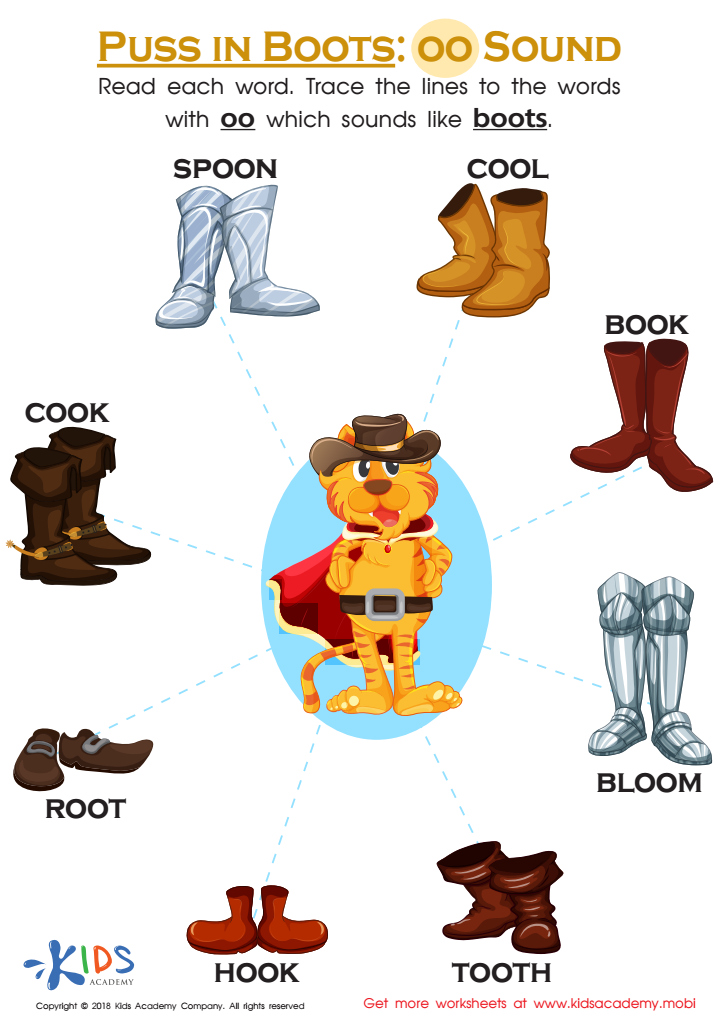
Puss in Boots: OO Sound Worksheet
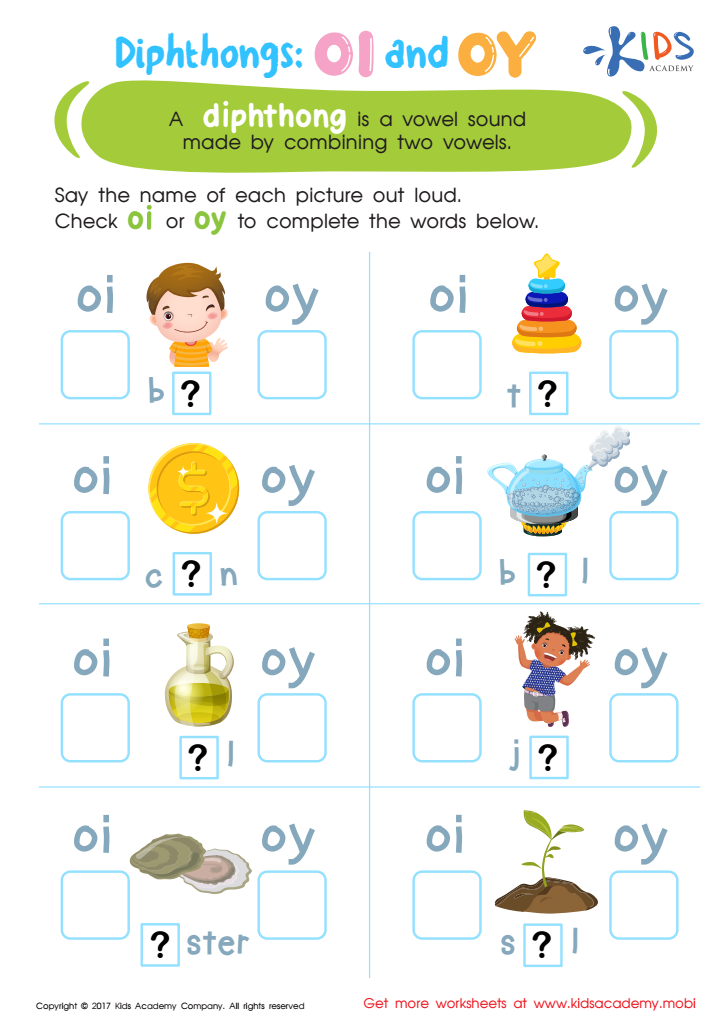
Vowel Diphthongs OI OY Worksheet
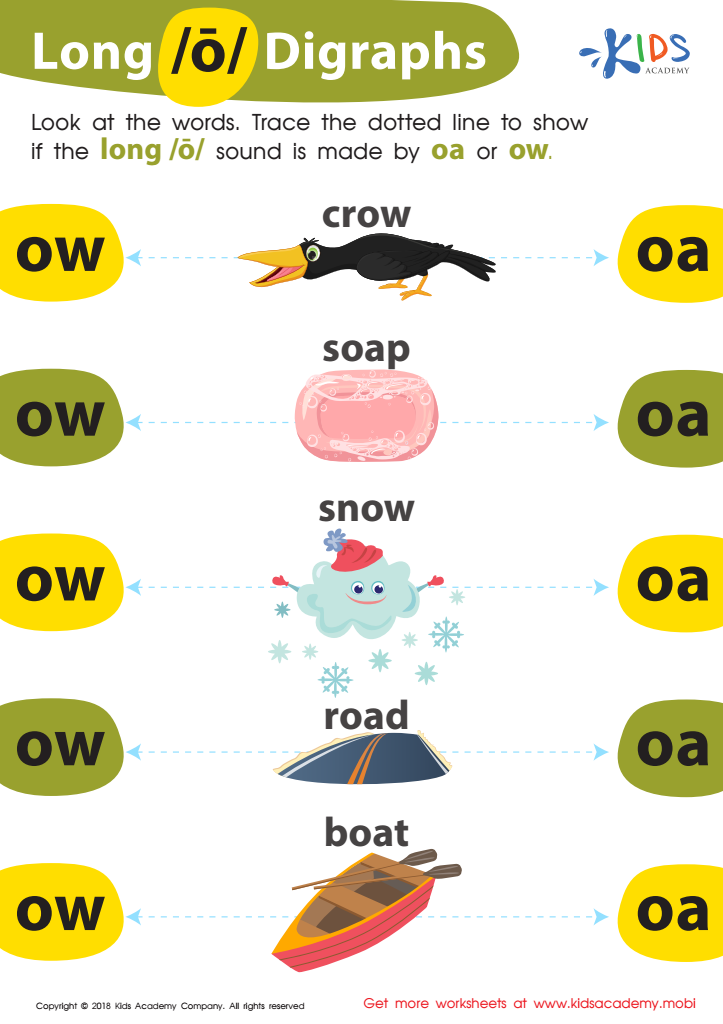
Reading: Long O Digraphs Worksheet
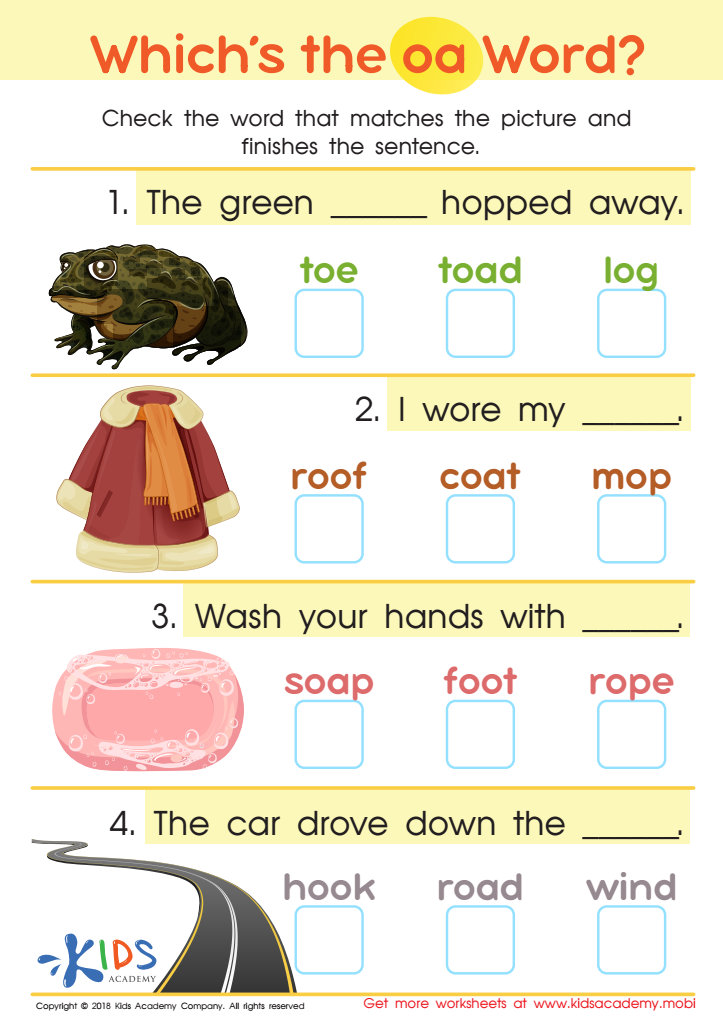
Which's the OA Word? Worksheet
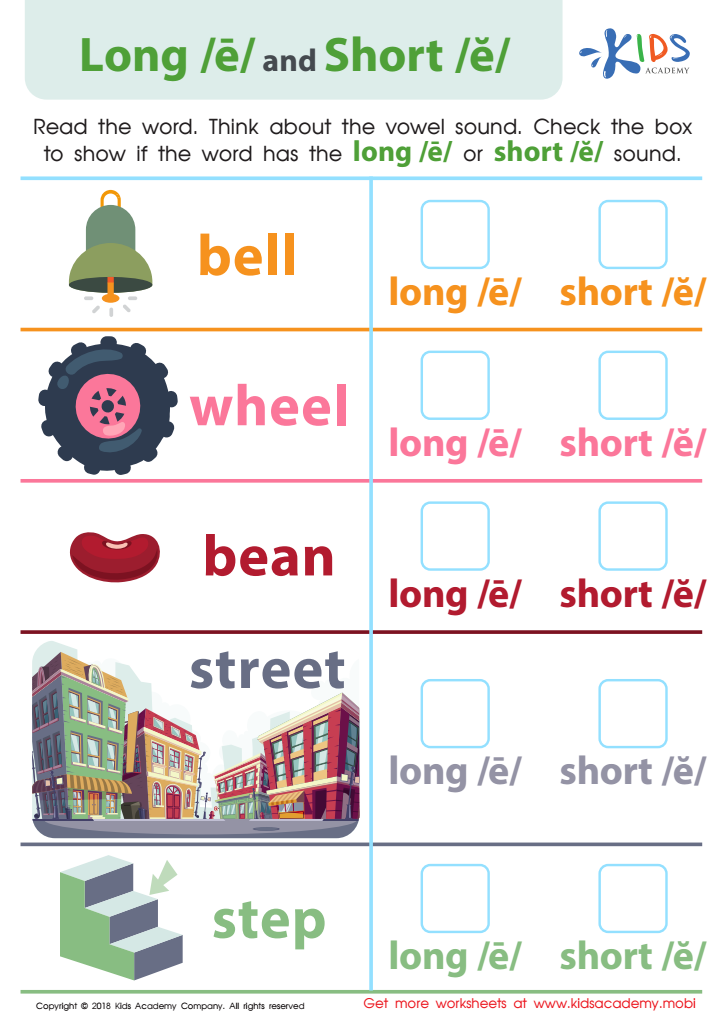
Reading: Long E and Short E Worksheet
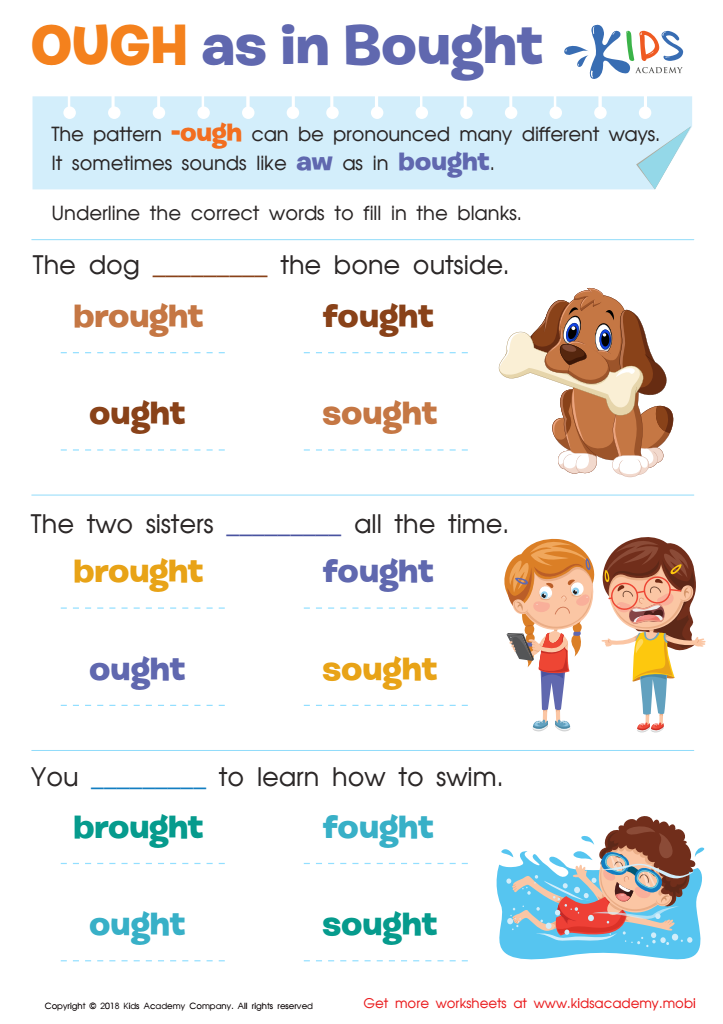
OUGH as in Bought Worksheet
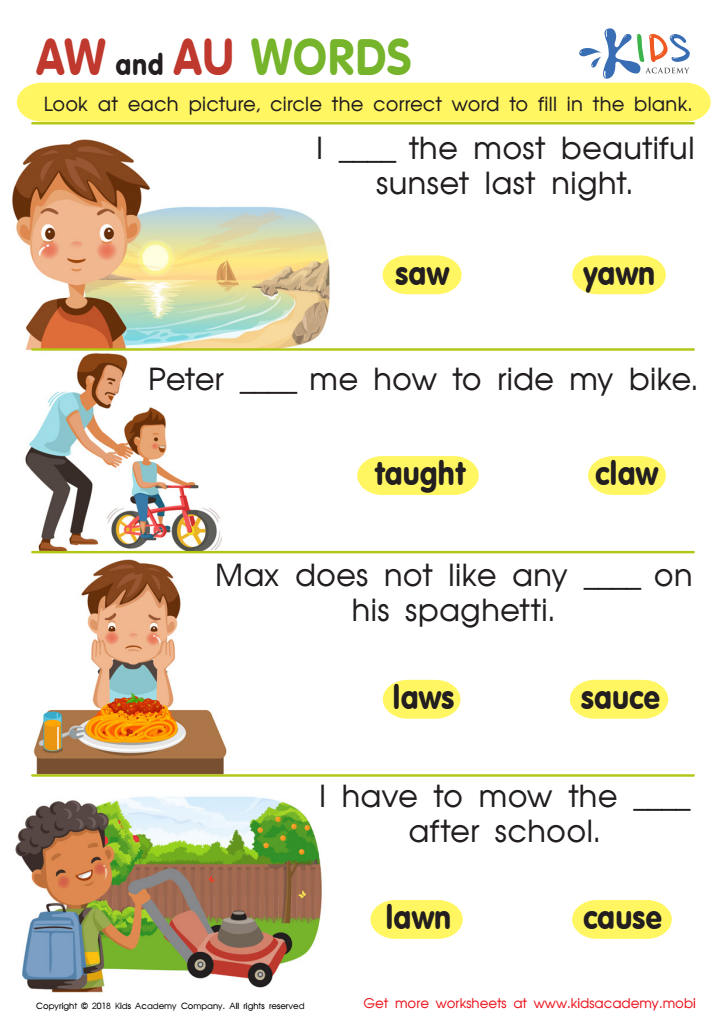
Reading: AW and AU Words Worksheet
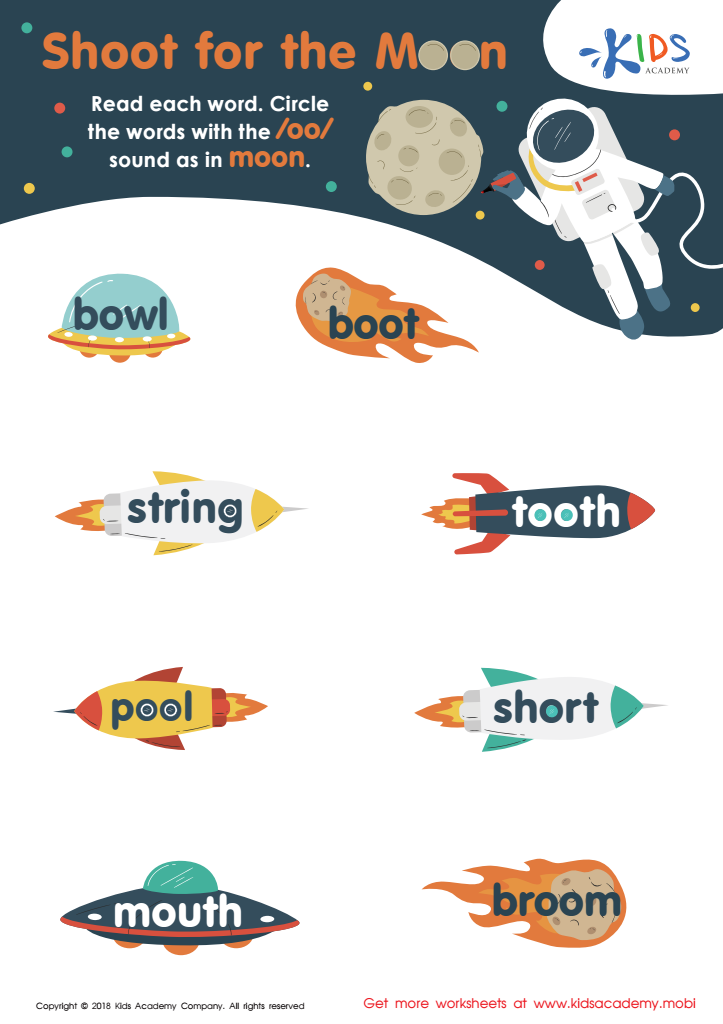
Reading: Shoot for the Moon Worksheet
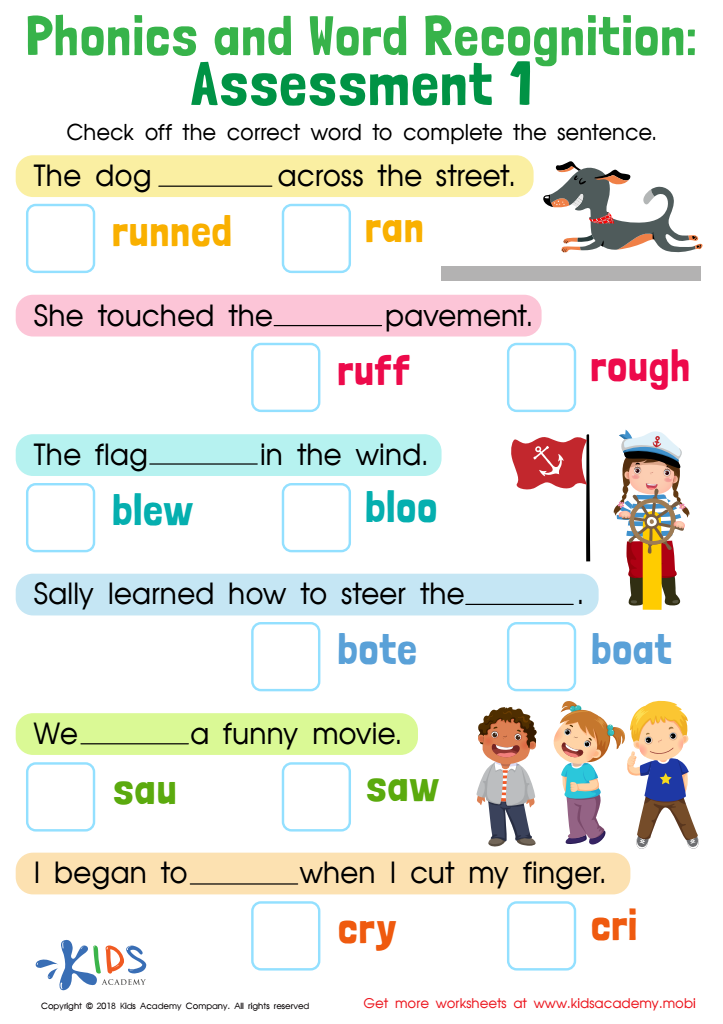
Phonics and Word Recognition: Assessment 1 Worksheet
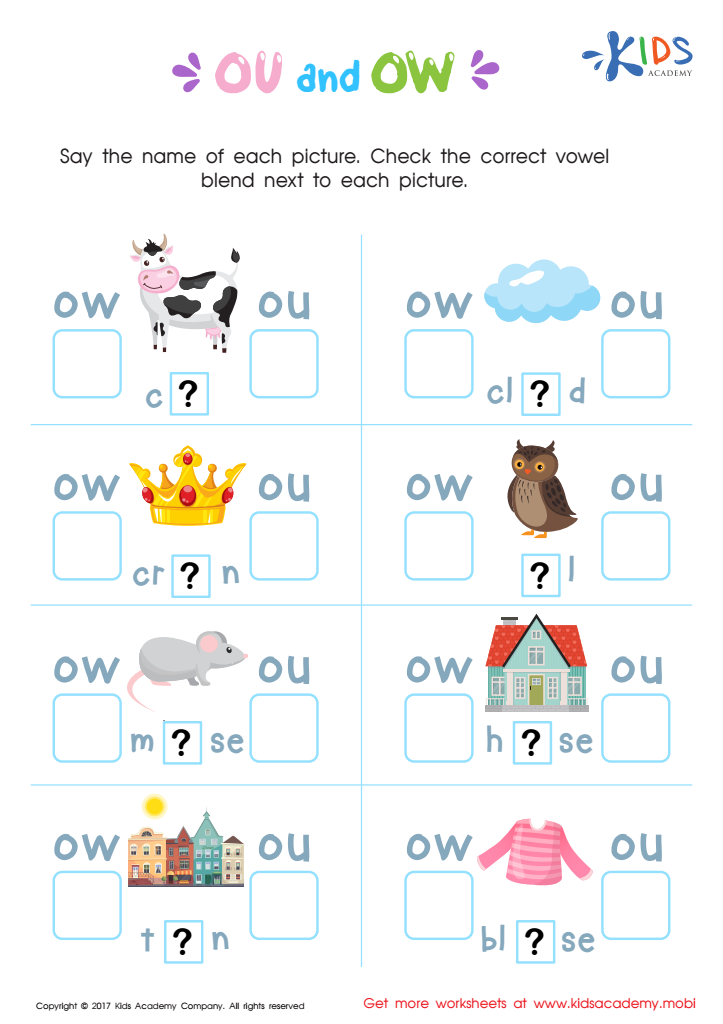
OU and OW Words Worksheet
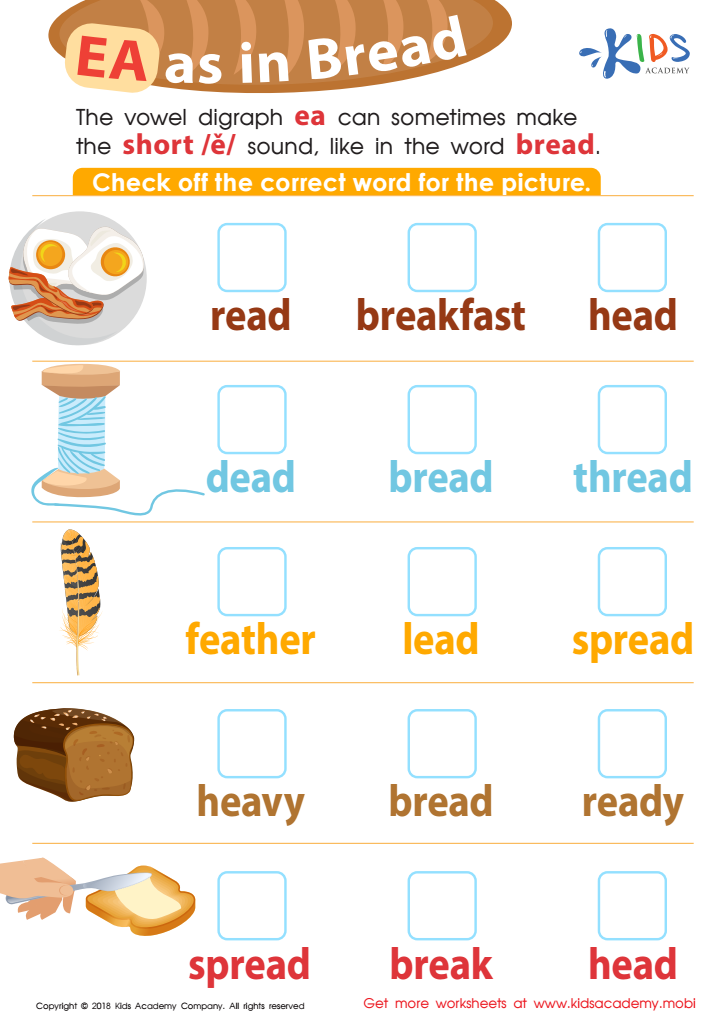
Reading: EA as in Bread Worksheet


Parents and teachers should prioritize reading comprehension and vowel diphthongs for children aged 3-8 because these foundational skills are crucial for early literacy development. Reading comprehension is at the heart of effective learning; it allows young students to understand and internalize the material they are reading, building the basis for academic success across all subjects. Without comprehension, a child can read words correctly but may not grasp the underlying meaning, hindering deeper learning.
Vowel diphthongs—combinations of two vowels in a single syllable, where both vowels contribute to the sound quality—are essential for phonemic awareness. Knowing how vowel diphthongs like "oi" in "boil" or "ay" in "play" function helps children decode and pronounce a broad spectrum of words accurately. This phonetic practice strengthens their reading skills and pronunciation, leading to better fluency.
During the ages of 3-8, children's brains are particularly receptive to language acquisition. Establishing a solid understanding of vowel diphthongs during this critical period enhances their phonological awareness, making them adept listeners, keen readers, and articulate speakers. Therefore, cultivating reading comprehension and the mastery of vowel diphthongs helps build a strong literacy base that facilitates lifelong learning and effective communication.
By properly attending to these essential elements, parents and educators can equip children with the tools they need for both academic progression and everyday literacy.








