Addition of fractions Worksheets for Ages 3-8
3 filtered results
-
From - To
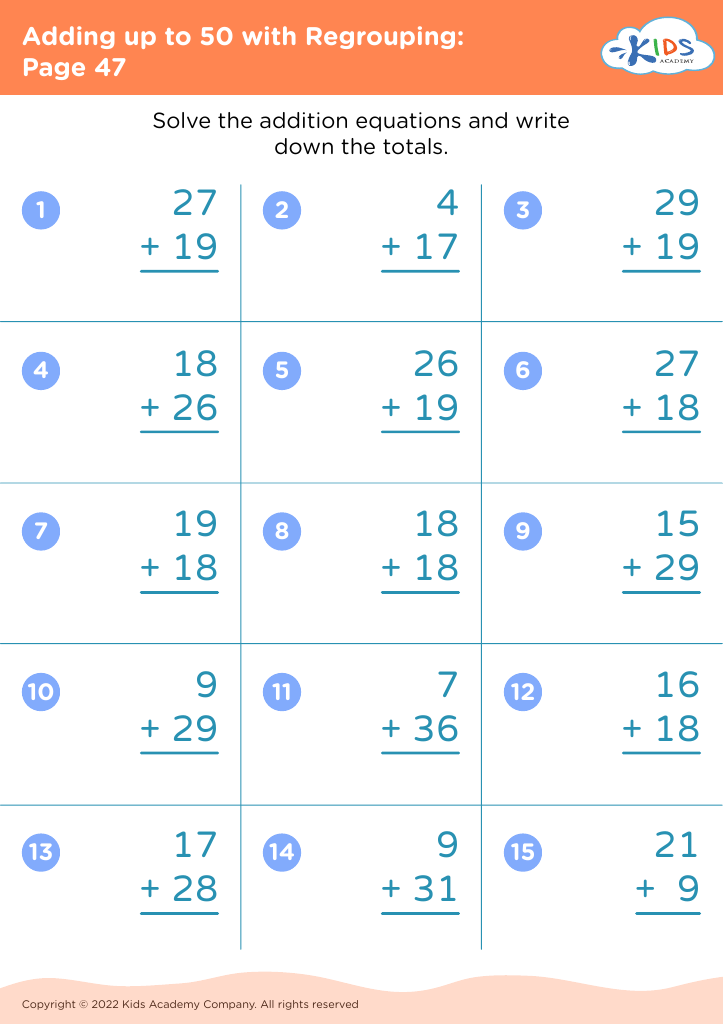
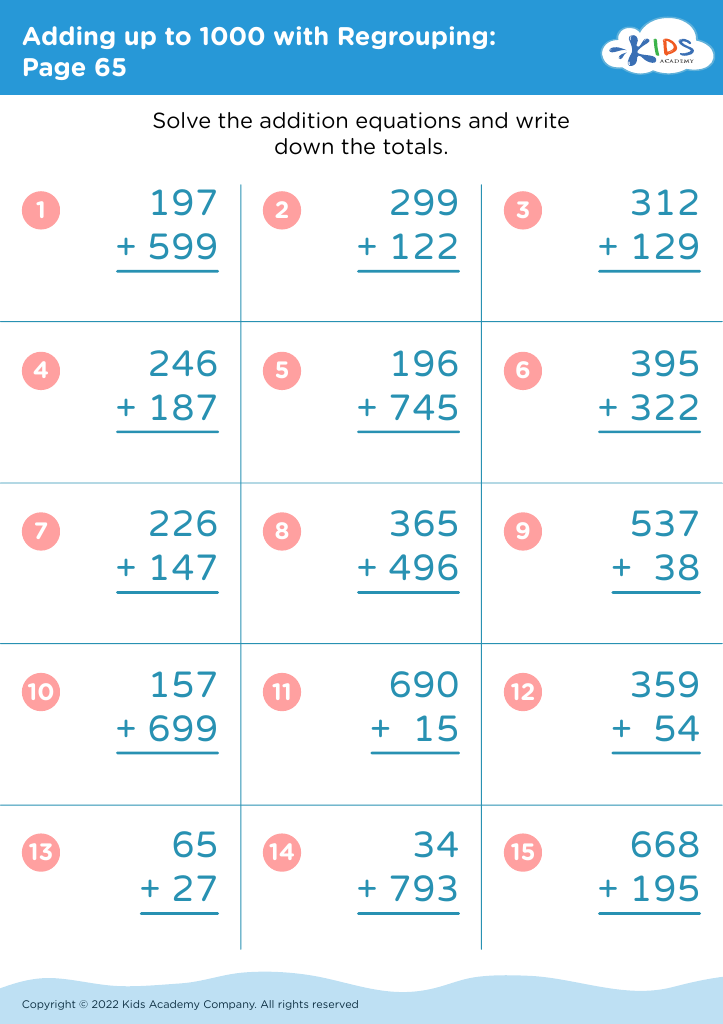
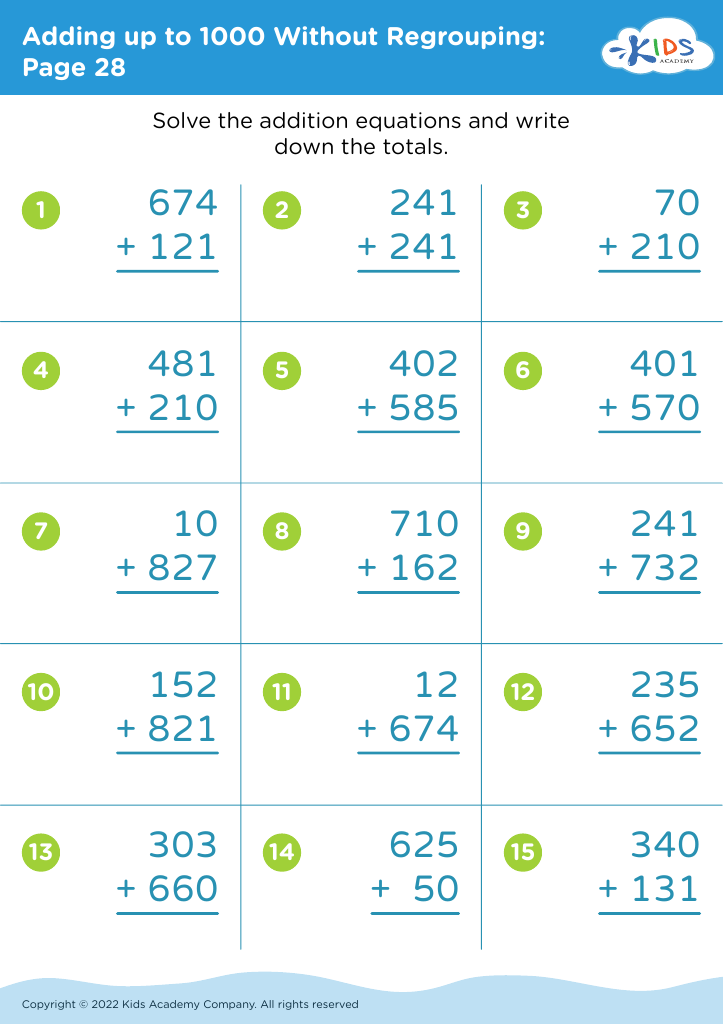
Discover engaging Addition of Fractions worksheets designed for ages 3-8 on Kids Academy. These printable worksheets introduce young learners to the basics of fractions through fun and interactive exercises. Perfect for early grade students, the activities incorporate colorful visuals and simple problems to make learning fractions intuitive and enjoyable. Each worksheet gradually builds on previous concepts, ensuring a solid foundation in fraction addition. Foster a love for math in your child while developing critical thinking and problem-solving skills. Visit our website to download free worksheets and take the first step towards mastering fractions today!







Understanding the addition of fractions is a foundational skill in math that sets the stage for more complex mathematical concepts. For children ages 3-8, mastering this skill has profound implications for their overall numeracy development. Early familiarity with fractions and their addition enhances children's understanding of division, ratio, and algebra later on.
Fractions also represent a tangible way to grasp parts of a whole, which is a critical conceptual leap from counting whole numbers. By engaging with fractions, children learn to see numbers in a different light, facilitating better problem-solving and critical thinking skills. It aids them in real life too – for example, recognizing that two halves make a whole or that one-quarter of an apple plus another quarter creates half an apple.
Parents and teachers should care because a strong early mathematical foundation contributes to long-term academic success. Positive early experiences with math can enhance a child's confidence and enthusiasm for the subject, reducing math anxiety. Further, proficiency in math is linked to improved reasoning and analytical skills, beneficial across all areas of learning and everyday decision-making.
Thus, investing time and effort in teaching fractions, especially their addition, at an early age is crucial. It is not merely about learning numbers; it is about developing a versatile and resilient mind capable of tackling a variety of problems.








