Alphabetical order Worksheets for Ages 3-8
3 filtered results
-
From - To
Discover our engaging Alphabetical Order Worksheets designed for children ages 3-8! These educational resources promote essential literacy skills by helping young learners understand and practice arranging words alphabetically. Ideal for preschool and early elementary students, our worksheets feature fun illustrations and age-appropriate activities that keep children entertained while they learn the order of letters. Parents and educators can easily access printable worksheets online, making it convenient to integrate into home or classroom settings. Explore the joy of learning the alphabet through these interactive exercises, fostering reading, writing, and cognitive development in young minds. Start enhancing your child's learning journey today!
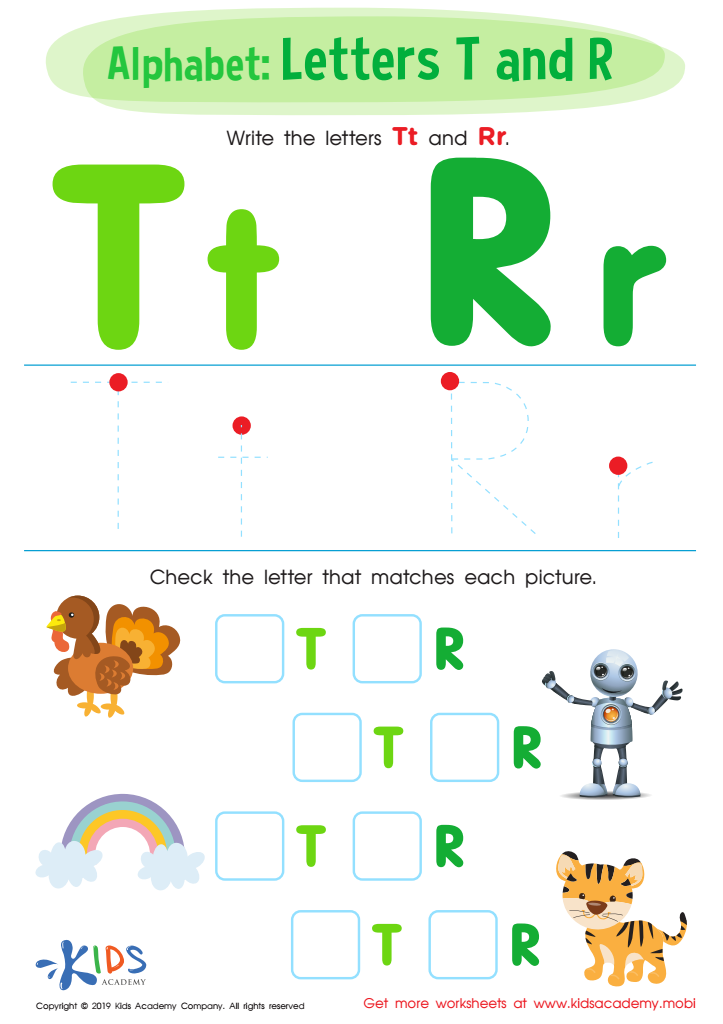
Letters T and R Worksheet
 Assign to My Students
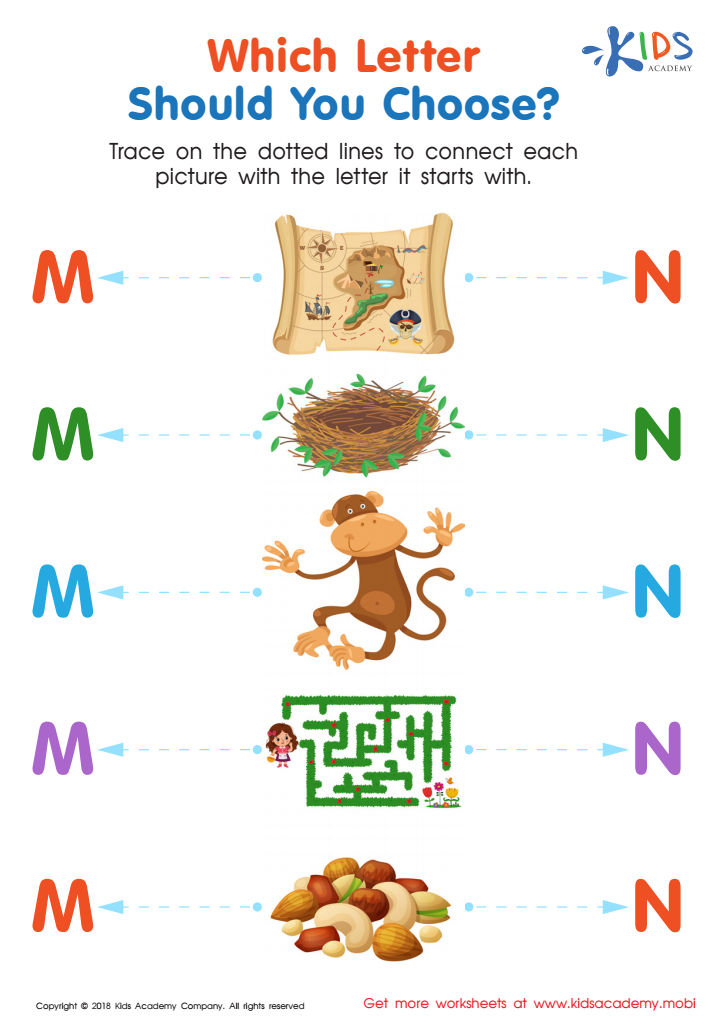
Which Letter Should you Choose? Worksheet
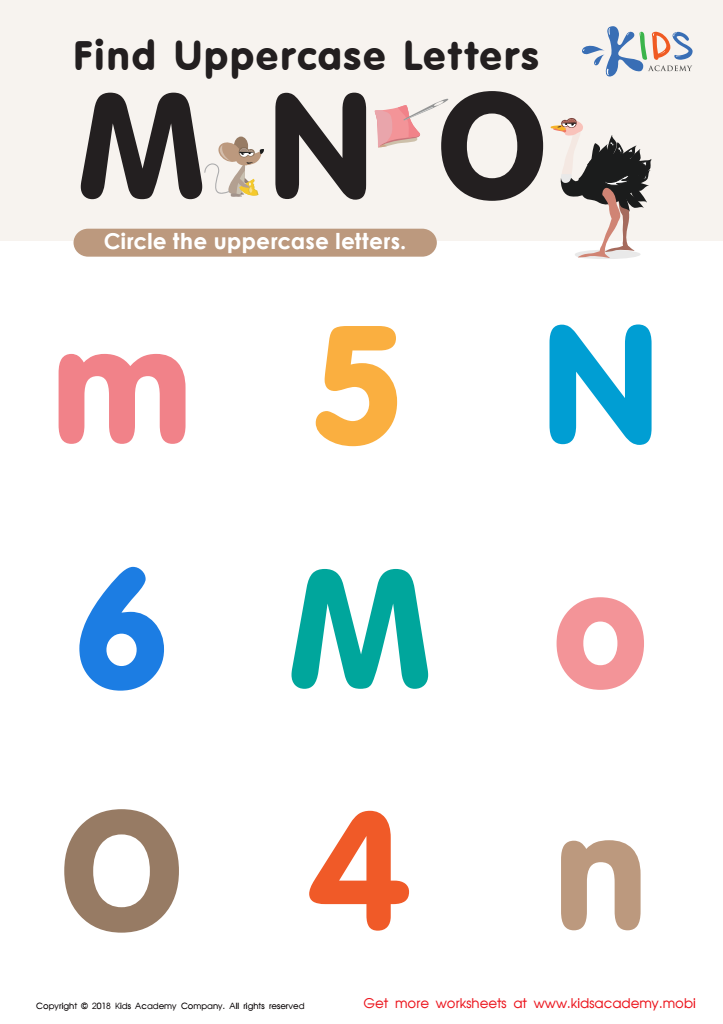
Find Uppercase Letters M, N, and O Worksheet





Understanding alphabetical order is crucial for children aged 3-8 as it lays the foundation for reading, writing, and organizational skills essential for academic success. At this developmental stage, children are increasingly exposed to books, signs, and printed materials. Teaching them to recognize and arrange letters alphabetically cultivates an appreciation for language structure, improving their overall literacy skills.
Moreover, grasping alphabetical order enhances children’s ability to classify information and make connections between words, which is vital for vocabulary building. As they learn to sort items or words in alphabetical order, they also develop critical thinking skills and become more adept at problem-solving.
For parents and teachers, incorporating activities that highlight alphabetical order—such as games, songs, or alphabet puzzles—encourages playful learning, making the process enjoyable. This foundational skill not only supports reading and writing but also fosters independence, aiding children in locating resources, such as books in a library.
Ultimately, with a strong understanding of alphabetical order, children are better prepared for future academic challenges, making it an essential skill for lifelong learning and success. It serves as a building block, preparing young learners for more complex language tasks in later grades.








