Answering questions Worksheets for Ages 3-8
6 filtered results
-
From - To
Our "Answering Questions Worksheets for Ages 3-8" are designed to help young learners enhance their comprehension and communication skills. Tailored for early childhood education, these engaging worksheets encourage children to think critically and express their ideas clearly. Interactive and fun, they cover various topics, prompting kids to answer questions based on visuals and short texts, fostering cognitive development and boosting confidence. Ideal for parents, teachers, and caregivers, these printable resources support a positive learning experience, making them perfect for home schooling, after-school enrichment, or classroom activities. Let your child embark on a journey of discovery and learning with our engaging resources!
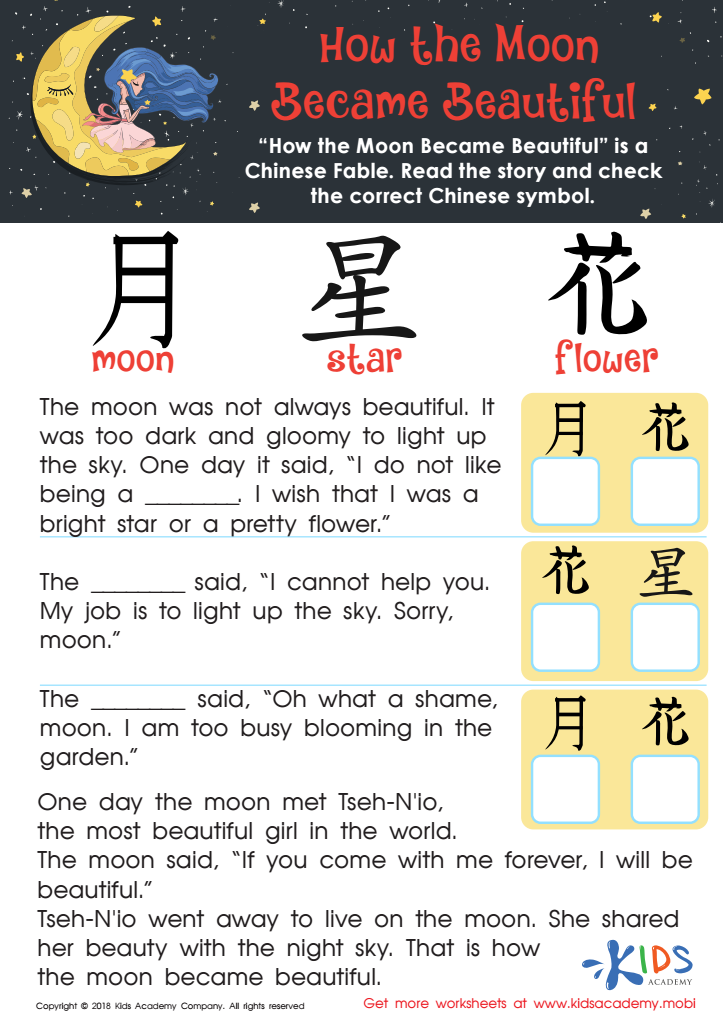
How the Moon Became Beautiful Worksheet
 Assign to My Students
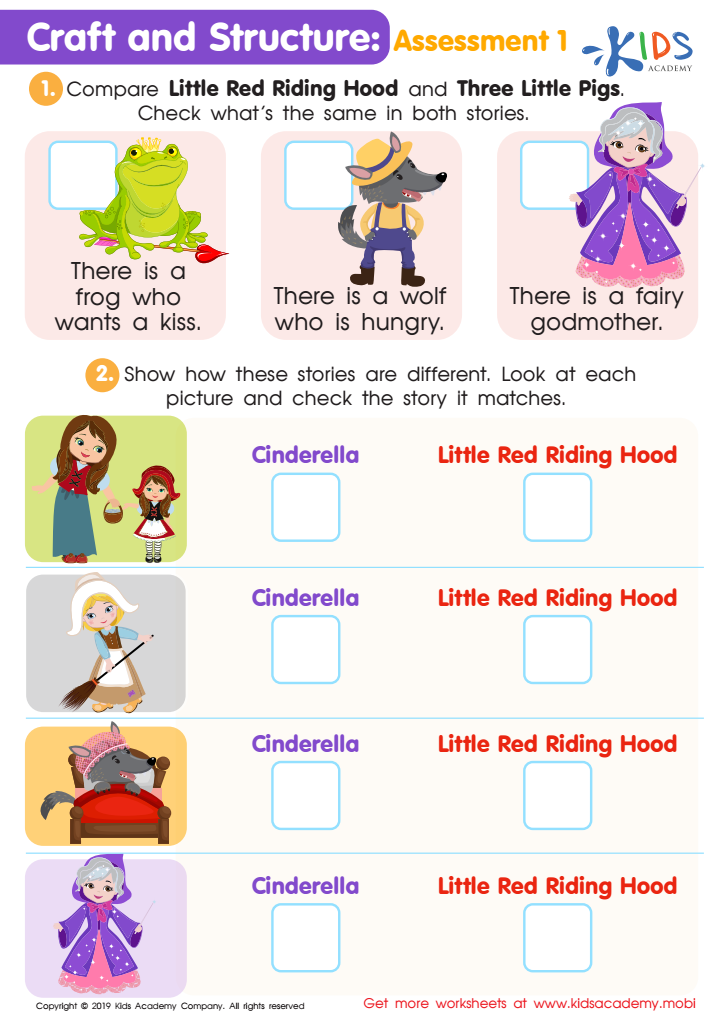
Craft and Structure: Assessment 1 Worksheet
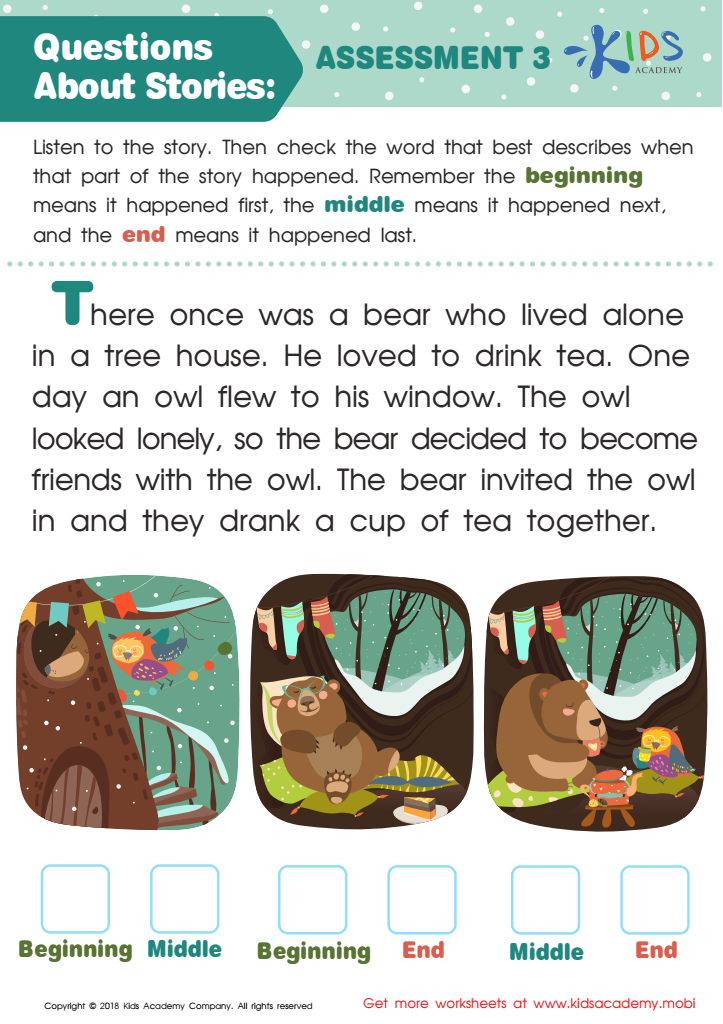
Questions About Stories: Assessment 3 Worksheet
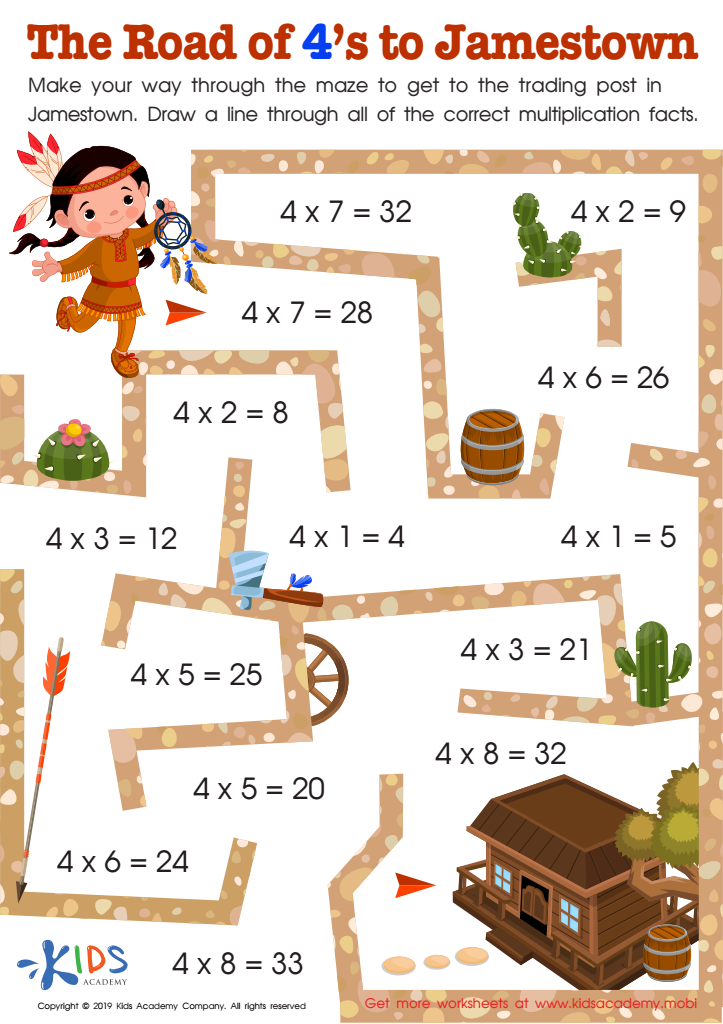
The Road of 4’s to Jamestown Worksheet
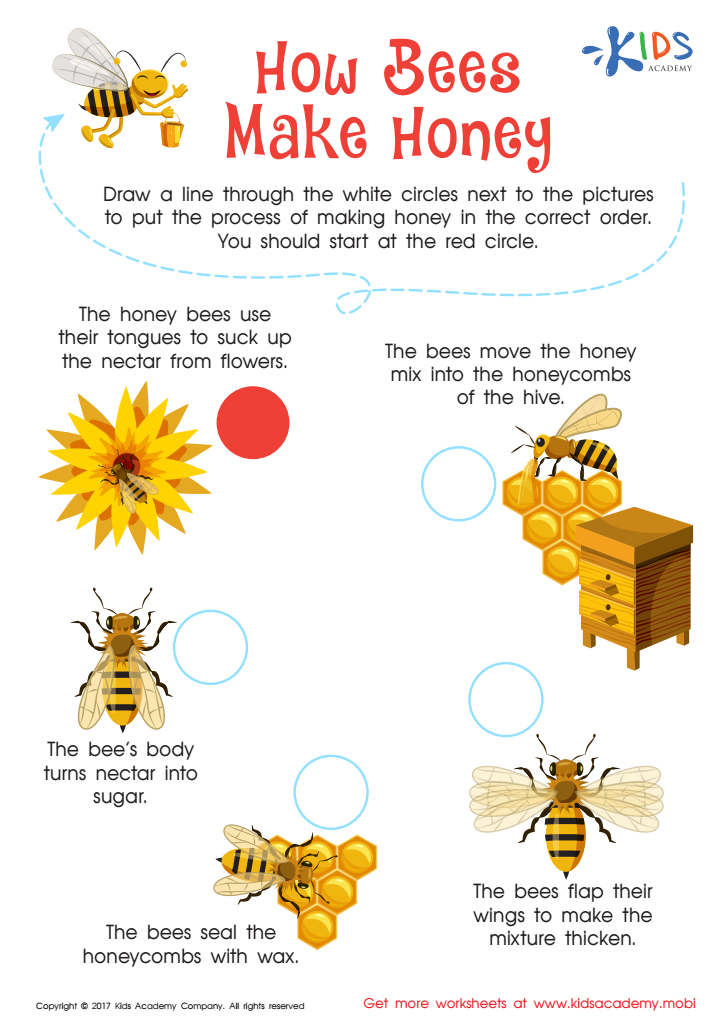
Honey Bee Worksheet








Parents and teachers should prioritize answering questions from children ages 3-8 because this stage is crucial for cognitive and emotional development. During these formative years, children are naturally curious and eager to learn about the world around them. When adults engage with their inquiries, it fosters a love for learning and exploration. Addressing their questions helps to build critical thinking skills and encourages them to think deeply about various topics.
Moreover, children gain a sense of validation and confidence when their questions are taken seriously. It shows them that their thoughts and feelings matter, which can significantly boost their self-esteem. In turn, this promotes open communication—a vital component of healthy relationships with adults.
Furthermore, answering questions allows parents and teachers to identify and address misconceptions, guiding children toward more accurate understandings of concepts. It also creates an opportunity for meaningful conversations that can help develop language skills and vocabulary.
Overall, engaging with a child's curiosities cultivates a nurturing and supportive learning environment, essential for fostering lifelong learners who are excited about discovery and growth. The process not only enriches their educational journey but also strengthens the bond between adults and children.








