Basic arithmetic operations Worksheets for Ages 3-8
3 filtered results
-
From - To
Discover our engaging Basic Arithmetic Operations Worksheets designed specifically for ages 3-8! These fun, educational worksheets help young learners master essential math skills such as addition, subtraction, multiplication, and division. With colorful visuals and interactive activities, kids can develop a strong mathematical foundation through play and practice. Ideal for parents and teachers, our worksheets cater to varied learning styles and abilities, ensuring every child experiences success. Foster confidence and a love for math in your little ones with these expertly crafted worksheets from Kids Academy. Join us on the path to making math enjoyable and rewarding for all!
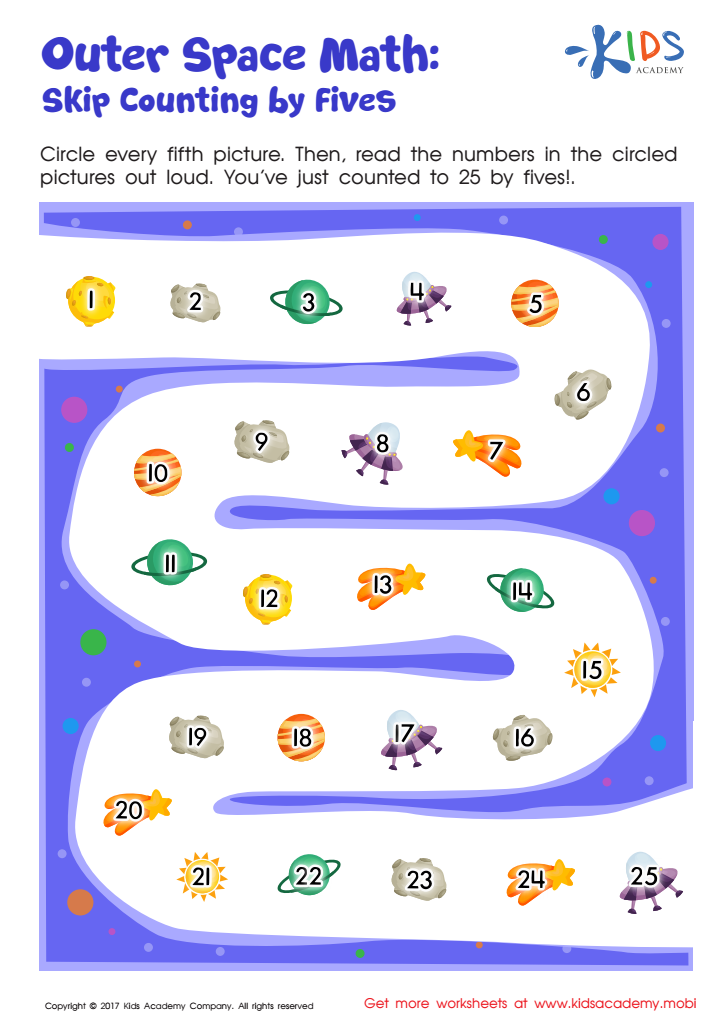
Skip Counting by 5s: Outer Space Math Printable
 Assign to My Students
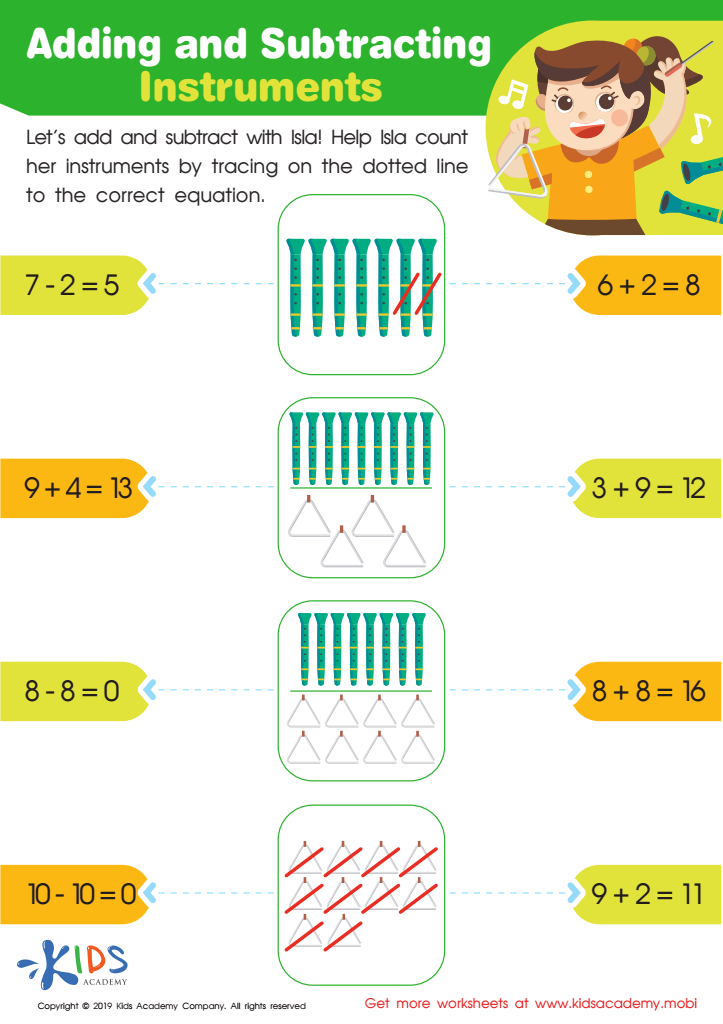
Adding and Subtracting: Instruments Worksheet
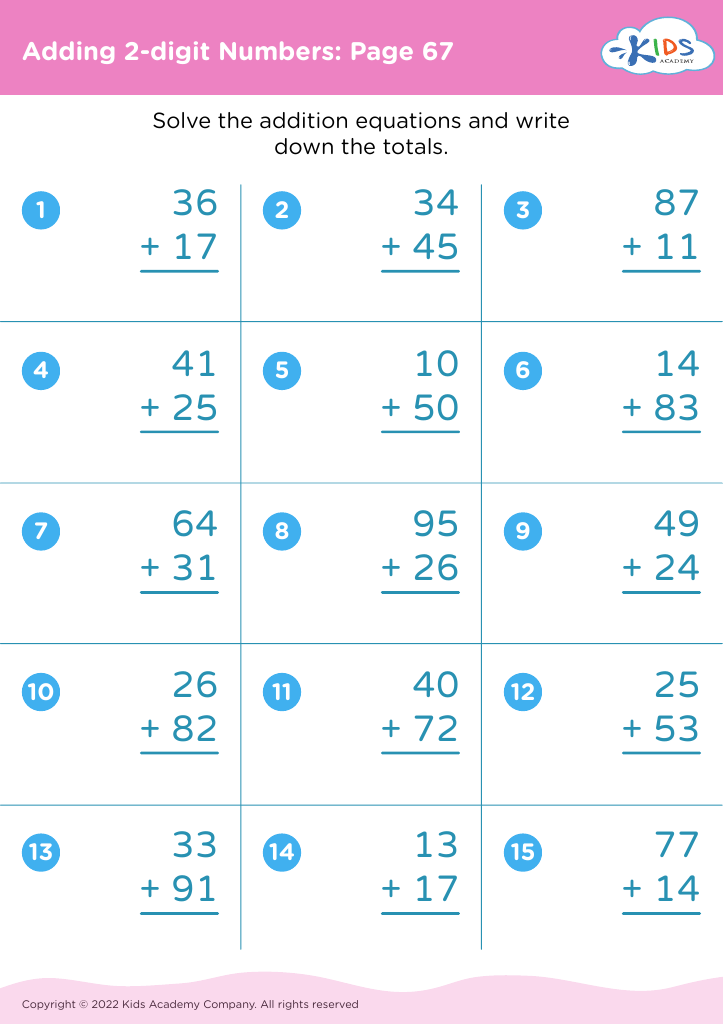








Basic arithmetic operations—addition, subtraction, multiplication, and division—form the cornerstone of more complex mathematical concepts and are essential for everyday life. Introducing these concepts at an early age, specifically between the ages of 3 and 8, equips children with critical thinking and problem-solving skills that are foundational for future academic success.
For parents and teachers, fostering these skills early on is crucial. Young minds at this age are highly adaptable and capable of absorbing new information quickly. By incorporating basic arithmetic into daily activities and lessons, children are likely to develop a positive attitude toward math, seeing it as a fun and useful tool rather than a daunting subject.
Moreover, a solid grasp of basic arithmetic aids in developing logical thinking and reasoning abilities. These skills can influence a child’s performance in other subjects, contribute to better decision-making, and even enhance their ability to understand and organize information. Early exposure to math concepts also helps in identifying potential learning challenges early, allowing for timely intervention and support.
In a broader sense, mathematical proficiency is linked to improved job prospects and financial literacy in adulthood. Ensuring that children are comfortable with basic arithmetic from an early age sets the stage for long-term success in a mathematized world where numbers are ubiquitous. Thus, parents and teachers have a vital role in nurturing these foundational skills during the early, formative years.








