Basic geometry concepts Worksheets for Ages 3-8
3 filtered results
-
From - To
Explore our engaging Basic Geometry Concepts Worksheets designed specifically for children aged 3 to 8! These interactive resources introduce essential geometric shapes, patterns, and spatial awareness through fun and colorful activities. Perfect for parents and educators, our worksheets encourage early mathematical skills while enhancing cognitive development. Children will enjoy identifying circles, squares, triangles, and more as they complete hands-on practices that boost their confidence in geometry. With accessibility in mind, these printable worksheets cater to various learning styles, making them ideal for home or classroom use. Start your child's exciting journey into the world of geometry today!
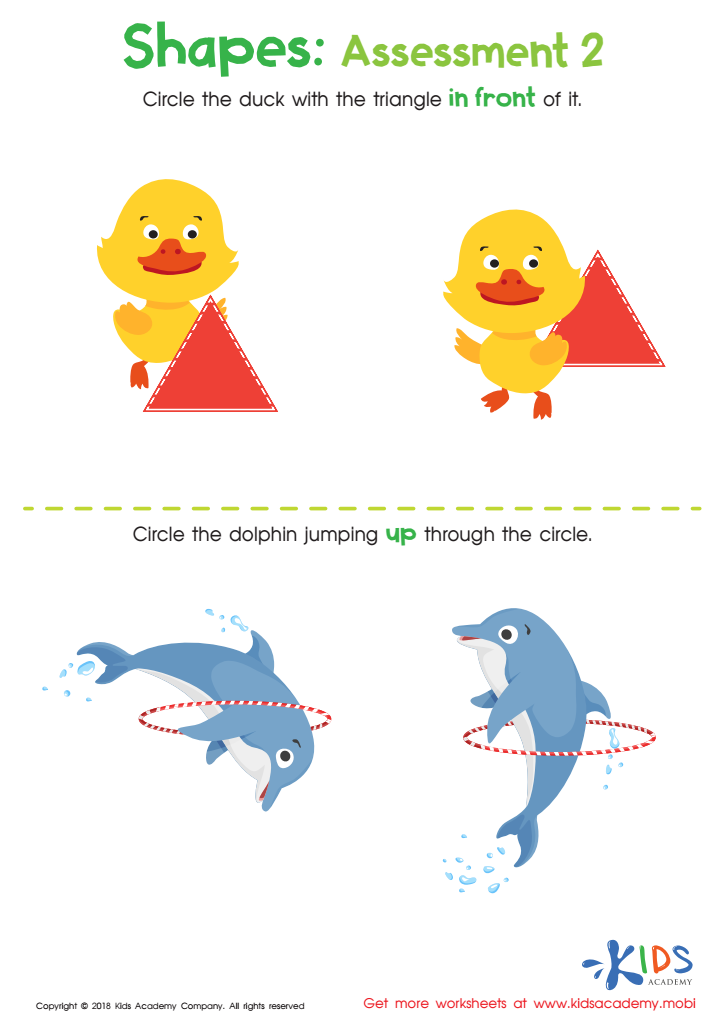
Geometry – Assessment 2 Worksheet
 Assign to My Students
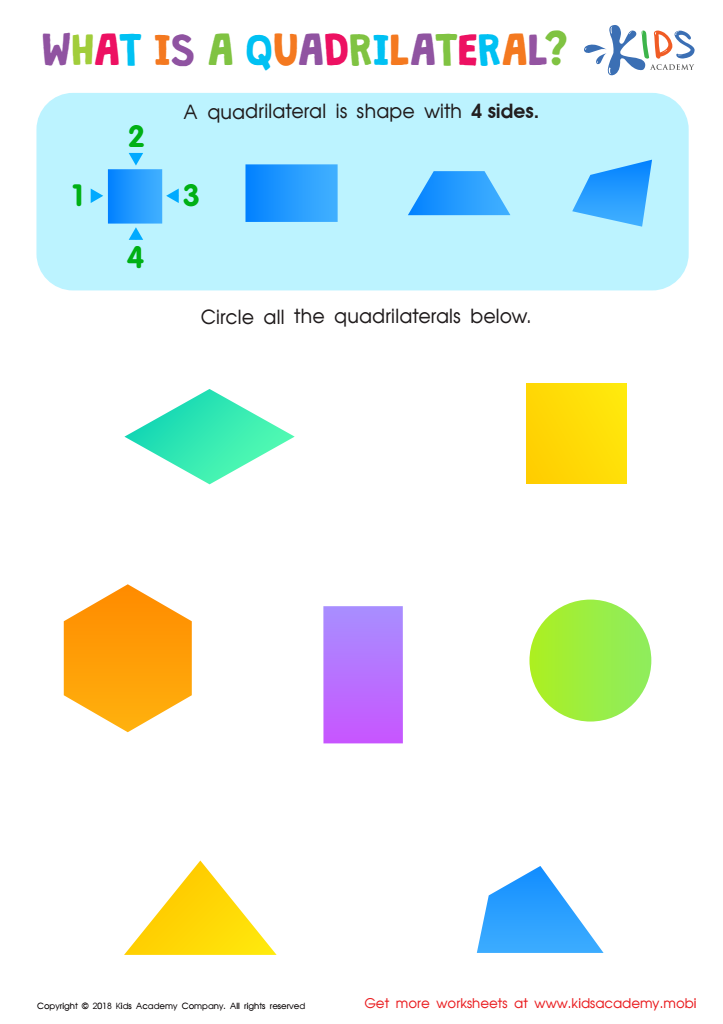
What Is a Quadrilateral? Worksheet







Understanding basic geometry concepts is crucial for children aged 3-8 as it lays the foundation for their mathematical skills and cognitive development. During these formative years, children are naturally curious and eager to explore their environment. Introducing them to concepts like shapes, spatial awareness, and measurement can enhance their problem-solving abilities and critical thinking skills.
Geometry helps children make sense of the world around them. Recognizing shapes, distinguishing between them, and understanding their properties can boost a child's observational skills. Activities such as building with blocks or drawing shapes engage them in hands-on learning, making abstract concepts tangible and relatable.
Moreover, early exposure to geometry supports language development as children learn to describe objects and their relationships. It fosters creativity and promotes reasoning abilities which are essential in later mathematics.
Teachers and parents play a pivotal role in this learning process. By incorporating fun and interactive geometric activities into everyday routines — such as naming shapes during a walk, playing with geometric puzzles, or engaging in arts and crafts — adults can stimulate a child's natural curiosity and love for learning. This early foundation in geometry not only enhances mathematical skills but also contributes to overall intellectual growth.








