
Basic science knowledge Worksheets for Ages 3-8
3 filtered results
Difficulty Level
Grade
Age
-
From - To
Subject
Activity
Standards
Explore our engaging Basic Science Knowledge Worksheets designed for children aged 3-8! These worksheets introduce young learners to essential scientific concepts through fun and interactive activities. From understanding nature and the weather to exploring animals and their habitats, our resources encourage curiosity and critical thinking. Each worksheet is thoughtfully created to cater to various learning styles, making science accessible and enjoyable. Perfect for both home and classroom use, these printable worksheets promote hands-on learning and support early foundational skills. Encourage your child's love for science while developing their observation and analytical skills. Start your adventure in discovery today!
Favorites
With answer key
Interactive
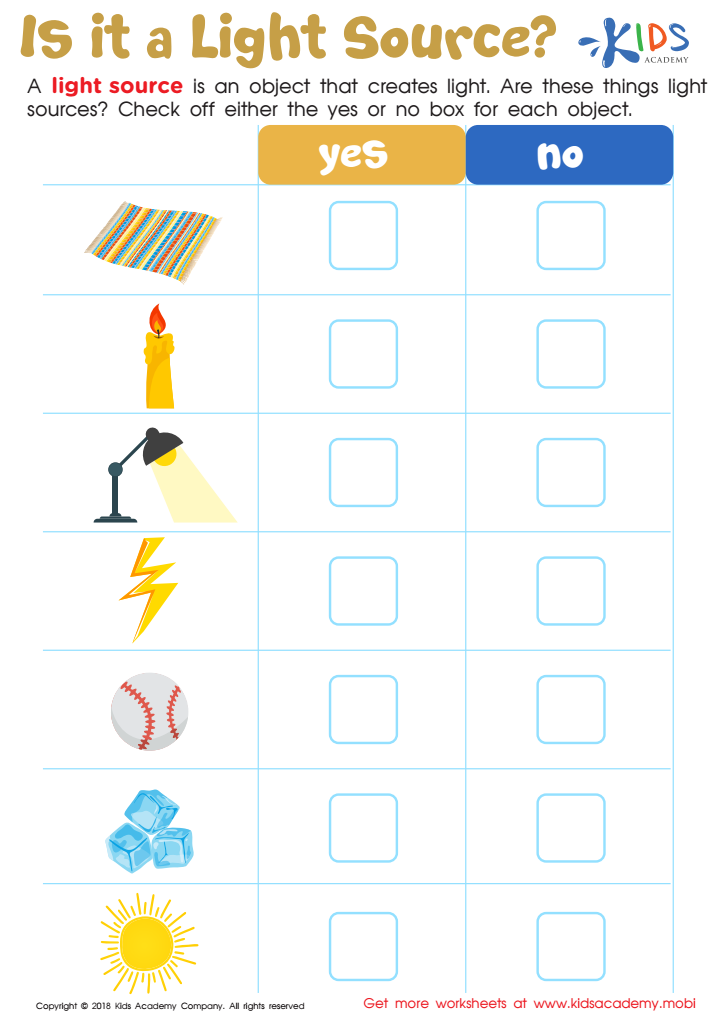
Is It a Light Source? Worksheet
This worksheet is a fun way to teach kids about light sources. Children must identify natural sources like the sun and lightning, and man-made sources such as candles and lamps. Ask them to look at each object and check the box to indicate if it's a light source or not.
 Assign to My Students
Is It a Light Source? Worksheet
Worksheet
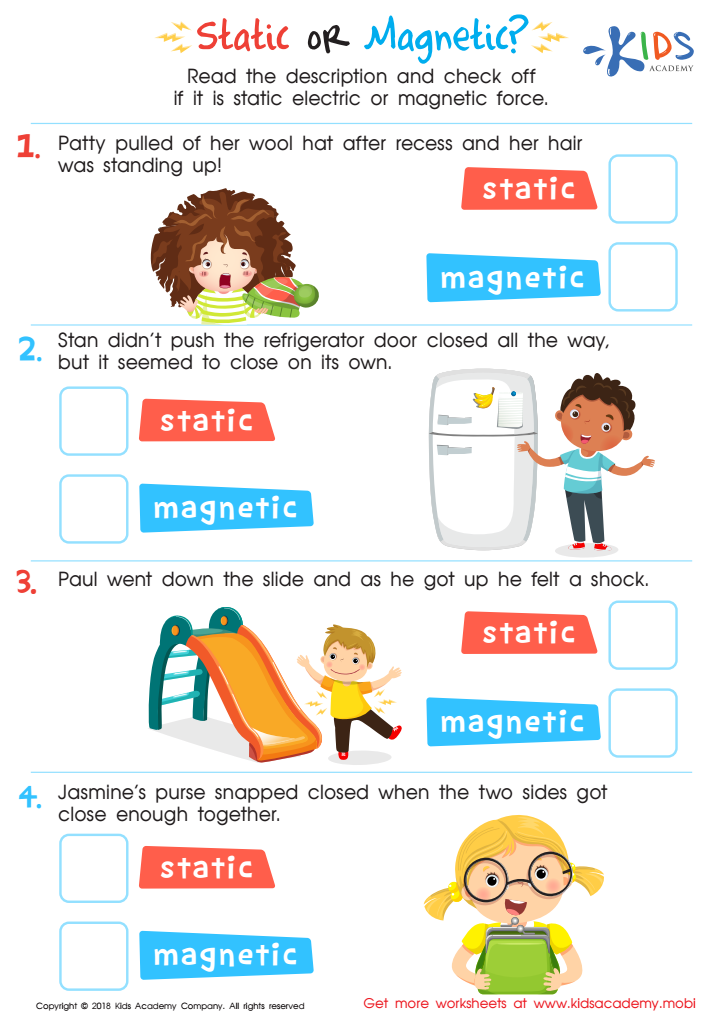
Static or Magnetic Printable Worksheet
Ever wondered if a situation involved static or magnetic force? This printable worksheet has the answer! Read the scenarios and check out the illustrations to decide which force is in play for each. Learn about these two amazing forces with this fun activity!
Static or Magnetic Printable Worksheet
Worksheet
Join Kids Academy for Free
Who is primarily going to use this learning content?








Parents and teachers should prioritize basic science knowledge for children aged 3-8 because this foundational understanding fosters curiosity, critical thinking, and a love for learning. At this age, children are naturally inquisitive, often asking questions about the world around them. Introducing simple scientific concepts not only satiates their curiosity but also encourages them to ask further questions, paving the way for deeper exploration of scientific ideas.
Engaging children in basic science helps them develop essential skills such as observation, experimentation, and reasoning. Activities like observing plant growth, experimenting with water and sand, or exploring the properties of everyday materials can enhance their cognitive development. This hands-on exploration makes learning enjoyable and memorable.
Moreover, a solid grounding in science at an early age prepares children for future academic success. It builds a framework for understanding more complex sciences in later years, as well as promoting an understanding of important issues like climate change and health.
Finally, nurturing scientific literacy at this stage aids in developing problem-solving skills and creativity, preparing children to navigate an increasingly complex world. Ultimately, instilling basic science knowledge lays a vital foundation for their educational journey and future societal contributions.








