Categorizing objects Worksheets for Ages 3-8
5 filtered results
-
From - To
Discover our engaging "Categorizing Objects Worksheets" designed for children ages 3-8! These worksheets help young learners develop crucial skills in classification, organization, and critical thinking. By sorting objects based on different categories—such as color, shape, and size—kids will enhance their cognitive abilities while enjoying fun and interactive activities. Our kid-friendly worksheets provide a variety of images and scenarios to keep children entertained and encouraged as they learn. Perfect for classrooms or at-home learning, these materials are a great way to foster your child's early understanding of the world around them through hands-on experience. Download today and watch their skills blossom!
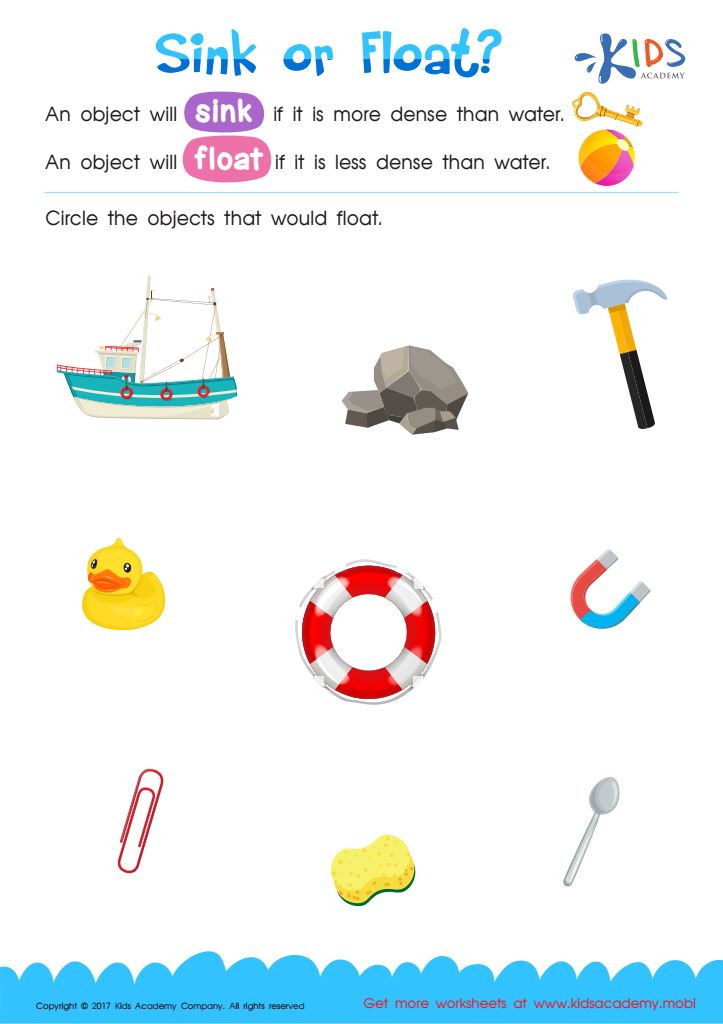
Sink or Float Printable
 Assign to My Students
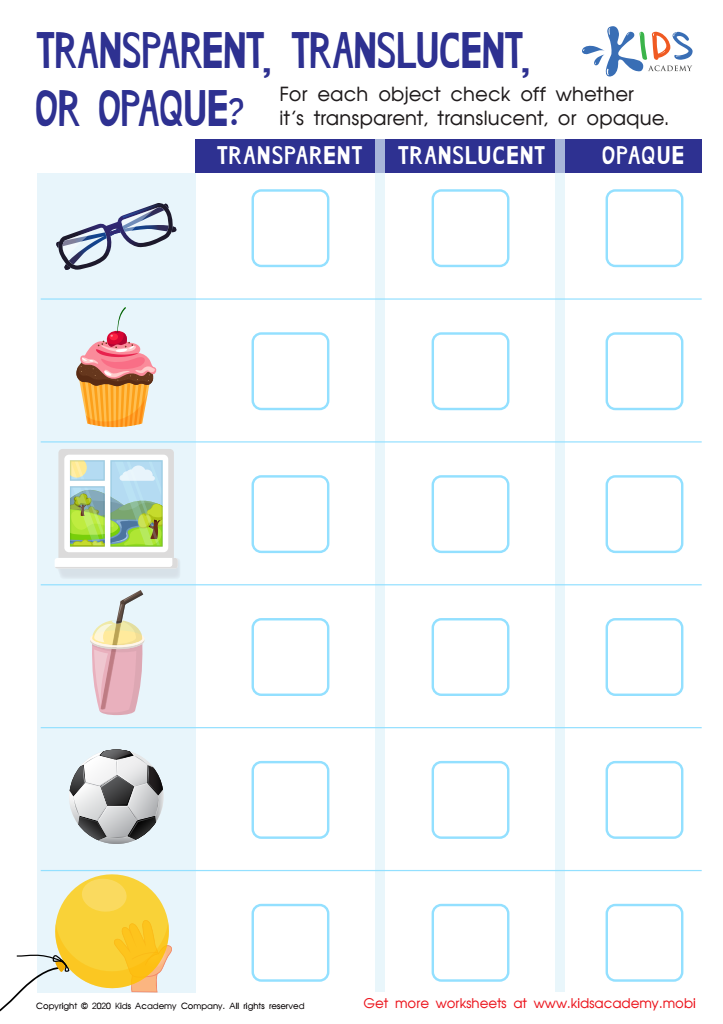
Transparent, Translucent, or Opaque Worksheet
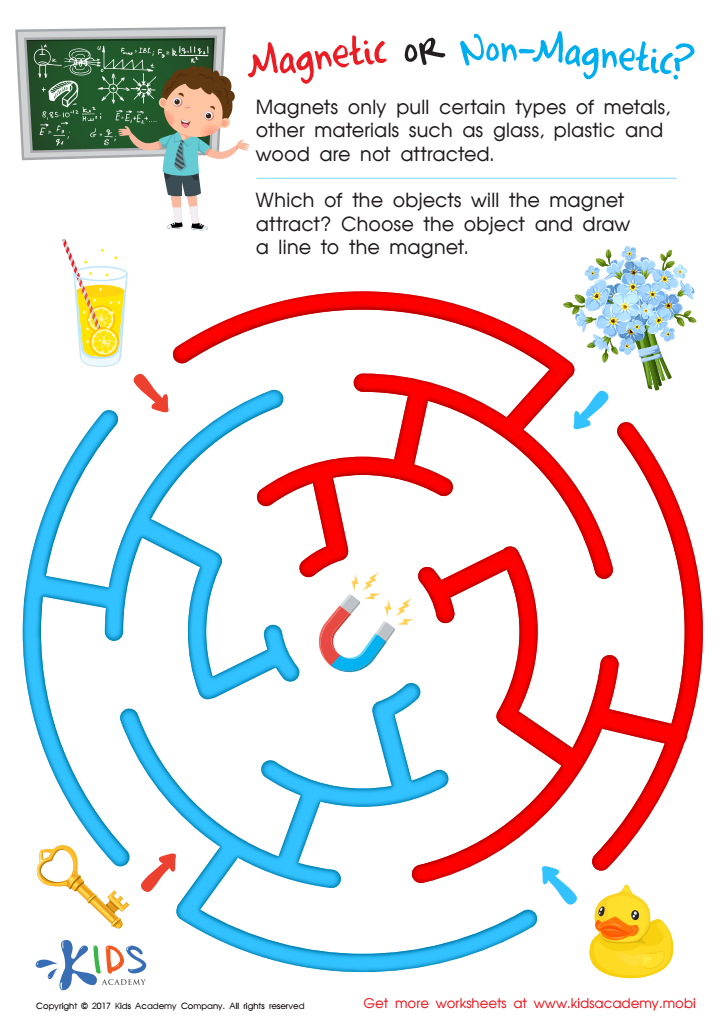
Magnetic or Non–Magnetic Worksheet
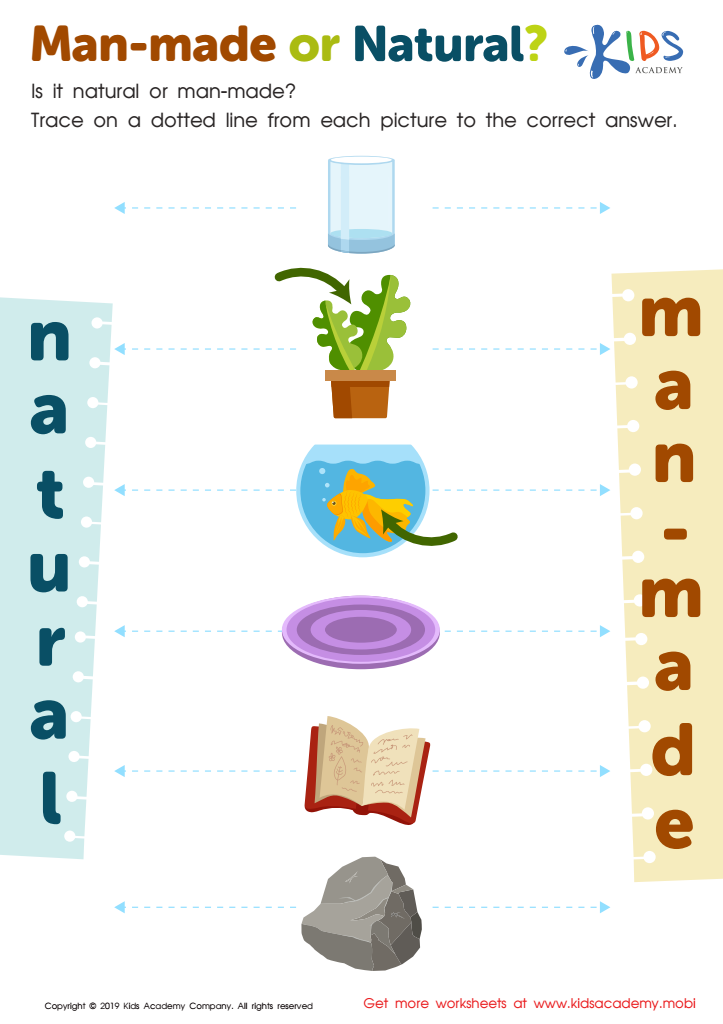
Man-Made or Natural? Worksheet




.jpg)
Categorizing objects is a fundamental skill for children aged 3-8 that significantly contributes to their cognitive development. For parents and teachers, fostering this skill is essential for several reasons. Firstly, categorization helps enhance critical thinking and problem-solving skills. As children learn to group objects by attributes such as color, shape, or size, they practice analytical thinking, enabling them to make connections and recognize patterns in their environment.
Additionally, categorizing objects aids language development. When children label the categories they create, they expand their vocabulary and better articulate their thoughts. For instance, grouping animals into pets and wild animals introduces them to new words as they learn to express differences and similarities.
Moreover, activities involving categorization can promote social skills. When children work together to sort items, they practice communication, collaboration, and respect for others' ideas and contributions. These activities can also support emotional development as children learn to appreciate differences and embrace diversity.
In summary, parents and teachers should prioritize categorization because it not only underpins intellectual growth but also nurtures essential life skills, playing a vital role in a child's holistic development. Supporting this skill sets a strong foundation for future learning and interpersonal relationships.








