Community awareness Worksheets for Ages 3-8
5 filtered results
-
From - To
Discover our engaging Community Awareness Worksheets designed for children ages 3-8! These sheets are crafted to help young learners understand and appreciate their surroundings. Focusing on safety, neighborhood roles, and daily routines, each worksheet encourages interactive learning. Through fun activities, children develop critical thinking and social skills, preparing them for real-world situations. Perfect for parents and educators, our worksheets make learning about community life enjoyable and effective. Foster a sense of responsibility and curiosity in your child today with our expertly designed community awareness resources!
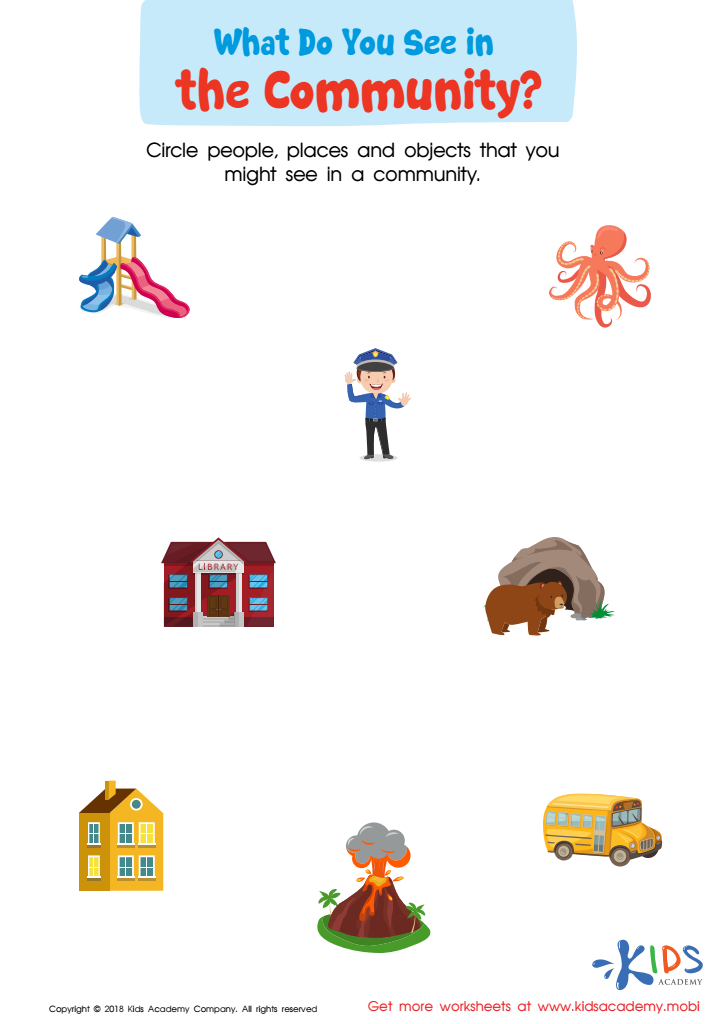
What Do You See in the Community Worksheet
 Assign to My Students
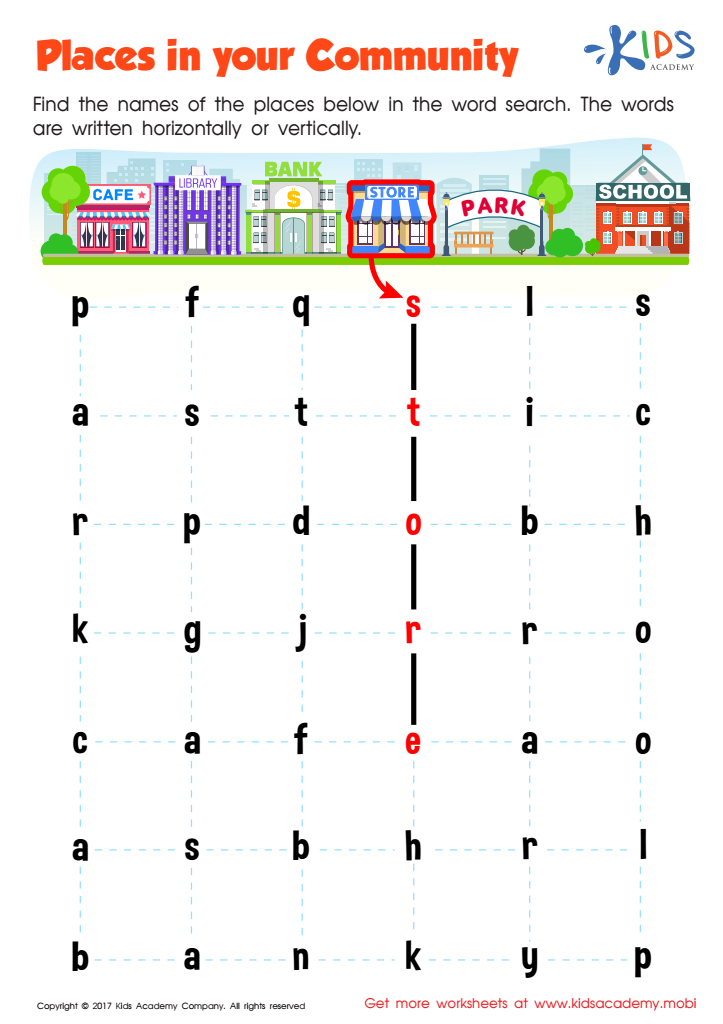
Places in Your Community Worksheet
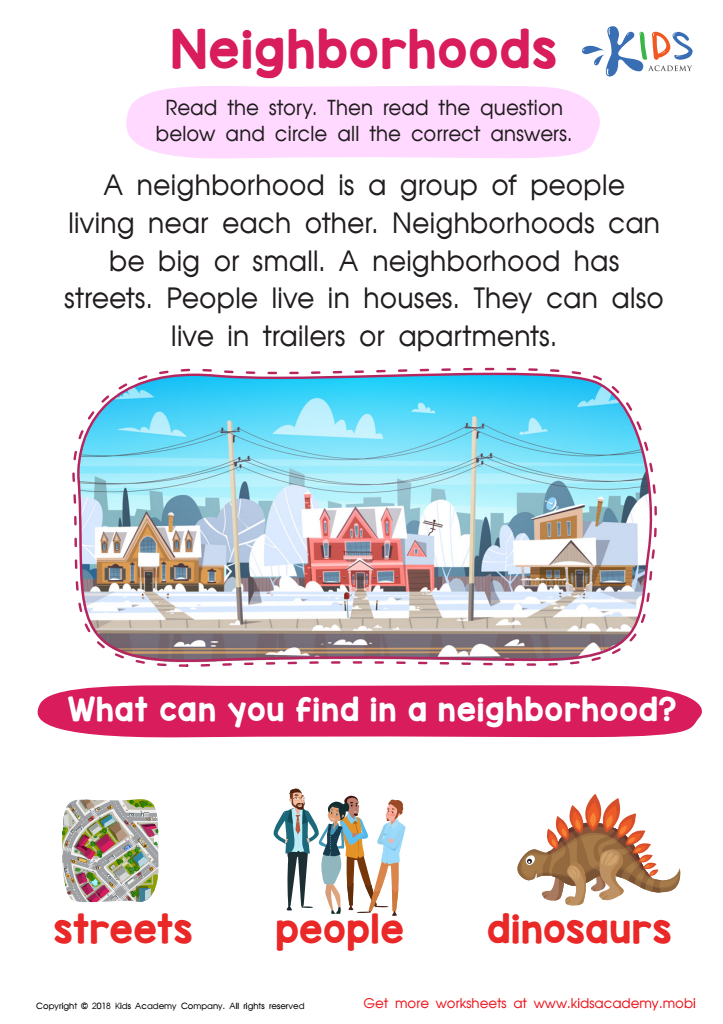
Neighborhoods Worksheet
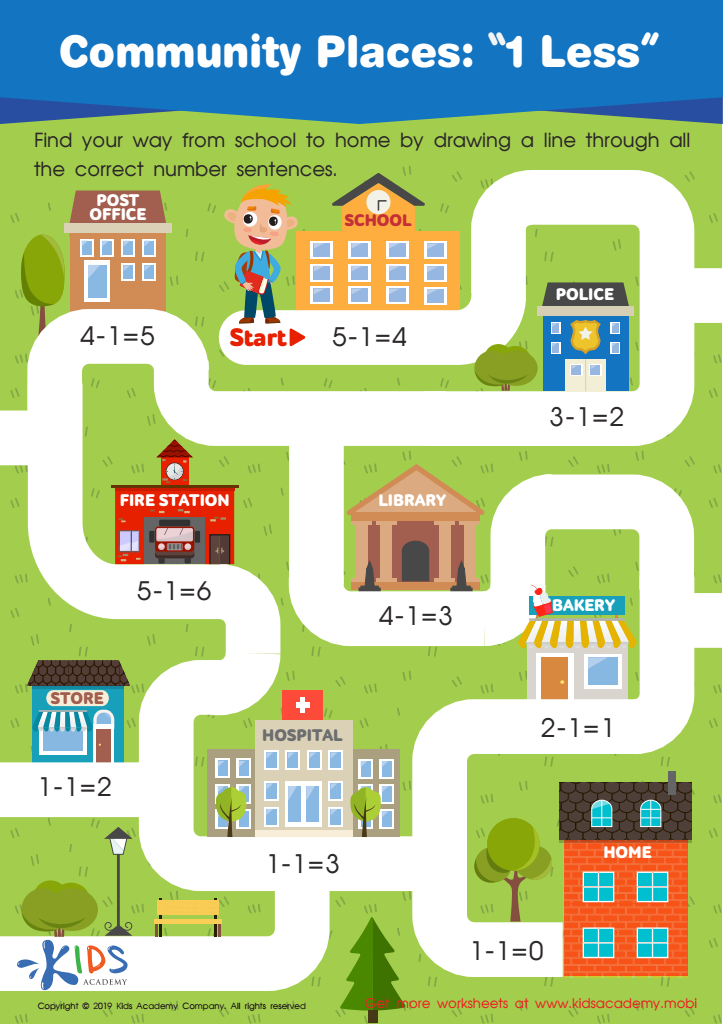
Community Places: 1 Less Worksheet
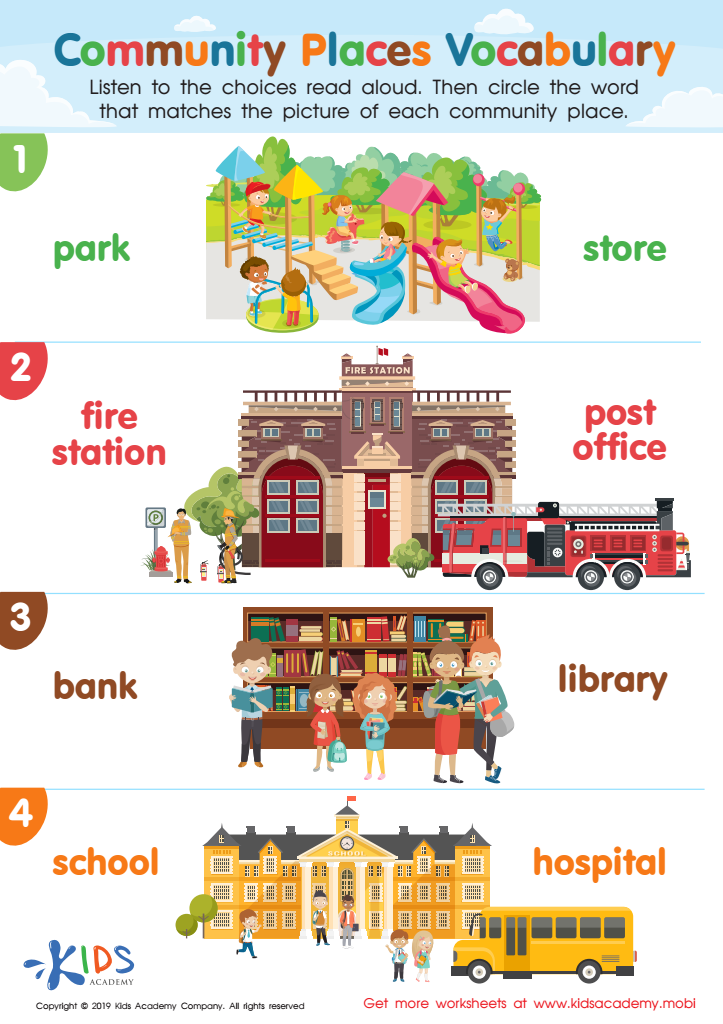
Community Places Vocabulary Worksheet






Community awareness is crucial for young children, ages 3-8, because it lays the foundation for their social and emotional development. At this stage, children are highly impressionable and learn by observing and interacting with their surroundings. Understanding the concept of community helps them develop a sense of belonging, empathy, and responsibility towards others.
Parents and teachers play a vital role in cultivating this awareness. When children are exposed to community settings — like neighborhood activities, cultural festivals, and social service initiatives — they learn the importance of cooperation, respect, and diversity. These experiences teach kids values such as kindness, sharing, and recognizing societal roles and responsibilities.
Additionally, fostering community awareness can enhance cognitive skills. Activities like local field trips, community service, and participation in local events create real-world connections that enrich academic learning. It helps them understand broader societal structures and dynamics, providing context to classroom instruction.
Moreover, community-aware children are more likely to develop positive self-esteem. They feel valued as members of a community, which reinforces their confidence and sense of security. This, in turn, promotes emotional well-being and willingness to engage and contribute positively to society.
In summary, community awareness is integral to holistic child development, instilling lifelong values and preparing kids to be conscientious, empathetic, and engaged citizens.








