
Community understanding Worksheets for Ages 3-8
3 filtered results
Difficulty Level
Grade
Age
-
From - To
Subject
Activity
Standards
Explore our engaging Community Understanding Worksheets designed for children ages 3-8! These interactive resources promote social awareness and appreciation of diverse environments. Our worksheets help young learners recognize community helpers, local landmarks, and everyday social interactions, fostering important life skills. With colorful illustrations, relatable scenarios, and engaging activities, children will develop a deeper understanding of their neighborhoods and the roles of various community members. Perfect for parents and educators, these worksheets encourage discussion, critical thinking, and empathy. Dive into a fun, educational experience that nurtures community awareness and connection—ensuring kids grow up with a strong sense of belonging and understanding!
Favorites
With answer key
Interactive
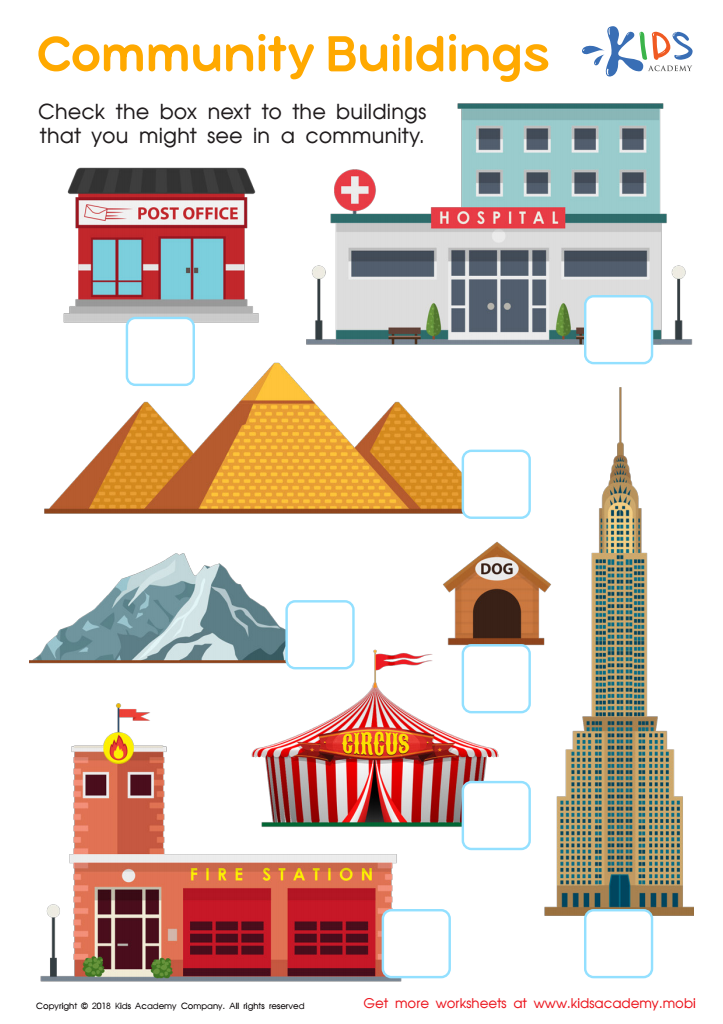
Community Buildings Worksheet
Test your child's knowledge of local buildings with this worksheet. Ask them to name the buildings in the images, then check the boxes next to the ones they might see in a community. It's a great way to explore the places you visit together.
 Assign to My Students
Community Buildings Worksheet
Worksheet
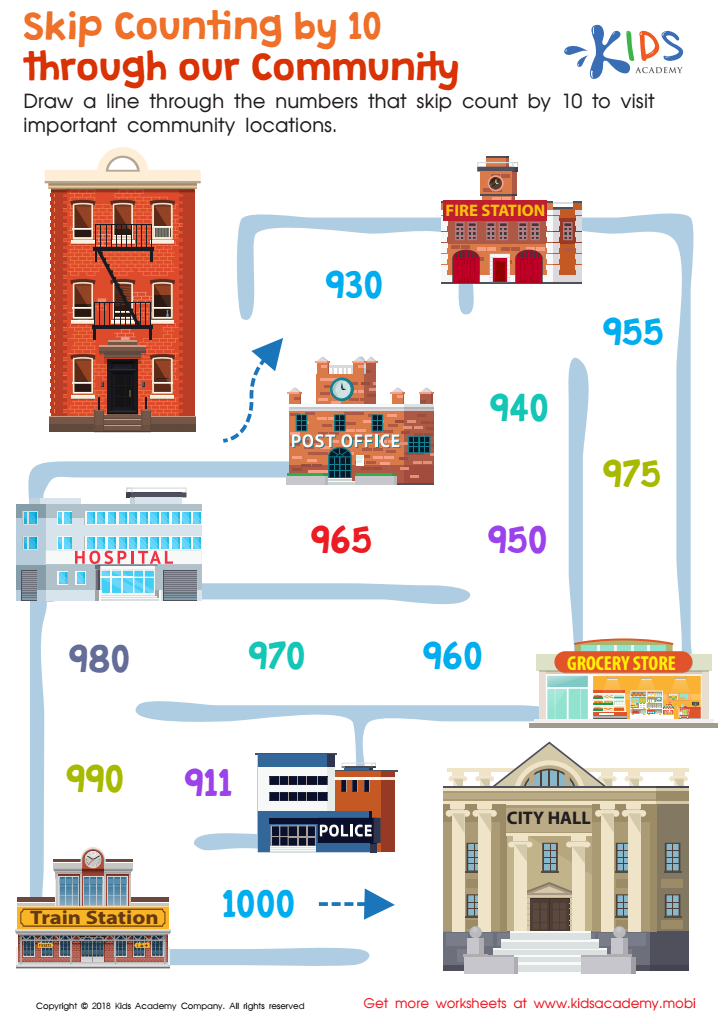
Skip Counting by 10 Through Our Community Worksheet
Our kids need to 'make a ten' and skip count by tens to boost their speed and accuracy in math. This cool, free worksheet takes them on a journey through their local community to practice counting by tens. They'll work on social studies and fine motor skills while having fun with the maze they get to count by tens in!
Skip Counting by 10 Through Our Community Worksheet
Worksheet
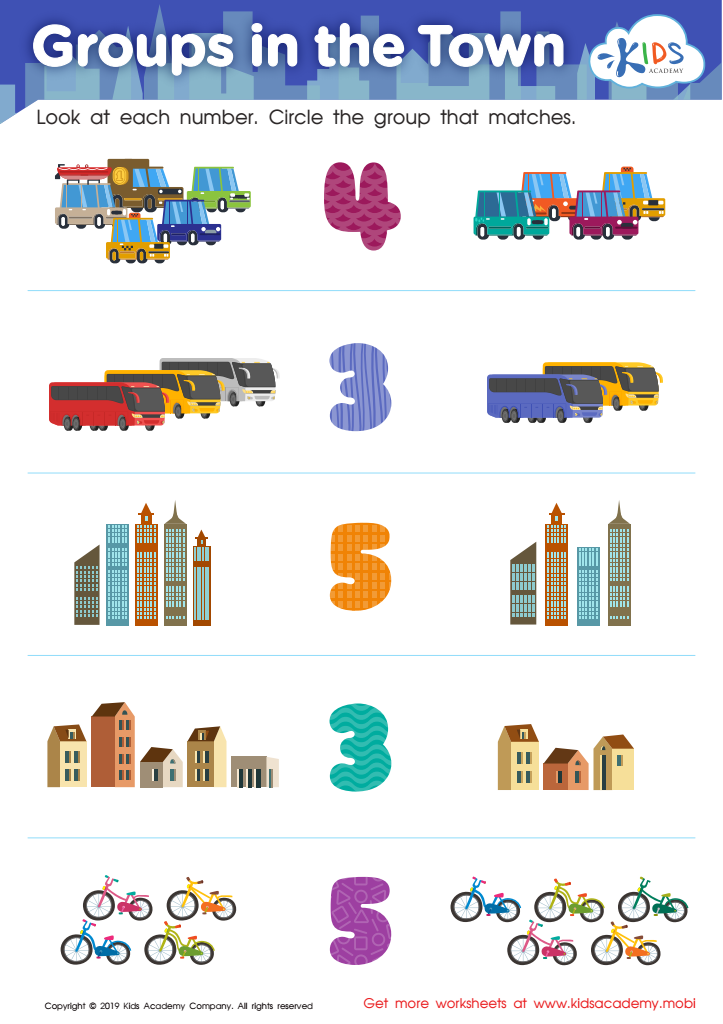
Groups in the Town Worksheet
Help your kids learn to count with this worksheet! Look at each number of objects and circle the group that matches. This simple activity can give them extra practice to support what they learn in school. Learning doesn't have to be a struggle; make it fun and interactive with this worksheet.
Groups in the Town Worksheet
Worksheet
Join Kids Academy for Free
Who is primarily going to use this learning content?



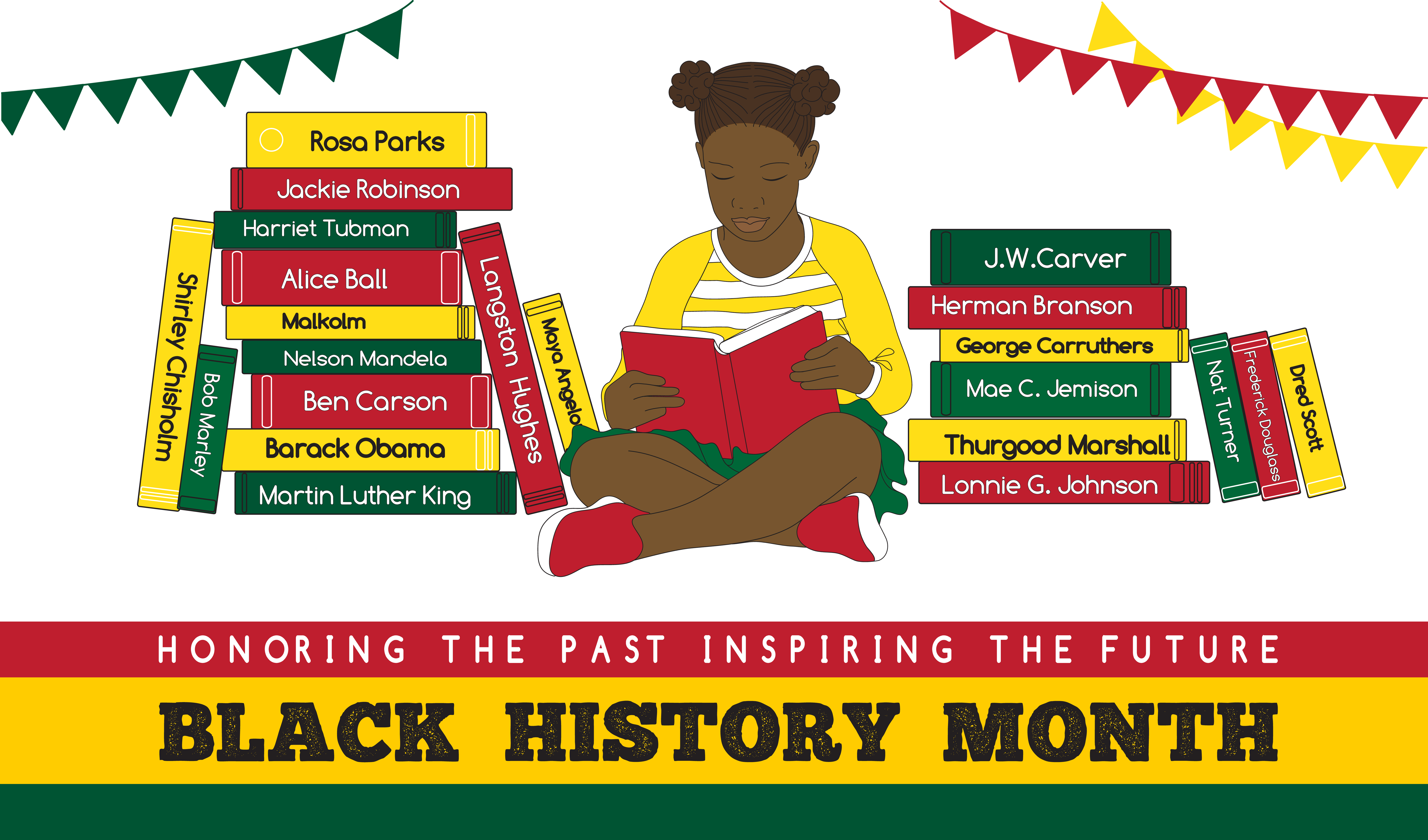

Community understanding is crucial for children ages 3-8 because it lays the foundation for their social, emotional, and cognitive development. At this young age, children are naturally curious about their surroundings and begin to form their identity in relation to their community. Parents and teachers play a vital role in fostering this understanding as it helps children develop a sense of belonging and security.
By learning about their community—its people, cultures, traditions, and values—children gain empathy and respect for diversity. This is essential in cultivating positive relationships and social skills. Early exposure to community concepts encourages critical thinking and problem-solving abilities, as children start to see how their actions can impact those around them.
Moreover, understanding their community helps children feel empowered and engaged. When they recognize their role within the community, they are more likely to become responsible, active citizens. Parents and teachers who emphasize community knowledge not only support academic readiness but also instill values of cooperation, respect, and inclusion. Ultimately, fostering community understanding in young children prepares them for future collaborative endeavors in school and life, making it a priority for both parents and educators.








