
Comparing object weights Worksheets for Ages 3-8
3 filtered results
Difficulty Level
Grade
Age
-
From - To
Subject
Activity
Standards
Explore our engaging "Comparing Object Weights" worksheets designed for children ages 3-8! Perfect for early learners, these worksheets help develop essential skills in measurement and comparison through fun and interactive activities. Kids will enjoy using visuals and hands-on exercises to identify heavier and lighter objects, enhancing their understanding of weight concepts. Our user-friendly worksheets promote critical thinking and vocabulary development, making learning enjoyable and effective. Ideal for preschool, kindergarten, and early grade classrooms, these resources are perfect for parents and teachers alike. Download now to make learning about weights an exciting journey for your little ones!
Favorites
With answer key
Interactive
 Assign to My Students
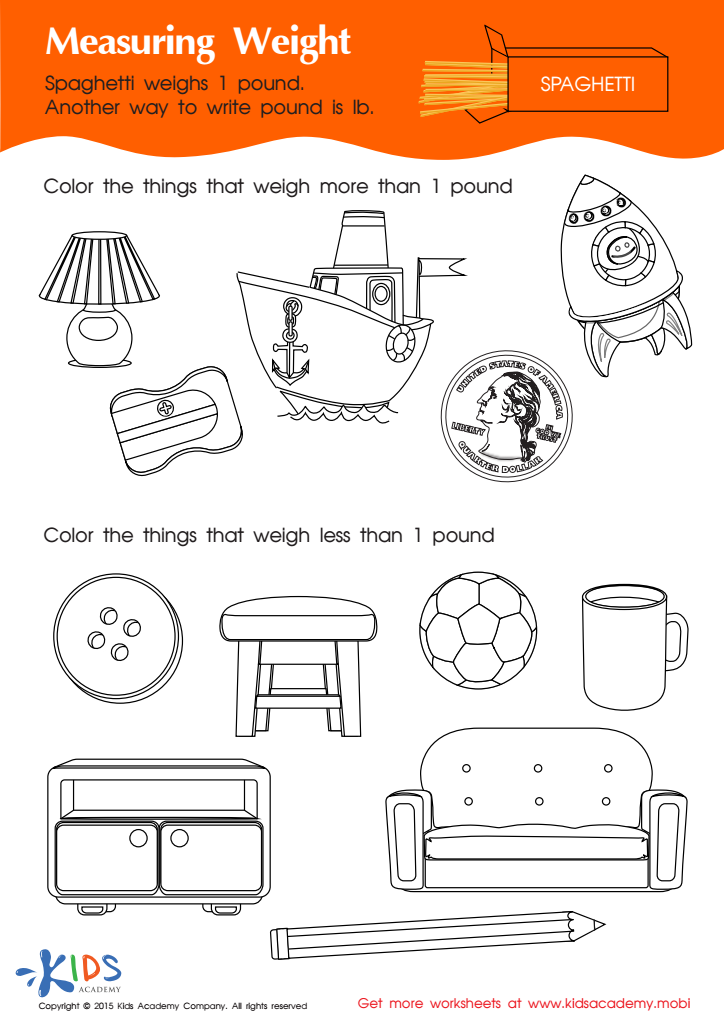
Measurement: Measuring Weight in Pounds 1 Worksheet
Worksheet
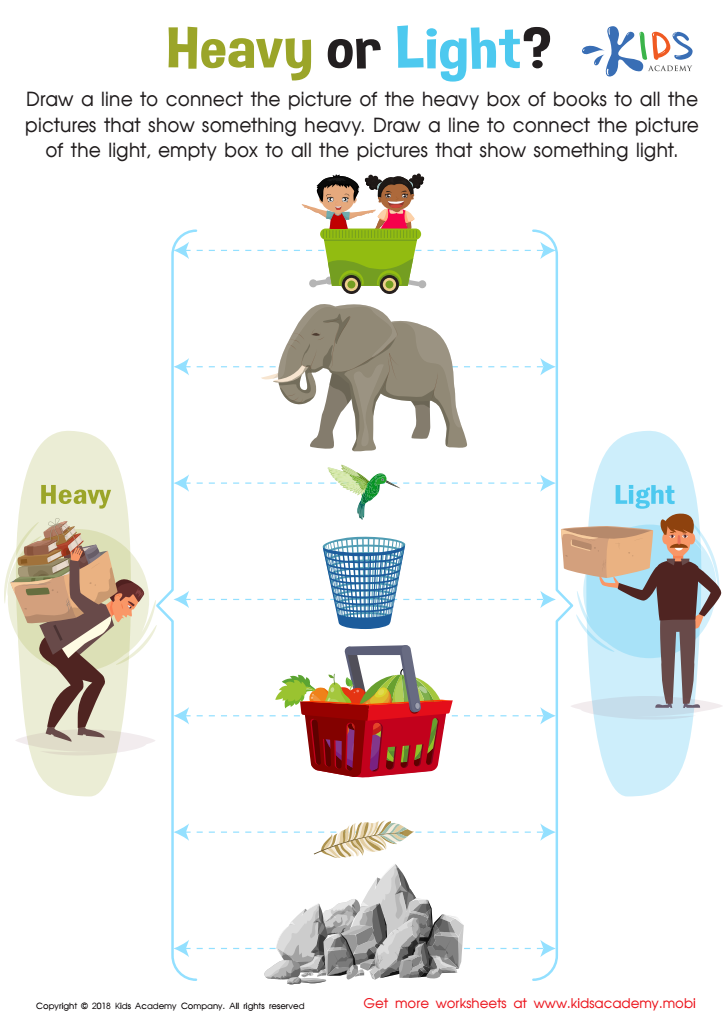
Heavy or Light? Worksheet
Kids can struggle to understand weight comparison, as size and mass matter. This free PDF helps develop fine-motor and hand-eye skills as kids trace lines to match pictures. The familiar pictures create concrete representations, ideal for learning more complex concepts.
Heavy or Light? Worksheet
Worksheet
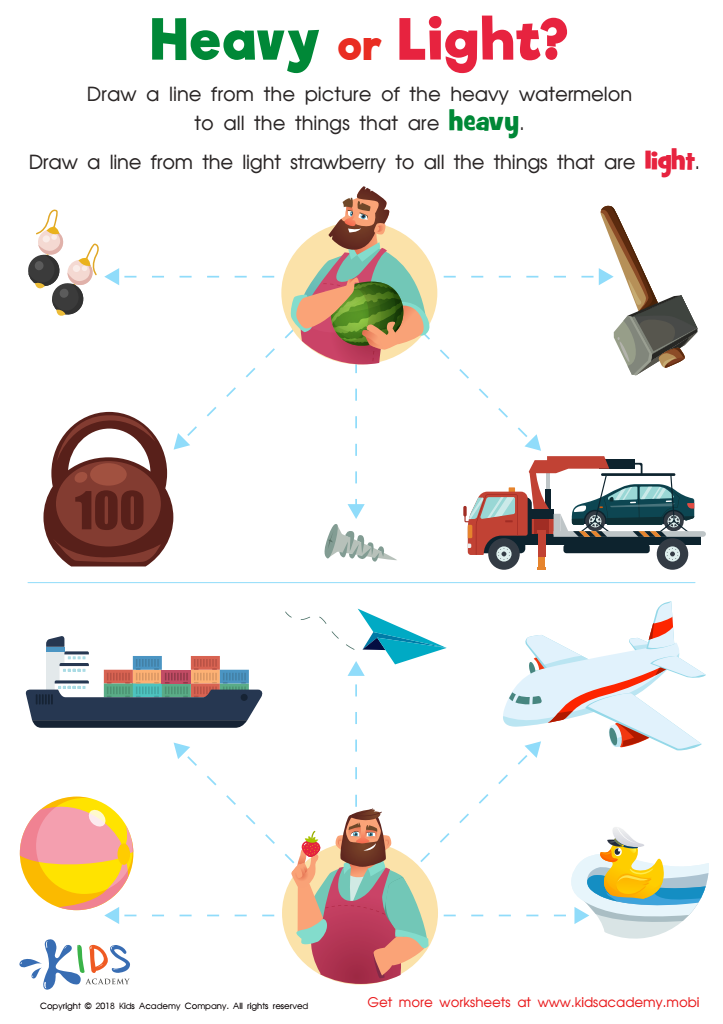
Heavy or Light? Worksheet
This fun, free worksheet helps kids build measurement skills and reinforce concepts of 'heavy' and 'light', while also improving their fine motor skills. Kids use traceable lines to connect the gentleman to objects they know, giving them a strong foundation for understanding weight.
Heavy or Light? Worksheet
Worksheet
Join Kids Academy for Free
Who is primarily going to use this learning content?







Comparing object weights is an essential learning opportunity for children aged 3-8 as it lays the foundational skills for critical thinking and scientific reasoning. At this early stage, children are naturally curious about the world around them. Engaging them in activities that involve comparing weights can spark their interest in science and mathematics. Understanding weights introduces concepts of measurement, balance, and gravity, all critical components of scientific literacy.
Parents and teachers should prioritize these activities as they also enhance fine motor skills through hands-on manipulation of objects. When children lift, hold, and balance items of different weights, they develop spatial awareness and strengthen their sensory perception. Furthermore, comparing weights fosters language development as children learn to articulate their observations and thoughts.
Incorporating weight comparison in everyday settings, such as during play or while cooking, allows children to apply learned concepts in real-life situations, ensuring that the lessons are relevant and meaningful. It encourages collaborative learning when done in groups, thereby building social skills. Overall, understanding object weight is more than a mere academic exercise; it cultivates curiosity, nurtures cognitive development, and instills a sense of discovery, all valuable for a child's growth and education.








