
Enhancing problem-solving abilities Worksheets for Ages 3-8
15 filtered results
Difficulty Level
Grade
Age
-
From - To
Subject
Activity
Standards
Boost your child's cognitive development with our "Enhancing Problem-Solving Abilities Worksheets" tailored for ages 3-8. These engaging, age-appropriate worksheets from Kids Academy are designed to cultivate critical thinking, logical reasoning, and independent problem-solving skills. Our carefully crafted activities cover a variety of fun and educational topics, promoting curiosity and intellectual growth. With colorful images and interactive tasks, children will enjoy learning while overcoming challenges that build their confidence and imagination. Perfect for parents and educators, these worksheets provide the essential tools for nurturing young minds and preparing them for future academic success. Explore today and watch your child's abilities flourish!
Favorites
With answer key
Interactive
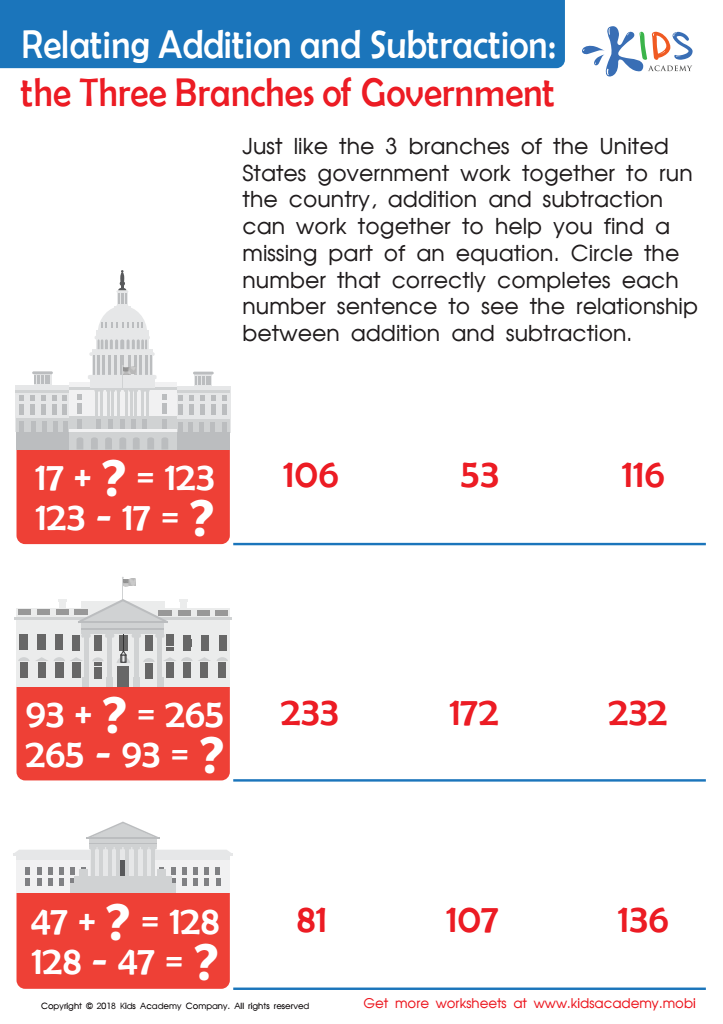
The Three Branches of Government Worksheet
Students learn best when they can relate ideas, like the three branches of government working together and addition and subtraction working together. This worksheet pairs math and social studies to help learners make an analogy. Help your child discover the relationship between addition and subtraction by completing the number sentences under each national landmark. This will help them solve tricky problems!
 Assign to My Students
The Three Branches of Government Worksheet
Worksheet
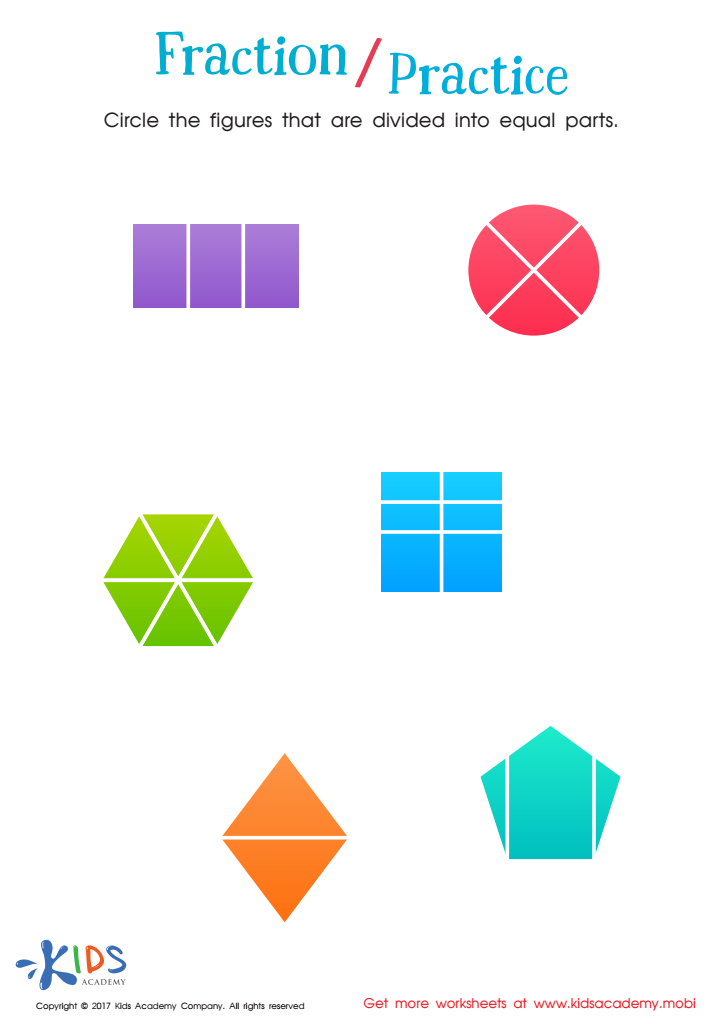
Fractions: Shapes Worksheet
Get your printable now.
Kids learn math differently today than you did in school; understanding concepts rather than memorizing facts. Help your child understand fractions with this printable worksheet. It'll help your child recognize parts of a whole, identify equal parts and build a foundation for numeracy. A better understanding sets kids up for math success! Get your printable now.
Fractions: Shapes Worksheet
Worksheet
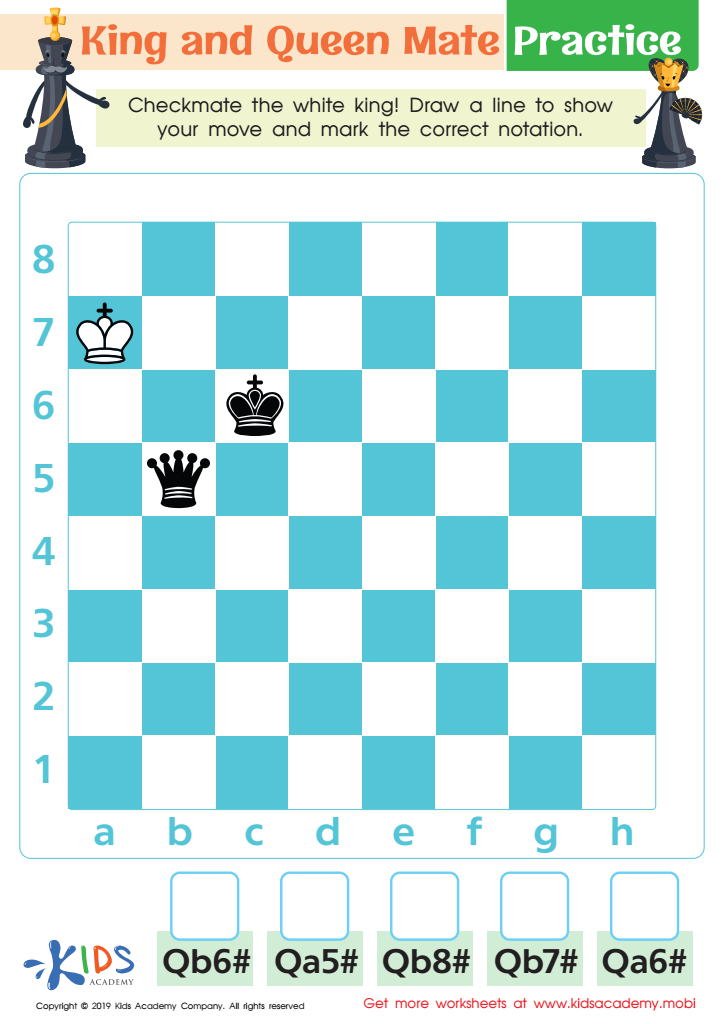
King and Queen Mate Practice Worksheet
Learning chess can open up a world of strategy, problem-solving and reasoning for your child! Our free worksheet gives them the opportunity to practice checkmating with their king and queen pieces. It also helps them develop fine-motor skills, as they draw lines to show the right moves and check off the correct notation. All without screens!
King and Queen Mate Practice Worksheet
Worksheet
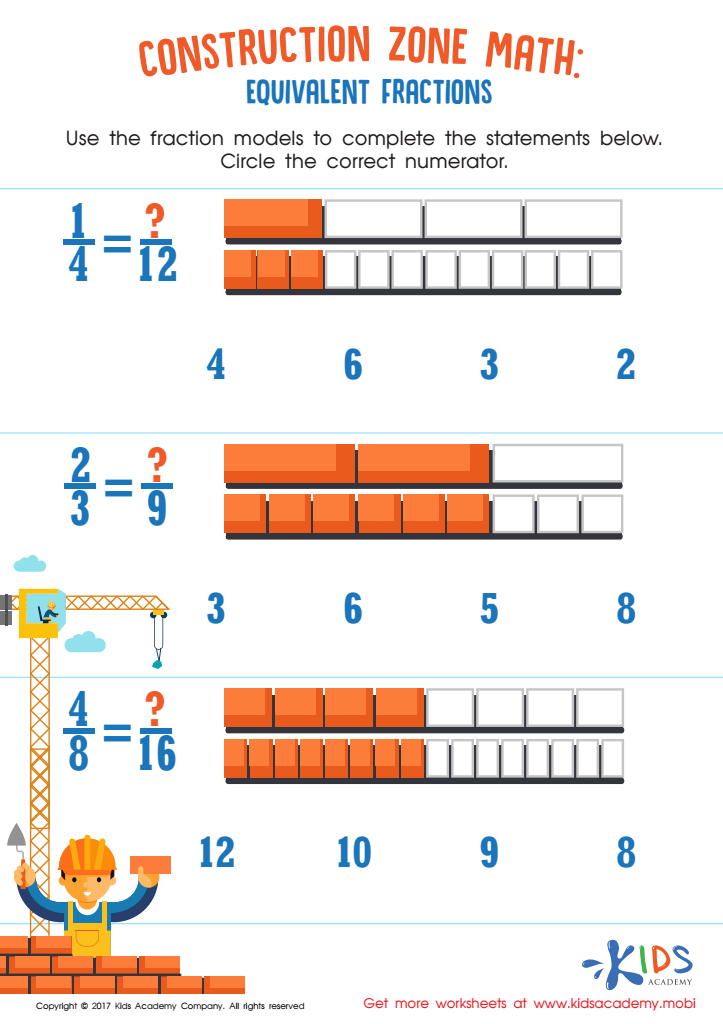
Equivalent Fractions Worksheet
Kids can easily learn fractions with pictures! This worksheet uses colorful bricks in a construction zone to help 3rd graders understand and compare fractions to find the numerator. Visuals make it simpler for kids to grasp fractions.
Equivalent Fractions Worksheet
Worksheet
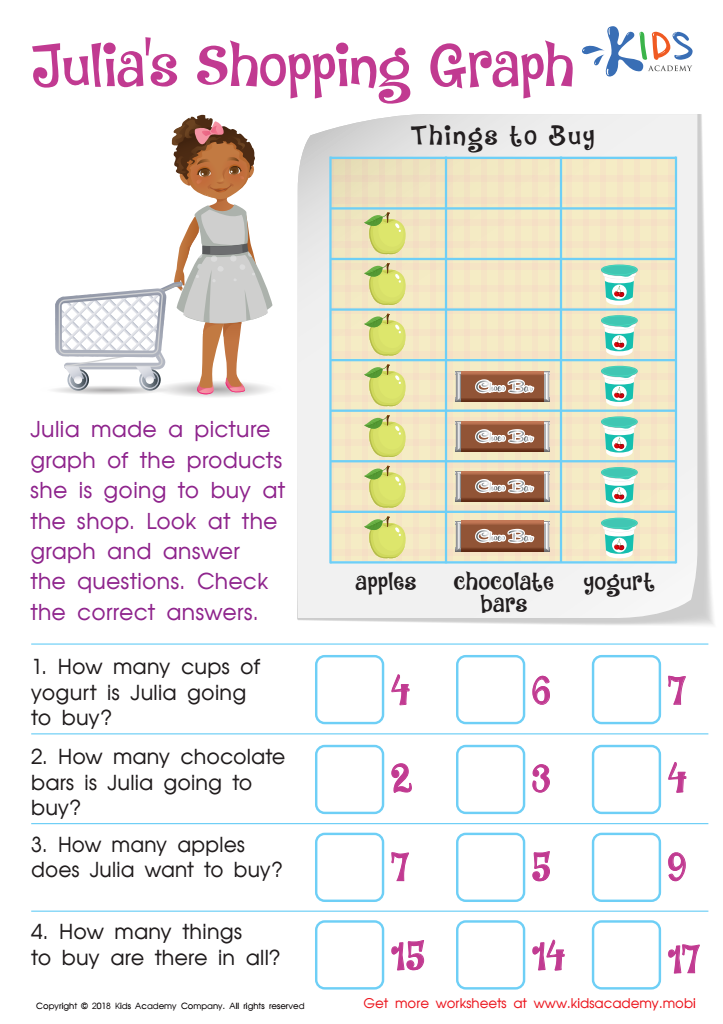
Julia's Shopping Graph Worksheet
This fun PDF worksheet provides little mathematicians with practice using pictographs. They will answer questions about Julia's graph, helping to assess their understanding of reading and interpreting data. Counting and choosing the correct answer is sure to be an enjoyable experience!
Julia's Shopping Graph Worksheet
Worksheet
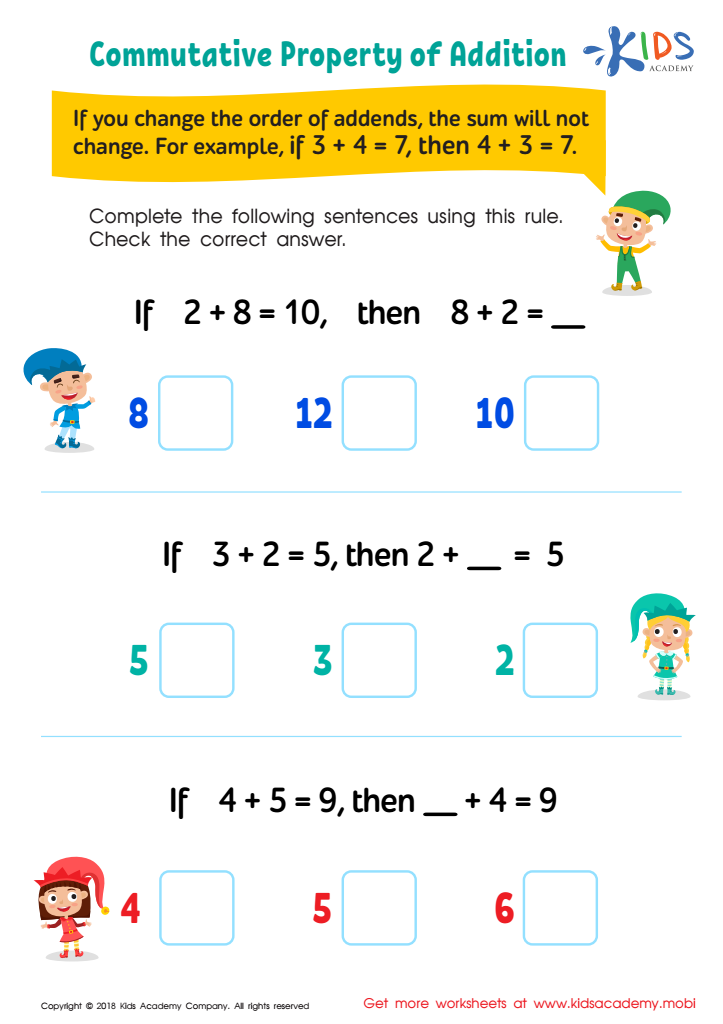
Commutative Property of Addition Worksheet
Master the commutative property of addition with Kids Academy's worksheet! Kids will have fun with silly elves as they complete the rows, switching or adding the addends. Observe that the sum stays the same no matter the order of the numbers!
Commutative Property of Addition Worksheet
Worksheet
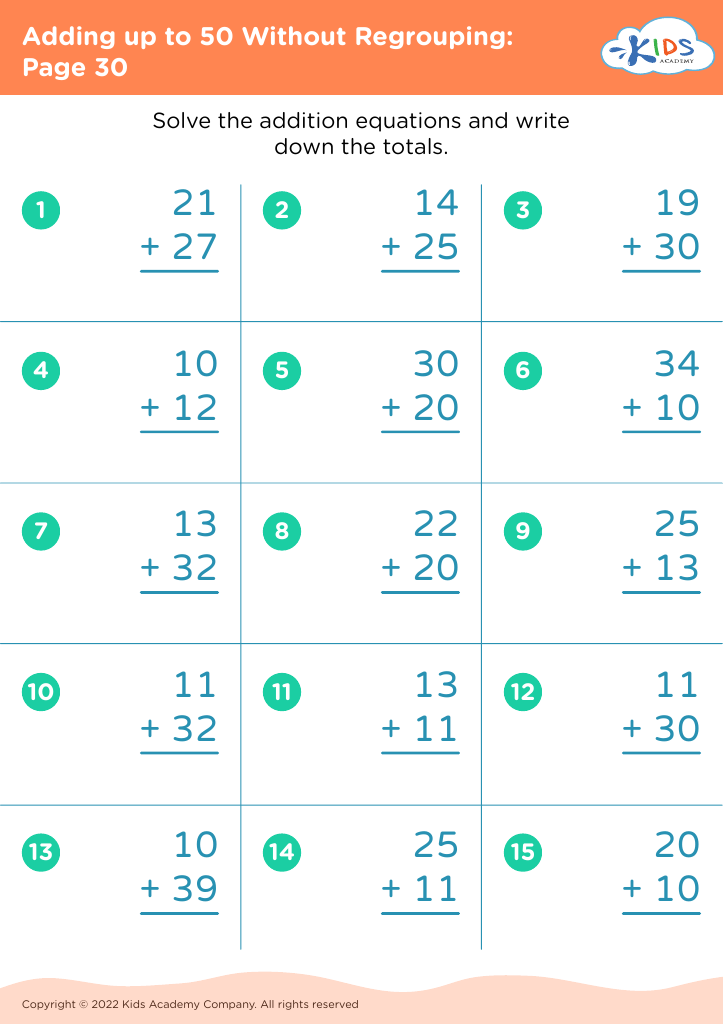
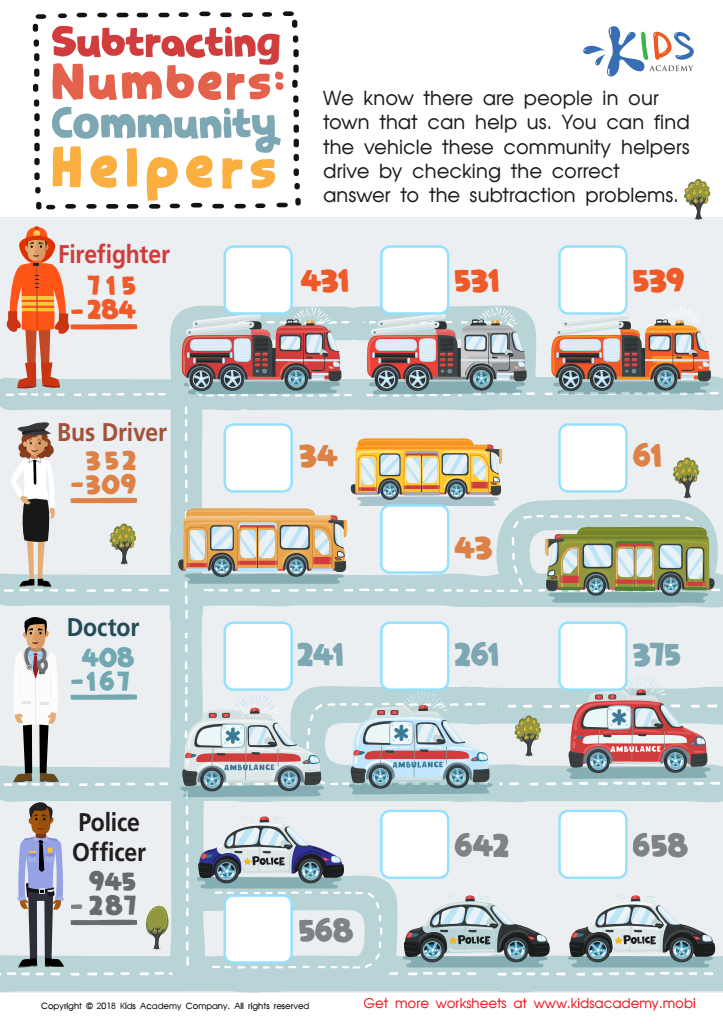
Subtracting Numbers: Community Helpers Worksheet
A community is an area of different people, buildings and other elements. People in a community have varied roles and work together to make it thrive. Ask your child what community helpers they know and how they help. Match the helpers to their vehicles by solving subtraction problems!
Subtracting Numbers: Community Helpers Worksheet
Worksheet
Learning Skills
Join Kids Academy for Free
Who is primarily going to use this learning content?






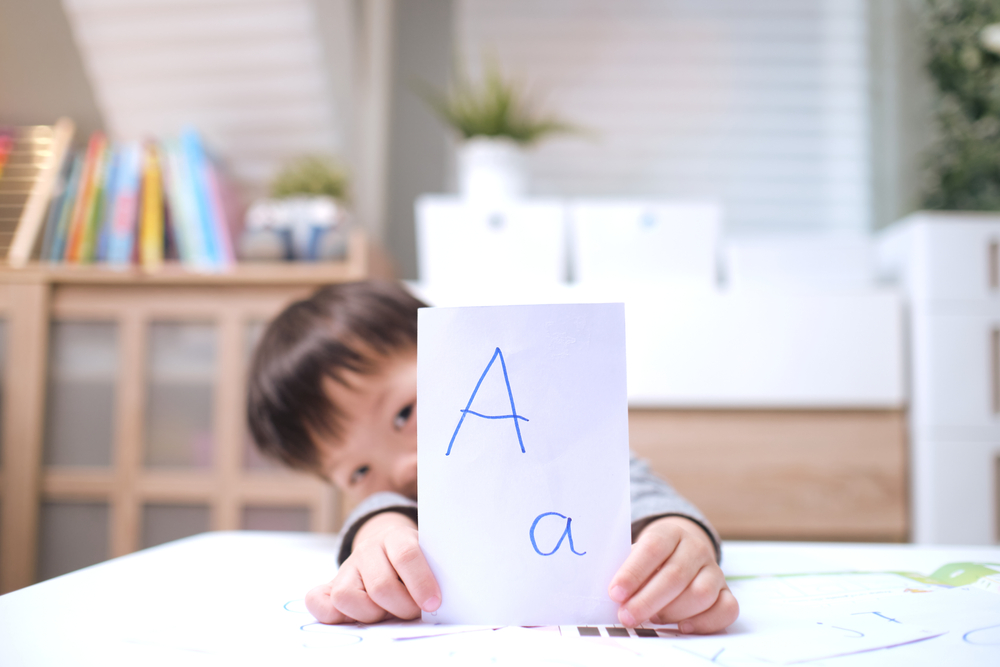
Enhancing problem-solving abilities in children ages 3-8 is essential as it lays a strong foundation for future cognitive and emotional development. During these formative years, children’s brains are highly receptive to new learning experiences. Engaging in problem-solving activities fosters critical thinking, encouraging them to explore various solutions rather than relying on one set answer. This skill will serve them well throughout their academic and personal lives.
For parents and teachers, focusing on problem-solving from an early age cultivates confidence and resilience. When children solve problems, they learn persistence and the understanding that setbacks are part of the process. These skills are crucial for handling everyday challenges and setbacks.
Moreover, improving problem-solving skills enhances academic performance. It encourages curiosity, boosts creativity, and improves mathematical and linguistic abilities. For instance, when children face a puzzle or a simple task requiring consecutive steps, they apply logical reasoning without direct instructions.
Finally, social interactions improve too. Problem-solving often involves collaboration, requiring children to negotiate, communicate, and understand different perspectives. These experiences promote empathy and teamwork, essential traits for future relationships.
In conclusion, nurturing problem-solving prowess in young children is an investment in their holistic growth. It equips them with tools to navigate the complexities of life, making them more capable and adaptive individuals.








