Graph reading skills Worksheets for Ages 3-8
3 filtered results
-
From - To
Unlock your child's understanding of data with our engaging Graph Reading Skills Worksheets designed for ages 3-8! These worksheets offer a fun and interactive way for young learners to develop essential graph-reading skills. Through colorful illustrations and simple exercises, children will explore different types of graphs, recognize patterns, and interpret data in a playful manner. Ideal for classroom use or at-home learning, our resources help reinforce critical thinking and enhance early math skills. With a variety of activities, our worksheets make learning about graphs not just educational, but enjoyable for children as they embark on their mathematical journey!
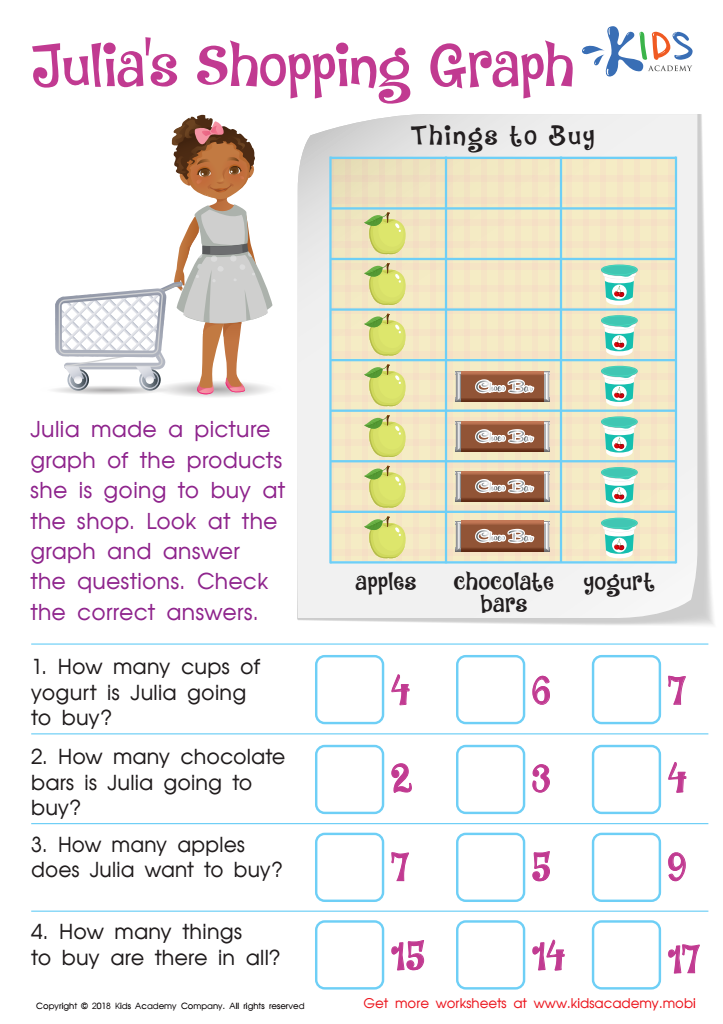
Julia's Shopping Graph Worksheet
 Assign to My Students
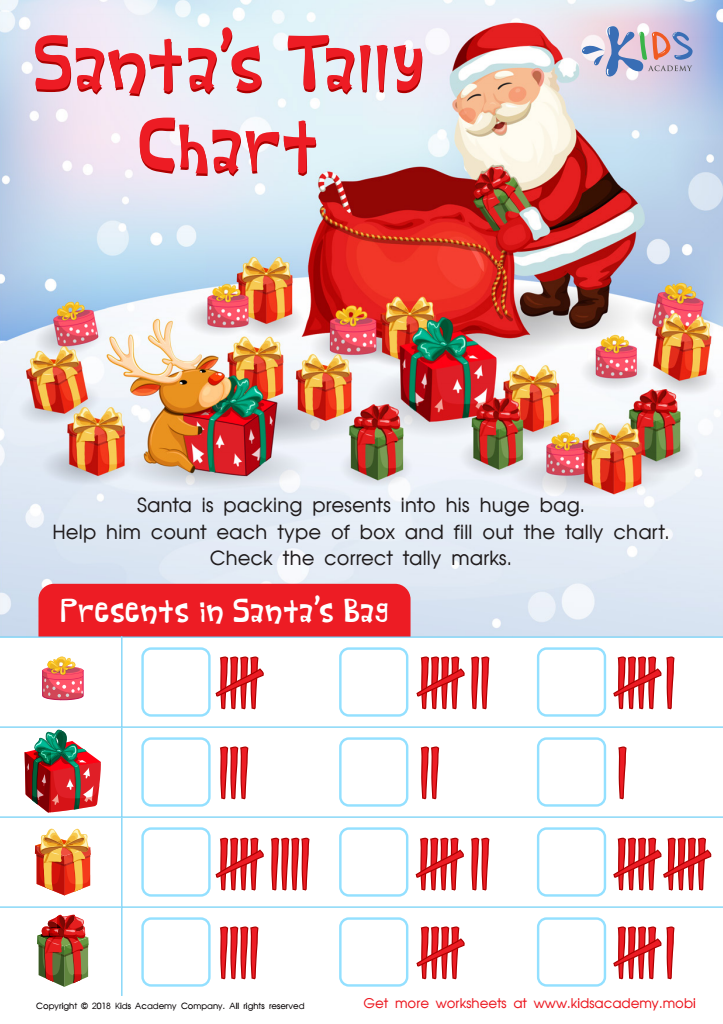
Santa Tally Chart Worksheet
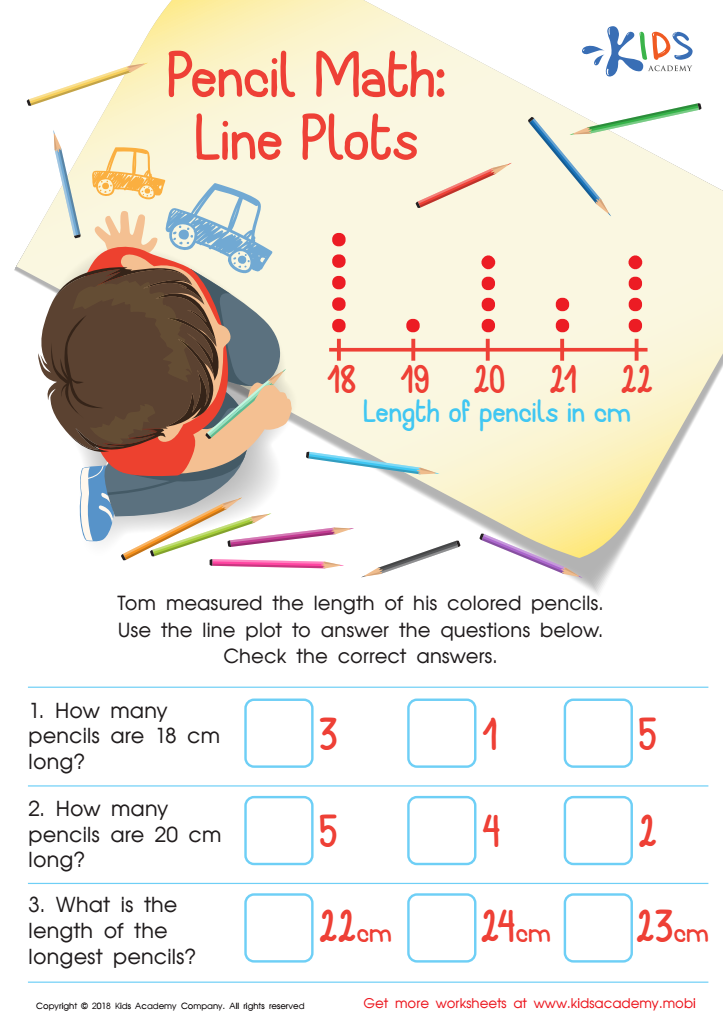
Pencil Math: Line Plots Worksheet





Graph reading skills are vital for children aged 3-8 as they lay the foundation for critical thinking and comprehension abilities. At this age, children begin to engage with various forms of data representation, such as pictographs, bar graphs, and simple charts. These skills encourage early numeracy and support cognitive development, enabling children to recognize patterns, discern relationships, and develop analytical skills.
Understanding graphs fosters curiosity and encourages a love for learning. When children see visual information, they can better grasp concepts in subjects like math and science, helping them learn to interpret real-world data. For example, when children observe data about animals in a graph format, they can compare quantities, leading to deeper discussions about ecology and biology.
Additionally, graph reading skills enhance communication as children learn to interpret and convey information visually. As educators and parents nurture these skills, they equip children with tools necessary for future academic success and responsible citizenship, where data interpretation becomes increasingly important. Helping young children to engage with graphs promotes confidence and competence, paving the way for lifelong learning habits. Therefore, it is crucial for parents and teachers to prioritize the development of graph reading skills in early education.








