
Identify numbers Worksheets for Ages 3-8
3 filtered results
Difficulty Level
Grade
Age
-
From - To
Subject
Activity
Standards
Introduce your young learners to the world of numbers with our "Identify Numbers Worksheets for Ages 3-8." These engaging and interactive sheets, available at Kids Academy, are designed to make learning fun and effective. Our carefully curated materials help children recognize and understand numbers through coloring, tracing, and counting activities. Each worksheet aims to boost number recognition, fine motor skills, and foundational math concepts. Perfect for both classroom and home use, these worksheets cater to various learning styles and abilities, ensuring your child develops a strong numerical foundation. Visit Kids Academy for free access to these valuable learning tools!
Favorites
With answer key
Interactive
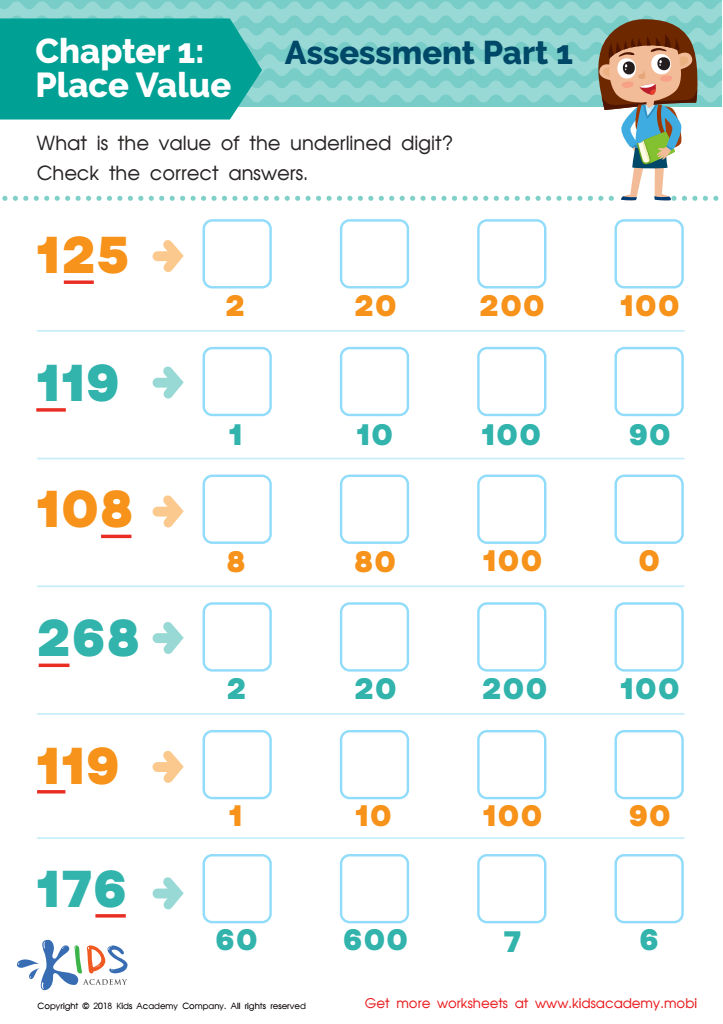
Place Value: Chapter 1 Worksheet
Check your kid's place value understanding with this assessment worksheet. It features 6 questions with one digit underlined for your child to determine the correct value of. Get the download and see if they can correctly choose the answer from the options given. It's a great way to test progress and keep their minds sharp!
 Assign to My Students
Place Value: Chapter 1 Worksheet
Worksheet
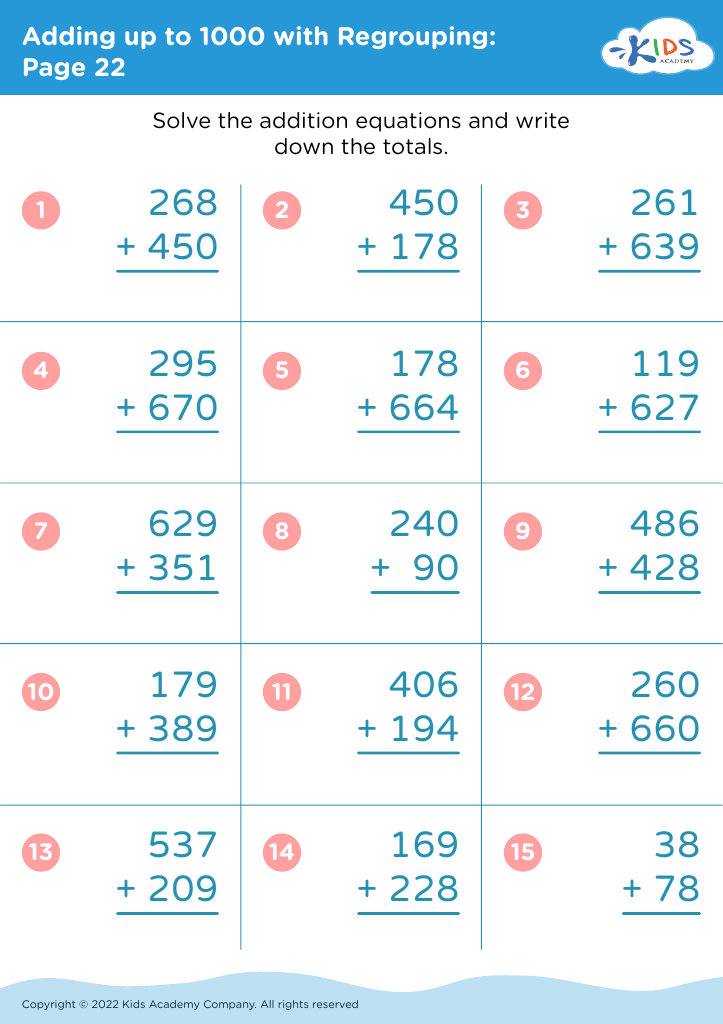
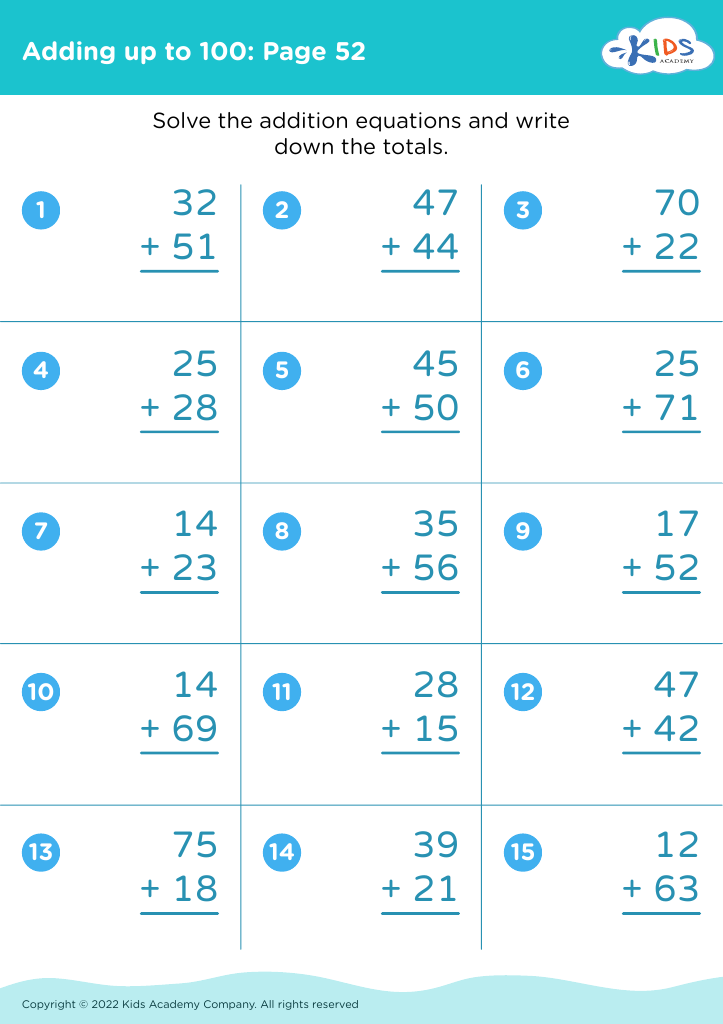
Join Kids Academy for Free
Who is primarily going to use this learning content?







Identifying numbers is a foundational skill for young children aged 3-8 that significantly influences their academic and everyday lives. For parents and teachers, fostering this ability is crucial because it is the gateway to understanding more complex mathematical concepts. Early number recognition helps children grasp the values of numbers, fosters basic counting skills, and improves their capability to perform simple arithmetic operations.
When young children can identify numbers, they also develop a better sense of sequence and order, which is essential not only in mathematics but also in daily activities like following steps in a process or arranging objects. Additionally, number identification exercises enhance cognitive skills such as memory and attention to detail, which are vital for overall learning in other subjects.
Furthermore, early confidence and competence in number identification can cultivate a positive attitude towards mathematics, reducing the anxiety or reluctance that often surfaces in later years. Parents often witness quicker problem-solving and logical reasoning in children who have a solid foundation in number identification. This early skill, therefore, sets the stage for academic success, making it critical for parents and teachers to emphasize and support learning in this area.








