Improve arithmetic skills Worksheets for Ages 3-8
3 filtered results
-
From - To
Boost your child's arithmetic skills with our engaging worksheets designed for ages 3-8. Our carefully crafted resources help young learners grasp fundamental math concepts through fun activities that nurture problem-solving abilities. Featuring a variety of exercises, from counting and addition to subtraction and basic word problems, each worksheet is tailored to meet the developmental needs of early learners. Promoting critical thinking and enhancing number recognition, our worksheets are perfect for classroom settings or at-home practice. Encourage a love for math while building confidence in arithmetic with our interactive and enjoyable learning materials! Start your child's math journey today!
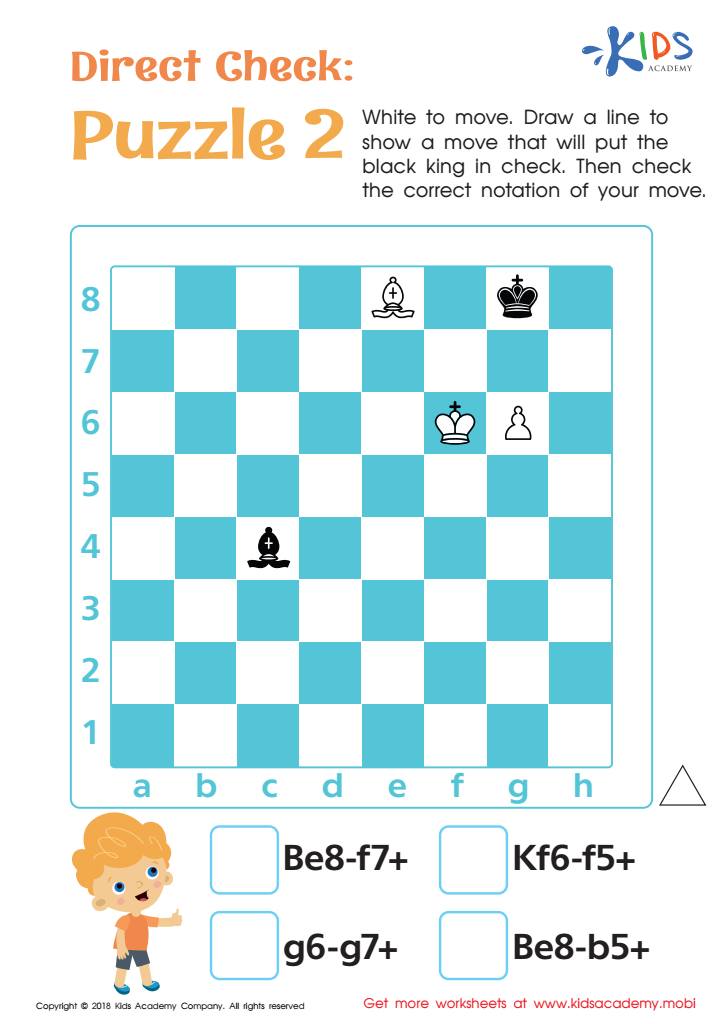
Direct Check: Puzzle 2 Worksheet
 Assign to My Students
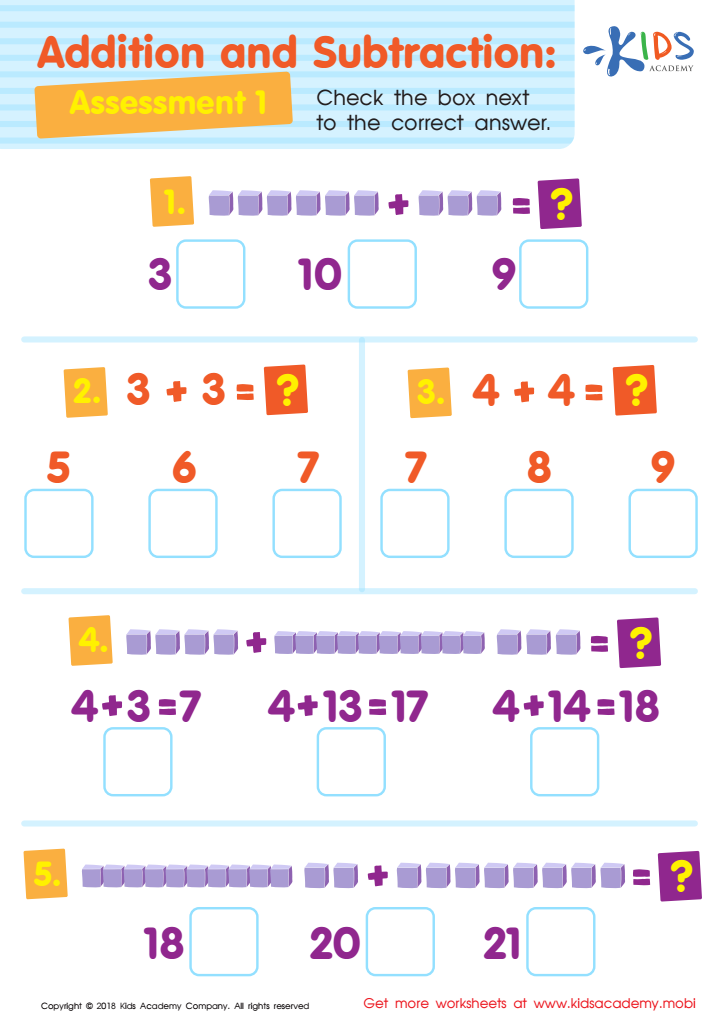
Addition and Subtraction Assessment 1 Worksheet
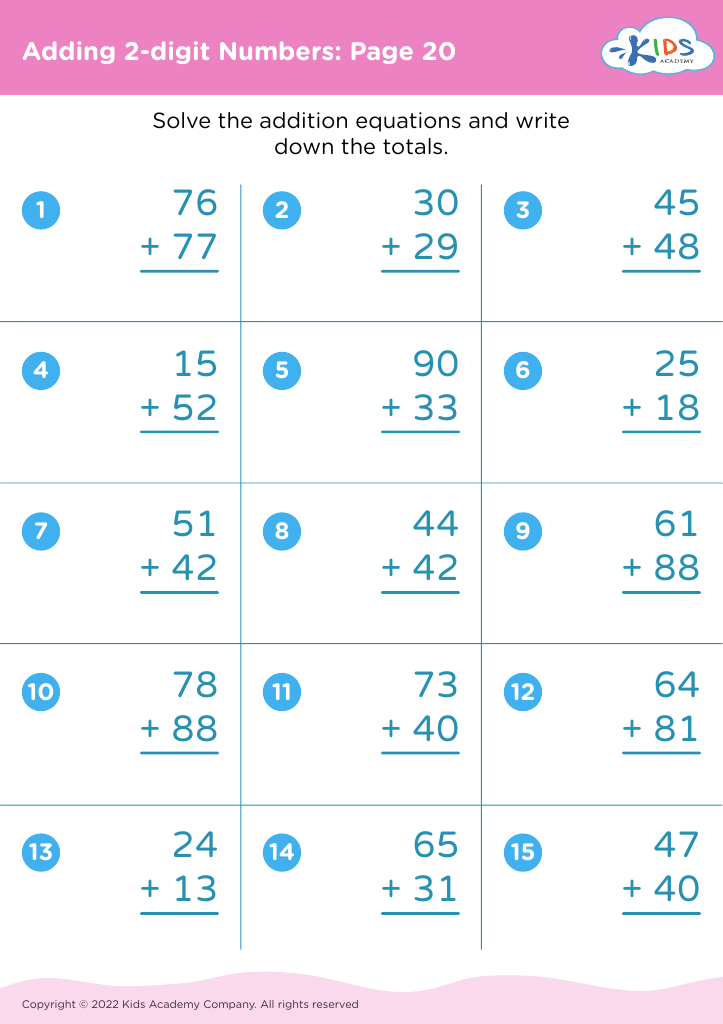








Improving arithmetic skills in children aged 3-8 is crucial for a multitude of reasons. First, this foundational stage is essential for cognitive development; young children build numerical understanding and problem-solving abilities during this period. By fostering arithmetic skills early on, parents and teachers can help promote critical thinking, logical reasoning, and analytical skills, which are vital for later academic success.
Moreover, early arithmetic competence correlates with lifelong positive attitudes toward math. Children who develop confidence in their math abilities early are less likely to fear or avoid mathematics in their future schooling and careers. Engaging in fun, age-appropriate activities such as counting games, simple puzzles, and hands-on manipulative tasks can make learning enjoyable and relatable.
Additionally, strong arithmetic skills lead to improved performance in other subjects, creating a robust framework for interdisciplinary learning in fields such as science and technology. Early mathematical literacy is not just about numbers; it helps children understand their environment, promoting everyday problem-solving.
By prioritizing the development of arithmetic skills, parents and teachers can empower children with essential tools that enhance their academic journey, fostering a love for learning and equipping them for challenges ahead. Engaging effectively in their learning can make a lasting impact.








