
Improving calculation skills Worksheets for Ages 3-8
7 filtered results
Difficulty Level
Grade
Age
-
From - To
Subject
Activity
Standards
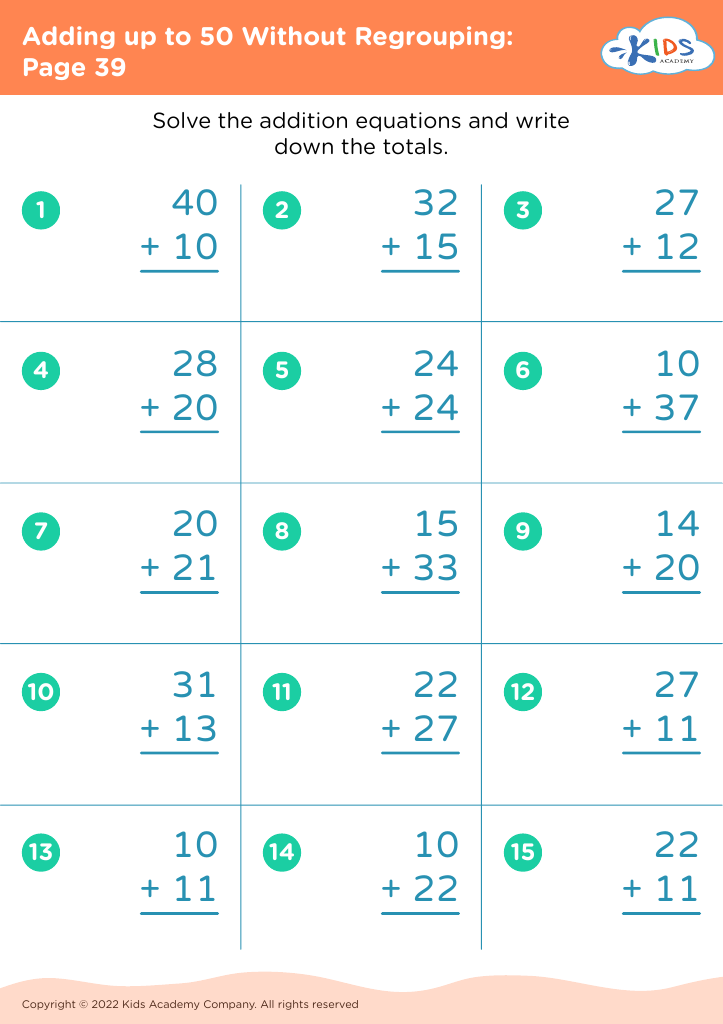
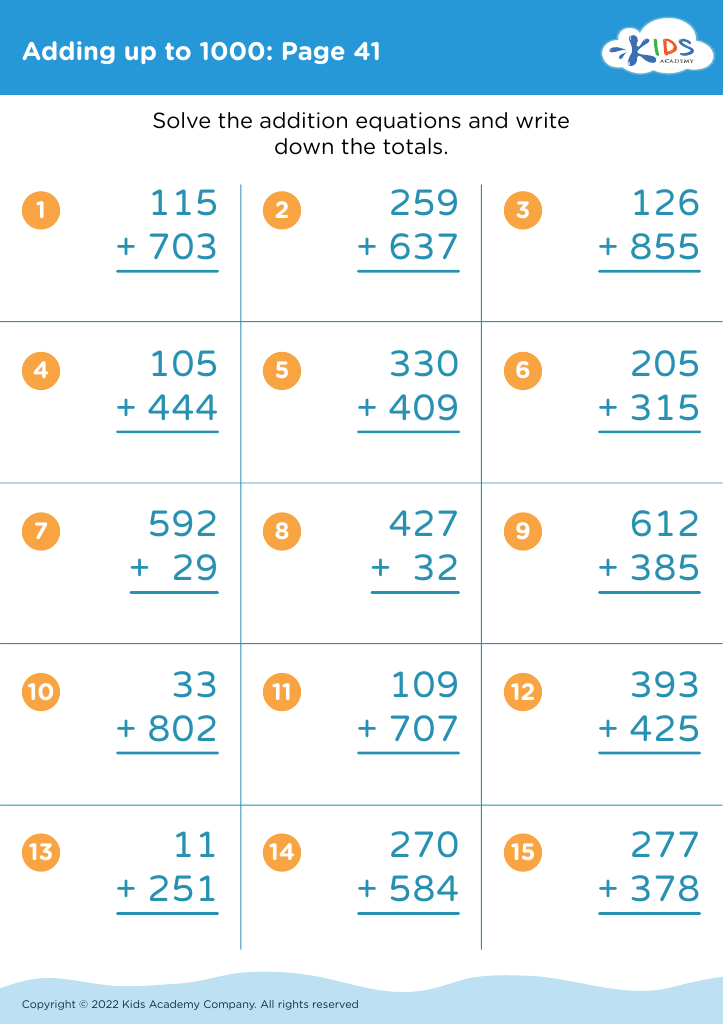
Discover our engaging worksheets designed to enhance calculation skills for children ages 3-8! Perfect for homeschooling or classroom settings, these resources offer a fun and interactive way for kids to practice essential math concepts. Our carefully crafted activities focus on addition, subtraction, and basic math operations while promoting critical thinking and problem-solving abilities. Each worksheet is designed to cater to various learning styles, ensuring all children can improve their math skills at their own pace. Download our printable worksheets today and watch your child's confidence and arithmetic abilities soar! Transform learning into a joyful journey with our innovative math tools!
Favorites
With answer key
Interactive
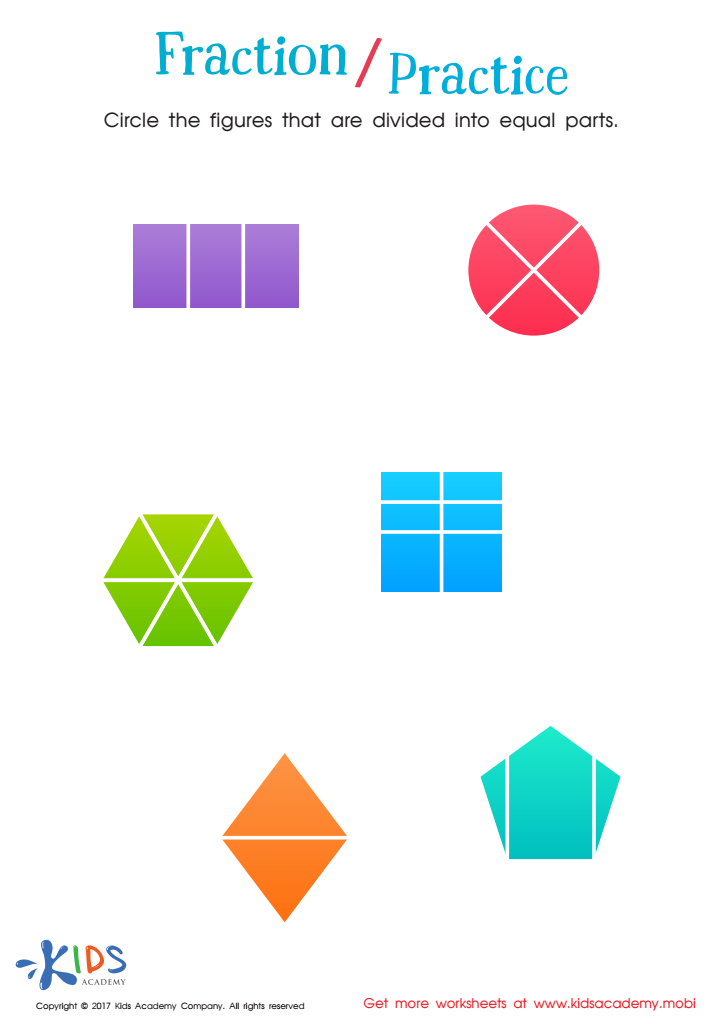
Fractions: Shapes Worksheet
Get your printable now.
Kids learn math differently today than you did in school; understanding concepts rather than memorizing facts. Help your child understand fractions with this printable worksheet. It'll help your child recognize parts of a whole, identify equal parts and build a foundation for numeracy. A better understanding sets kids up for math success! Get your printable now.
 Assign to My Students
Fractions: Shapes Worksheet
Worksheet
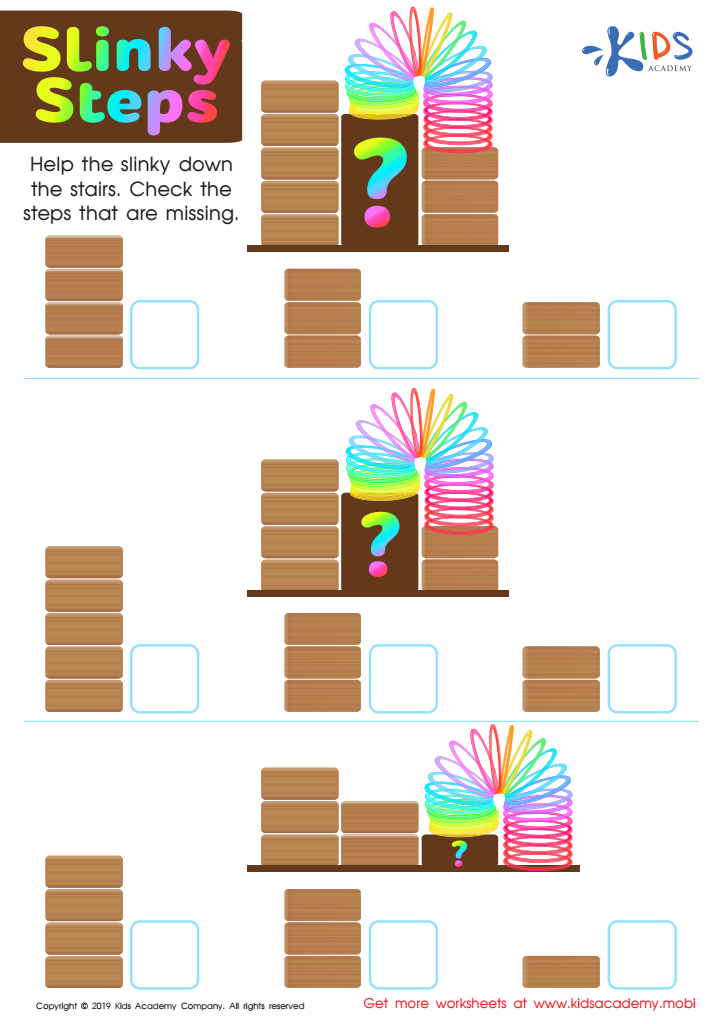
Slinky Steps Worksheet
Help your kids improve their counting and math skills with this fun worksheet! Challenge them to help the slinky make its way down the stairs by selecting and checking the missing steps. Your assistance is key - get the printout and let them practice. It's the best way to becoming better in maths!
Slinky Steps Worksheet
Worksheet
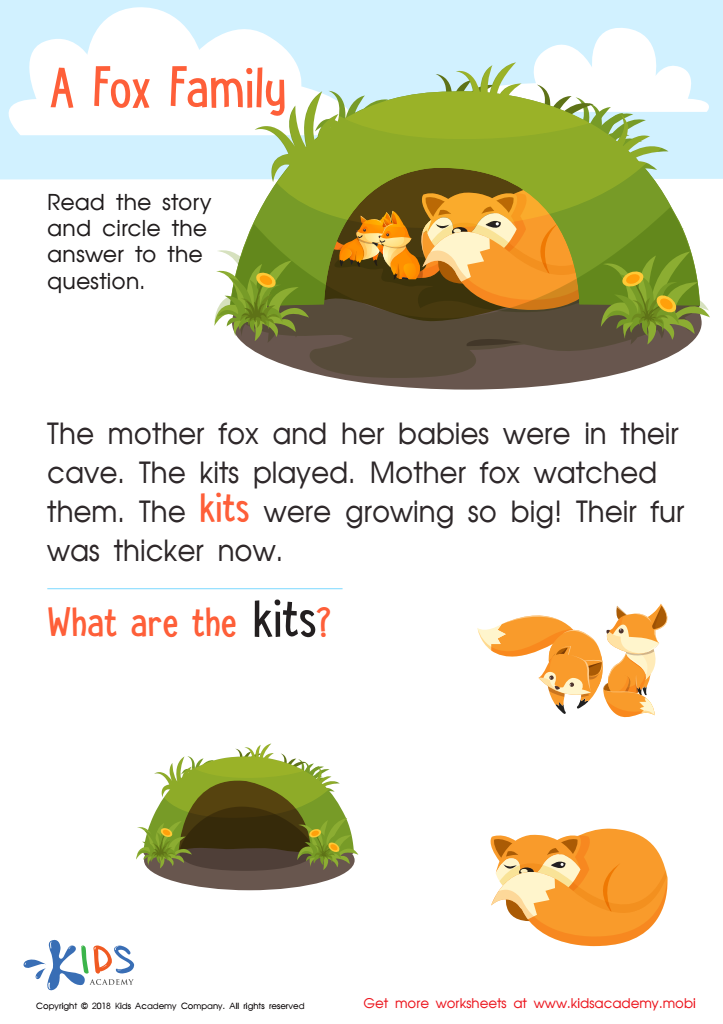
A Fox Family Worksheet
Reading is an easy way to learn new words. This worksheet introduces an interesting story about a fox family, teaching your child that "kits" refers to baby foxes. Read the text together and circle the picture to answer the question.
A Fox Family Worksheet
Worksheet
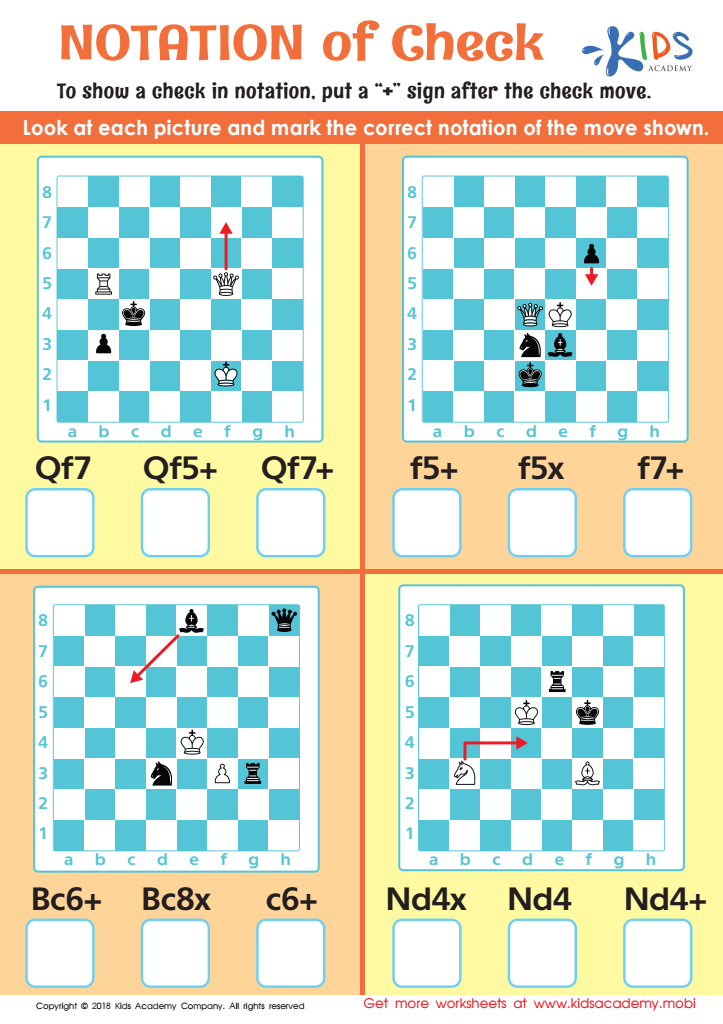
Notation of Check Worksheet
Chess is an addictive game! Once you know the basics of check and checkmate, you'll be hooked! Teach your little one to make check notation with this free PDF worksheet. They can use downloadable practice to look at each picture and mark the correct notation, strengthening their problem-solving skills while they learn to play - and win - this fun game!
Notation of Check Worksheet
Worksheet
Join Kids Academy for Free
Who is primarily going to use this learning content?







Improving calculation skills in children ages 3-8 is crucial for their overall development and future academic success. During these formative years, children are highly receptive to learning and building a strong mathematical foundation paves the way for advanced skills in later schooling. Early calculation skills not only foster a love for mathematics but also enhance cognitive abilities such as problem-solving, critical thinking, and logical reasoning.
Furthermore, strengthening numerical skills supports students’ confidence. When children grasp basic calculations, they are more enthusiastic about tackling challenging concepts down the line, reducing math anxiety and fear of failure associated with the subject. This confidence extends into real-life scenarios: everyday activities like shopping or cooking require basic arithmetic, aiding in their mathematical literacy.
Parents and teachers who prioritize enhancing calculation skills can adopt engaging, play-based learning activities that make math enjoyable. Incorporating games, visuals, and hands-on tools can stimulate interest and promote better retention of knowledge. Also, fostering these skills early on empowers children to become independent learners, setting them on a path to lifelong learning. Ultimately, investing time in improving calculation skills during these pivotal years lays the groundwork for responsible and competent individuals.








